| Author |
 Replies: 23 / Views: 3,193 Replies: 23 / Views: 3,193 |
|
Valued Member
United States
127 Posts |
So what I've gathered through reading and looking at coins is many of them for sale come in some sort of stapled, cardboard flip that either may or may not be made of plastics that can harm the coins over time. So the question is, can you tell the difference so you leave your purchases in the flip it was sold in; or should you immediately transfer them to whatever your preferred method of storage is? I've been buying some fairly inexpensive cents at coin shops and have noticed some of them are not completely problem free. So far being in a shop filled with coins is a bit overwhelming and it doesn't really seem polite to inspect a cheap coin for 10 minutes while browsing the net for info. I just wanted to get my collection rolling. I'm aware of verdi-care and have purchased a bottle of it which has yet to arrive. I have been storing my coins in 2x2 saflips because they seem like a reasonable storage solution for the time being. My second question has to do with re-using saflips which may have once held a verdigris stricken coin in it. If for instance I have an Indian Head cent in a saflip, realize it has some verdigris in it and I treat it, can I put it back in the same saflip? Does this stuff spread just from traces of it? should I wash my hands before handling other coins? I know the ideal situation would be keep everything separate, clean, and new but at this point I have a few hundred fairly inexpensive coins and am still trying to figure out my organization of my collection so If I migrate a bunch of cents or silver Washington quarters to an album, I want to be able to reuse these saflips for new coins or extras which I want to keep safe. |
|
|
|
Moderator
 United States
23522 Posts |
Saflips are cool, and my normal go-to container. Never re-use a flip which has had a known-corroded coin in it. Me, I do not "re-use" them at all ever. The difference between good cardboard 2x2's and "bad" ones (which are a vanishing breed) is very easy to tell because the appropriate Mylar plastic is noticeably "cracklier" than softer plastics. You should be able to tell without even removing the coin. You're doing your homework without being told.  |
|
Valued Member
 United States
127 Posts |
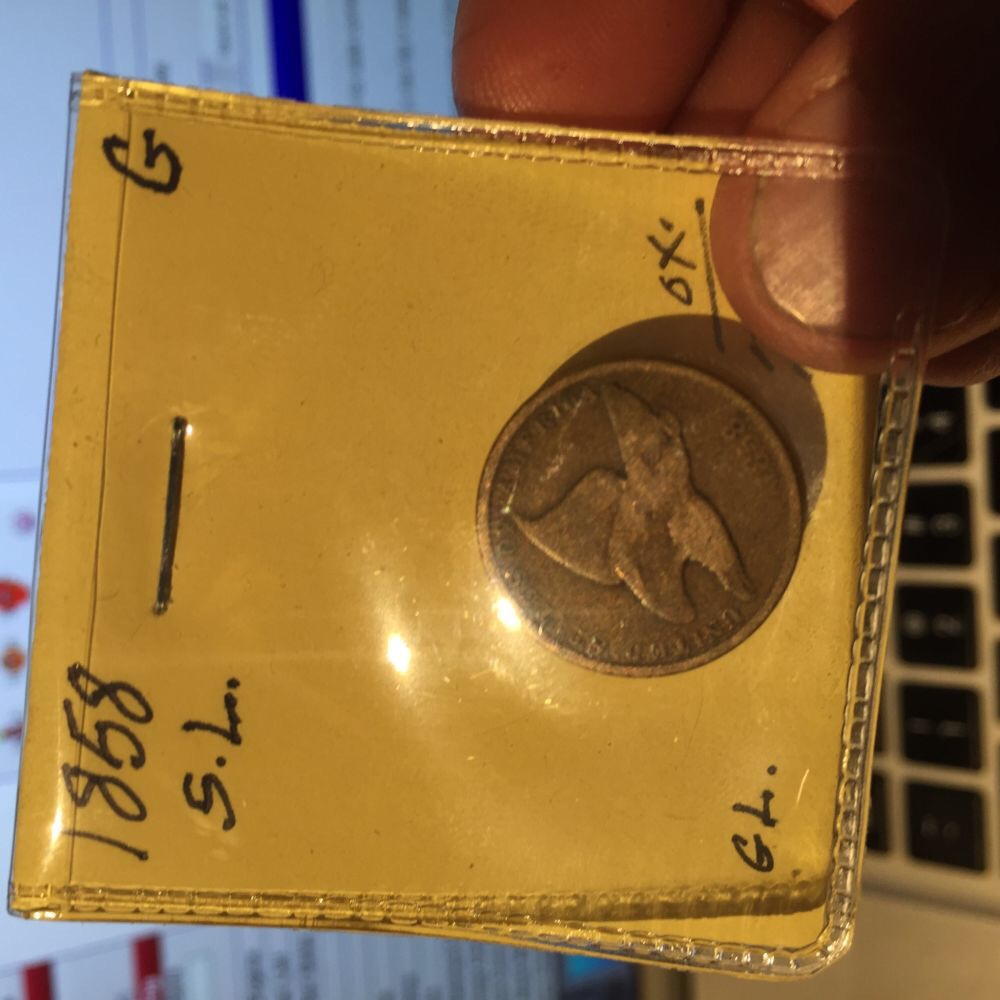
cool, that confirmed some suspicians I had. If I take the coins I bought by the cardboard sides and twist a little bit I hear some crackling but after the initial twist I can't make it crackle. I also bought a Flying Eagle cent that was in a foldover plastic thing with a yellow card stapled in between it. This seems pretty flexible and makes no noise |
|
Valued Member
United States
127 Posts |
|
|
Bedrock of the Community
 United States
12877 Posts |
I'd say get it out of that thing immediately and into a flip!  |
|
Moderator
United States
23522 Posts |
Quote:
If I take the coins I bought by the cardboard sides and twist a little bit I hear some crackling but after the initial twist I can't make it crackle.
That's about right for Mylar. The flip is PVC. Lose it, quickly. The press ridges along the edge confirm this. Search this subforum for the term "Acetone" and make use of the info to treat this and any other coin you may have had in such a flip. The damage caused by PVC plasticizers is not visible before it's self-supporting. You might not know if it's there yet, but even if you lose the flip the process is already moving on its' own. It is a habit of many collectors - myself included - for the first handling of a new coin to be dumping it into an acetone rinse. The caveat is, acetone may remove things you don't want removed because sometimes surfaces age differently when coated with crud and when you remove the crud those fresher surfaces make the coin look obviously cleaned. |
|
Pillar of the Community
United States
1476 Posts |
Do you guy's feel the same about the flips the prominent online dealers ship there single coins/bullion rounds in? Think They are safe?
I speaking of firms like Provident/JM Bullion ect.
Thanks
|
|
Pillar of the Community
Canada
3049 Posts |
It's actually really simple... buy coin... you have no idea the history of it... so if it's a good candidate.. acetone bath then into new fresth and clean 2x2...
I would think of 2x2's as sort of a protection for the coins.. a condom if you will... would you reuse one of those.... (second thought that question is rhetorical... I don't want to hear the answers!)
|
|
Moderator
United States
191235 Posts |
I do not like those flips, not even for temporary storage. I always transfer to a new cardboard 2x2.
|
|
Valued Member
United States
127 Posts |
Cool, thanks for the input. It all makes sense, I just wish I could stop spending $ on supplies and get some more coins!
On another semi-related question, I'm having trouble trying to figure out what type of box or case to store my tubes, bags, and flips that keep the coins environmentally stable yet is not a Safe.
I gather you ultimately want coins to be air tight with some desiccant in there as that will keep additional moisture out and let the desiccant do it's job.
I don't have enough coins to warrant a safe but a lot of mine currently live in a plastic latching file box that I put in a cabinet.
Will any kind of plastic box or tub do the job, or do they have to be made of some specific inert plastic. I figure cardboard would work, but its not air tight, and wood breaths, holds moisture etc.
Hope this ties in with the initial thread. I don't know if starting a new one for every question is preferred or not.
|
|
Moderator
United States
191235 Posts |
Quote:
Hope this ties in with the initial thread. I don't know if starting a new one for every question is preferred or not. This is your thread, so you are fine. |
|
Rest in Peace
United States
18456 Posts |
|
|
Moderator
United States
23522 Posts |
The degree of care you need to put into storage is to an extent dependent on your environment. Given your location, you're a good candidate to be careful.
In the majority of cases, though, your greater enemy than humidity is atmospheric chemicals, most specifically atmospheric sulfur. Aside physical security concerns, airtight Ziplocks with the air pushed out and a dessicant, as a final layer, will serve appropriately. And they free you to put all that into whatever container/closet/drawer you like.
Except don't keep them in furniture less than 50 years old if you can help it. Furniture outgasses glue and finish byproducts for a long time. Leave a coin out on your desk for a week or three. You'll see what I mean, unless you're lucky.
I'm not lucky.
|
|
Bedrock of the Community
United States
20753 Posts |
For the slight amount they cost, it is just not safe to reuse any flip. Once a coin was in there you don't know what else was there. Just best to be safe, not sorry.
|
|
Pillar of the Community
Canada
3049 Posts |
Depends on where I'm storing my coins..
1) some coins go into to 2x2's then into holders that will go into binders....
2) some coins go into 2x2's then into boxes that are stored on shelves in my dinning room (my own coin area)
3) some coins go into 2x2's or ziplocks and then into small rubber made containers....to be stored elsewhere for longer durations.
4) some coins go into the safety deposit box with a few packs of desiccants
|
|
Valued Member
United States
127 Posts |
Sounds good. I just remembered I have a box of hefty 2 gallon bags and these xxxl bags ziplock makes for clothes and stuff. Once I get some boxes I like I can just drop them in there. Too bad they dont make gigantic air-tite tupperware like the kind people use to store pantry stuff in.
Ive also though about ammo boxes. I have to standard old army ones, I know they are gasketed and have pretty rust free paint on them which could be marine grade. They need to keep ammo dry and free of corrosion so who knows? but they are old and metal...
Maybe ill scope out some modern ammo cases made out of that ballistic plastic stuff.
|
| |
Replies: 23 / Views: 3,193 |










 Posted 04/16/2015 3:06 pm