| Author |
 Replies: 11 / Views: 1,385 Replies: 11 / Views: 1,385 |
|
|
Valued Member
United States
110 Posts |
I noticed this when I was going through my quarters before I put them in my change jar and noticed this one. It has a chip on the head that looks like it is either PMD or a die chip but if this is PMD I haven't noticed any raised areas to indicate this was chipped out manually. The whole heads side shows any signs of chipping period other than the missing area of clad in which the edges of the chipped area are all smooth.   if this was PMD what would have caused it? And I know the Mint Mark device is also a die chip artifact but would a die chip also be the cause of the damage to Washingtons head? |
|
|
|
Pillar of the Community
United States
740 Posts |
If the area is raised it should be a die chip. A chip in the die means when it stamps the planchet the planchet metal will fill that hole in the die. There isn't much of a way to do this post mint. If the area is lowered or dented it could be struck through something or more often post mint damage. When something is in between the die and the planchet the die pushed the object into the planchet causing the dent. But in PMD anything could have happened to the once fine coin. |
|
Rest in Peace
United States
7075 Posts |
I think it is just a damaged coin.
|
|
Valued Member
 United States
110 Posts |
Is it also possible that after 26 years of circulation any raised area in the chip could have worn down smooth? here are some other pics I'm trying the best I can with the photographic equipment that I have and can't afford high end expensive cameras.   |
|
Pillar of the Community
United States
5964 Posts |
Mikeymus, I have heard you mention inexpensive camera=bad pics more than once. I too, have an inexpensive camera. What you need is a diffused lighting box. It allows your lense to get close to the coin without "glare back". 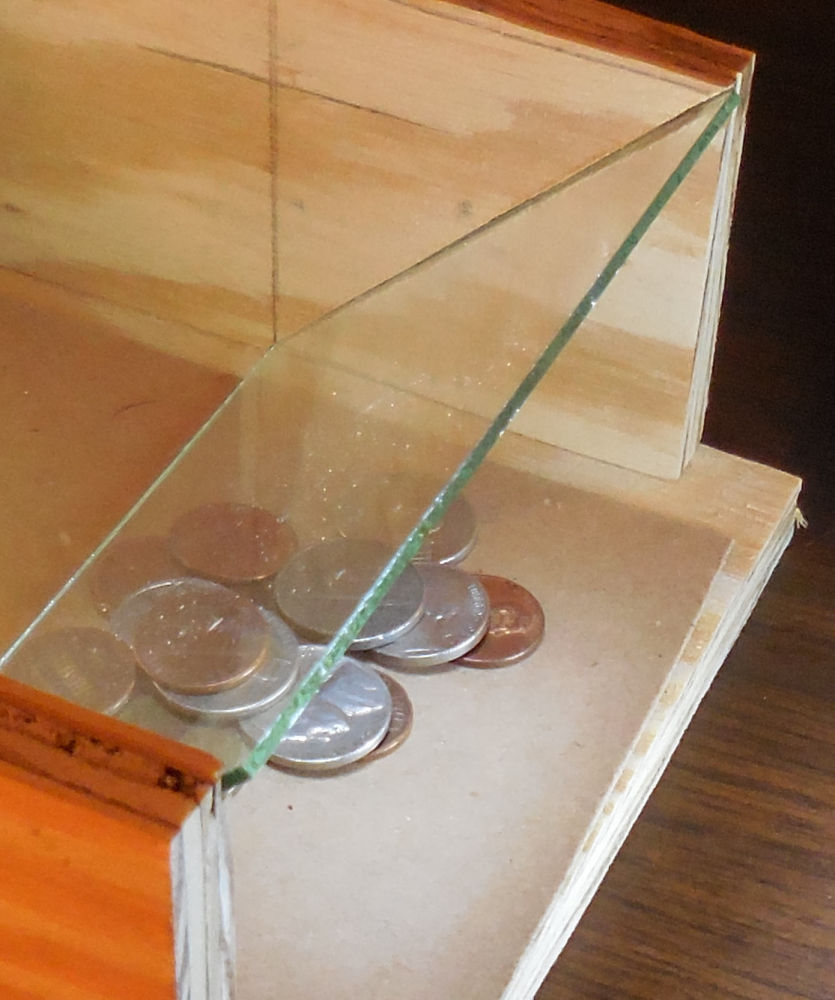 The glass (from a picture frame) is set on a 45 degree angle. A flashlight shines horizontally on the underside of the glass, you shoot from above. I have now lined the interior of the box with a dark cloth for further diffusion. I shot this close-up. 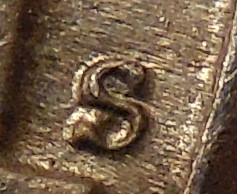 |
|
Pillar of the Community
United States
5964 Posts |
If you lack carpentry skills you can make it from a nickel box. 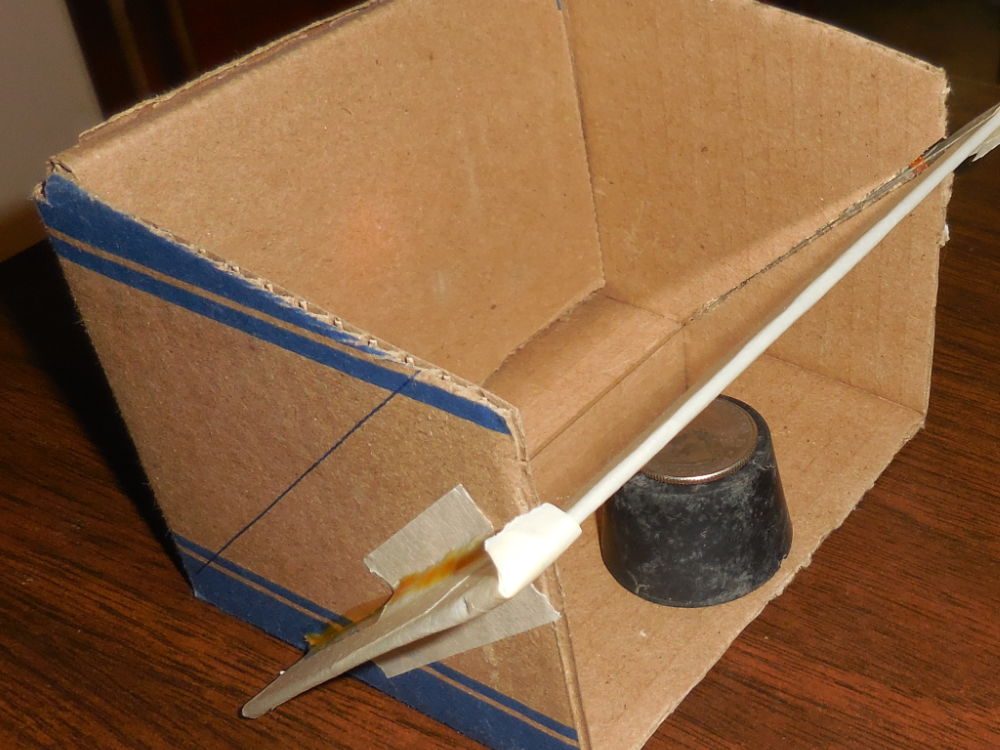 |
|
Pillar of the Community
United States
6478 Posts |
Nice contraption CM. I think I will try that. I usually clip a light to my microscope and put a nickle wrapper as the defuser when taking close up pics.
|
|
Valued Member
United States
110 Posts |
I also read something about lamination errors today is it possible this is a lamination error instead?
Edited by Mikeymus
04/26/2015 12:20 pm
|
|
Bedrock of the Community
United States
62064 Posts |
Is that area raised upwards or incuse? If it were a die chip it would be raised as Blue Solo mentioned. If so it would be raised upward from the gap in the dies interior devices. Some die chips get very large.  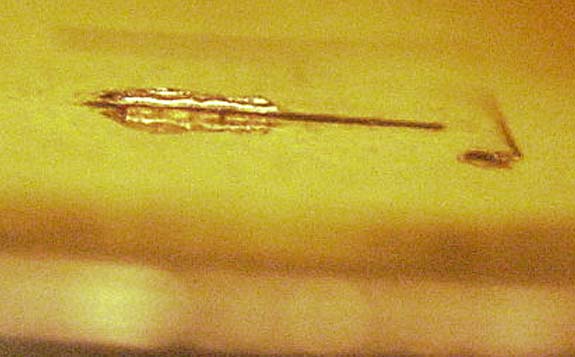 But judging by the color, it might be something else going on with your quarter? Edited by coop
04/26/2015 1:46 pm
|
|
Valued Member
United States
110 Posts |
coop is it also possible this could be a lamination error instead of a die chip.
|
|
Bedrock of the Community
United States
62064 Posts |
If it were, the color would be copper colored if it was a lamination below the silver line. With the dark gray/brown, it might be a stain/damage to the coin if it is incuse?
|
|
Valued Member
United States
110 Posts |
coop as far as I can tell it can be either of the 3 die chip PMD or lamination error. If it was a dent from someone hitting it with something like a low spot surrounding the artifact. And if it was chipped out with say a metal nail or similar device you would have a raised surface like the die chip but the evidence of both would have probably disappeared after almost 30 years of circulation. Though if this was a strike through what object could have caused and isn't the missing area the same color as the 1965 strike through error I posted a couple days ago? |
| |
Replies: 11 / Views: 1,385 |
|







 Posted 04/25/2015 7:52 pm





