| Author |
 Replies: 20 / Views: 2,293 Replies: 20 / Views: 2,293 |
|
Pillar of the Community
Canada
805 Posts |
RPM on 1960D 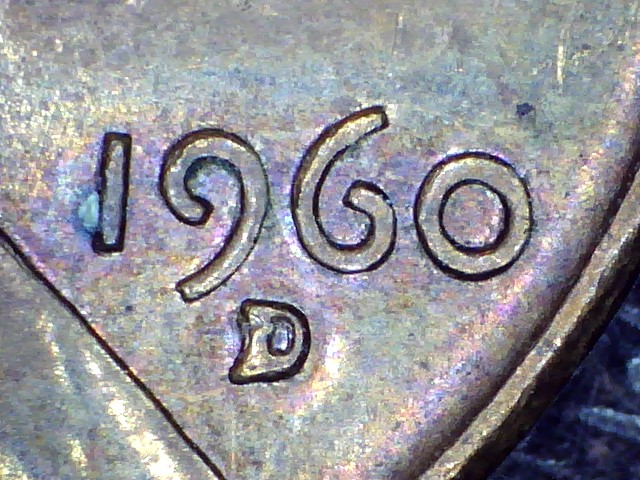 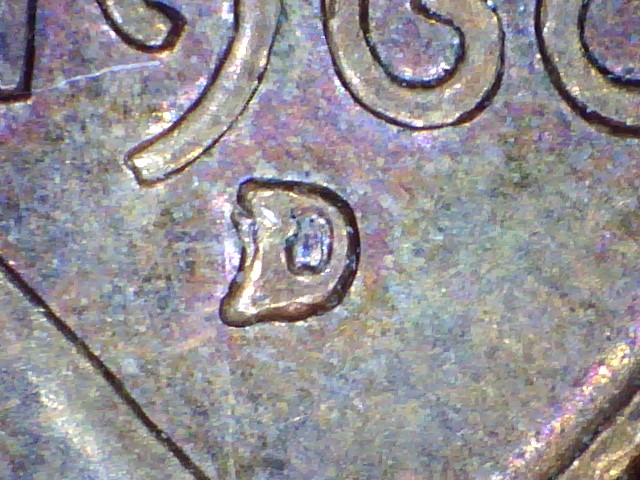 |
|
|
|
Pillar of the Community
United States
6478 Posts |
Nice find! I don't know wich one it is though.
|
|
Bedrock of the Community
United States
62064 Posts |
|
|
Pillar of the Community
 Canada
805 Posts |
Thanks! Being mostly into Canadian coins, this is my first RPM find!  |
|
Bedrock of the Community
United States
62064 Posts |
And a Nice one to find. I've only seen the one I have up for sale when looking through 1960-D RPMs.
|
|
Pillar of the Community
Canada
805 Posts |
Hi, Coop: I've compared this to the "9", but am having some doubts. It seems to match up better with 7 or 38? Except the markers aren't all there. I certainly am no expert in any means on these, but if you could have another look? Hopefully, this is a bit clearer... 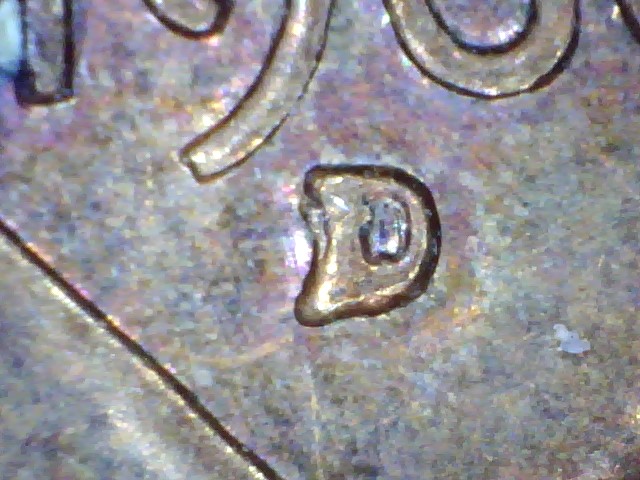 |
|
Pillar of the Community
United States
1781 Posts |
This is Stage A of RPM-004. Later stages actually get stronger - much stronger.
|
|
Pillar of the Community
United States
1781 Posts |
|
|
Pillar of the Community
United States
663 Posts |
Why does the RPM get stronger as it gets into later stages? I always thought it would get weaker as the die became more worn over time. Just curious. :)
|
|
Bedrock of the Community
United States
62064 Posts |
You are correct. It is not 009. It is 1960D-1MM-007. A dead on match for the overlay. Looks like a LDS example.
|
|
Moderator
 United States
23522 Posts |
What numbering system are you using, Ken? It's an extreme frustration, having to ask that.
|
|
Moderator
United States
23522 Posts |
I had that one onscreen at Wexler and had concluded it was a clearer example of that, only Ken's term isn't used there.
How do we rationalize competitive numbering systems? Makes it difficult and frustrating for me to try to teach this stuff.
|
|
Pillar of the Community
United States
1781 Posts |
Dave,
When a number for a US coin is not prefixed by a W (for Wexler) or a C (for Crawford) it's normally implied to be a CONECA number (those numbers currently being assigned by James Wiles). Now with that said, when the confusion started many years ago between the Wexler and CONECA numbers, Wexler starting a new numbering system after he sold his original system to CONECA years earlier, I attmepted to get Wexler and Wiles together to prefix all numbers with "Wexler" and "CONECA". Wexler decided on a W and Wiles decided that "since were were first we didn't need to do anything" so in taking this stance, confusion still reigns today. To make things worse, Kevei Flynn began writing books duplicating the CONECA numbers for what were often different varieties. When I talked to him about the problems this was causing with coins being sold with his numbers, his reply was that anybody reading his books should understand that the numbers he assigns are those that applies to coins in his books. So things are even more so confusing today since only Wexler (and Crawford later) wanted to seriously do what was best for the hobby. Coppercoins of course has their own numbering system that cannot be confused. Bottom line, if I forget and use a number like DDO-002 it is a CONECA number and if it is WDDO-002 it is a Wexler number. But I'll try to remember.
Edited by koinpro
04/27/2015 9:56 pm
|
|
Moderator
United States
23522 Posts |
Ken, I'm just most worried about how to teach this stuff most clearly and efficiently to new collectors. Doesn't matter which system it is, that's not my place to decide. I can tell you it's what's keeping me personally out of Lincolns, though, and of all things numismatic, attribution is only exceeded by photography in my heart.
But not Lincolns. There be monsters.
|
|
Pillar of the Community
United States
1781 Posts |
Agrippa, This is kind of a complex topic that was first advanced by Leroy Van Allan in regard to some Morgan dollar varieties that got stronger in the later stages. The topic was covered again in John Wexler and Tom Miller's, The RPM Book. I'm not sure how to explain it as I forget most of the details but it all makes sense when you read it. Something about metal being kind of folded over when a Mintmark is puched over another and then due to weakness in that area, those folded in areas of the die falling out, revealing more of the RPM. Somebody, correct me it I am wrong. Perhaps the most celebrated RPM where this effect can be seen is on the 1959-D 1c CONECA: RPM-001 FS-501 Tripled D (actually a Quad but not listed that way). I won't even buy these for inventory in Stage 1. The same holds true of the 1961-D/Horizontal/D. Later stages are stronger. |
|
Moderator
United States
23522 Posts |
At least with regard to RPM/OMM strengthening, I've always felt it intuitively to be a function of the violence of the initial punch altering the characteristics of the adjacent metal. The action of the punch creates a tremendous moment of pressure and heat when it impacts. Like a displacive transformation which defeats the tempering of the die, but only in a fairly precise local surrounding area to where the punch impacted. This steel is then more brittle and under the repeated impacts of strikes wears more quickly, strengthening the error without necessarily "smearing" it.
|
| |
Replies: 20 / Views: 2,293 |







 Posted 04/26/2015 04:42 am





