| Author |
 Replies: 21 / Views: 3,035 Replies: 21 / Views: 3,035 |
|
Pillar of the Community
United States
626 Posts |
The picture says it all... 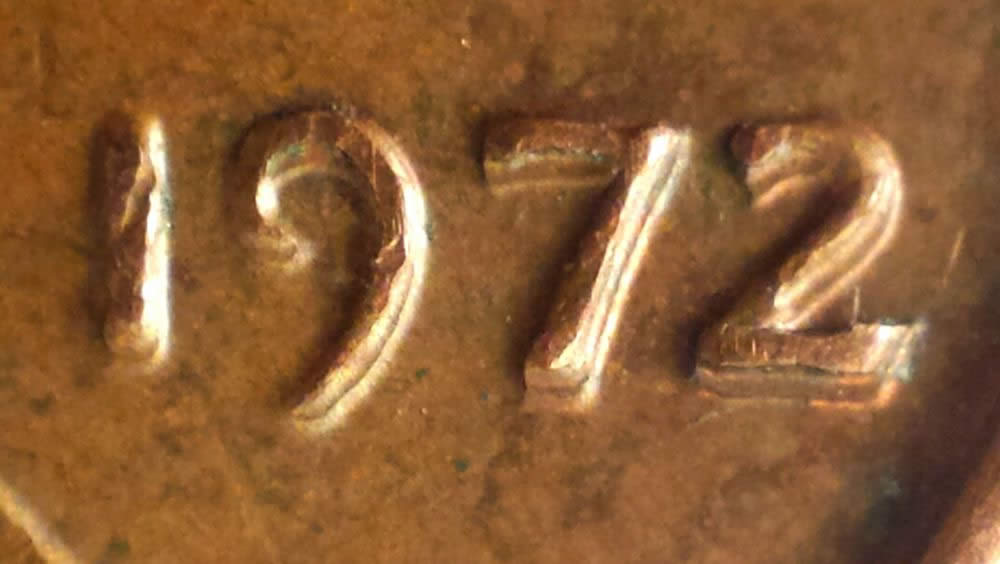 |
|
|
|
CCF Sponsor
United States
702 Posts |
FANTASTIC! Congrats on a great find!
|
|
Pillar of the Community
 United States
626 Posts |
This isn't a true doubled die. Very dramatic Machine Doubling that had me fooled at first glance. This is the second one that I have found like this. The first was about 15-20 years ago, took it to the local dealer and was offered $60. I decided to hold on to it only to later learn what it truly was. |
|
Valued Member
United States
290 Posts |
then what is this called, is it an error or not?
|
|
Moderator
 United States
23522 Posts |
HA! I knew from the title but my heart still skipped a beat when I saw it. This is one of those where I'm prone to wondering if the entire press bounced off the floor when it sneezed this strike.  Quote:
then what is this called, is it an error or not This is Machine Doubling. The term "error" has very specific connotations in numismatics, and this is better referred to as a "mistake." Errors are good in numismatics; mistakes are not. |
|
Pillar of the Community
United States
6478 Posts |
Ahhh man. What an almost cool find. Lol. That is so machine damaged. Probably the worst I have seen.
|
|
Pillar of the Community
Canada
3049 Posts |
Okay.. so I'm still very new to numismatics in general and I haven't done any reading on errors or varieties yet... but if there would be anyone to be so kind as to describe using this picture above how you tell the difference between a doubled die versus Machine Doubling... I would appreciate being enlightened.. |
|
Pillar of the Community
 United States
4618 Posts |
At least it happened in the mint, it's not the dreaded PMD. Still cool... -----Burton 50+ year / Life / Emeritus ANA member (joined 12/1/1973) Life member: Numismatics International, CONECA Member: TNA, FtWCC, NETCC, EveryCountry (online) coin club Owned by three cats and a wife of 40+ years (joined 1983) Author: 3rd Edition of the Sample Slabs book, https://www.sampleslabs.info/ |
|
Pillar of the Community
Canada
2632 Posts |
With a title like that you just have to look..lol. MD happens everyday, some people do collect the more dramatic ones though. As for any coin if you like it keep it, at least till you find a better one.
|
|
Bedrock of the Community
United States
62064 Posts |
Machine Doubling (actually damage to the coins devices) is from a normal die. The machines dies move or hop during the strike. The movement damages the devices during the strike. This happened a lot on the 1968-1972 cents. When compared to a true doubled die, the devices do not have the shelf like (squared devices), but are rounded like the shape of the devices doubled. On a doubled die, the hubbing of the die is doubled (thus the name doubled die). The doubling of the devices are wider/taller in most cases and the more the spread between the hubbing, the more interest is shown. 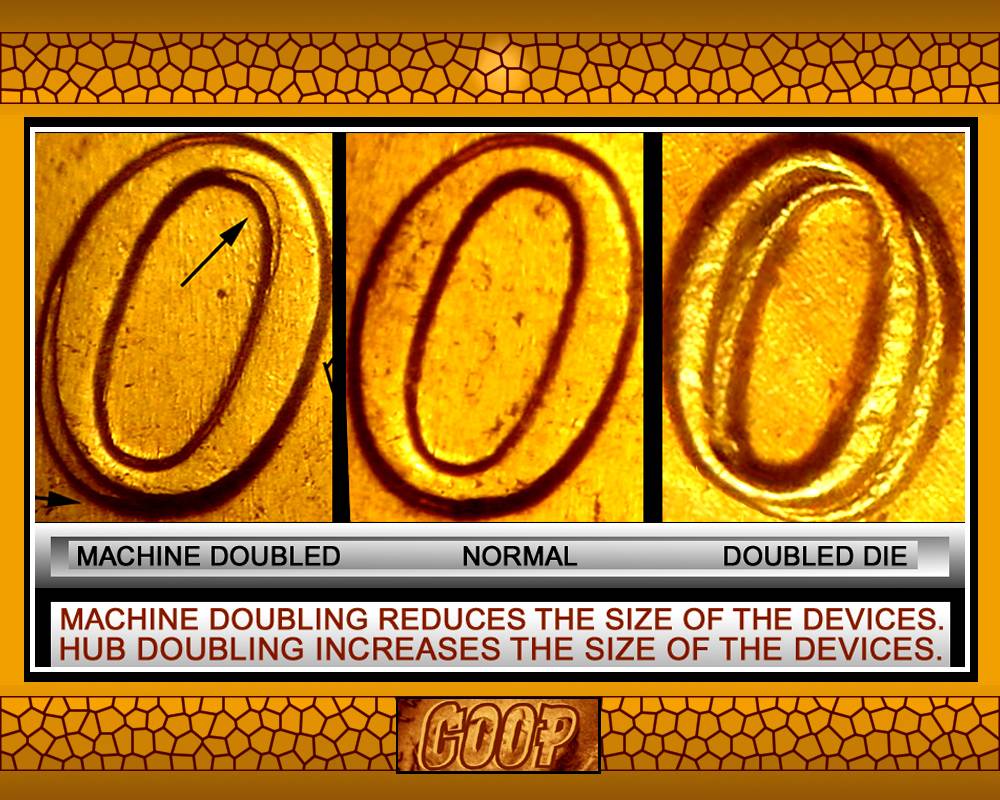 Not on this example. The one on the left is machine damaged. Note how the devices are reduced from a normal strike. That is because the die movement damaged them. The center image is a normal strike. The image of the right show hub doubling on the die. All coins struck with that die will show the same doubling strike after strike. The coin that show machine damage will vary in movement from strike to strike. 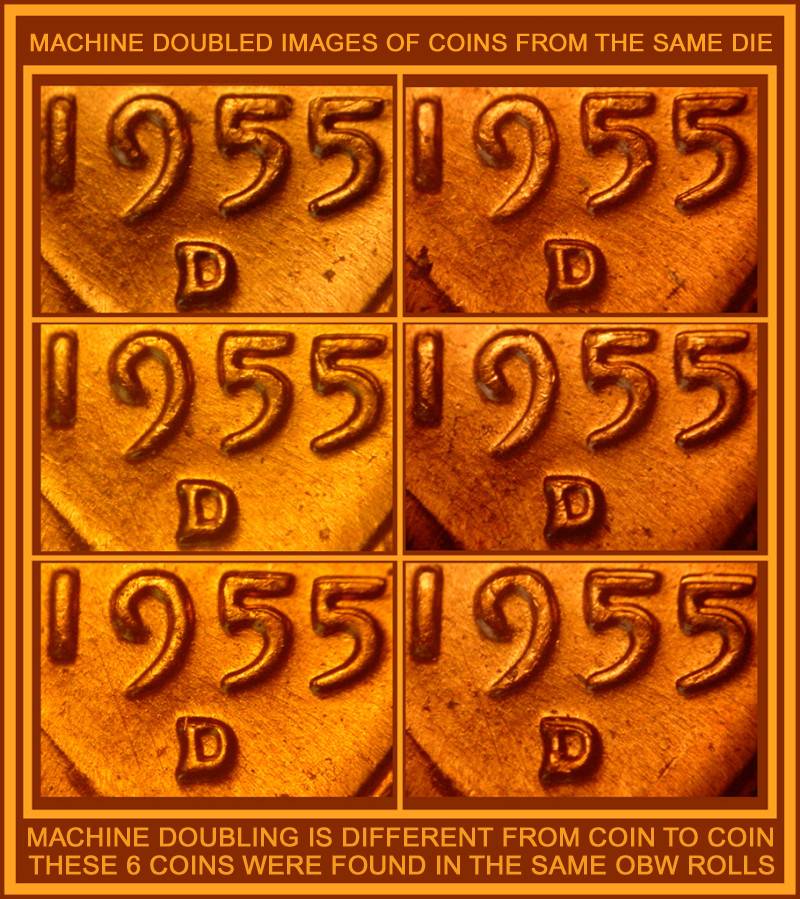 Note the variety of Machine Doubling from strike to strike on these images. These were all found in the same roll and showed a variety of damage from coin to coin. the same machine also created normal coins as well. The Machine Doubling on the profile of the bust is often thought of as hub doubling, but almost always is machine damage to the coins outline of the bust/reverse. Some doubling does occur on the central and close to the edges of the devices:  Not the image of the left. How parts of the interior devices are doubled? Note on the image on the right how the outline of the bust is machine damaged. Squared corners, shelf like, reducing the overall size of the bust. The one on the left is showing hub doubling on some devices. Now recheck your coin. See how the devices are squared, shelf like, reducing the overall size of the date? That is machine damage. (I call it what it is) But on a hub doubled example you see the devices doubled from the die: 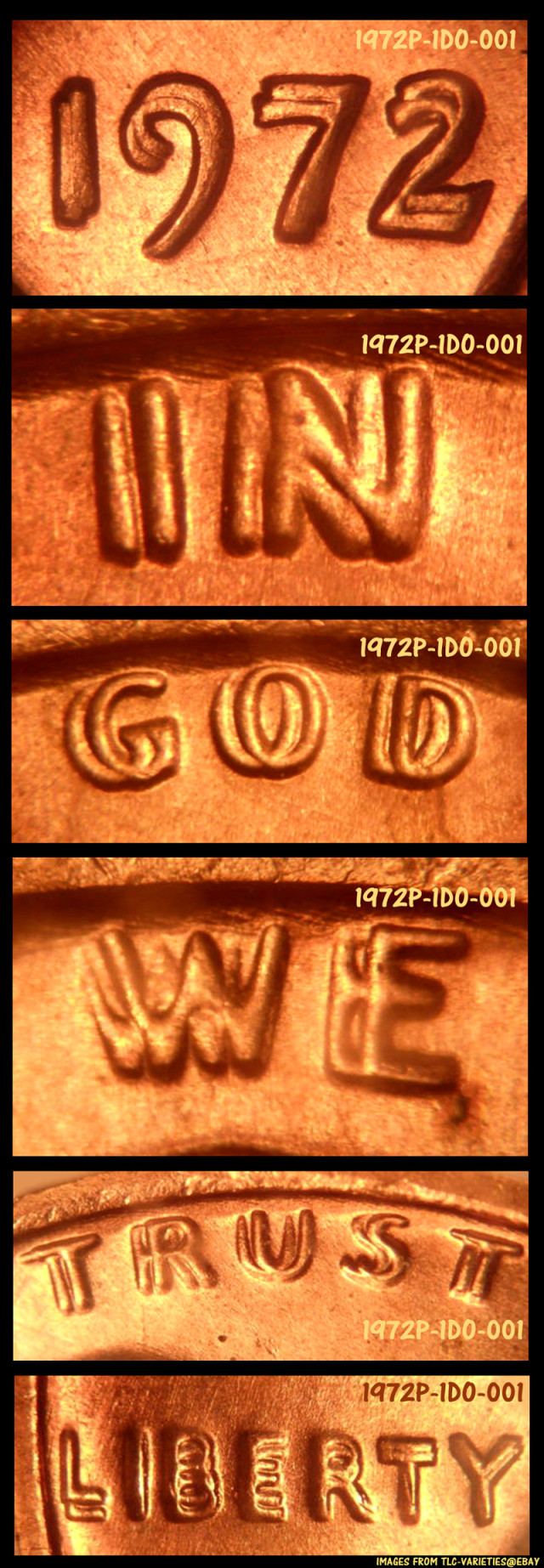 Hope this helps. If you would like an over view of coin collecting, watch the CCF youtube videos on the links below:
|
|
Pillar of the Community
United States
1911 Posts |
Wow very nice lesson Coop! That helps me because at first I didn't get what the thread was saying. I have heard DD and Machine Doubling but now have a better understanding of the difference. :) |
|
Bedrock of the Community
United States
62064 Posts |
|
|
Moderator
United States
195559 Posts |
Quote:
First I was like, ! , then I was like, ....... "So close, yet so far away..."  |
|
Pillar of the Community
United States
4932 Posts |
I nearly [staff edit: let's not go there please] when I pulled a 1969 S (what I thought to be a DDO) from a roll. Turned out it was major MD. |
|
Pillar of the Community
United States
5828 Posts |
|
|
Pillar of the Community
United States
2669 Posts |
Child o' the Wheat, didst thou learneth from thy questions from ago?  You were not an idiot. You just lacked knowledge, and you've been learning ever since  It's the process we all go through, if we understand that (1) we all start knowing absolutely nothing and go up from there if we are willing to learn and (2) even after years of learning or study or asking questions, we will never know everything. That's part of what makes it so fun; I learn something new every day here. |
| |
Replies: 21 / Views: 3,035 |









 Posted 04/29/2015 03:15 am