| Author |
 Replies: 15 / Views: 1,214 Replies: 15 / Views: 1,214 |
|
|
Pillar of the Community
United States
1249 Posts |
|
|
|
|
Pillar of the Community
United States
1781 Posts |
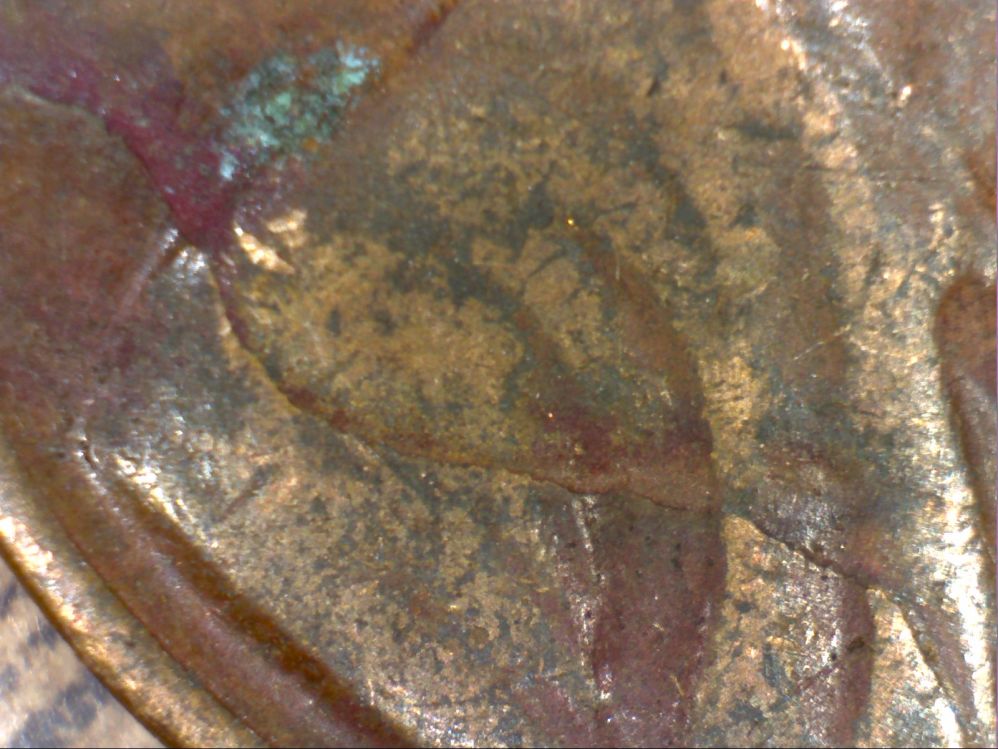
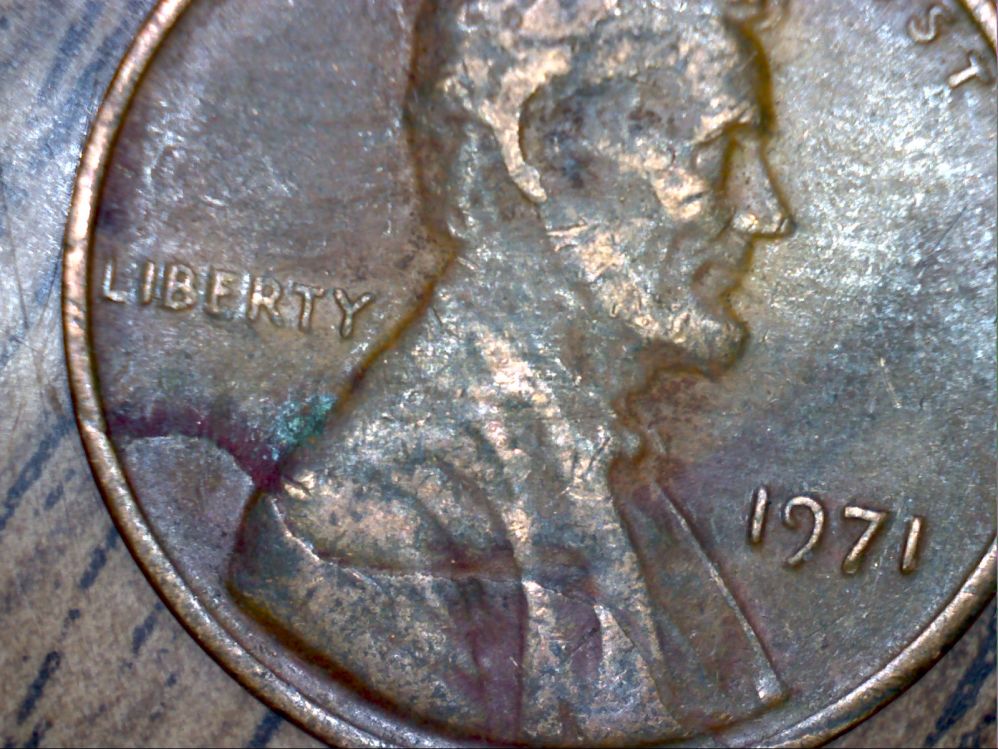
I'd say the coin has seen better days. The encrustation of verdigris all over the coin kind of gives you a hint of its history. Probably settled down in a corrosive environment for some time before being rescued.
|
|
Pillar of the Community
United States
6478 Posts |
Can't tell if it is or if it is a lam.   |
|
Pillar of the Community
 United States
1249 Posts |
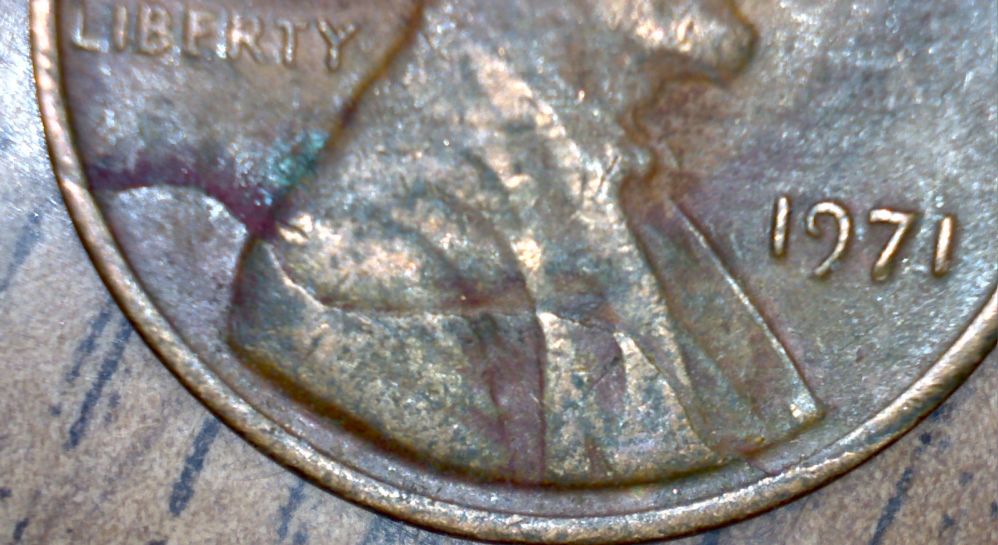
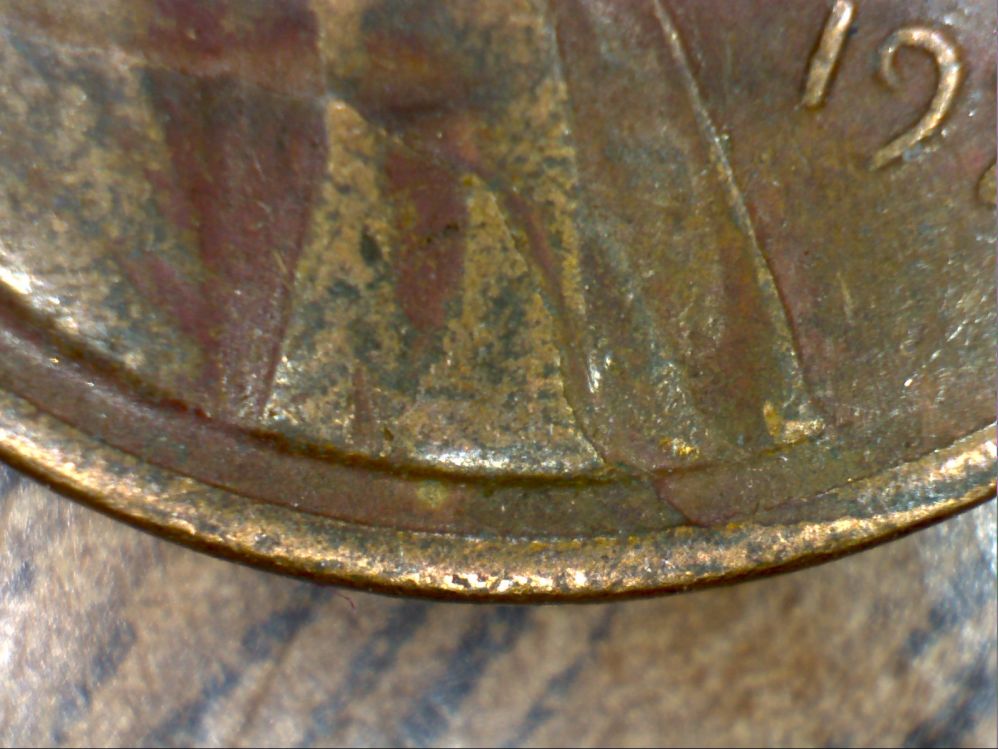
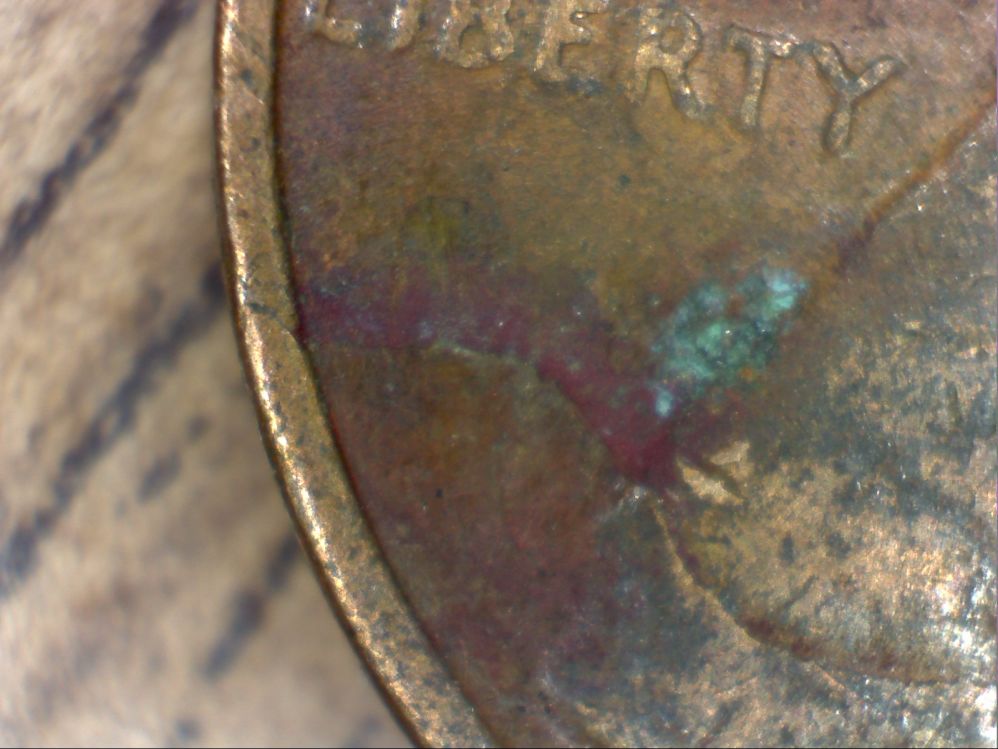
So I'm a little lost is it environmental damage? It definitely has seen better days. To bad it isn't ms65 still but yea is it ED, Lam, Retained? Oh and the bottom section is a little higher than the top half
Edited by tweak800
04/30/2015 01:12 am
|
|
Moderator
 United States
23522 Posts |
The nature of the beast here makes me think it's a sizable lamination. The relief along the edge of the feature isn't consistent with a die crack.
|
|
Pillar of the Community
United States
1781 Posts |
Based on the grade I suppose it matters little what it is. I still think what you see it do to a corrosive environment or some sort.
|
|
Moderator
United States
23522 Posts |
Well, the verdigris and altered surface color is plainly indicative of that corrosive environment, but it was insufficient to make any serious physical alterations in the texture of the surfaces. Aside that "cliff on one side, gentle slope on the other" evidence of a really sizable lamination much larger than the coin itself. I'm having a hard time coming up with a corrosive process that'll create a valley of that magnitude without affecting anything else. At least in my (uneducated) eyes, this one's clear. I'm actually surprised it didn't delaminate when the planchet was punched, and I bet only the strike is holding it together. Honestly, if it were my coin I'd be having a go at manually delaminating it, after exhaustive photographic study of course. Think they'd slab it if you sent both pieces?  |
|
Pillar of the Community
United States
1781 Posts |
SuperDave,
I hear what you're saying but I feel the corrosion and a lamination together are all to coincidental. Thus, I'd have to guess this coin may have been thrown in a spot like a shelf over a washing machine where detergent and other solvents are stored and pulled off the shelf over and over again often dragging some liquid with them. I can envision a strand of yarn soaked in a corrosive being under or over this coin working away at the section that appears to be a lamination. I can also see the coin in a wet corrosive environment sitting over a crack in the floor (or what have you) where liquid corrosives can settle causing an effect like this. I can also see a coin falling into a sink trap where a strand of thread (or again yarn from a sweater) gets stuck against the coin for years. There are just too many things that could concentrate a corrosive up against a coin like this in one area where the rest of the coin is allowed to at least partially dry more often. Just my opinion, but I see this as most likely a sink-trap-coin. LOL
|
|
Pillar of the Community
United States
1781 Posts |
It would be VERY helpful to see the reverse of this coin.
|
|
Pillar of the Community
United States
1781 Posts |
I have an almost full box of altered coins that I got from a CONECA member for educational purposes. I'll see if anything like this turns up.
|
|
Moderator
United States
23522 Posts |
I'm a rookie in this arena, going solely on deductive reasoning and not experience. Sufficient optics would probably clarify things completely, but in the absence of such experience trumps.  |
|
Pillar of the Community
United States
1249 Posts |
I think I se now how this could point to E.D. oh well win some lose some. Better educated now 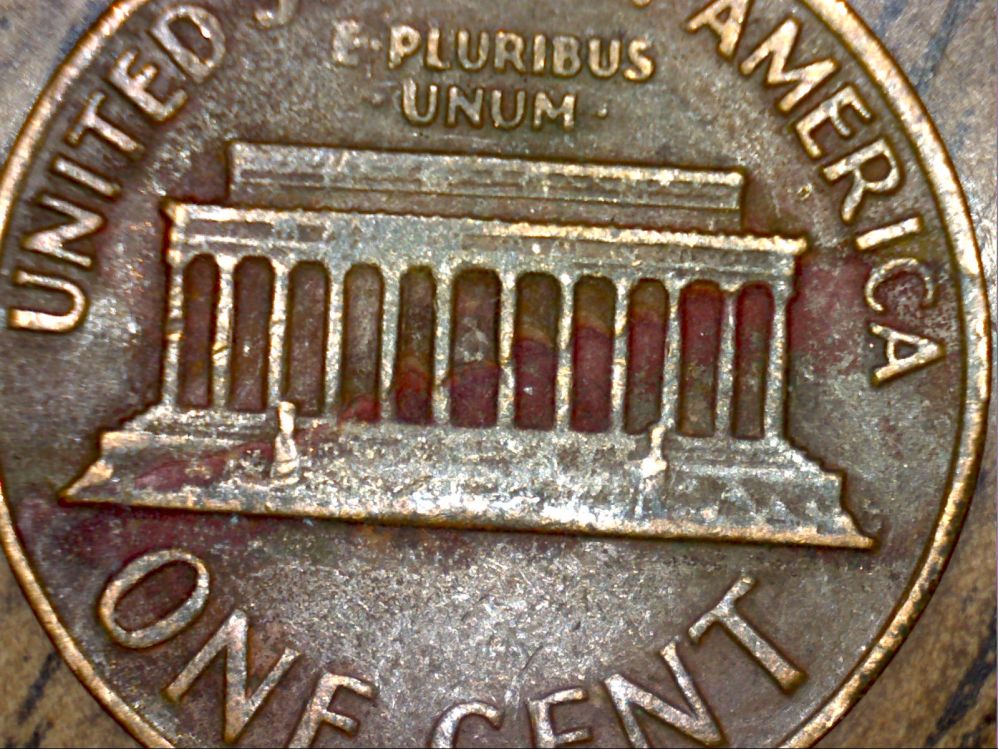 |
|
Moderator
United States
23522 Posts |
The most important part of a reverse image of this coin would be the part exactly opposite what we're arguing aboutdiscussing on the obverse (  ). It's not really visible in your images. |
|
Pillar of the Community
United States
1781 Posts |
SuperDave, You could be entirely correct. Mine is just my opinion based on at one time being a janitor to my wife's (wives') laundry rooms, cleaning out sink traps, etc. LOL! The reverse has a line that runs diagonally accross the Memorial building. This suggests the coin was stuck up against or between something. I'm still going to go with my wife's sink trap in the laundry room. LOL. With all this said, there could have been a subsurface lamination that the corrosive brought out like "Date Restorer" on Buffalo nickels. Who knows? Good discussion though I don't think we have a solid answer that is 100%. |
|
Moderator
United States
23522 Posts |
100% not being possible sometimes is a fact of life in numismatics and the bane of my existence. Not knowing "why" offends me on a fundamental level. Think I picked the wrong hobby.  |
|
Valued Member
United States
290 Posts |
|
| |
Replies: 15 / Views: 1,214 |
|









 Posted 04/29/2015 11:03 pm





