| Author |
 Replies: 59 / Views: 5,028 Replies: 59 / Views: 5,028 |
|
|
|
New Member
 United States
36 Posts |
hehe people have been cruel to coins for a long time I guess. but they fooled me (and probably my forefather too who collected it) :) As a consolation prize can you guys tell me what you think of one more? I'm rather sure this has the original (albeit ugly to me) surfaces. Thanks so much you guys are cool. dan 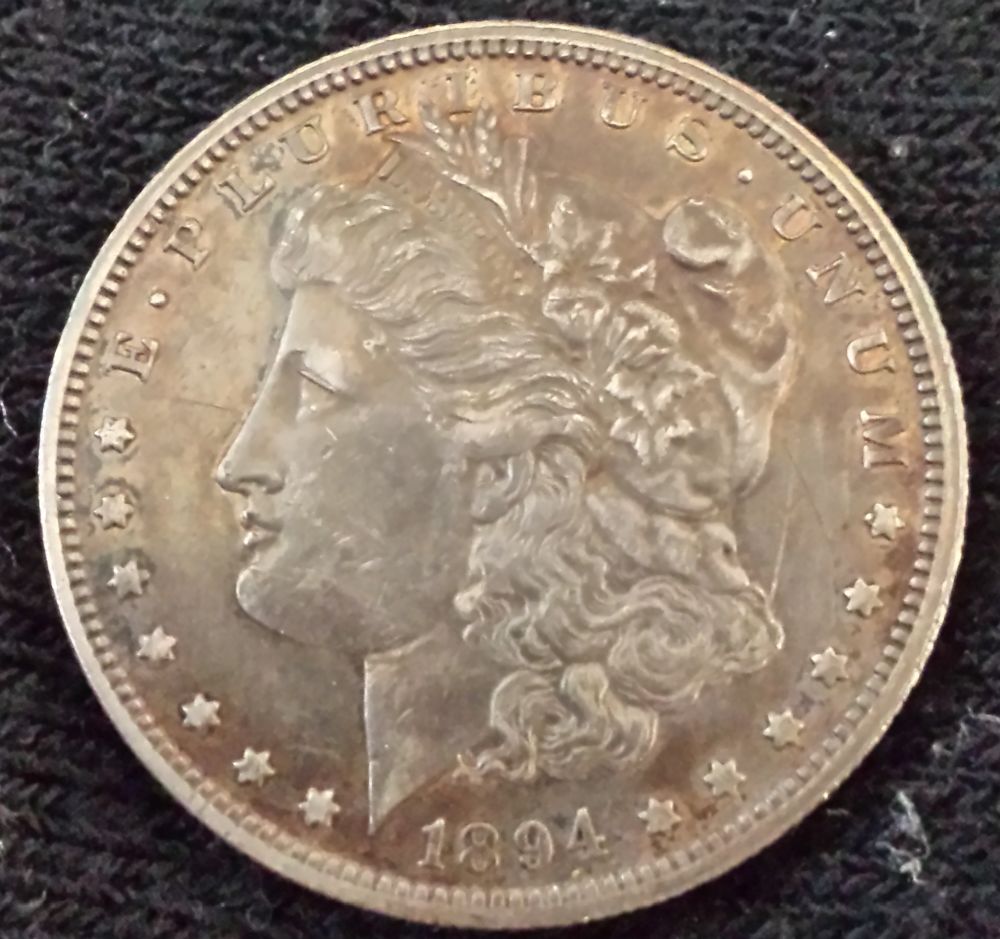 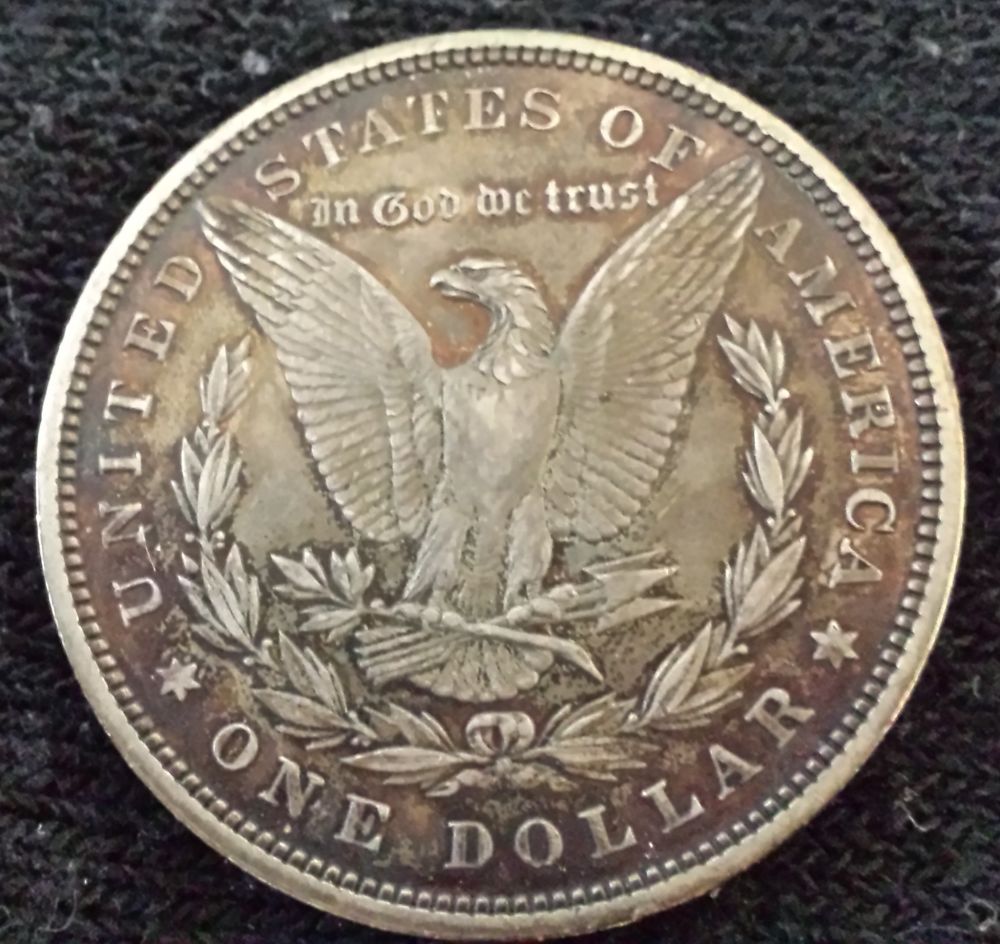 In real life it looks really really dark, my camera is very kind to coins it seems (but not to people) |
|
Pillar of the Community
United States
7377 Posts |
Not sure if the reverse was cleaned a bit, but the surface looks original. AU?
|
|
New Member
United States
36 Posts |
do you think that it would be downgraded because of how dark it is? I mean it is Dark, like almost black when I see it in person. I know this may be controversial, but I saw pcgs has an "approved restoration" process. Would it be advisable to do that to this or are they really damaging it too? If I saw those pictures I would think it doesn't need it, but the picture doesn't do it enough injustice. I am assembling a nearly complete and generally nice looking Morgan dollars and this one just stands out as "I'm too tarnished". Just like that other one screamed "i look too nice" thanks for being helpful again |
|
New Member
United States
36 Posts |
also since the consensus is that my 1921 was polished, check this out. This detail from it would be a good reference of a polished surface I and others who have not encountered one can learn from. Next time I see a very shiny one I will check if I see the same like microscopic pitting effect, maybe that is indicative of polish. 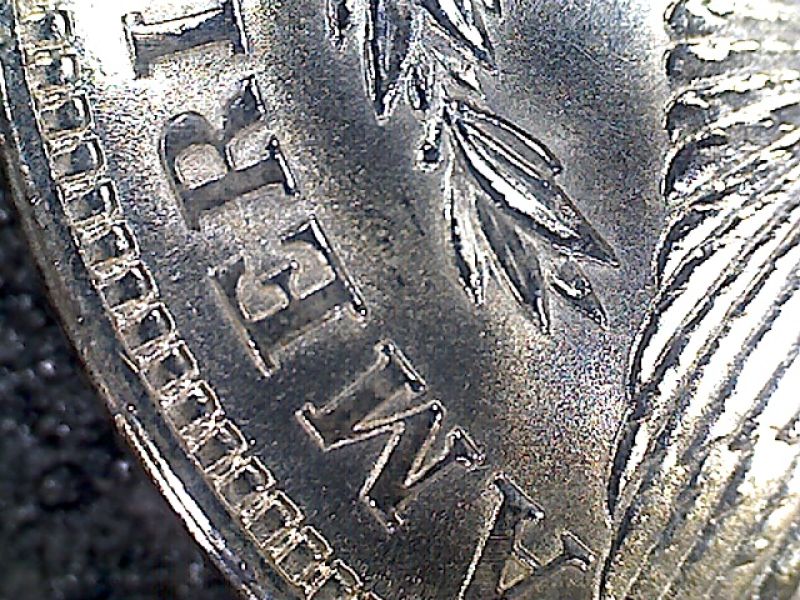 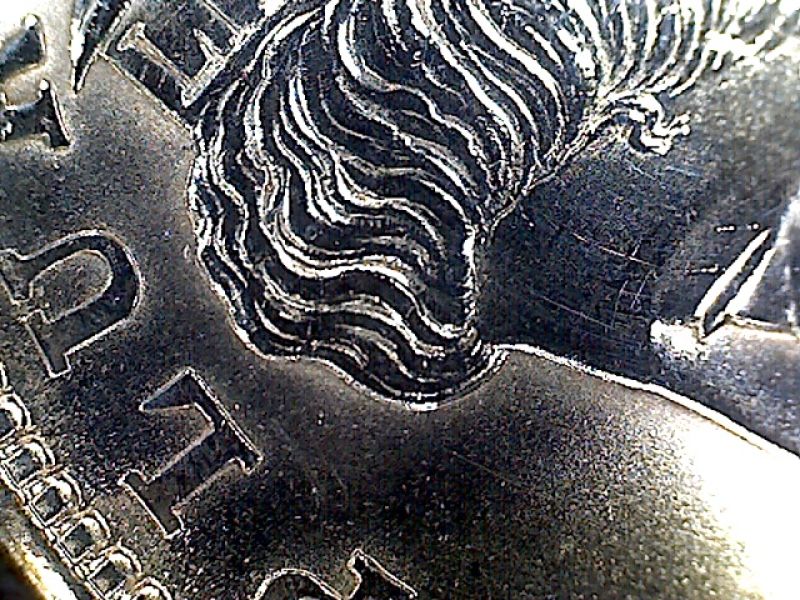 |
|
Pillar of the Community
United States
7731 Posts |
I'd have the 94 slabbed "as is" --- originality is hard to come by nowadays!
|
|
Moderator
 United States
23522 Posts |
It's a pleasure to deal with a person having your attitude, scout81.  In about an hour when I get home, I'm going to repay your niceness with a *book* of a post which will hopefully clear this up for you and others reading. |
|
New Member
United States
36 Posts |
thanks for the kind words super dave. I have always loved coins but have only ever been like a "pick them out of my change" guy. The thrill of that hunt or like going through rolls is so fun and exciting to me. but more recently I came into a lot of coins and a lot of good ones. I had only seen pretty worn Morgan dollars in person, but now I have a bunch that are in amazing shape. The details are perfect and the surfaces are more like ones I see from other posts. I went through about 200 morgans or so and I saw the 1894 and I know that is a rare date, so I pulled it out of storage to get graded. Then- I saw that 1921 and was in love because it was so different than the others (but now I know why) so I pulled that one out too. I am somewhat lost in the woods when it comes to high grades, old time cleaning techniques and whatnot. I have read and seen example photos of course of what details are present to grade, but there is so much more to consider (ie a coin with all details could have been destroyed by polish) The books I saw never went into that, but it is amazing to see what other people with more knowledge see and post and point out. I have been binge reading this forum and could barely sleep last night I was so excited. I have said this before but all I can say is thank you so much :) |
|
New Member
United States
36 Posts |
oh and westernsky I am glad you think I should get it slabbed 'as is' because even though the dark color is distracting it has really grown on me  |
|
Moderator
United States
23522 Posts |
OK. I'll use the 1921 as my reference for the below.
The key to telling between luster/PL surfaces and polishing is the contrast between fields and devices. It can be generalized - with very few exceptions - that the closer to this the fields look like, the less like this the devices have to look. That is a totally unnatural finish for the devices, the only exceptions being some dates (early 1900's come to mind) where the Master dies were tired out and their surfaces pretty much consistent through the whole die. They therefore impart a consistent surface to the coin where devices don't look much different than fields. But those won't be this "bright."
Luster and/or reflectivity is created by microscopic irregularities in the surface of the coin. Prooflike surfaces having been freshly polished - which actually moves metal around, but only the softer molecules since at that tiny level the composition of the steel is not homogenous, only on average - show reflectivity like this. Once the weaker metal of the polished die surface wears away, it reverts to what we call "luster," as do original dies which weren't polished. That granular surface is what the working hub applies to the die, and causes "cartwheel."
Now, let's talk about how this 1921 got to where it was. You can achieve this by hand, but it's a ton of work and it was more likely caused by a polishing wheel, perhaps a Dremel-sized one. It's been buffed just like a car finish. When this buffing has been so vicious that it actually visibly smears metal around - it doesn't have to be that vicious to get this-polished a look - we refer to it as "whizzed." Let's go back for a moment to my earlier mention of the inconsistency of the surface of the steel die at a tiny level - you're looking at it in your detail images. To a lesser extent - it's been exaggerated here by the buffing - you'll see that more or less all Morgans and indeed all coins. Here, that stuff has been flattened, moved around and exaggerated.
I know you like the finish - it's undeniably pretty - but it needs to become abhorrent to you because the coin is destroyed by it. It's a lump of silver now, no longer history in any much more sense than a written book is history.
|
|
New Member
United States
36 Posts |
so really what I called microscopic pitting isn't indicative of the polish, it is an impression of the die. but if it had been struck nice enough to have that shiny a background it would have very much sharper details. Like in a nutshell? You can see I'm not afraid to ask dumb questions but i'll try to one-up myself. What is dipping and how do you tell? Is it the same concept - consistency of the surface matching the devices? I have a total appreciation of the unaltered surface found in untreated silver dollars. Like I say I have the lucky problem of having a large amount to look through. The only reason this one will never be a lump to me is now it taught me a good lesson. I'm not going to get it graded but I will secretly take it out and feast my eyes on how shiny silver can be once in a while  |
|
Moderator
United States
23522 Posts |
Now, on to the 1894. Quote:
I know this may be controversial, but I saw PCGS has an "approved restoration" process. Would it be advisable to do that to this or are they really damaging it too? They wouldn't be doing this if the hobby didn't endorse it. The dirty secret about "conservation" is if you can fool a TPG and/or a series expert with the quality of the work, it didn't happen. The result is what counts, not the road it took to get there. So, submitting a coin for "official" conservation is an acceptable part of what we consider "appropriate" numismatics. But you don't do it for circulated coins except in extreme circumstances. Like, it's so corroded as to make authentication difficult; the victim of an active corrosive process like PVC plasticizer infection which has to be arrested before it inevitably damages the coin; one so dirty that even cleaning would help the look (this is a rare case); things like that. This service is primarily for Mint State coins. Your 1894 has surfaces I'd consider suspect. See the dotted look on the lower reverse? That kinda hints at a failed attempt to clean real dark stuff off it. All the same, I'm not coming down firmly because the pics aren't sufficiently clear and there's a chance it would be deemed natural anyway. That's another point - evaluating coins and evaluating coins from images are two different animals, and not all of the inherent skills are even the same. A good grader learning to grade from images will consistently grade a couple points low. But, what you have here has a very good shot at AU, even if that's a Details grade. That makes it a rather pricey little piece of silver in any event. :-) Get it into a TPG slab with AU Details, yo're still looking at well north of $500. |
|
Moderator
United States
23522 Posts |
Quote:
What is dipping and how do you tell? Dipping is stripping the surfaces of the coin with acid. Literally. The usual suspect is a compound sold to the hobby called E-Zest, a thiourea-based liquid. Done right, you cannot tell it's been done. You can only do it to Mint State coins because a circulated coin which has been dipped looks far too "clean." It's obvious to an experienced eye. But....and this is a very big but: The lustrous surfaces of a coin will only tolerate a certain number of seconds in this stuff. No two coins will tolerate the same number of seconds (we'll call it a maximum of 10 seconds in a "best case"), and you can never know how many of those seconds have been used up by a previous owner as it's cumulative. Once you exceed that time, the surfaces are forever dull and lifeless and everyone will know what's been done. I am very much trying to scare you away from ever attempting it. Yes, I've done it and I will probably do it again, but it's a calculated risk for anyone and I won't attempt it unless I'm willing to throw that investment straight out the window if I calculated wrong. And before deciding I look at the surfaces under microscopic magnification to see if I can glean a hint as to the coin's past. Sometimes I can, sometimes not. |
|
New Member
United States
36 Posts |
thanks, I am happy to even have that 1894 dollar because that would be a harder hole in my collection to fill on my budget. by the way I didn't know what TPG stood for so I clicked on it, it led me to the glossary - and now I have something also amazing to read. I can trust this place to learn from. I see so much on the internet that is not really meant to teach collectors it is more skewed to sell things to collectors. Thanks for taking the time to answer my questions. It will be a long time before I can get back to my newly acquired coin stash but I wish I had more here to share with you guys, I can learn a lot and know I am dealing with honest enthuisiastic and in all senses True numismatists. dan |
|
Moderator
United States
23522 Posts |
Unlike any other competing forum, we specifically chose the mission of catering to and developing new collectors. It's why we hold to such a strict ruleset regarding posting language and such - a large percentage of our membership is young. Like we say in the Rules, if you wouldn't want your 8-year-old reading it, it doesn't belong here. This place isn't for everybody. And like I say personally, you should be either learning or teaching if you're a member here.  |
|
Pillar of the Community
United States
7390 Posts |
Scout, I must say I am a little impressed at how intelligent your thought prosseses are with such a naive numismatic mind. You remind me a little of myself. Ask ANY question you like without hesitation. Stick around and your knowledge will grow exponentially in very short order.
|
| |
Replies: 59 / Views: 5,028 |







 First Page


 Posted 05/03/2015 2:03 pm





