| Author |
 Replies: 12 / Views: 3,360 Replies: 12 / Views: 3,360 |
|
|
Pillar of the Community
United States
3362 Posts |
What is this? Could it be a rim Cud? I am thinking that it may be just extra metal pressed on the rim because of its irregular shape. I know that rim Cuds do not necessarily cross over the entire rim...and I do not understand where the extra metal - if that is what it is, might have originated? 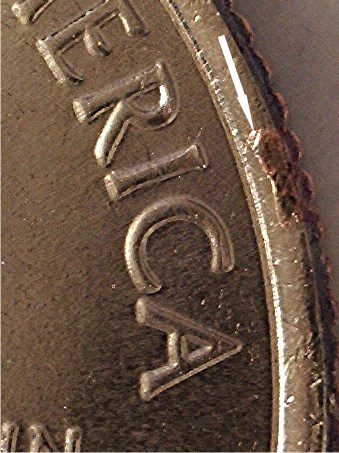 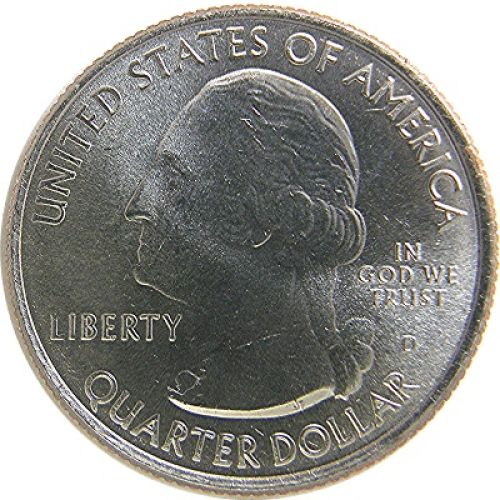 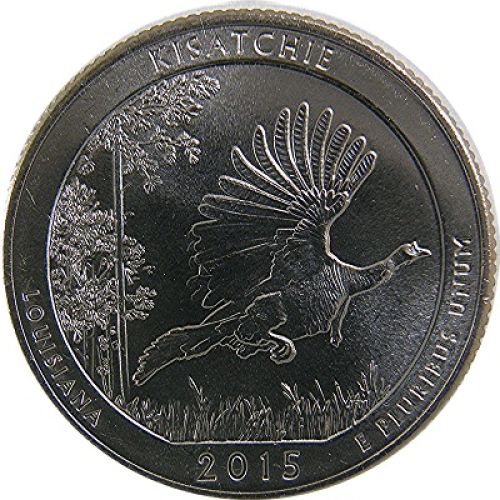 |
|
|
|
Moderator
 United States
56855 Posts |
Not a rim Cud. John1  |
|
Pillar of the Community
 United States
3362 Posts |
It must be extra metal - I just found another with the metal in 2 places, slightly different than the first. So where does it originate? 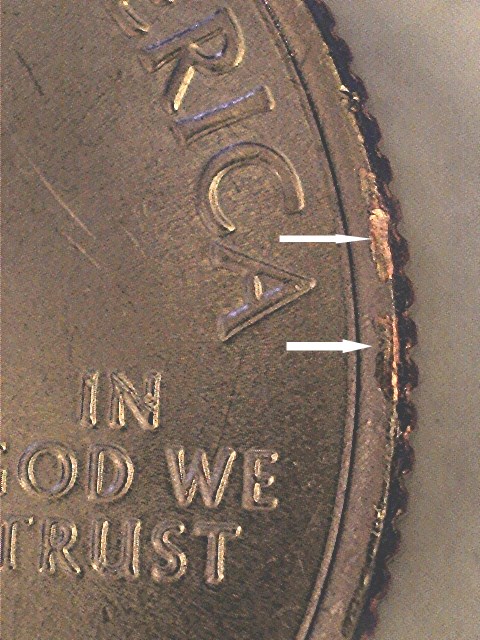 |
|
Pillar of the Community
United States
1249 Posts |
|
|
Pillar of the Community
United States
1781 Posts |
|
|
Pillar of the Community
United States
3362 Posts |
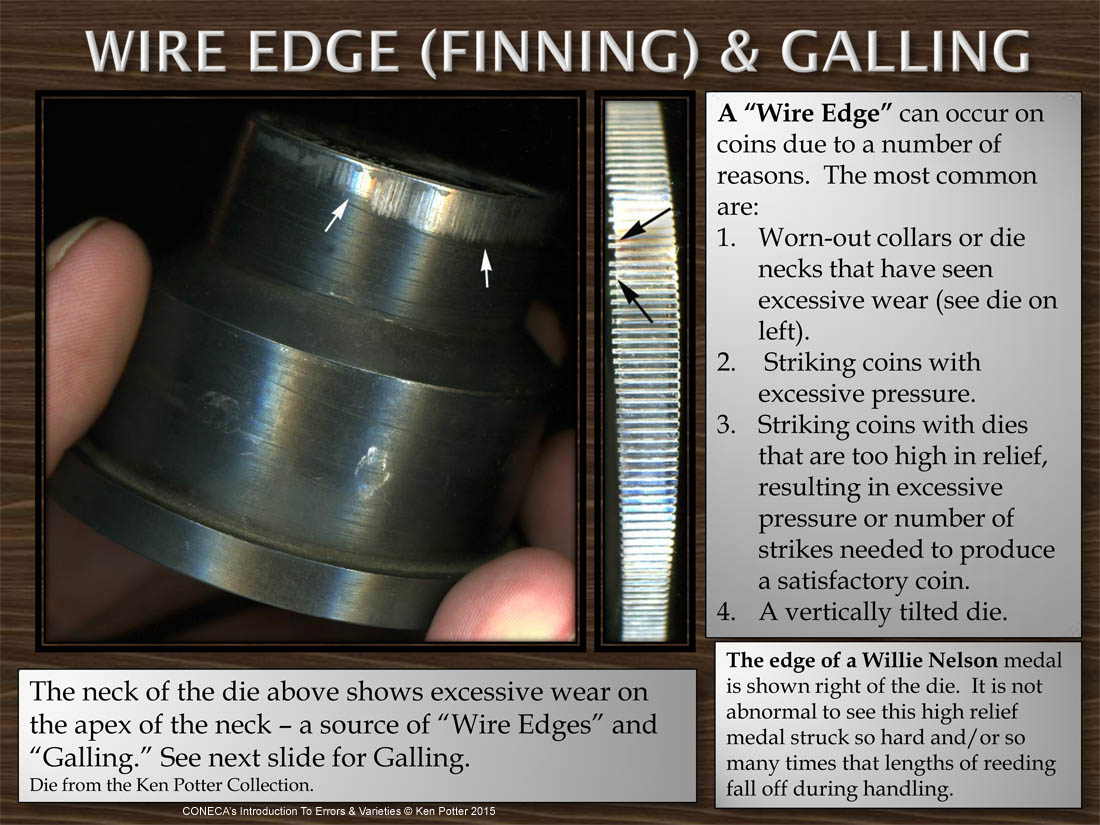
Thanks koinpro - so it appears that this extra metal most likely comes from excess lengths of reeding which fall off. That makes sense to me.  |
|
Pillar of the Community
United States
1781 Posts |
Pete2226,
That's correct. :)
|
|
Bedrock of the Community
United States
62064 Posts |
From what I can see it looks like a bit of the rim cladding has chipped off showing the copper layer underneath. If so it is just coin damage.
|
|
Pillar of the Community
United States
3362 Posts |
Quote:
it looks like a bit of the rim cladding has chipped off showing the copper layer underneath The areas in question are raised. They are, indeed, more copper color than the rest of the quarter. |
|
Pillar of the Community
United States
1781 Posts |
Normally, the copper gets pulled up with the finning. This is just folded down after the strike during ejection into a tub with many other coins, counting, stacking, etc. Not really post-mint damage as it can usually be knocked off pulling up and flicking it away with a fingernail. I've cut myself on ones that sometimes come in on my medallions that I have struck, since they are processed as proofs, and put in slotted tubes where there is no chance for the finning to be flattened to the rim. If this is as Coop says it might be, metal that has been exposed by a piece of the rim being knocked off after the strike, then it is PMD. If it's being found on more than one coin from the group and they are from the same dies then it is most likely, Finning. Pete2226, do you have another example or two from the roll that you can shoot? Edited by koinpro
05/21/2015 11:52 am
|
|
Pillar of the Community
United States
3362 Posts |
Quote:
it can usually be knocked off pulling up and flicking it away with a fingernail. These areas will not allow themselves to be pulled off like that. |
|
Pillar of the Community
United States
1781 Posts |
Then they could be planchet burrs. Are you finding them on both the obverse and reverse of the coins in that roll? If it was a series of very thin burrs if could look something like that but I can't be sure from your images. Is there a border around the copper flecks? Below is what happens where you get much larger cud-like rim burrs. Yours does not look like this but see if there are borders like on the nickel.  Edited by koinpro
05/21/2015 9:03 pm
|
|
Pillar of the Community
United States
3362 Posts |
Quote:
Then they could be planchet burrs. Are you finding them on both the obverse and reverse of the coins in that roll?
If it was a series of very thin burrs if could look something like that but I can't be sure from your images.
Is there a border around the copper flecks?
No border - I don't think they are burrs. Thanks for mentioning that, though - I had not heard of those. I really think this is nothing more than some extra metal pressed into the rim - most likely from finning or reed surplus. |
| |
Replies: 12 / Views: 3,360 |
|





 Posted 05/20/2015 3:54 pm