| Author |
 Replies: 12 / Views: 1,451 Replies: 12 / Views: 1,451 |
|
|
Pillar of the Community
Australia
1006 Posts |
In my searches for staters I came across the following two coins and was wondering what has caused the colour difference in the following two coins. It is not due to differing pictures as both were photographed by the same dealer in the same way. Could anyone comment on how or why this has occurred? 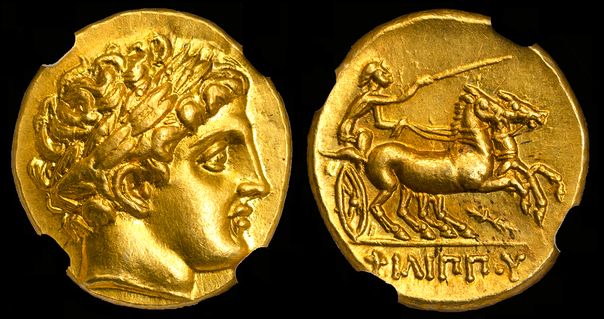 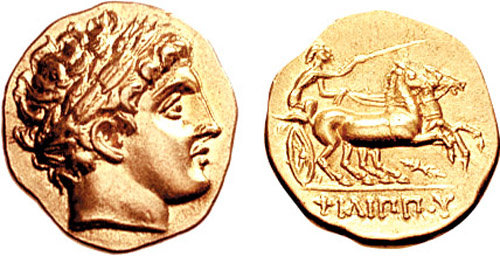 On a side note this is probably a good example of differing qualities at the same price level with the oddly toned one the more premium option. |
|
|
|
Valued Member
United Kingdom
130 Posts |
I'd imagine the amount of impurities in the gold,ie copper,I had two Q.staters that were totally different colour.
|
|
Pillar of the Community
 Australia
1006 Posts |
That was what I was thinking in this case it gives me the feeling of silver impurities (grey toned silver?) but in the other thread about staters that I posted one person said Macedonian Staters are rather pure in content so I was second guessing myself?
|
|
Pillar of the Community
1121 Posts |
I wouldn't be in a hurry to say that the dealer has photographed both coins in a similar way because if you compare the colours of the 'fingers' on both slabs there is a significant difference. This could be different coloured slabs (unlikely), or different lighting conditions (likely). (Even different time of day, or time of year.)
In any event, I have almost as many different 'coloured' gold pieces as I have different pieces of gold.
(It is easier to find two silver coins the same colour than to find two gold coins the same colour.)
|
|
Pillar of the Community
United States
5010 Posts |
i think TC is correct.
i know I can take two pictures of the same coin under similar (or even the same)conditions and have them look pretty darn different.
|
|
Pillar of the Community
United States
3495 Posts |
From what I have read on the subject ancient gold coins were remarkably pure. Something on the order of 99% pure. That compares with modern standards of 90% & 92.5% for gold coinage. At 1% impurities any color differences would be all but undetectable.
Screaming yellow is the standard color.
|
|
Pillar of the Community
1121 Posts |
Thanks, Chris. Same thing happened to you, did it? (I didn't get into 'exposure settings'.)
Following FVRIVS RVFVS' comments, is there any question about authenticity on the first coin?
Edited by Topcat7
05/26/2015 8:07 pm
|
|
Pillar of the Community
Australia
1006 Posts |
|
|
Pillar of the Community
United States
513 Posts |
Looking at the two the second is either under brighter light or exposed longer. Either could impact the way the image looks. Most gold coins I've seen (not a ton) look closer to the second one so I would expect the first to have the biggest gap between appearance and picture. Which is unfortunate because I prefer the subdued gold color, but I like silver even better so many would likely disagree.
|
|
Pillar of the Community
1121 Posts |
I went to the seller's site and here is his photo of the coin in the slab, and his photo of the slab with the coin in it. (i.e. both photos are his and of the same coin), and yet there is a significant difference. Can we therefore be concerned about the difference in the colour of the gold in different coins? (Clearly same coin = same colour, but photo techniques inadvertently manipulate the colour.) Both photos are his, and are untouched by me. 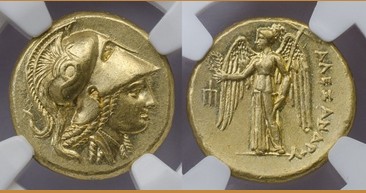 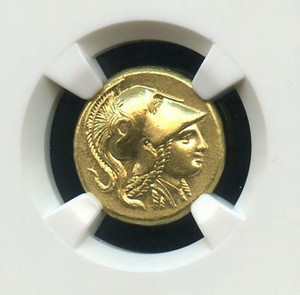 Edited by Topcat7
05/27/2015 02:48 am
|
|
Pillar of the Community
Australia
1006 Posts |
Thank you everyone for your help I greatly appreciate it and would appreciate if anyone can help improve my knowledge of ancients in this thread https://goccf.com/t/230805Thanks everyone for your time and effort in helping me. Make no mistake it is greatly appreciated. |
|
Pillar of the Community
United Kingdom
856 Posts |
There's a common misapprehension that gold doesn't tone over time like silver or other metals. But that's not the case. There's a good range of colours observable in mediaeval gold coins that have been in collections or museums for a long time.
And any impurities or alloying of gold can cause small degrees of difference from a bright yellow, through traditional 'gold' to a reddish tone.
This means that, in addition to the variation you get with photography, really the only way to judge is to see a coin 'in the hand'.
.
|
|
Valued Member
United States
61 Posts |
Believe me, it has everything to do with lighting and post-processing.
Part of it has to do with your own eyes. The "true" color of gold is relative to what light it's viewed under. Your brain knows how to smooth it over so that it's all "gold" but the camera delivers an image after taking into account a bunch of variables. Color temperature of the light, the background illumination, color profiles, exposure, etc... Basically, you really can make a gold coin look any color of the rainbow!
Ras
|
| |
Replies: 12 / Views: 1,451 |
|










 Posted 05/26/2015 05:32 am


