| Author |
 Replies: 20 / Views: 3,506 Replies: 20 / Views: 3,506 |
|
Valued Member
Canada
444 Posts |
|
|
|
|
Pillar of the Community
United States
4963 Posts |
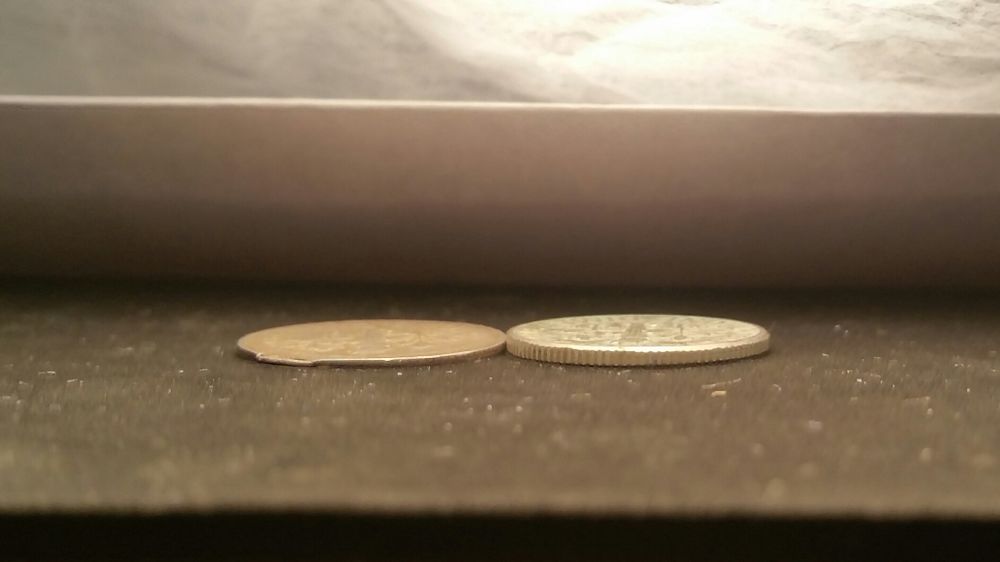
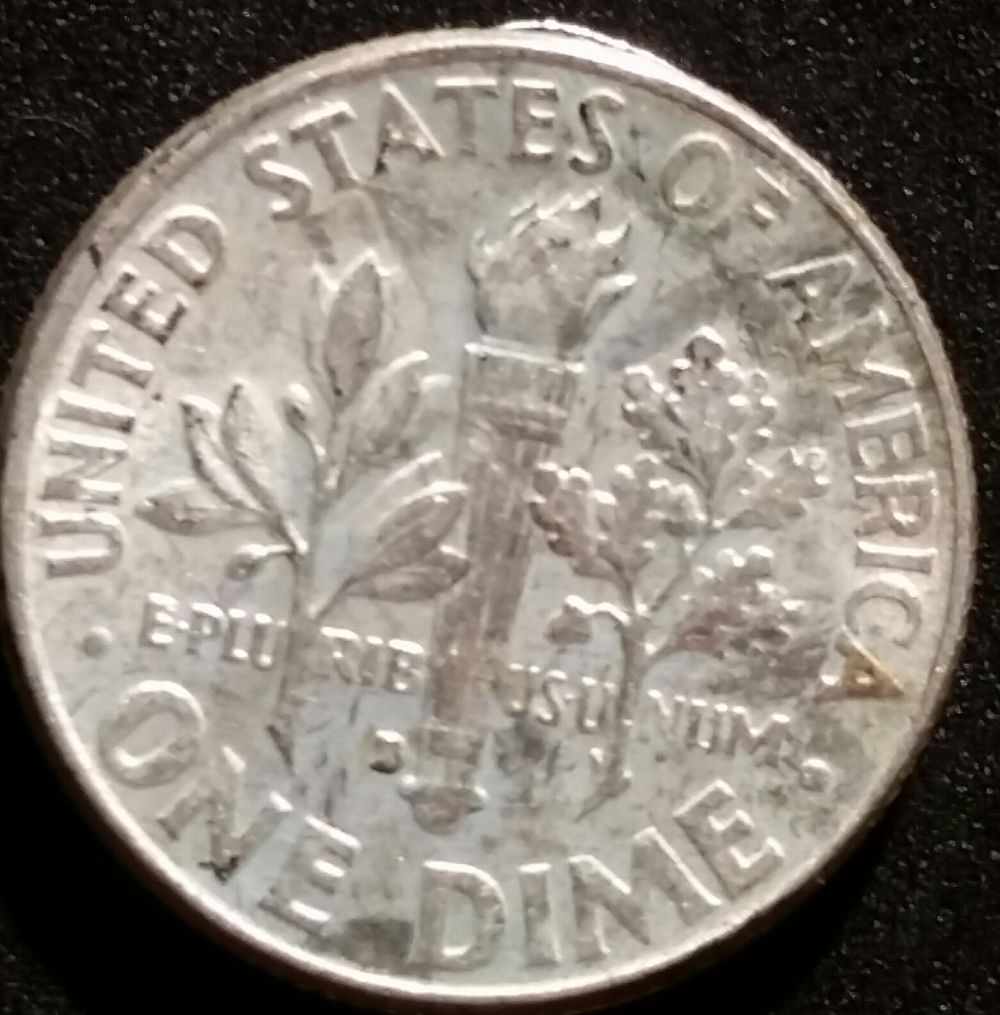
This looks like a broadstrike, but I'm going to go with PMD, considering that the rims are formed and the diameter is correct. The dents and scratches are also damage, of course. I am, however, at a loss regarding the coin's thickness. Could you post the weight if possible? A normal silver Roosevelt should weigh 2.5 grams. |
|
Pillar of the Community
United States
4963 Posts |
On second thought, it may be that the metal was rolled too thin, and this caused the dies not to strike the planchet with appropriate pressure, resulting in the weak strike on this coin. Either way, nice find.
|
|
Valued Member
 Canada
444 Posts |
Bump...
I would appreciate other opinions or possible explanations. Thanks for your opinion Numisma. Sorry no scale for weight but it would be half or less then the other dime in the photos.
Edited by Coin Scavenger
06/07/2015 11:02 pm
|
|
Pillar of the Community
United States
2376 Posts |
That weight as mentioned would help narrow things down a bit.
|
|
Pillar of the Community
United States
4963 Posts |
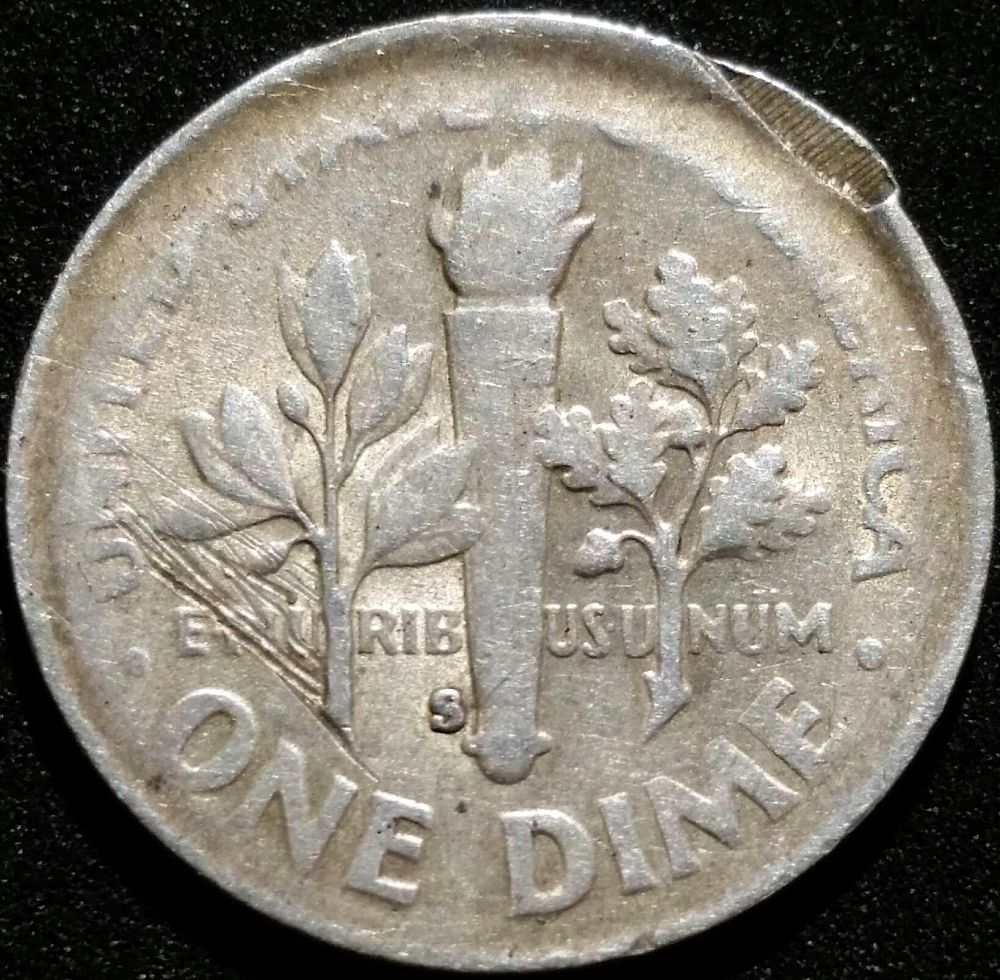
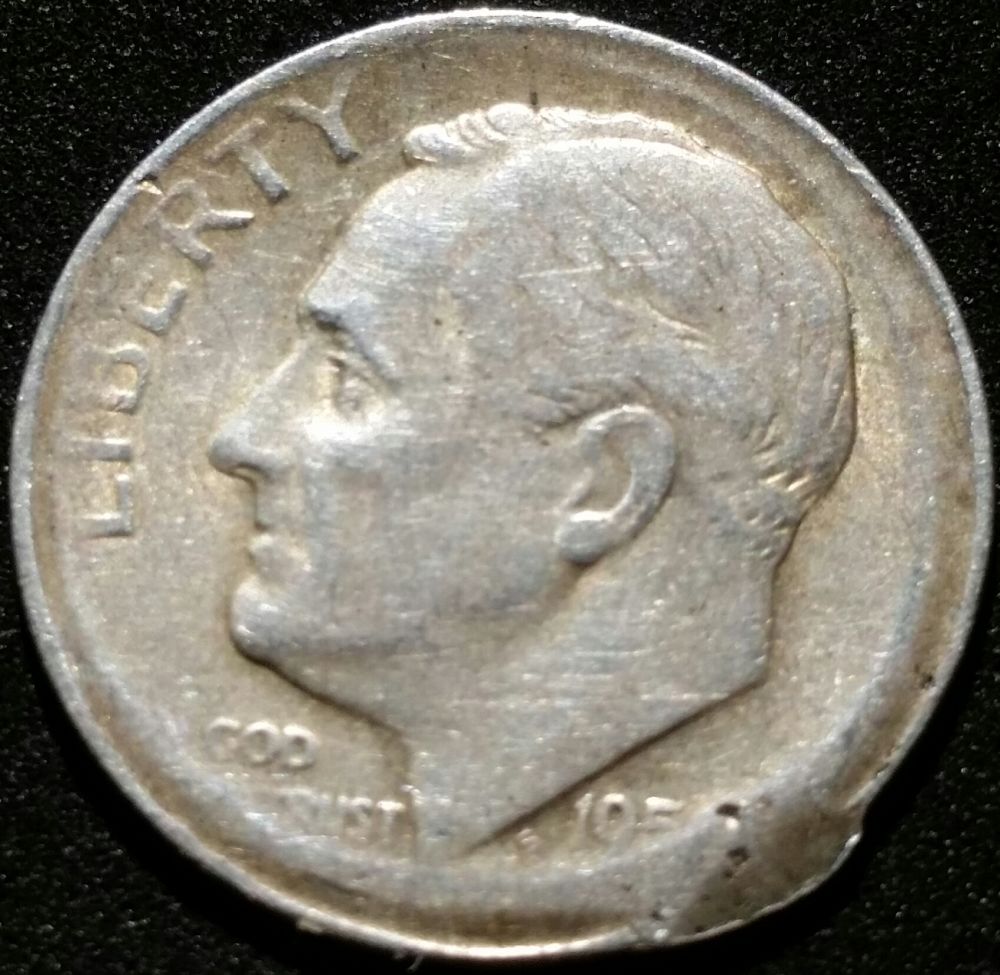
I think it's a 1950, if what I'm seeing is part of a zero.
|
|
Valued Member
Canada
444 Posts |
I noticed that ONE DIME is about twice the distance from the edge. I will try my local coin shop tomorrow for a weight. I believe that it will weigh less then half what it should.
|
|
Valued Member
Canada
444 Posts |
|
|
Valued Member
United States
51 Posts |
|
|
Pillar of the Community
United States
2376 Posts |
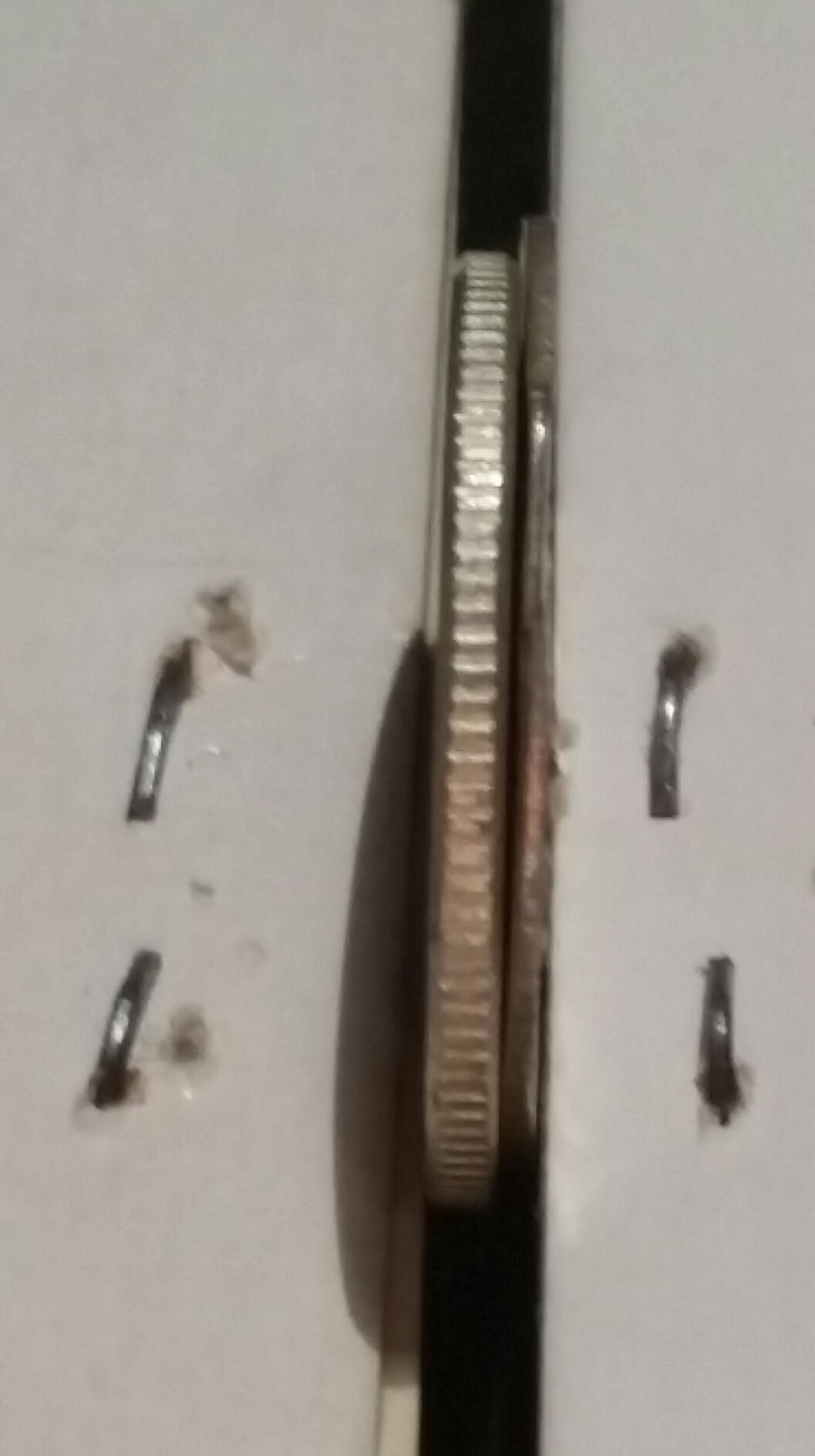
Your last shot is very convincing. I would say it's a rolled thin planchet as was proposed before. Sorta suprised it struck up as well as it did. Looks like someone in the past did a scratch test to see if it was real. Bummer!
|
|
Pillar of the Community
United States
5230 Posts |
[quote]Your last shot is very convincing. I would say it's a rolled thin planchet as was proposed before. Sorta suprised it struck up as well as it did. Looks like someone in the past did a scratch test to see if it was real. Bummer![quote] The dime is the thinnest coin at the time. I don;t know how you would roll the stock any thinner. In this shot you can see the coin in question is definitely larger in diameter than the other dime which could be due to a broad strike or PMD. For the OP: do you have a pic of a regular dime on top of the coin in question? And as stated above what is the weight of the coin  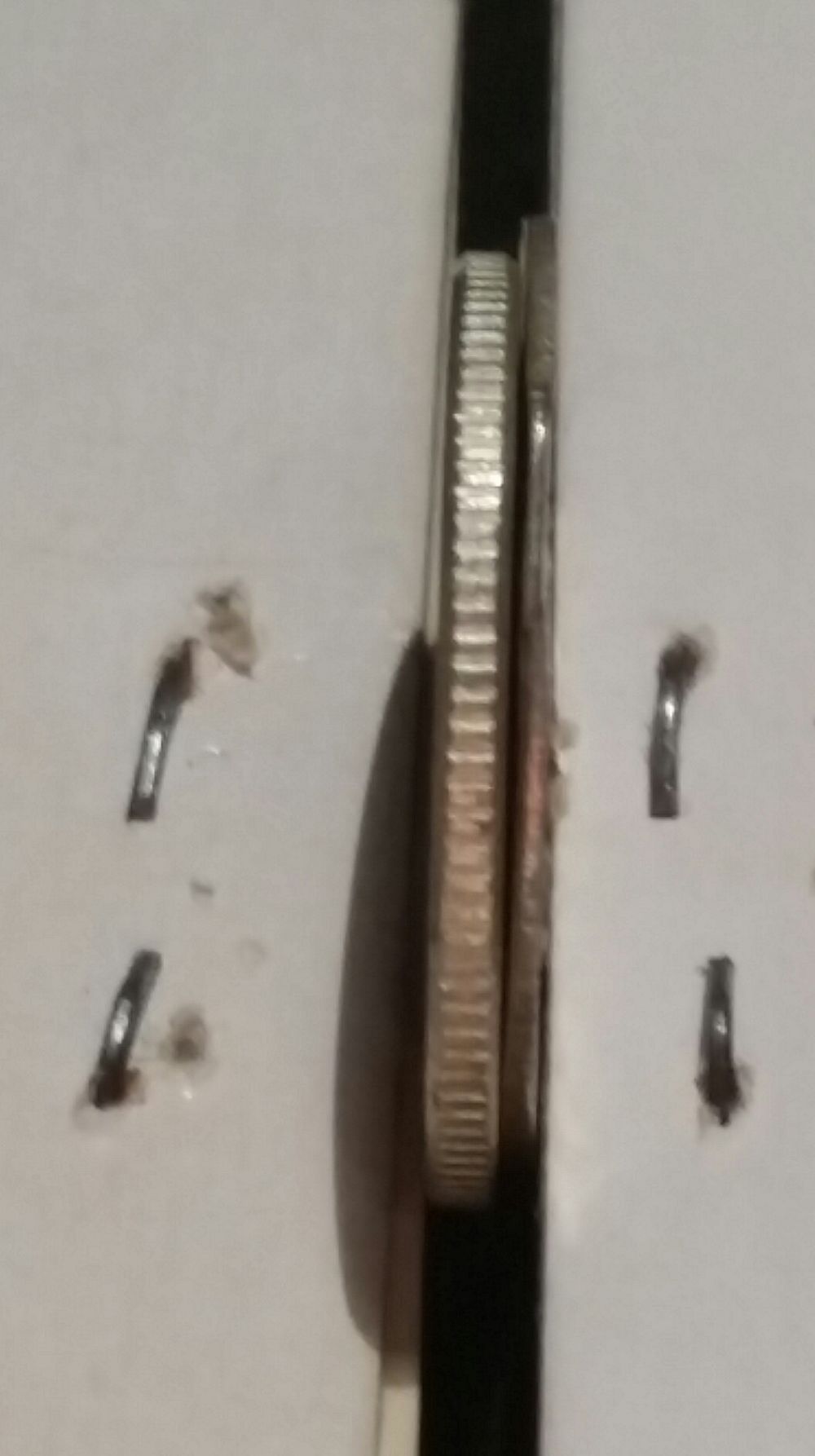 |
|
Pillar of the Community
United States
4963 Posts |
Quote:In this shot you can see the coin in question is definitely larger in diameter than the other dime which could be due to a broad strike or PMD. I am afraid not. If you look closely at the bottom of the picture, the coin in question is just raised up, but they appear to be about the same diameter. |
|
Valued Member
Canada
444 Posts |
Picture 3 is dime on dime, all that sticks out is the squished bit. I will try to get it weighed tomorrow. Thanks for the posts.
|
|
Valued Member
Canada
444 Posts |
I'm not sure how the process works but could it be possible that the squished bit jammed and the scratch marks are from a tool that was used to get it loose? The squished bit appears to be the edge.
Edited by Coin Scavenger
06/10/2015 02:10 am
|
|
Pillar of the Community
United States
2376 Posts |
Jack , many errors that are called rolled thin are actually tapered planchet errors, one thickness to another within the same planchet from the same stock. I would think it probable even dime stock could be rolled thin
|
|
Pillar of the Community
United States
4963 Posts |
I'm certain that the scratches are PMD. If the coin got stuck in the minting process, it would have been destroyed before it could enter circulation. |
| |
Replies: 20 / Views: 3,506 |












 Posted 06/06/2015 02:01 am