| Author |
 Replies: 30 / Views: 4,528 Replies: 30 / Views: 4,528 |
|
|
|
New Member
United States
6 Posts |
Hello Bob!
I enjoyed reading this post ("Gold as a marker for early silver coins").
I your article while trying to interpret XRF data for a colonial silver tankard, hallmarked in the 1750's.
XRF shows traces of gold in many parts of the tankard (such as the lid, the handle, and the base).
Strangely, there is no gold in the (hallmarked) main body of the tankard, or the spout. There is only a trace of lead.
Would you (or anyone reading this) be willing to look at the XRF data, and give an opinion as to how this could be?
Respectfully,
Matt Duddy
duddymatt@yahoo.com
|
|
Pillar of the Community
 United States
5362 Posts |
MattDuddy Welcome and nice to hear from you.
Please post the test data along with the type of XRF unit used. Also where was the piece made and how sure of the 1750 date are you? The silver of George II is much more highly prized than later pieces like George IV.
Lead is seen as a trace contaminant in silver that was extracted from argentiferous lead ores such as are found in the UK and Europe. So I would expect the body of the tankard to be from the UK. Mexican silver because it is from a different ore and refined by mercury amalgamation has gold which would mean the other parts are made from silver that originated in a different location.
There are two theories that could answer this evidence.
1. The silversmith had two entirely different sources of material and did not mix them. That seems a tad unlikely but of course is still possible.
2. The tankard is an alteration. I read somewhere in one of my books on silver plate and plating that it is not unheard of to add a lid base and handle as well as other decorative elements to another old but less valuable item to make it "worth more". In the same reference they said other "valuable items" were fabricated by cutting the hallmark out of a damaged or low value item and then inletting it into a more valuable but later piece.
Since the body of the tankard has the hallmark and tests as containing lead I would suspect # 2 specifically the type that starts with a plain open vessel with a spout and the base, handle and cover to convert it to a tankard were fabricated from a different source of silver at a later time and place.
As I recall the book was written early in the 20th century so the practice has been around for a while. XRF being a new test is perfect to detect forgeries of this type.
I would look at all of the seams to be sure the same level of workmanship is present throughout the tankard.
|
|
Pillar of the Community
United States
5362 Posts |
MattDuddy I had to go to my daughter's for supper so I was not able to check my sources earlier, but I just thumbed through 6 books trying to find the comments I referred to earlier. In the process I came across a comment from Burgess in his 1937 book entitled "Silver: Pewter: Sheffield Plate" which indicates that the tankards of George II were noted for a change of hallmark location from the outside of the lid to the inside of the lid. He says "invariably" positioned on the inside of the lid.
You did not indicate that there was a hallmark on the inside of the lid which might call authenticity into question.
I located the book that discusses at length the fabrications that were made prior to 1928, it is "Old Silver and Old Sheffield Plate" by Howard Pitcher Okie. In Chapter 2 he discusses "Frauds and Transformations".
|
|
New Member
United States
6 Posts |
Hello again! First, I mis-spoke in the last post. My associate reminds me that it isn't a hallmark... it is a touch mark. The tankard was made by Jeremiah Elfreth of Philadelphia, PA, in the 1750s. There are two touch marks, one on each side of the handle on the main body. Neither is perfectly stamped, so both are necessary for proper identification. Images are posted below. We used a [URL="http://www.thermoscientific.com/en/product/niton-xl2-xrf-precious-metal-analyzer.html]Thermo Scientific Niton XL2 XRF analyzer[/url], calibrated for precious metals. In order to demonstrate the resolution of the analyzer, I began by scanning three Peace dollars, 1922, 1923, and 1924. My theory was that if the analyzer could distinguish between them, then it would certainly tell us whether the spout was original or not. Next, we scanned various points of the tankard. We began with two points on the body (the main part). Then, we did the bottom and top of the spout. Next was the lid, the handle, and the bottom. And finally, we analyzed the solder on the spout, and the solder on the bottom. The data is as follows: 1922 Peace dollar: % Ag: 92.548 % Pd: <LOD % Pb: <LOD % Au: <LOD % Zn: <LOD % Cu: 7.452 1923 Peace dollar: % Ag: 91.793 % Pd: <LOD % Pb: 0.014 % Au: <LOD % Zn: <LOD % Cu: 8.194 1924 Peace dollar: % Ag: 91.957 % Pd: <LOD % Pb: 0.056 % Au: <LOD % Zn: <LOD % Cu: 7.987 Tankard Body 1: % Ag: 95.690 % Pd: <LOD % Pb: 0.107 % Au: <LOD % Zn: <LOD % Cu: 4.203 Tankard Body 2: % Ag: 93.200 % Pd: <LOD % Pb: <LOD % Au: <LOD % Zn: <LOD % Cu: 6.635 Bottom of Spout: % Ag: 93.741 % Pd: <LOD % Pb: 0.238 % Au: <LOD % Zn: <LOD % Cu: 6.021 Top of Spout: % Ag: 92.663 % Pd: <LOD % Pb: 0.276 % Au: <LOD % Zn: <LOD % Cu: 7.061 Lid: % Ag: 93.218 % Pd: 0.044 % Pb: 0.200 % Au: 0.114 % Zn: 0.110 % Cu: 6.323 Handle: % Ag: 95.343 % Pd: <LOD % Pb: 0.119 % Au: 0.204 % Zn: <LOD % Cu: 4.248 Bottom: % Ag: 97.278 % Pd: <LOD % Pb: 0.099 % Au: 0.153 % Zn: 0.118 % Cu: 2.242 Spout Solder: % Ag: 94.207 % Pd: <LOD % Pb: 0.272 % Au: <LOD % Zn: <LOD % Cu: 5.520 Bottom Solder: % Ag: 98.150 % Pd: <LOD % Pb: 0.117 % Au: 0.088 % Zn: 0.146 % Cu: 1.500 It should be noted that the spout solder was too narrow for a good analysis. The values represent an average between the body, spout, and solder seam. First, I was surprised to see that there was no lead in the 1922 Peace dollar, but it was present in the 1923 and 1924 dollars. Second, there were traces of gold in all of the components of the tankard, except for the main body, and the spout. We cannot say, however, that the body was made later, because it contains the touch marks from the 1750s! And perhaps the most bizarre, one reading of the body contained no lead, but the other side did. Apparently the metal is not homogenous... So I am left wondering, what is a possible explanation for this? The heart of the matter is whether the silver used to make the spout was from the 1750s, or the 1850s. Is there still a trace of lead in silver refined by electrolysis? I appreciate your thoughts. Respectfully, Matt Duddy 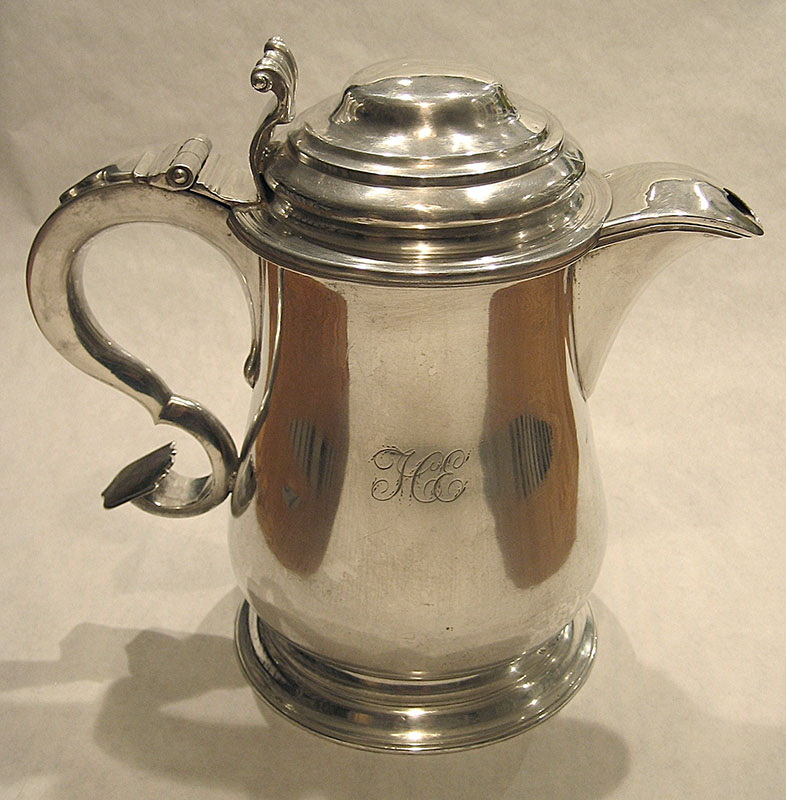 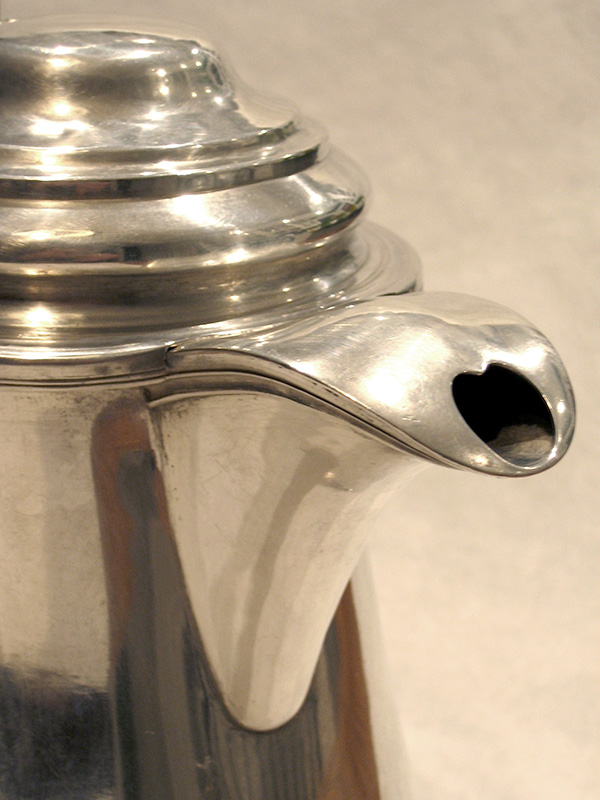 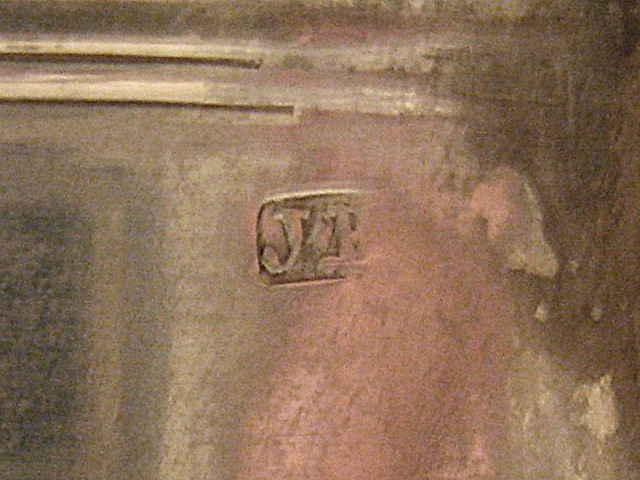 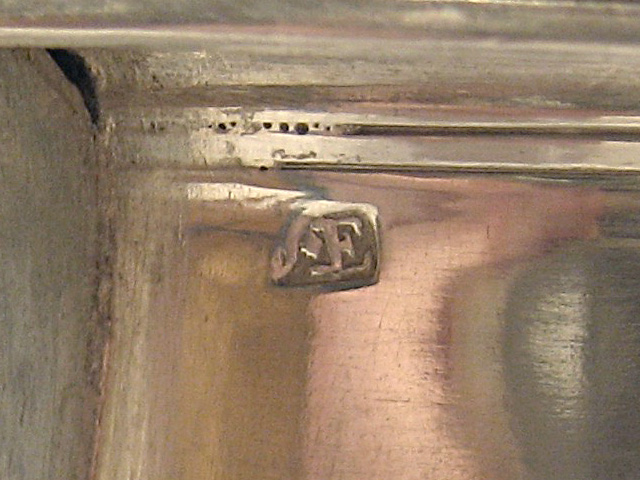 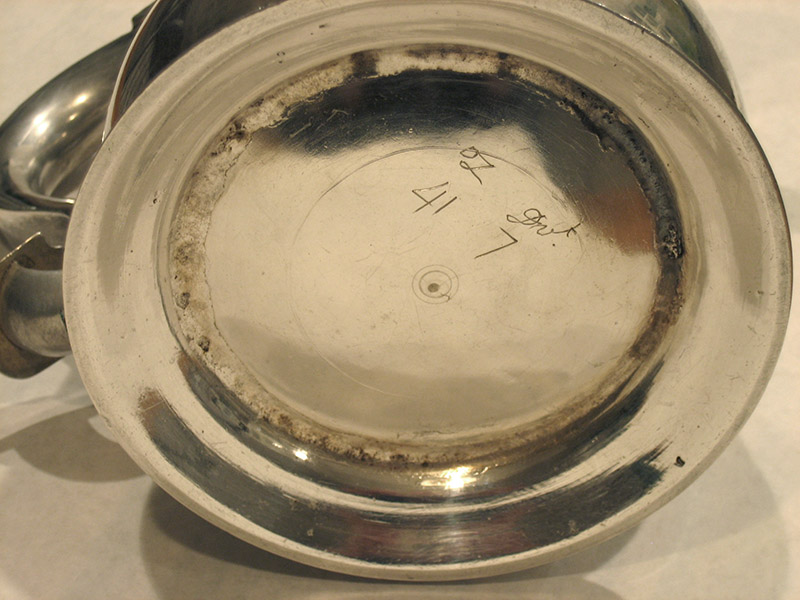 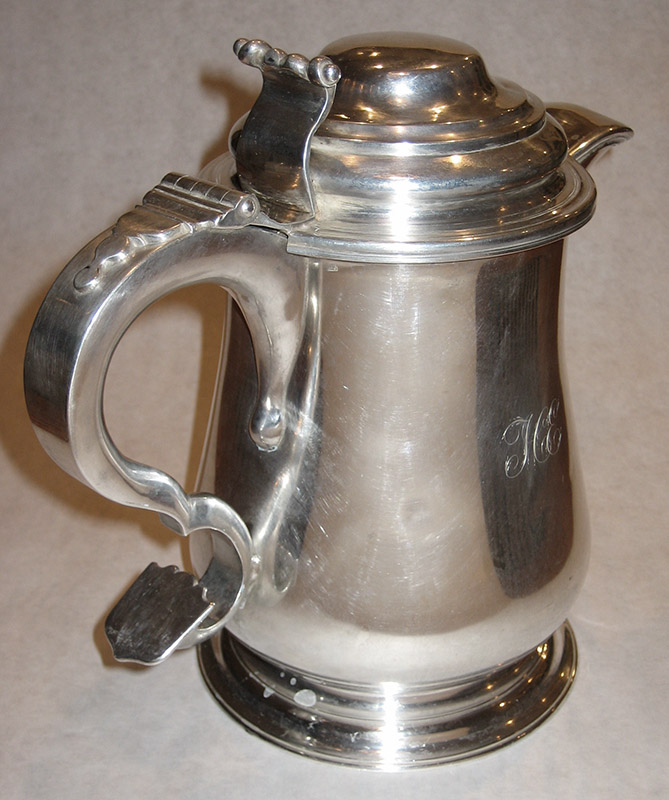 |
|
Pillar of the Community
United States
5362 Posts |
American silver of 1750 could have multiple silver sources because there were no native silver deposits available at that time in the territorial US. England restricted silver sales in the colonies and the result was a more eclectic silver supply imported from many sources. Therefore it is more possible IMO that the results could simply prove the silver smith used what was at hand in smaller batches than would be suspected in England.
I am more bothered by the 560 ppm lead reading for a US silver dollar made in the 1920s. That should not be there - not that high at least. The mint used A grade (99.99) Cu and standard (99.999) Ag in the 1920s. That leaves only 110 ppm for trace contamination of any kind. Gold contamination of Silver is most likely because of their mutual solubility and that could account for much of the 10 ppm of impurity. Lead (Pb) would not be expected as a silver contaminant in 1920. The majority of the contamination comes from the copper and it is in the 100 ppm range. Lead is considered detrimental in high grade copper and extra steps are taken for its removal. So I would presume that there must have been surface contamination from some outside source to achieve 560 ppm lead. The 140 ppm Pb on the other coin is close enough to be possible. It falls within the typical range of tolerance of the XRF unit. So two out of three tends to prove general reliability.
I checked on the Thermo Scientific Niton XL2 XRF analyzer and it is not a pin point capable apparatus. It is also a low power unit with a minimal depth of penetration. It is effectively a surface reading only and quite susceptible to contamination (dirt) even residue from handling. It also has a range of accuracy specified for each element so the reading are not precise.
Because of surface enrichment of silver caused by striking and copper depletion due to surface oxidation and leaching - I feel comfortable with the elevated silver (Ag) results and depressed copper (Cu) results. That is quite normal. So the alloy used at the mint is likely near correct - the results would be more accurate if the XRF penetration was deeper.
As far as the test results for the tankard, I will include some questions particularly in areas with which I am not 100% familiar. I would presume that the solder used in 1750 was not the same as modern silver solder (a mix of silver and copper). The test results for the spout solder seam (which picks up parts of the tankard on the sides) is 2700 ppm lead (Pb). The other solder seam shows 1100 ppm Pb. So I presume lead could be a constituent found in the solder from 1750.
Could polishing the tankard create enough surface displacement of the lead in the solder to effect a surface reading taken a few cm away? IMO quite possibly. It may have been present since the tankard was fabricated when the until was wiped down and polished after fabrication.
The contamination with gold and zinc are primarily seen in the lid, the handle and the base. All three of which would presumably be castings. These could have been made from melted Mexican coins. The added zinc is a bit odd but perhaps that makes the casting easier. That could be something peculiar to this silversmith. I have heard of other odd metals being added to make casting "easier" in the case of counterfeiters. It was mostly a semi-superstitious addition like alchemy. Science was extremely primitive in 1750.
As I see, the results tell me that the silversmith started with sterling plate - flat stock possibly shipped from England which he used to form the sides and bottom of the tankard. The spout was also made with this same flat stock. The silver smith made his own solder and assembled the flat stock. The other elements were cast from a different source of silver (likely Mexican coins)and he may have used a contaminated crucible or he may have intentionally added zinc.
That makes the most sense to me.
The books I own do not make a specific reference to American silver plate cups being altered to create tankards like the English examples I located.
Let me know if any of my assumptions or theories do not match what you know about American silver production in the 1750s.
|
|
New Member
United States
6 Posts |
Thank you, sir! Your reply was very insightful, and demonstrates your years of study. I can't explain the lead in the silver dollar. I would have expected the lead levels to decrease as time progressed, but the opposite was observed. Because only three coins were tested, I don't think any real conclusions can be drawn. It was only for the purpose of demonstrating that the equipment worked. The representative from Thermo Scientific, who performed the analysis, began by testing a 24k gold-plated Eisenhower dollar. The results showed that the XL2 "sees" into the metal, not just the surface. Here's what it showed: % In: <LOD % Cd: <LOD % Ag: <LOD % Pd: <LOD % Rh: <LOD % Ru: <LOD % Pb: 0.041 % Se: <LOD % Pt: <LOD % Ir: <LOD % W: <LOD % Au: 3.364 % Zn: 0.094 % Cu: 43.978 % Ni: 52.41 % Co: 0.074 % Fe: 0.054 Any surface test, including the acid test, would indicate that the coin is 24 karat gold. The XL2 clearly showed that the coin is made of nickel and copper. He also described how the XL2 is used to check for tungsten fakes (bars and coins), which is impossible with specific gravity, density, magnet, or acid tests. As you indicated, only one of the three Peace dollars had an abnormally high lead level. I can't explain it. All three were thoroughly cleaned prior to analysis. I know that, in general, coins should not be cleaned. But these were not of any particular numismatic value, and cleaning is essential for effective XRF analysis. All three were cleaned using the sodium bicarbonate-aluminum foil method, which converts the silver sulfide tarnish back to elemental silver and sulphur gas, thereby re-deositing the silver onto the surface. Perhaps this is why the silver content appears to be higher than 90%. After cleaning, the coins were handled with cotton gloves. No lead or other contaminants were introduced. Anyway, thanks for your insight. We're on the verge of answering the original question... is that spout original? ;-) |
|
Pillar of the Community
United States
5362 Posts |
That depth of penetration seems completely impossible given what I have been told by the experts at RTI. That is the laboratory that made the XRF testing equipment for several NASA probes. They also do sensitive EPA testing. They have done testing for me on counterfeit 8 reales. Their most powerful unit will not reach past 100 microns into silver. They estimate that the best handheld units will barely reach 10 microns.
To get a depth of penetration over 100 microns requires power levels that would be dangerous if not used in an enclosure. At that higher level the beam would also damage the surface of the coin.
Yet according to what the field rep told you this handheld device had a beam that not only penetrated the gold plating but went deep enough into the coin so that the pure gold outer layer was reduced to 3.36% of the total reading. That implies a total depth of over 10X the plating thickness.
I just finished reading a publication that covered the use of handheld XRF testers to estimate the thickness of plating layers found on historical and archaeological items. It is done by taking readings at multiple angles of incidence of the beam. A beam hitting the object at 90 degrees to the surface gives the "best" reading for the surface composition. At an angle the reading changes in favor of the plating because the beam travels longer in the plating layer. Multiple readings at different angles allows estimation of a plate layer thickness of up to about 2 microns in thickness of Ag. Over that plate thickness the lower angled beam may not be able to escape and be read ending the test.
XRF absorb at different rates so denser materials Ag, Au return signals at much lower depths than tests of bronze which returns through 35-40 microns.
The thickest gold plate that XRF will provide a return signature is 10 microns at near 90 degrees.
The maximum power of handheld units is what limits depth.
|
|
Pillar of the Community
United States
1758 Posts |
The answer on the 1922 Silver Peace dollar is probably based on the equipment utilized. Most of my experience has been with more sophisticated bench-top devices. With the hand held types due to the size of the aperture normally it may be difficult to do accurate multiple surface shots of the coin's surface. Do six surface shots and report back (if possible). I remember this issue with Max Keech and Mexican Coin Company's hand held unit in Arizona (MNA Conference) in 2013 where only singular dead center coin shots were possible due to the large aperture opening of their unit. Also realize the levels you are reporting here with lead levels are in the 10 to the minus 2 range (i.e., 0.01%). Possibly outside the normal LOD's of the instrument which are normally questionable below 0.1% for these units IMO. The spout does suggest being a later add-on feature from the data. JPL |
|
New Member
United States
6 Posts |
The curious thing is that both the body, and the spout contain only lead as an impurity. Since the body has the touch marks, it's hard to imagine that the body isn't period.
This is the final part of the mystery. The body and the spout are consistent with each other. But how could that be? And since Elfreth is a very obscure silversmith, with only a handful of pieces known, it's not likely that this is some kind of sophisticated forgery.
This piece may represent a lapse in our knowledge of colonial silver. But perhaps not. I'm still working on it.
|
|
Pillar of the Community
United States
1758 Posts |
... and you are putting too much emphasis on a $10K hand held XRF unit. Bench top units in the $75,000 range and up can do spot analysis and like Bob said can penetrate deeper with more energy input into the XRF beam. I think with multiple spot analysis you will find lead in that Peace dollar - obviously. Again ... with these lead quantities I personally would not base any real conclusions. With a hand held reserve your conclusions on detectable values >0.1% ONLY. IMO. JPL Edited by colonialjohn
03/01/2016 2:16 pm
|
|
New Member
United States
6 Posts |
Just so you know, the XL2 is $40,000.
|
|
Pillar of the Community
United States
5362 Posts |
MattDuddy I certainly hope it was not you that spent $40,000 on a hand held unit. I priced a desktop model a few weeks ago and got a quote from a reputable dealer for less than that for a desktop version - used but under a guarantee. It was almost as good as the older unit at RTI which I was hoping they would sell cheaply.
|
|
New Member
United States
6 Posts |
No, I only worked with the rep on this one project. He regards the XL2 as the best all-around, and that's why he selected it.
Perhaps the antiques-world's foremost expert on the subject is Dr. Jennifer Mass at the University of Delaware and Winterthur Museum. Sotheby's recommended that we work with her to establish the authenticity of the spout.
We would have done it, except that she charges $2500 - 3000 for her analysis. Given the estimated value provided by Sotheby's ($6000 - 8000), it was cost-prohibitive (after deducting all of their fees and commissions).
She co-wrote a book on the subject: "Handheld XRF for Art and Archaeology". Reliable XRF has grown beyond the bench top.
|
|
Pillar of the Community
United States
5362 Posts |
Just ordered that book should arrive in 3 days.
Have you read the book? Seems to contradict what I have been told by the people at RTI for the past two years.
Her authentication fee is fairly high, but antiquities are much more difficult than most coins. Does she use a handheld XRF in her work for that fee? [I would presume that many antiquities would be too large for the largest bench XRF devices. I wonder if her usage is based on logistics of size more that the physics of the instrumentation?]
Should be an interesting read.
I was looking at the seams and the position of the touch marks in relation to the handle. The application of the handle seems to damage the edges of the touch marks on the side nearest the handle on either side. In most cases, I was of the opinion that the touch marks were applied after fabrication - so doesn't this make the handle an obvious later addition? Or am I missing your point?
Regarding the spout there seems to be a less obvious seam. Where two different levels of workmanship are obvious in the handle and base joins; the spout looks better (which could just be the images). The earlier work on the body of the item is far superior to the handle join where it meets the body - there are bubbles in the solder that were not chased out. Perhaps a repair due to later damage.
If I saw similar marks on a coin it would be proof of a later repair.
Just thoughts in an area I am not overly familiar with.
Edited by swamperbob
03/02/2016 11:37 am
|
|
Pillar of the Community
United States
5362 Posts |
MattDuddy The book "Handheld XRF for Art and Archaeology" arrived and I have completed a first reading. It is very interesting. It confirms without a doubt the thesis I have held since the early 1990s in a very simple yet authorative manner. Gold MUST be present in all silver refined before the 1870-1890 time period because the methods of parting gold and silver to a modern standard of purity was unavailable anywhere in the world. It is the touchstone of museum authentication. They also mention the use of trace contaminants as a dating method based on changes in the refining methods used. In the old word silver was refined by cuppelation (fire reduction) because of the ores that occurred in old world. The ores found in the new world called collectively American silver were refined differently. The predominant method was mercury amalgamation. Argentiferous lead was not discovered in the Americas until 1879. The book also outlines the basic stages in silver refining technology. The most applicable chapter for our work with coins is number 7 which deals with American wrought Silver. They explain the difference between old world and new world silver deposits and touch on the chemistry involved. Right at the outset, the authors discuss XRF limitations that apply to wrought silver. They list pickling (acid treatment which removes surface copper deposits), copper fire scale (caused by repeated annealing at temperatures near 1200 degrees, repeated polishing (over the life of the item), segregation of elemental copper and silver during cooling, irregular surface structures, small radii of curvature and others. Most of these drawbacks apply less seriously to struck silver coins than to worked silver vessels. The experts cited include Winterthur Museum Scientific Research and Analysis Laboratory which is a well known lab which I have also contacted for my research. They work extensively with silver ware of known ages but do not typically use coins to develop time lines for silver alloys (the results are different than wrought vessels because of significant surface enrichment). I have corresponded with the director and they have little to no interest in coins per see because of how coins were manufactured. They do use handheld XRF because it is easy to handle and can be taken to museums to test collections in place in a non-lab setting. The reason for the author's preference for handheld units seems to come from the mix of features that makes the handheld preferable for testing fabricated silver in a museum. The one specific statement expressing a clear preference is found on pp 226 and 227, as follows; Quote:
The handheld spectrometers currently being used for cultural heritage applications have the advantage of having beam sizes of several millimeters, and therefore require fewer replicate measurements to obtain representative results. Replicate tests are needed for wrought silver because the working of the silver (multiple annealing's and pickling in particular) as well as the steps taken to remove copper fire scale create an enriched surface silver deposit with large grain sizes compared to the more homogeneous alloy seen in coins. The use of a wide beam (several mm in diameter) spans many individual grains. The finely focused laboratory beam can distinguish individual grains in a wrought piece of silver and requires several tests along a line to create a representative reading. This wide beam creates an average reading which is not necessarily good for examining coins. Coins often have breaks in the plate measuring less than 1 mm. For that reason a focused point beam is far superior for work with coins. Coins because they are struck from rolled and laminated silver stock have characteristically smaller surface graining (segregation of copper and silver) when compared to articles fabricated by a silversmith. The surface texture of coins is far more uniform and has fewer surface barrier layers than wrought silver. I also discovered why the test demonstration used a gold plated silver coin. The thin PURE gold film applied by electro-deposition is virtually invisible to XRF. It will be seen and recorded but the beam is almost unaffected so it still can penetrate the surface of the underlying silver coin. That is because the depth of penetration into pure gold which provides an acceptable return signal is substantially greater than silver. In gold a 50(keV) unit penetrates and reflects a readable signal (return emission) to a depth of 37 micrometers whereas the same unit will only get a return emission in a 90% alloy of silver of 8.5 micrometers. Had the salesman used a silver plated gold coin the plating might have eliminated the return emission of the of gold in large part if not entirely. All of my experience is with silver coins where gold is a minor trace contaminant. So until I read this book I had not put two and two together that a return signal is not REDUCED by density - it is actually increased in the case of gold. That is also why low density metals are difficult to test with handheld units. The book covers a wide range of topics and is quite a detailed analysis, but at no point does the author assert that the handheld units are superior to lab units when alloy levels below 1/10th of a percent are important. A one decimal point reading is still the best reading that can be hoped for. The focus of the Winterthur Museum Lab is actually to distinguish MODERN Twentieth Century forgeries from artifacts that were fabricated before 1870. They do say that handheld XRF devices are adequate to make that call. This is what I have said as well for coins. The handheld UNITS CAN detect gold of 0.1% which is found on the surface of pre-1870 silver. They can therefore be used to eliminate modern silver. But the more subtle differences between the earlier types of Counterfeits can not be detected with a hand held unit. That is why in some cases lab units are still indispensable.
|
| |
Replies: 30 / Views: 4,528 |








 First Page


 Posted 02/27/2016 6:27 pm


