Coinweek - The early Macedonian kingdom did not have sufficient access to mines to be able to mass-produce influential coinage. However, when Philip II rose to power in 359 BC, he recognized the importance of mining and prioritized the acquisition of metals in his early conquests.
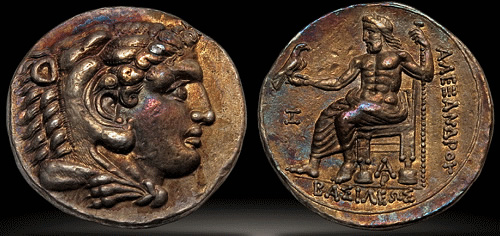
After defeating Amphipolis and Crenides, Philip was able to secure a consistent annual supply of nearly thirty metric tonnes of precious metal, striking them into new, iconic coinage. This production volume made Philip's coins immensely popular throughout the world.
His son, Alexander the Great, continued Philip's coinage and improved upon it, refocusing the silver mintage on a tetradrachm based on the Athenian weight standard that could be used easily throughout Greece. For more than two hundred years, Alexander's tetradrachms would be minted at a prolific rate, sourced from his father's mines in Thrace and Macedonia as well as the new bullion Alexander received when he conquered the Persians.
Read the Entire Article 









 Posted 07/14/2015 12:25 pm


