Quote:
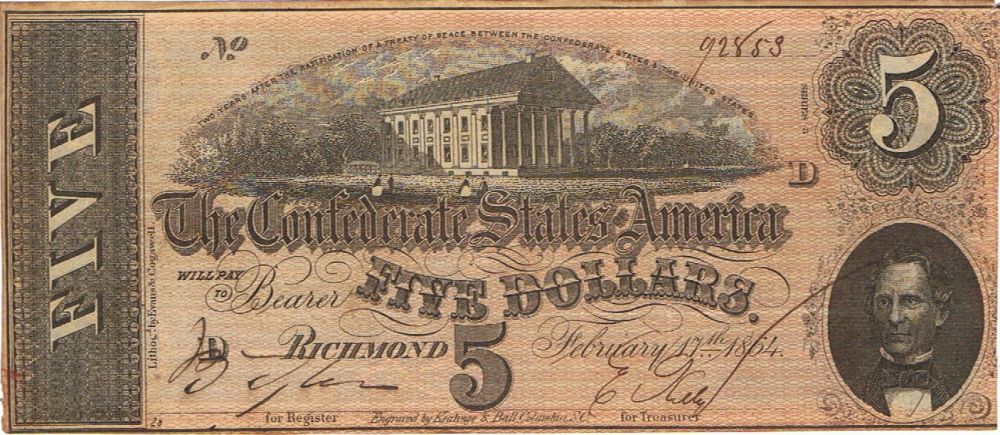
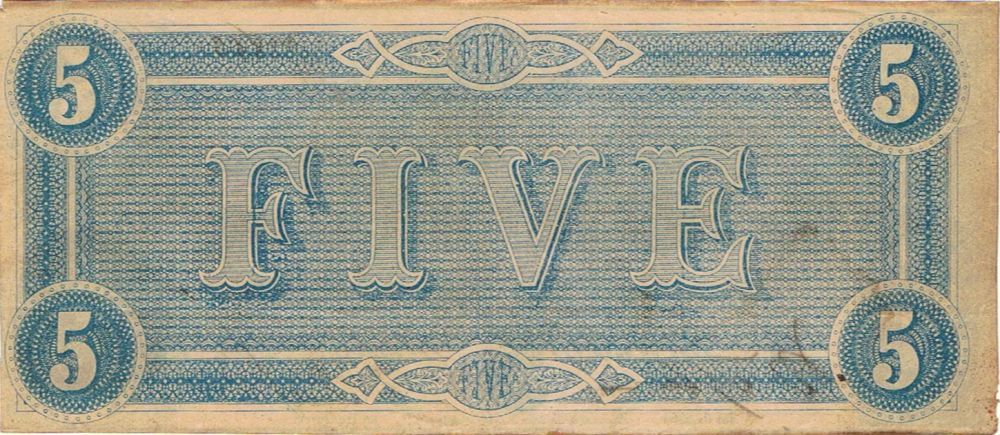
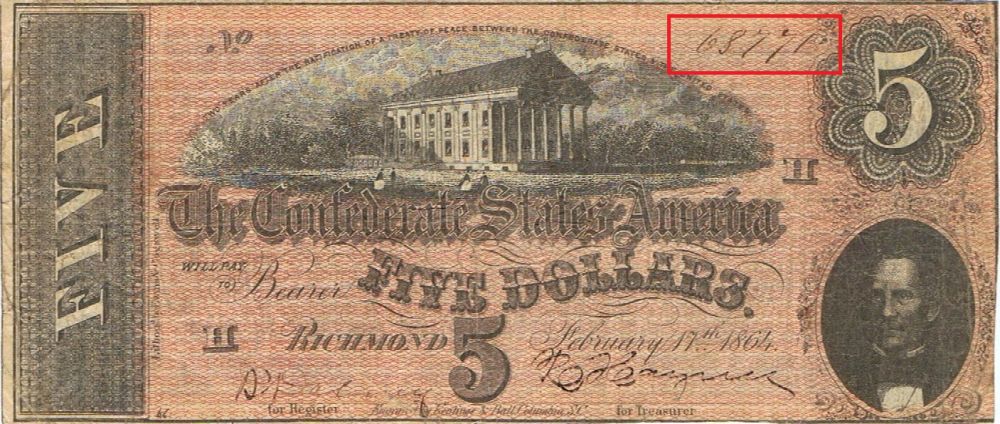
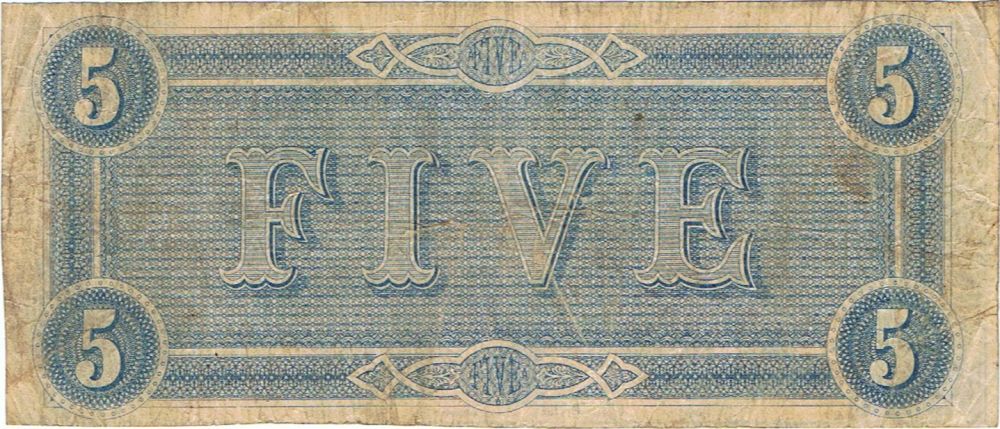
However, I only see one signature that has bled through. Am I missing something?
You can see part of the second signature: the part that is heaviest, the long, upward curving end letter that pokes up into the portrait. You can see this same curve, in reverse, on the back beneath the F of FIVE.
Quote:
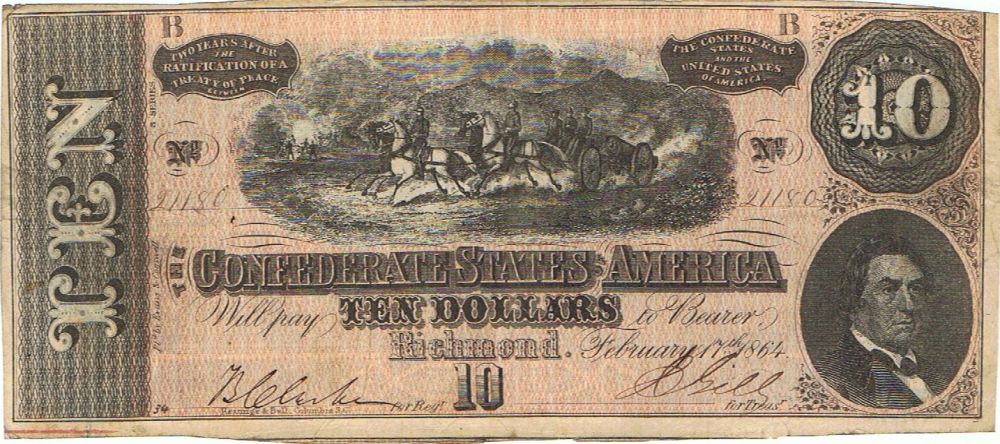
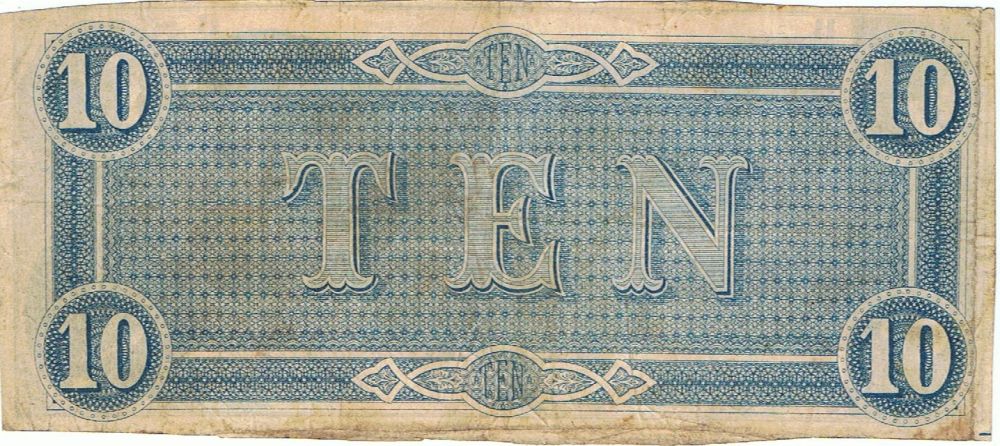
I have now also examined my 1864 10 Dollar note and yes you've guessed it. Even though that serial number isn't listed.
I just had a reply from one of the sites that sap pointed me to and it appears my 10 Dollar is genuine. Phew!The "ink-bleed test" is more an assurance of authenticity, rather than definitive proof of fakeness. As seen in the example of the left-hand-signature on the first note, a weak, faint signature won't bleed through much, if at all. On the second (fake) note, the right-hand signature is very dark and heavy, and I would have expected much of that to bleed through, if genuine. On your third (formerly dubious) note, both the signatures are fairly light and thin. Yet even here, the darkest parts - the slanted strokes of the first two letters of the right-hand signature - have bled through, faintly; I can see them to the left of the lower arabesque, below and slightly to the left of the T in TEN.
Finally, of course, there was a war going on, and the Confederacy was under blockade. High-quality black fountain-pen ink may have been in short supply on occasion, and they may have watered it down or tried to use whatever cheap substitutes may have been on hand; we don't know. Writing in such inks might look "better" today than iron gall ink, or they may look even worse.
Don't say "infinitely" when you mean "very"; otherwise, you'll have no word left when you want to talk about something really infinite. - C. S. Lewis












 Posted 07/20/2015 08:50 am