| Author |
 Replies: 10 / Views: 4,197 Replies: 10 / Views: 4,197 |
|
|
Pillar of the Community
Hong Kong
1270 Posts |
Hello, this is my first thread in this banknotes forum as I am no expert in this field. I pick up two Japanese banknotes this year and last year, from ebay US and from Yahoo HK, when I compare both notes, I am scared why they have the same serial number. The first instinct to tell is they are fake, aren't they? But when I go to a local shop for vintage banknotes, I find that the same type notes also have same serial number pairs. Are they all fake? I think this is not an expensive note so it shouldn't be the target for counterfeiting. Can anyone tell my notes are fake or same serial number notes are really present for some reasons (historically I guess)? Thank you! Henry 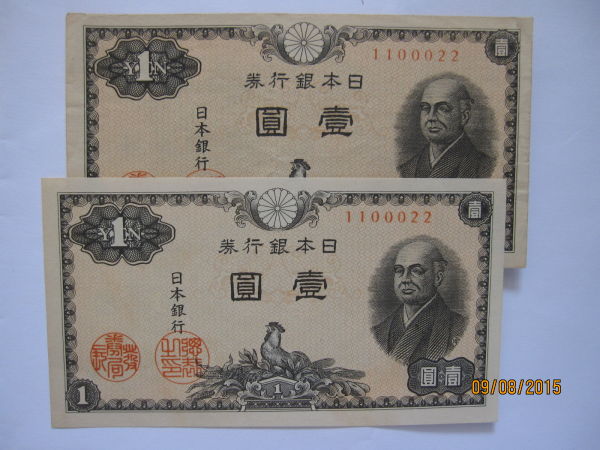 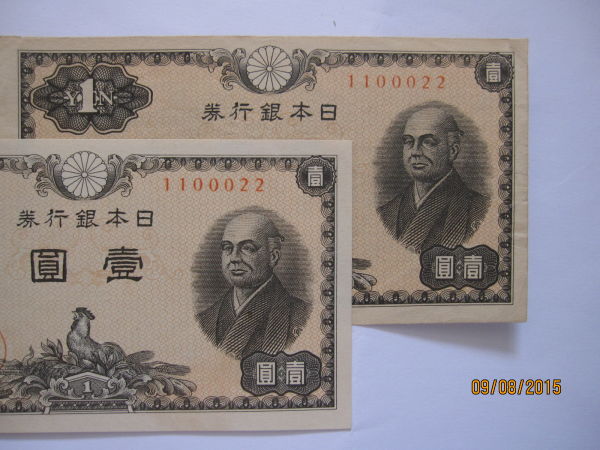 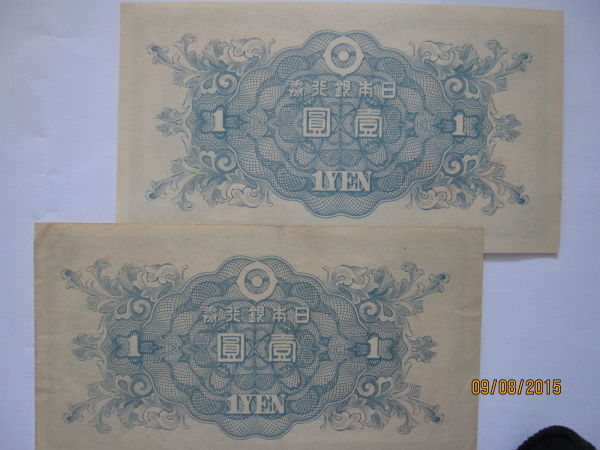 |
|
|
|
Pillar of the Community
Germany
1071 Posts |
The one on top looks a lot newer than the one below.
|
|
Pillar of the Community
Thailand
1509 Posts |
I would call them reproductions.
I see many packs of small denomination notes from various Asian nations for sale to tourists and most of them are in too good a condition to be genuine.
|
|
Pillar of the Community
 Hong Kong
1270 Posts |
Quote:
I would call them reproductions. Vic, thank you your reply. But was the reproduction official or not? It was at the time of post WWII, would there be a shortcut way to print notes like that? I actually see some other notes of this type have same serial number in a shop of seller old banknotes. Of course they are reproduction but were they still authorized legal tender at that time? I have no books for paper currency. Can anyone tell a useful book for historical paper currencies? |
|
Pillar of the Community
Thailand
1509 Posts |
|
|
Pillar of the Community
Hong Kong
1270 Posts |
Thank you vic, this mean one of them is worthless because it is a reproduction, isn't it? Are these copies made to cheat collectors or they are officially produced for tourist souvenir or some other purpose?
|
|
Pillar of the Community
Thailand
1509 Posts |
I would say they are both copies. The chances of you getting the original note and a copy from different sellers must be millions/billions to one. I would have thought that the 'older' looking note has been deliberately 'aged'.
I don't think the Japanese government would do this and they could have been produced anywhere in the world.
|
|
Pillar of the Community
Hong Kong
1270 Posts |
Any original put here is appreciated.
|
|
Pillar of the Community
Hong Kong
1270 Posts |
Just get a reply from a friend to explain the so-called "serial number" of this note.
He said, the first number 1 be the government no., the following 1000 be the batch no., the last digit 22 be the mint no. So this note has no serial number!
Can anyone confirm this explanation?
|
|
Valued Member
Canada
499 Posts |
The note is a Japan P-85. (Nippon Ginko Ken / Bank of Japan) ND (1946) http://banknote.ws/COLLECTION/count.../JAP0085.htmYes, I believe that the number listed is not a serial number but a sheet or run (bunch of sheets) number. You will find many examples of these notes with the same numbers. The notes should also not have cost more $1-$2. |
|
New Member
Australia
32 Posts |
wonghinghi your friend is correct. Your "serial" number of "1100022" 1 - Bank of Japan Issue 1000 - Batch number (range 1 - 1156) 22 - Print company and location Here's mine for comparison :)  Edited by mulla
08/10/2015 03:23 am
|
| |
Replies: 10 / Views: 4,197 |
|








 Posted 08/09/2015 02:02 am


