| Author |
 Replies: 18 / Views: 3,261 Replies: 18 / Views: 3,261 |
|
New Member
Canada
4 Posts |
Hey guys, My name is Adam and I just created a log in today. I had a quick question pertaining to a coin I purchased earlier from a flea market. The coin is packaged in a cardboard sleeve marked 190? It is a King Edwardvs VII coin so I am assuming 1902-1910 I have attached a few photos of what appears to be a missing final digit in the date. I was not sure if this was a stamping error or removed after the fact, but both on naked eye inspecion and under my digital microscope it looks like the last number was just never there. There are some scratch marks where the number should have been but they don't look like someone had scratched away the number? Anyways I am no expert so I have uploaded pictures for your consideration! Let me know guys! 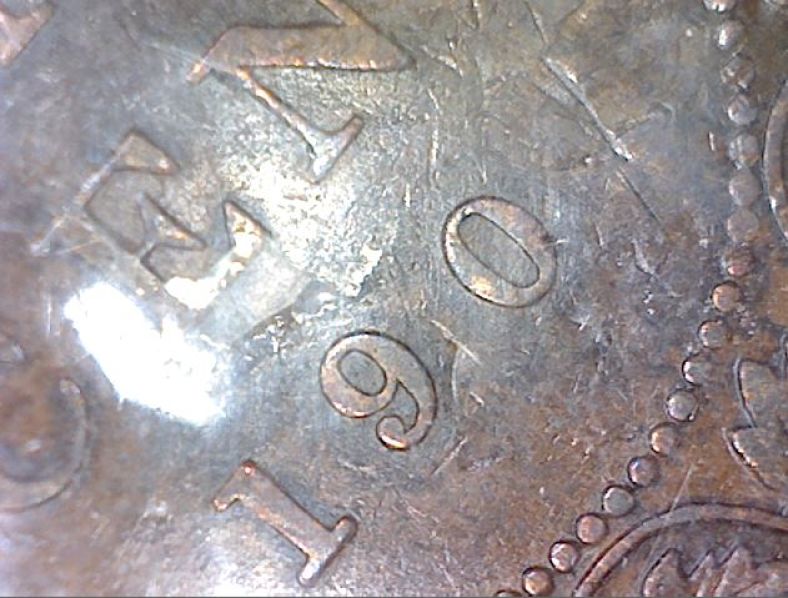 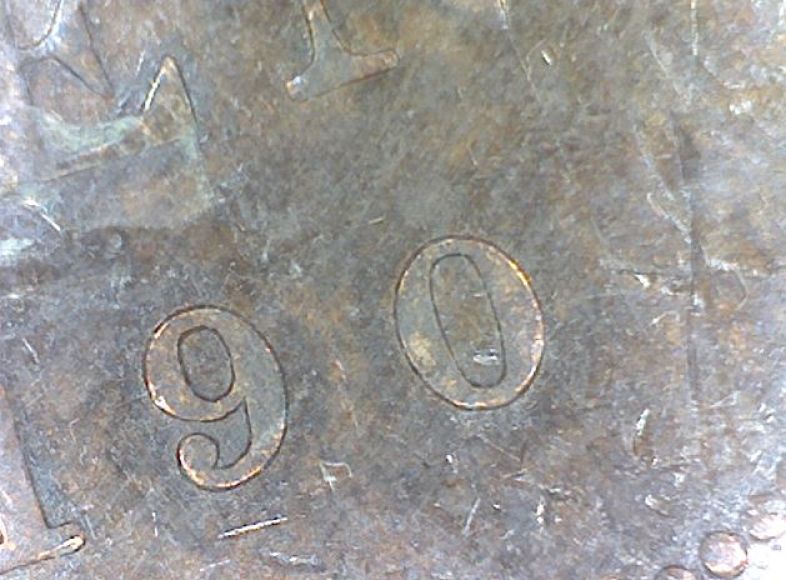 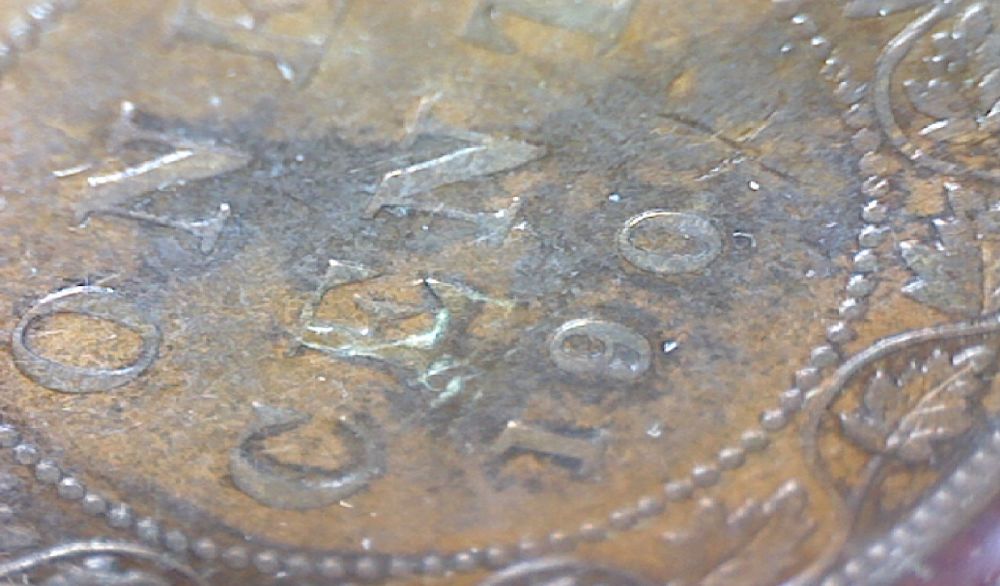 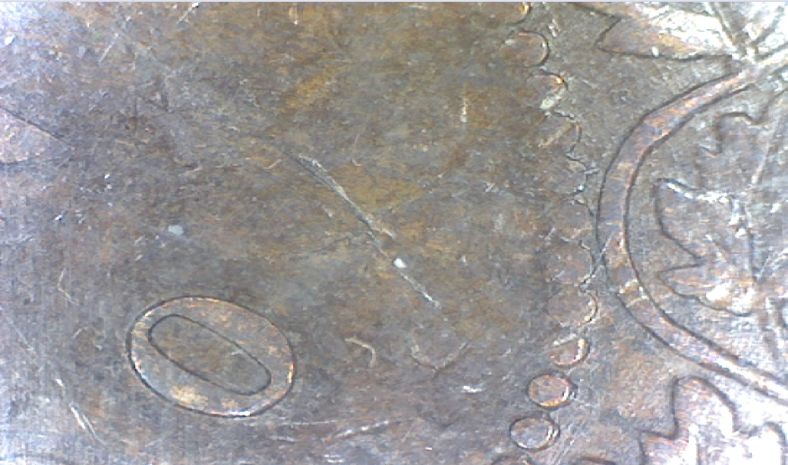 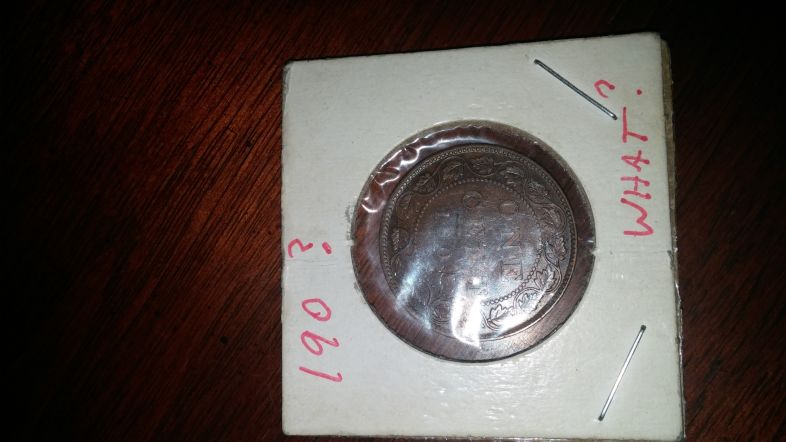 |
|
|
|
Pillar of the Community
Canada
1118 Posts |
Firstly  , even if this isn't a legitament error I hope you stay around and continue to collect. Well, it would have to be between 1902 & 1909 as the zero is present. Older coins did not have an amazingly strong strike to begin with and if you look at where the digit should be you can see a wee gauge in the copper. You should also think "If this is a legitament large cent error why would the guy be selling it in a cardboard 2x2 at a flea market". The fact that is was identified with a "?" and not cherry picked out of an old tin can should put you on the air of caution. Post Script: Those are GREAT pictures for this type of thread. Good job on that. Edited by Harmonica
08/22/2015 1:33 pm
|
|
Valued Member
United States
108 Posts |
Canadian? A clear close up of the whole reverse would be nice. I have a Canadian 1912 George V, same pattern around the edges (ivy), small dot outer, larger dot inner ring. Couple of things. Mine says "ONE CENT CANADA" and has a dotted bar between text and date. Don't have my scanner here, but I'll post pic later if you like. Gah. Always do an image search first. Ignore all the above.  Edited by MoeTate
08/22/2015 1:52 pm
|
|
New Member
 Canada
4 Posts |
Thank you for the welcome, and yes, 1910 would not be possible due to the 190. LOL. The gentleman at the flea market only had this and one other coin, the rest was just old antique stuff. He seemed as curious as me, almost as if he hadn't noticed it either. For those interested, I paid $5
|
|
New Member
Canada
4 Posts |
Also as requested, a photo of the back side: 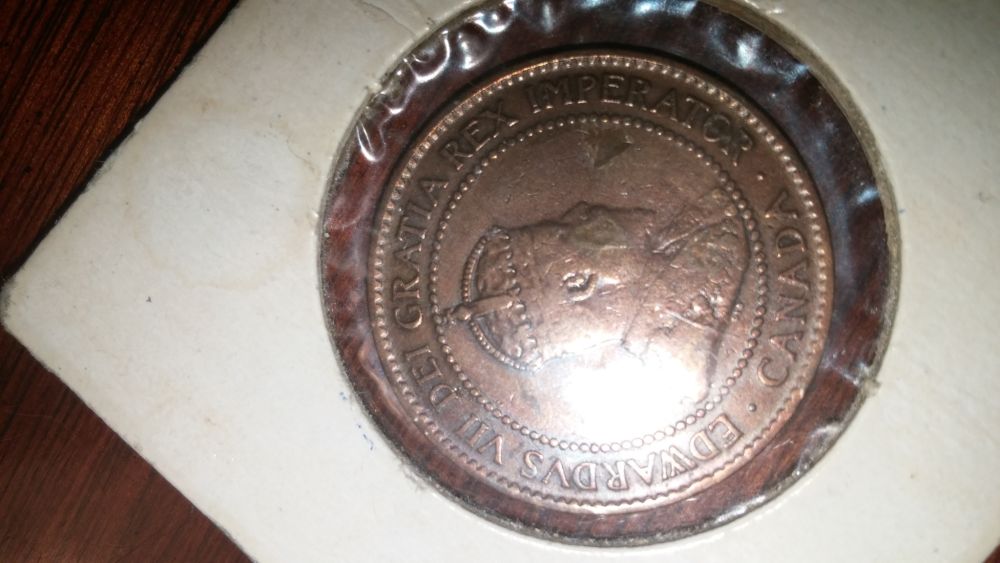 |
|
Pillar of the Community
 United States
5828 Posts |
|
|
Pillar of the Community
Canada
2845 Posts |
I can see traces of what looks like a "5" after the 190.
There's no lack of large cent experts who follow this forum and maybe someone could clarify whether or not the last digit of the date on these early pennies was hand stamped. As I seem to recall the minting of coins with only the first three numbers of the date was a practical convenience because the same precast coins could be hand stamped and then released at any point during the same decade. If so it might seem that final digit either wasn't firmly affixed or at some point in time it got chiseled off.
Edit to add: look at your first pic, slanted sort of sideways, looks like an image of a missing "5". Excellent photo skill you have!
Edited by wildflowerAB
08/22/2015 3:26 pm
|
|
Pillar of the Community
Canada
2361 Posts |
I think I see a 4. From the top image. 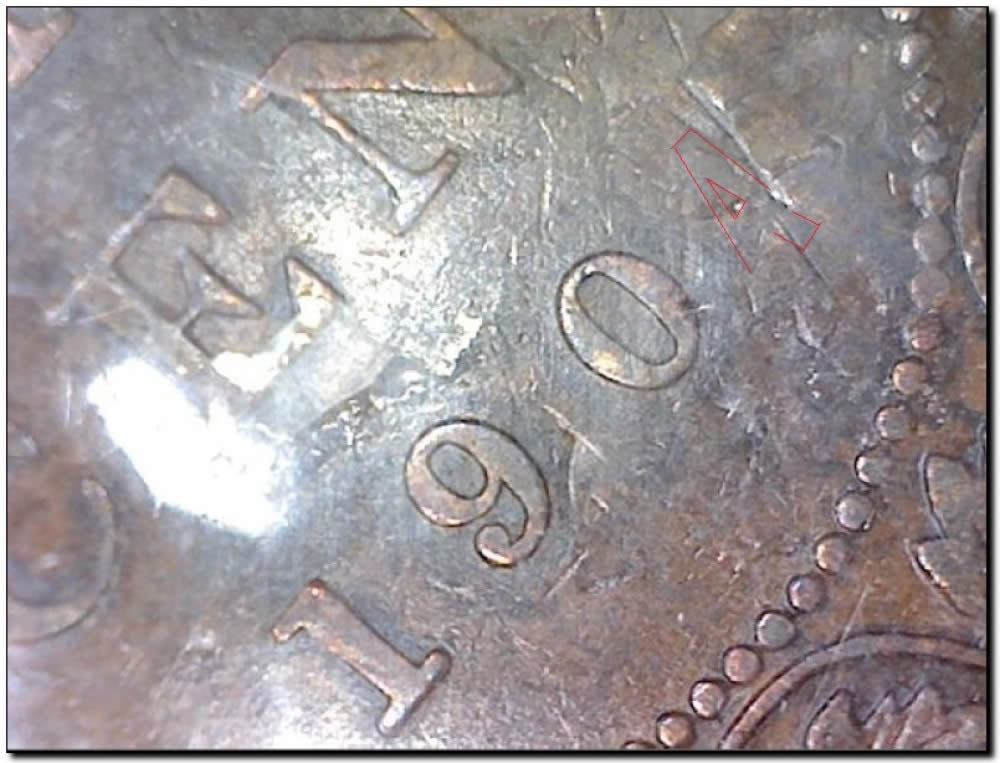 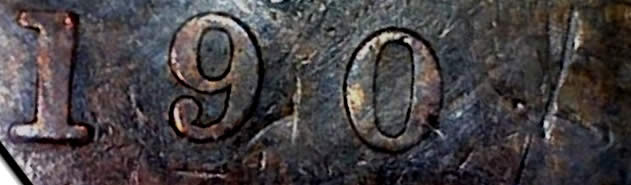 Edited by SilverDon
08/22/2015 7:45 pm
|
|
Pillar of the Community
Canada
818 Posts |
Great eye SilverDon, definitely looks like a 4. And adamgharavi! Good find! |
|
Pillar of the Community
Canada
2845 Posts |
Indeed, must be time for an optometrist visit.I can still see an impression of a "5" as clear as day. The flat horizontal top line of the "5" lies about where the top of the vertical scratch ends, then the scratch cuts into the vertical bar of the "5", the curve of the bottom half of the "5" then swings out although the mid/lower portion is blurry because of something that looks like a gouge.
While we can never know for sure, please tell me I'm not just seeing things!
Regardless, what might have happened to the missing digit?
|
|
Pillar of the Community
Canada
818 Posts |
I'm seeing the 5 now wildflowerAB. Very interesting.
|
|
Pillar of the Community
Canada
2845 Posts |
Oh thank you AgHoarder! Because that falls into my theory....the "5" looks to be too high up. If the last digit was indeed hand stamped, is it then possible for that reason the mint employee removed it (scratch/gouge) while the metal was still soft with the intention of correcting the placement? And obviously that did not occur?
This is a very fascinating coin!
|
|
Pillar of the Community
Canada
5654 Posts |
The 5's were not hand-punched in as the final digit for that series. Many Edward cents were weakly struck to begin with, usually the reverse. If there is any kind of dish, ding or bend on the Obverse (portrait) side, it would cause a corresponding section on the reverse side to be convex, and wear away much faster than the rest .. it would be the highest point on the reverse.
|
|
Pillar of the Community
Canada
2845 Posts |
So if between 1900 and 1909 the forth digit was not hand stamped, then:
- if that digit was at a high point, it wore off.
- filled die, the 4th digit wasn't cast onto the coin from the onset.
- Post mint damage, the 4th digit was gouged or grinded off in some manner.
Anything else?
Still, it's an interesting and unusual coin, a great conversation piece for the price of $5 and one that you may never be able to truly unlock the mystery of.
|
|
Pillar of the Community
Canada
5654 Posts |
I'm not sure what you mean by "hand-stamped". There were Victoria series cents that had the master punch (that strikes and makes the working dies) with only the first 3 digits. Each partially finished working die had the last digit then handpunched in. To fully complete the working die, it took 2-3 blows, sometimes 4) with the hammer and punch after alternate courses of annealing the die and hardening the punch.
A "filled die" doesn't mean that there is nothing there to strike the coin. It means that the incuse (inset) detail of the working die is partially full of dirt, wax, grime, meatl flakes or something else. Something would have been there and it could be weak or strong ... who knows, but the coin, when struck, had at least vestiges of the 4th digit there.
The coin is so heavily worn/used that it's hard to tell what happened. I still think that it's a ding that made the last digit protrude out on the reverse and it wore off. If you look at the Ed's right shoulder, you can see a heavy Obverse dish/dent there that would correspond to the last digit on the Reverse. Regardless, it's not worth the $5 paid. You could get an XF Edward for that price.
Edited by okiecoiner
08/23/2015 1:24 pm
|
|
Pillar of the Community
Canada
1275 Posts |
quote: " Something would have been there and it could be weak or strong ... who knows, but the coin, when struck, had at least vestiges of the 4th digit there." I agree with okiecoiner if it was a filled die there would some remnant of the digit. The 1903 below was from a filled die or partially filled. I guess another possibility would be a collapsed die. Have you checked for a ding or damage on the obverse yet? 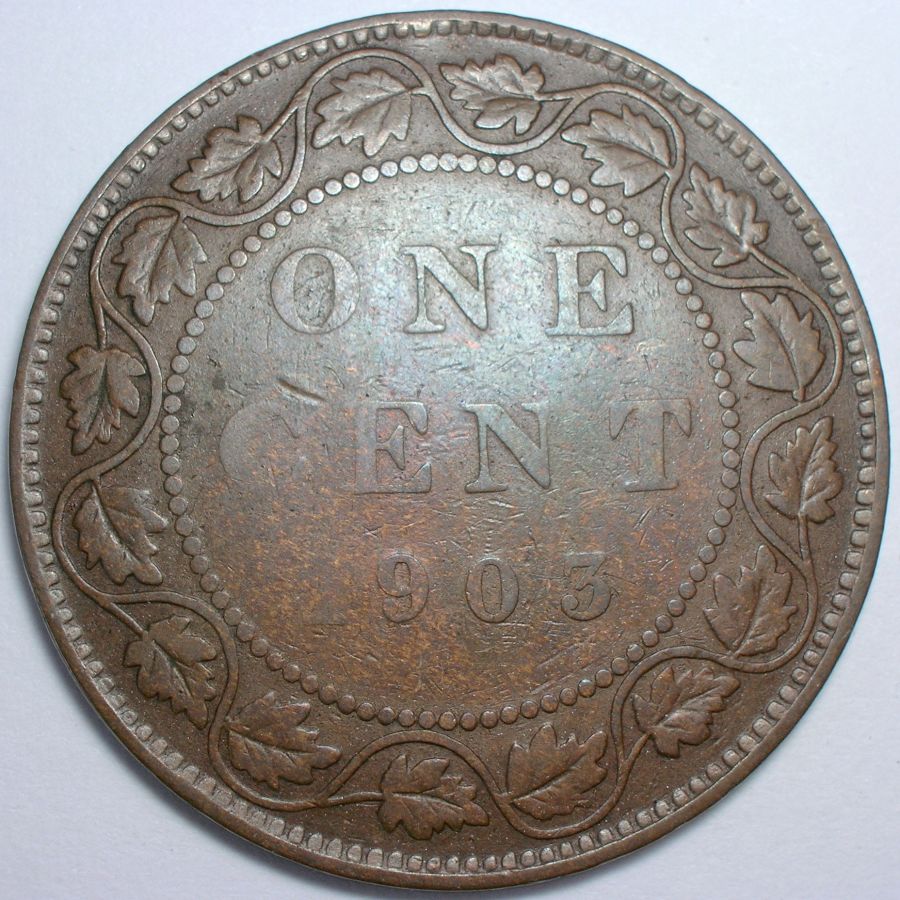 |
| |
Replies: 18 / Views: 3,261 |










 Posted 08/22/2015 1:50 pm


