| Author |
 Replies: 13 / Views: 2,155 Replies: 13 / Views: 2,155 |
|
|
Pillar of the Community
Canada
1267 Posts |
This is a coin a purchased a while ago and it was identified by the seller as PC-6B2 and Courteau Variety #243, Rarity 5. Couple of questions first is the variety number correct and can rarity 5 be translated into numbers such as less then <500? Can someone please help me with the grade? I'm thinking VF-30 Cheers, Bill 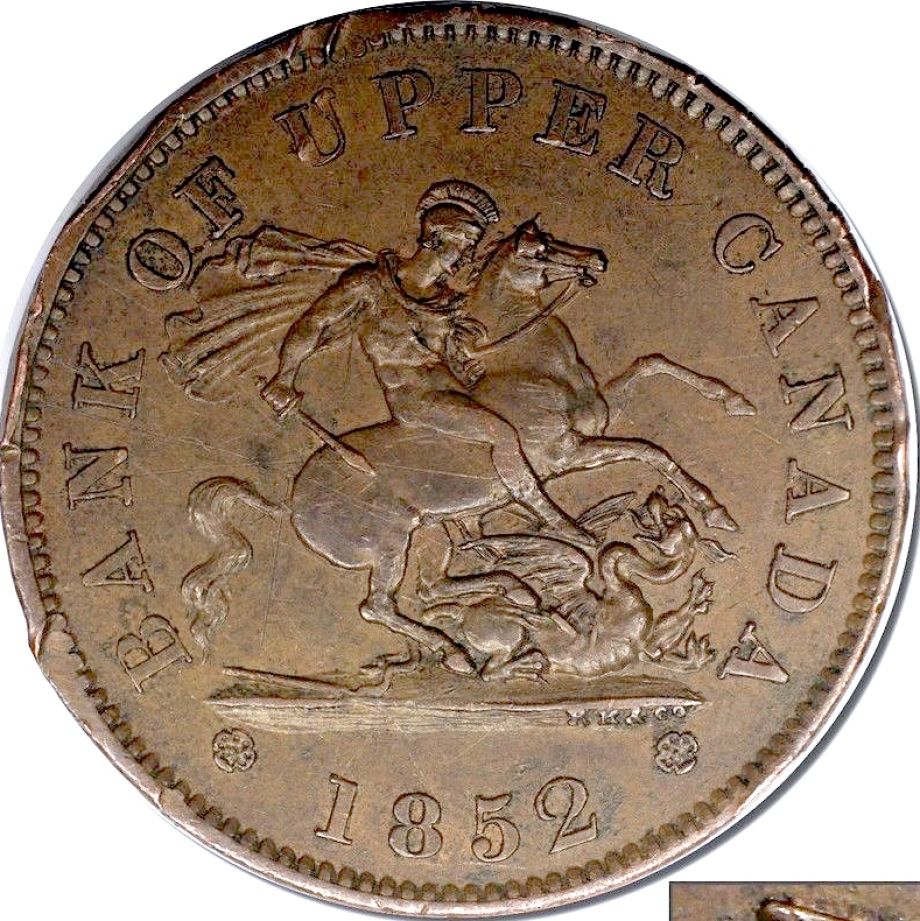 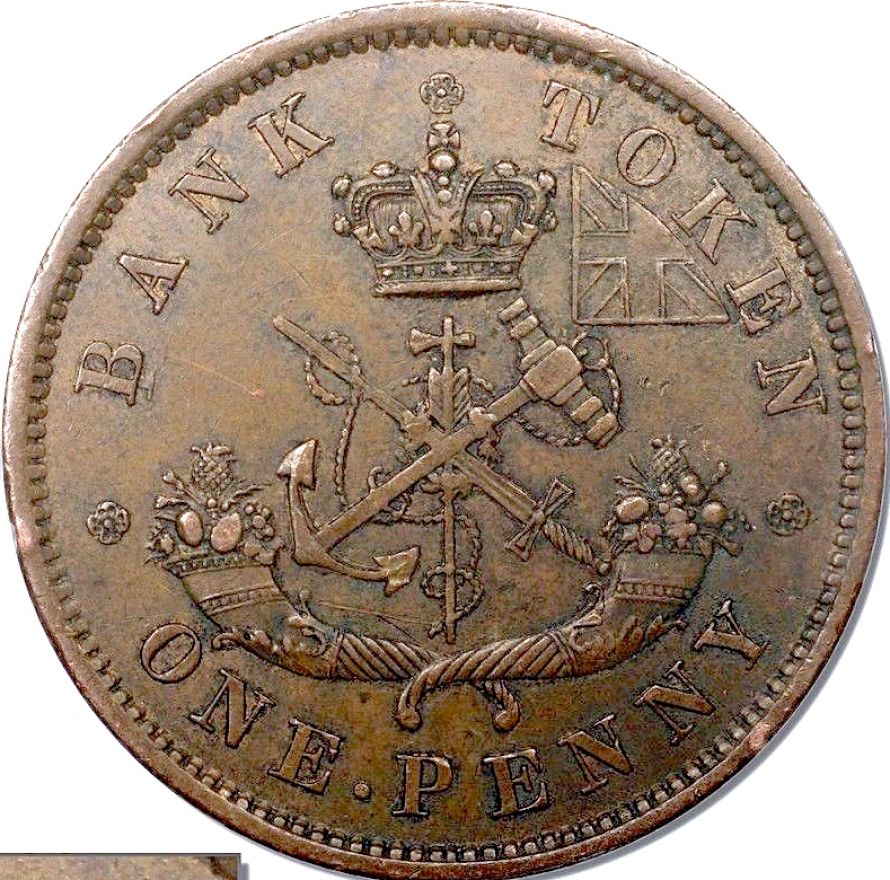 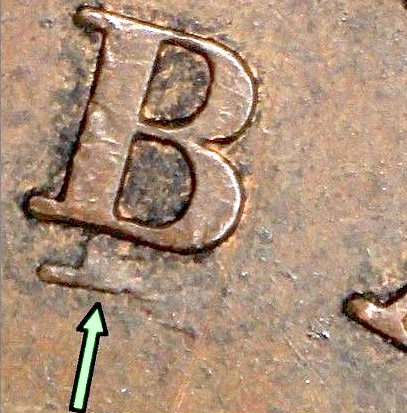 |
|
|
|
Pillar of the Community
United States
536 Posts |
With as many hits as you have on the rim, I don't see it getting anything but F-VF "Details".
|
|
Pillar of the Community
Canada
618 Posts |
Yes---Rim hits that extend into the denticles represent serious damage---Lovely doubling with great EF details. A great collector specimen to keep until you get a replacement---Sell for 40% of retail?
|
|
Pillar of the Community
United States
840 Posts |
The seller was correct, Courteau 243, R-5.
Absent the edge bumps and obverse scratches VF 30;
as is, net is VF 20.
A keeper.
Dr. Courteau gave this variety a rarity factor of 5
(on a scale of 1 to 10, with 1 being common). In my
experience, I find this variety more difficult to obtain
than the rarity factor indicates.
doug
|
|
Pillar of the Community
Canada
2785 Posts |
what sort of premium would this carry over its more common counterparts? based on these absolutely horrible pictures, could one assume that this looks to be the same variety ?   |
|
Pillar of the Community
 Canada
1267 Posts |
Hi Wade, It sure looks the same to me and if it's any help I paid $11 Canadian but mines damaged on the rev. also.
Cheers, Bill
|
|
Pillar of the Community
Canada
618 Posts |
Wow----it looks to be a variety to me---it must be extemely rare and not merely a mint error---my value estimate is the $11 X 50 = $550.The next trick is to get it recognised.
|
|
Pillar of the Community
Canada
2785 Posts |
you got yours as a buy-it-now? maybe it was underpriced?
for an R5 coin that seems cheap (even with the dings).
mine was unattributed and $25 USD. its maybe grades 40 (will have to get some better pictures)
i tried finding reference for a value, but haven't come up with anything so far.
|
|
Pillar of the Community
United States
840 Posts |
Nowadays very few collect the St. George series by Courteau number.
Within the series, there are well over 300 listed varieties, and I
have most of them. True, many varieties are super rare, but what is
even rarer is the knowledgeable collector of Courteau varieties. And,
the few serious collectors of this series privy to me have similar
collections. Currently, the number of collectors is not sufficient
to generate the expected prices for the comparable rarity.
In bygone years, tokens were all that was available for numismatists
to collect...then along came decimals, and tokens lost favour. Slowly
interest in tokens is re-emerging. For now, prices are being governed
by condition, and not variety rariety.
doug
|
|
Pillar of the Community
Canada
2785 Posts |
thanks Doug, your insight is always appreciated,
question about the rarity factor,
did Courteau use his own scale? does it coincide with other scales?
could you quote the populations associated with each tier?
I'm still searching for the book on these (so far only been able to locate digital copies of Courteau's bouqeet-sous series, PEI, and bank of montreals). I would like to find the Nova Scotia & Dragon series as-well to complete the collection.
cheers
Wade
|
|
Pillar of the Community
United States
840 Posts |
Numismatic pioneers such as Breton, McLachlan, Sandham, Lees, Wood, Gibbs, etal.,
each have indicated rariety data. Many of the works are rather generic and do not
recognize individual die-varieties within a given series. Other works provide a
rather extensive study of varieties (such as the Ships, Colonies, and Commerce
tokens, and the Bouquet Sou). Amongst the authors, the rarity factors provided
are comparable.
However, concerning the Habitant, St. George, Bank of Montreal series, Prince Edward
Island, etal., Doctor Courteau was the sole researcher to publish detailed studies
of die-varietes within the series. I do not know how Dr. Courteau arrived at his
rariety determination, other than to speculate being from a sound educated opinion.
As for Dr. Courteau's rariety scale, he used a scale of 1-10, with 1 being common.
Breton used a scale of 1-5, with 1 being common. Other researchers were similar.
Concerning specific populations, I am unaware of any relevant data as extensive
population data has never been compiled...and absent exhaustive research, the data
would be speculative. Aside from this most concur that Dr. Courteau's rarieties
are acceptable.
A similar situation is found in ascertaining rarieties of the hundreds of varieties
of the 1859 Victoria ONE CENT, identified in Dr. Haxby's masterful tome. At present,
insufficient data has been tabulated to render an accurate assessment. True, however,
many can form an educated guess as to what is rare, by what they are still lacking.
enough for now.
doug
|
|
Bedrock of the Community
Canada
10743 Posts |
Reading these posts, I have come to the conclusion, we have some great experts on this Forum..  Edit,, For spelling.  Edited by SHAFTA9a
09/17/2015 3:55 pm
|
|
Pillar of the Community
Canada
2785 Posts |
my own version (updated pics)   Edited by Wade
09/25/2015 9:26 pm
|
|
Pillar of the Community
United States
840 Posts |
Nice token. AU details / rim bumps / net XF 45
doug
|
| |
Replies: 13 / Views: 2,155 |
|







 Posted 09/14/2015 9:25 pm





