| Author |
 Replies: 26 / Views: 4,916 Replies: 26 / Views: 4,916 |
|
|
|
Pillar of the Community
United States
4963 Posts |
If the planchet is silver clad, you will be able to see the different layers on the edge (the core will be darker in color), while a 90% coin will have the same composition throughout.
|
|
Valued Member
 United States
264 Posts |
Well I tried the tissue test. I did not have a silver dollar, so I used a shiny silver thaler (hope it works the same. The coin to the right is the thaler, an Ike dollar in the middle and the planchet tpo the left. I included a rim photo. looks to be the same as the flat surface to my eyes. 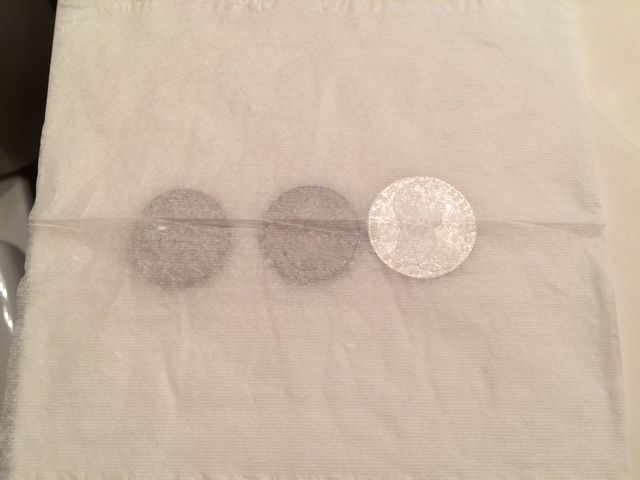 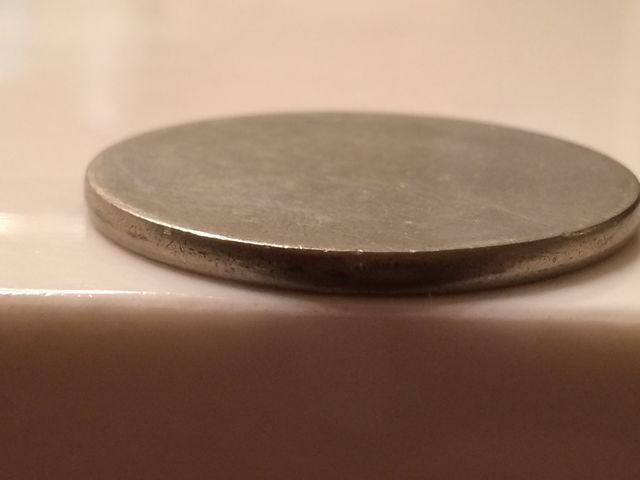 |
|
Pillar of the Community
United States
8537 Posts |
Looks like the real deal but have you tried a magnet on it yet ?
Oregon coin geek.....*** GO BEAVS ! ! ! ***
|
|
Valued Member
United States
264 Posts |
No magnetic attraction. What does that mean?
|
|
Pillar of the Community
United States
8537 Posts |
Means it's not a hunk of iron, that's good. One of the first things we do to detect counterfeits.
Oregon coin geek.....*** GO BEAVS ! ! ! ***
|
|
Valued Member
United States
264 Posts |
Learning a lot on one planchet!
|
|
Pillar of the Community
United States
4963 Posts |
|
|
Bedrock of the Community
United States
17884 Posts |
Edge doesn't look clad to me.
|
|
Pillar of the Community
United States
4963 Posts |
Me neither. I would be leaning toward a silver dollar, except for the weight.
|
|
Valued Member
United States
467 Posts |
Could it be planchet from another country? Canadian Silver dollar pretty close 23.xx grams
Edited by oober
10/09/2015 12:48 pm
|
|
Pillar of the Community
United States
4963 Posts |
That's a good point, oober. OP, did the person you inherited I from ever live or spend time in another country? Lots of countries have produced large silver coins like this. |
| |
Replies: 26 / Views: 4,916 |





 First Page


 Posted 09/19/2015 12:29 am


