| Author |
 Replies: 7 / Views: 2,051 Replies: 7 / Views: 2,051 |
|
|
Valued Member
United States
297 Posts |
A big issue ---when looking to get a copper coin or any coin for the matter--surface quality -is what straight grades a coin. But many copper coins have corroded or porous issues----and there is no were that I can safely compare to net grade properly. I would like to introduce a from 1-7 (quality planchet level grade system) that any one can more or less judge by. It is unfair that the person looking at a coin cannot make a proper net grade decision biased on a porous or corroded coin--correct ? Especially--when it means by hundreds or even thousands of dollars. So how would be a fair way to have a numerical guide with pictures from 1 that is very choice surfaces to 7 that's for extreme corroded. So with a fair % percentage number verses Net grading u end up with a price that makes sense. Example----- lets say a extreme corroded 7 level coin that the corrosion is almost totally obscuring the coin -would be %75 less of a higher level (6 level-that is good surfaces non porous at all,but can have some nics non prevalent )A level 7* is above average-of the normal(even ware no nics under magnification-even at G levels or AG or fair levels this shall be applied . ,so instead of lets say a 1796 rev 94 in fine is priced at $900 is #7 worst level-{ = $225 ) ( or level 4 = $585 ) (level 5 = $ 780. ect ect. Were not talking about split graded coins at this time--------it can create confusion crazy. So I think this is a great fair idea so when your out there looking a expensive coin that's a bit porous-------you will be able to fairly judge a net price accordingly. -- Ill put picture examples soon to show what I mean. AA
|
|
|
|
Bedrock of the Community
United States
12057 Posts |
Once you get out of 1/2 and Large cents, corrosion no longer is worth splitting into subgrades, unless it's something like a 1877 IHC or 1909-S VDB Wheat cent. Within 1/2 and Large cents, a planchet is either porous, or it's not. Porosity is not (usually) environmental damage, although you see a lot of people misuse the term when they mean "corroded." Corrosion IS environmental damage and can be subtyped, if you wish. However, unless it's a coin where the level of corrosion can really impact value (Chain, Wreath, Cap cents, Classic Head cents) splitting it into 7 levels would be a time-consuming effort with not much financial difference. When it comes to the aforementioned early Large Cents and Half Cents, such a system as you describe might have its uses, where a single Chain Cent or rarer Wreath variety can gain or lose several hundred or more dollars just between levels of surface ED. However, it would be as subjective as any other grading system, and what you consider a 25% corroded coin, another collector might think 50% or 10%. Much like toning, every advanced collector has their own ideas of what is and is not acceptable: some only want flawless planchets, others will take a coin on a porous or corroding planchet if it's still got good eye appeal, and still others will take any coin regardless of the surface just to put it in an envelope. Robinson's CQR system may be more coarse than fine when it comes to appeal but it's worked well for a long time. (I don't mind a scudzy coin, but you may, but we can both agree it's scudzy.) Just my one cent. AB Member ANA - EAC - TNA - SSDC - CCT #890 "Most of the things worth doing in the world had been declared impossible before they were done." -- Louis D. Brandeis |
|
Valued Member
 United States
297 Posts |
I already uploaded this image--but its a good example--- from porous that is micro ,I would fairly say it would be a level 5. So instead of VF 35 level 6 that's a non porous $21,000 coin.its a net level 5 and the price would be- $ 15,750. Minus other factors ( scratches or nicks rim bumps) yes I only uploaded the obverse side for just an example. This coin final balanced price safely sayin-- $14,200. 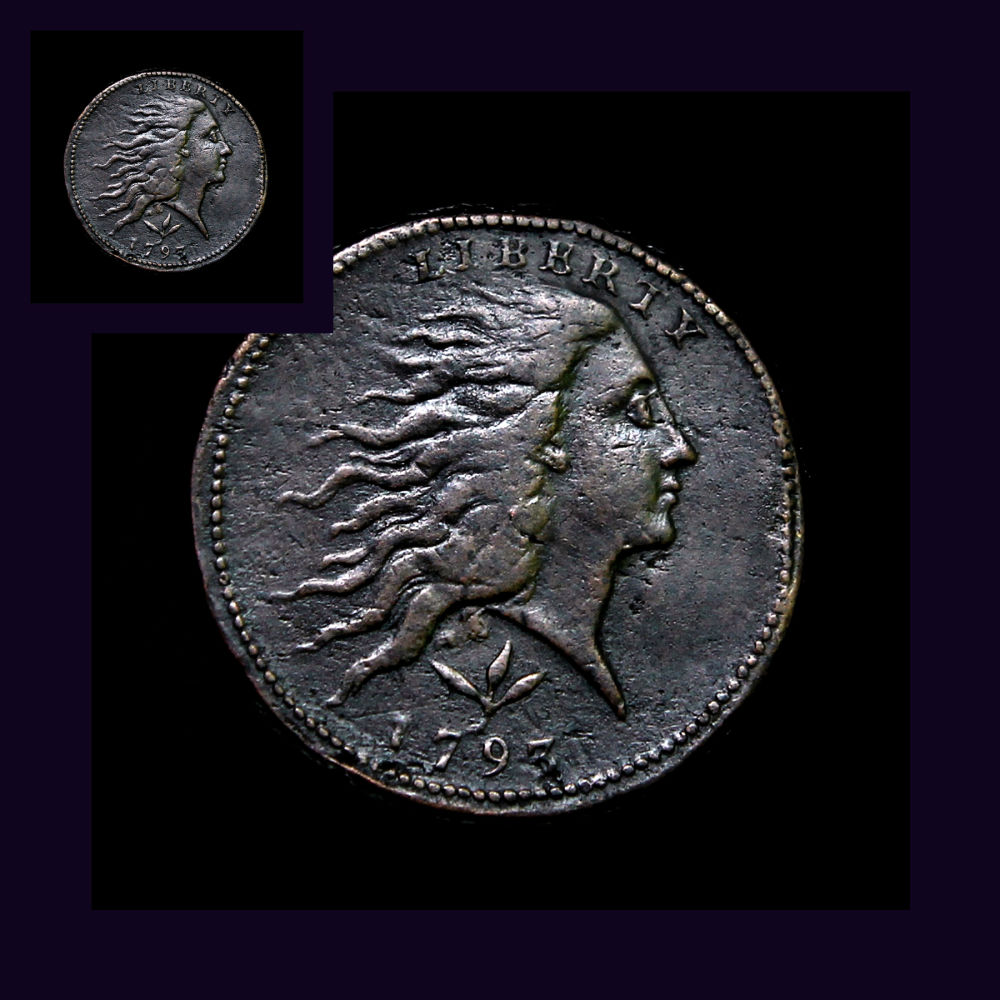 |
|
Valued Member
United States
297 Posts |
A ruff cut like the early grade book. Ill put real coin examples chart soon-this is just an idea 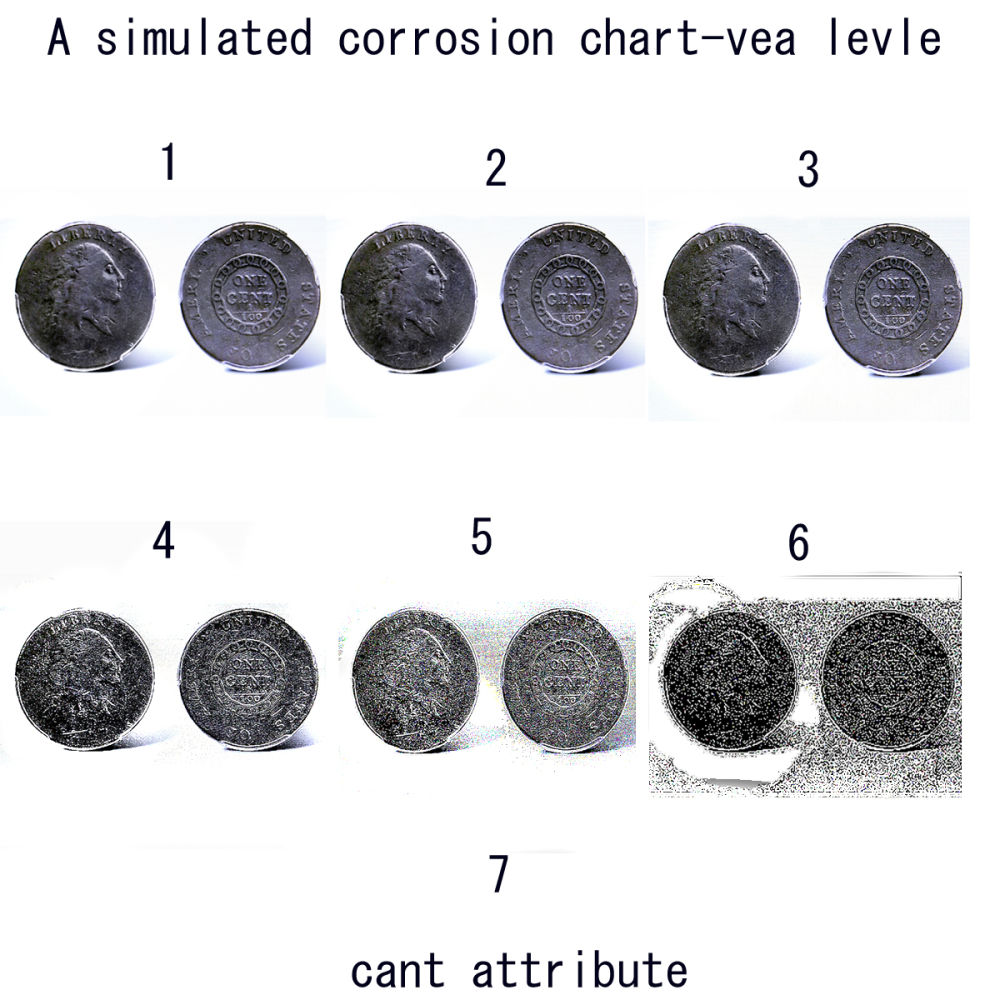 |
|
Valued Member
United States
297 Posts |
Why am I proposing this-is because if u want to know why coins come back from grading services as details grade-- its kinda not fair to be on the limbo on what to assume the net grade level is. I want to create a proper easy to compare photo plate example of corrosion or porous attribution via from 1-7 with a percentage to deduct for your coin-as expected in the real world. You have the right to know how to grade your coin !
|
|
Valued Member
United States
297 Posts |
So--first thing to see if u got a coin in hand---{1} What is it ? {2} how much detail can u see-looking at a basic grading guide.{3} Once u added all what u can see and matched the grade then is it corroded or porous ? {4} take a magnifier X2 {5} look at chart to see if coin matches clarity like the picture -from 1 to 7. ---------- So here is the percent to deduct on price to expect. 1 is No nicks non porous at all-even under magnification-- from AU till fair grades. 2 is normal non porous surfaces but will have few small nicks color will be light brown. 3 Now there is a obvious unclearness -in magnification u can see it lightly porous-but coin looks very nice and retain natural color brown or dark brown. 4* is when clearly its porous and usually dark color fine details gone. 5* Is a corroded level and gets tricky to attribute a variety-coin will appear very dark scuzzy or so. 6* Is very corroded- AU details are in net good4 levels as final--attribution very hard-coin will have green live verdigris patches holes in surface not through coin --coin black or weird other colors. 7* is Huge cuts damage Basil condition -imposable to attribute-coins are rarely in this poor state.
|
|
Valued Member
United States
297 Posts |
Level 1** is a super nice surface a silver coin can have beautiful colors in any grade would require a premium --price will be higher than normal-in the book. level 2* some nicks are ok and going by book price is a good indicator. Level 3 take %20 off price from grade designated. Level 4 %30 off. Level 5 corroded %45 off. Level 6 very corroded very hard to attribute %55-60 off ect. Level 7 junk %80. ----That is all my friends. Coins are a tricky part of us---im here to try to simplify. AA
|
|
Pillar of the Community
United States
1554 Posts |
We've been net grading LC's for many many years in the copper community with no problems other than opinion of what constitutes more of a net grade. You may want to study up on EAC grading and how we do it. It takes many years of practice and is more of an art form than a numbers system when determining net grade. We already use Choice, Average+, Average, Average-, and Scudzy when determining value. This takes time, sometimes years in learning this way of determining surface quality. Nothing can be perfect when it becomes an opinion on grade/value.
Edited by 1893S
09/27/2015 11:17 pm
|
| |
Replies: 7 / Views: 2,051 |
|







 Posted 09/27/2015 12:01 am


