| Author |
 Replies: 10 / Views: 2,927 Replies: 10 / Views: 2,927 |
|
|
Pillar of the Community
United States
4883 Posts |
This was a total impulse purchase today, but I'm finding myself unable to pin it down as to RIC# and denomination, which arouses the suspicion that it may not be genuine - except I bought it from a very reputable dealer who obtains such from a specialist vendor they trust. Appears to be bronze, 2.85 grams in weight, about 17mm in diameter, medal alignment. 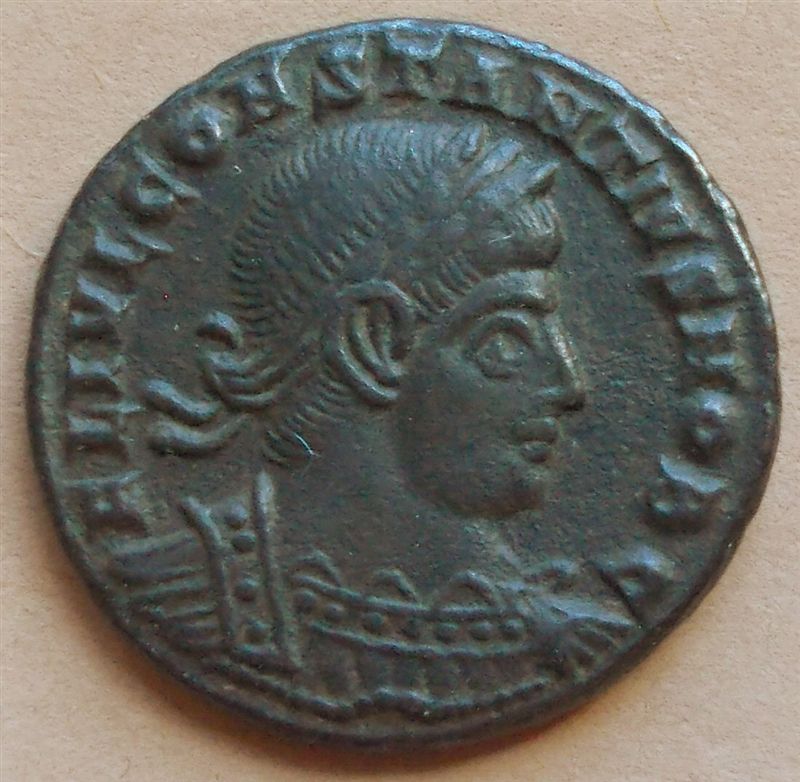 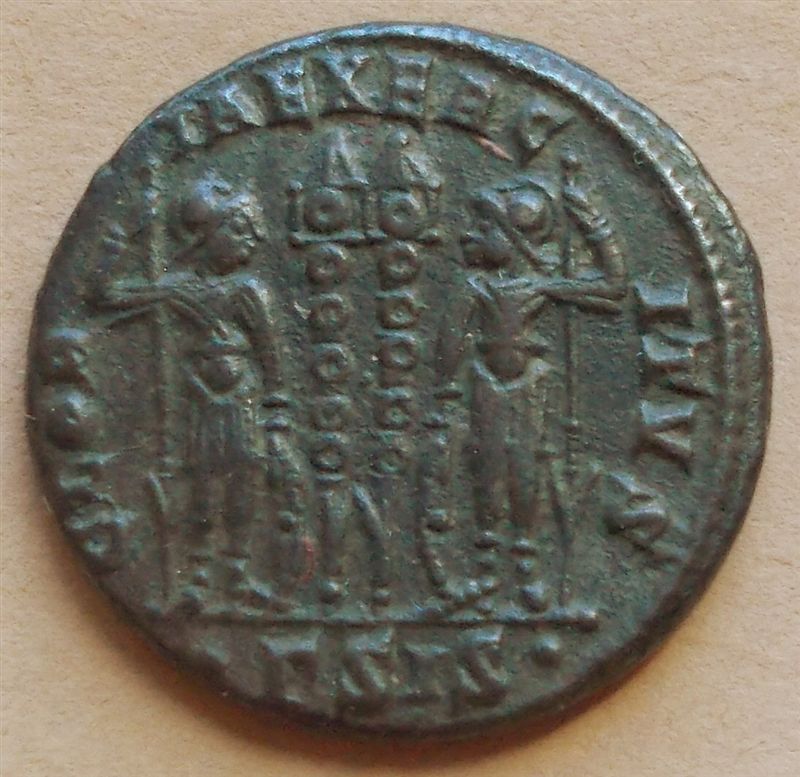 Colligo ergo sum
|
|
|
|
Moderator
 United States
23731 Posts |
I believe it's RIC VII Siscia 237. Rated R1.
|
|
Pillar of the Community
 United States
4883 Posts |
Thank you, that puts me on the right track at the very least. I did find this one which is certainly close: http://www.forumancientcoins.com/no...is238_e.htmlThere's one in the following gallery identified as RIC VIII Siscia 237, R4 which looks about right, too: http://www.doncstamps.com/SISCIA-MINT.htmlI'm continue to be amazed at how little many ancient coins command in terms of price, even when the condition is better than anyone has a right to expect. I don't think I overpaid for my specimen, but I'm presuming it's a pretty common item. Colligo ergo sum
|
|
Pillar of the Community
United States
4883 Posts |
I'd like to ask a few more questions on this one -
Is it a centenionalis? And if so, would've it been originally silver washed? And if the answer to that is a yes, have any survived with that wash intact?
And finally, what is the significance and/or meaning of the "NOBG" (if I'm reading that correctly) after the emperor's name?
Colligo ergo sum
Edited by Lucky Cuss
01/05/2016 10:08 am
|
|
Pillar of the Community
United States
870 Posts |
It is a C not a G. Nobilissimus Caesar.
Edited by MartiVltori
01/04/2016 10:27 pm
|
|
Pillar of the Community
United Kingdom
701 Posts |
Are you sure the mintmark says DOT EPSILON ? My eye is reading DOT GAMMA. Nice pick up though  |
|
Pillar of the Community
Belgium
1194 Posts |
as tenbobbit reads , it is dot gamma sis dot : siscia ,3th officina , rating r1 ;it is a centenionalis coin , a large bronze coin introduced about AD 320 to replace the follis. It is also called nummus.Very nice coin.albert
|
|
Pillar of the Community
United States
4883 Posts |
Thank you, everyone. Looking again, I should've surmised that it was a "C" following the "NOB" as it matches up with the "C" in Constantius. While I pride myself on being a quick learner, it's probably a measure of how little I still know about these that I was taking the character preceding the "SIS" mintmark to be a "P" signifying "pecunia". Quote:
Nice pick up Quote:
Very nice coin. I picked this out from a tray of a couple dozen Roman bronzes, all priced the same, and while none were in really terrible condition, this specimen just stood out to me. At my level of {un}sophistication with regard to such, that seems like as good a basis to choose one over another as any. Colligo ergo sum
Edited by Lucky Cuss
01/05/2016 10:06 am
|
|
Pillar of the Community
United States
949 Posts |
Quote:
it is a centenionalis coin , a large bronze coin introduced about AD 320 to replace the follis. It is also called nummus. Hi Albert. With all due respect your report contradicts Sear, Roman Coins in which the centenionalis is reported as having been introduced in 348 as part of a reform of the bronze coinage by Constantius II. That coin was of an AE2 module, and tariffed at 100 to the solidus. The Gloria Exercitus coins like the one here were much earlier and smaller. They were a diminution of the follis after the defeat of Maximinus II in 313, and the usual way of referring to them is as an AE3. This example from Siscia is dated by Bruun (RIC VII) to 334-35, just ahead of the further reduction to an AE4 module. So the best way to refer to the denomination of this pretty little coin, according to David Sear, is as an AE3. |
|
Pillar of the Community
United States
4883 Posts |
Well, so would my specimen be in fact some sort of "mini-follis"? What might a Roman citizen of the period have called it or valued it as? I see references to exchange of minor bronze coinage being by weight in aggregate as opposed to individual pieces. Would've that been the norm for a coin like this?
Also, I'm still wondering if it was originally silver washed.
Colligo ergo sum
|
|
Pillar of the Community
United States
949 Posts |
Quote:
Well, so would my specimen be in fact some sort of "mini-follis"? Numismatically it is indeed a reduced follis, but we do not know for sure what it was called in antiquity. Quote:
What might a Roman citizen of the period have called it or valued it as? The ancient coin names for these denominations are not known. Even the term "follis" as a name for coinage is of comparatively modern origin, being in fact the Roman word for "leather bag" which seems to have been the kind of pouch used to carry their coins with them. That said, early Islamic coinage had a denomination which was called the "fals," which Adrain Room claims is derived from "follis" and was applied to various small bronzes. Quote:
I see references to exchange of minor bronze coinage being by weight in aggregate as opposed to individual pieces. Would've that been the norm for a coin like this? Not sure what you were reading, but coins were certainly used singly and in aggregate as circumstances required. It also varied according to the economic condition of the empire, prices and the tariffing of currency. Generalities are hard to support for very many years at a time. Quote:
Also, I'm still wondering if it was originally silver washed. By the time the Gloria Exercitus reverse came into use, the AE3 was not normally silvered. However, at the time of the introduction of the AE3 in 313 it often was. Mint state examples of AE3 issues prior to 330 are hit or miss on the matter of silvering, and it is not clear (to me at least) what the official policy actually was. Maybe someone else here can shed more light on that. Edited by lrbguy
01/05/2016 5:32 pm
|
| |
Replies: 10 / Views: 2,927 |
|










 Posted 12/02/2015 10:16 pm


