| Author |
 Replies: 14 / Views: 2,133 Replies: 14 / Views: 2,133 |
|
|
Pillar of the Community
United States
6130 Posts |
I am still in shock that I won this auction for so little: http://www.ebay.com/itm/Lot-of-4-co...221970128219? I was going for the two Olbia dolphins, but the denarii seem to be worthwhile coins, even with some good honest wear. I don't typically spend this much per coin, but this makes both my first dolphin coins, and my first Roman silver. At just over $5 per coin after shipping, I just couldn't pass it up.     Thoughts welcome as always. Also, I know extremely little about these dolphin coins--are there any specific styles that can give clues as to age or place of origin? Edited by Finn235
12/23/2015 07:39 am
|
|
|
|
Pillar of the Community
United States
7067 Posts |
Great deal, Finn! Congrats. As I've said before, I love when good things happen to CC-Family members. I believe dolphin money from Olbia is usually just listed as 5th to 4th century BC, isn't it? I would speculate that the more naturalistic ones, with dorsal fin and eyes, may be from the later part of that range...but that's just an assumption. There's a decent but short write-up about these at Ancient Imports here: http://www.ancientimports.com/cgi-b...ory.pl?id=79 |
|
Moderator
 United States
23731 Posts |
Good deal. The dolphin coins are easily would that each.
|
|
Pillar of the Community
Russian Federation
5186 Posts |
I've been under the impression that the pretty dolphins are supposed to be earlier than the crude ones, not later.
And I think I've seen attributions of the type pretty much everywhere from 7th to 1st century BC (though the very late attributions are much less common).
|
|
Pillar of the Community
United States
7067 Posts |
I just came across this interesting tidbit in some listings by Forumancientcoins:
"Small cast dolphins were cast in Olbia, beginning 550 - 525 B.C., first as sacrificial objects for worship of Apollo and later as a form of currency."
|
|
Pillar of the Community
United States
949 Posts |
There is apparently a connection between the dolphin coins as sacrificial artifacts and their use as currency. See below. Marc had not done his homework in his writeup on the Olbian dolphins. In fairness, his interest was in selling some coins with a quick story. But the story is actually bigger and more interesting than he could have supposed. Here is a writeup which, while not authoritative either, takes up some aspects of ancient dolphin lore that I think has connection to things familiar to most collectors. http://www.pbs.org/wgbh/pages/front...an/myth.htmlHere are two sentences that I think are loaded: "In later myths, particularly in Roman literature, and again in art and statuary, it is the dolphin that carries souls to the 'Islands of the Blest', and around the Black Sea images of dolphins have been found in the hands of the dead, presumably to ensure their safe passage to the afterlife. Taken together these references seem to point to a deeper association with the processes of life, death and rebirth, perhaps linked to the dolphin's ability to pass between the air-breathing, living world of humans and the suffocating, terrifying world beneath the waves, which for the Greek sailors could easily be identified with the kingdom of the dead. " I don't like his speculative comments, and lot more background is needed to make a convincing argument out of these claims, but these two points are amplified and illustrated in the article with examples from ancient mythology, and they deserve some consideration. I am particularly impressed by the comment, "images of dolphins have been found in the hands of the dead." Wanna bet that dolphin coins are being referred to here? If that could be established, then it is entirely conceivable that a dolphin (coin) in the hand had the same cultural function as coins on the eyes in other parts of the world at that time (which paid the boatman on the river Styx). But the parallels in other ancient stories mentioning, or even discussing, dolphins, makes it quite clear that the interest was much more involved than a mere fascination with cavorting animals. These creatures got associated with some very heavy concepts in the ancient world. The association with Apollo, entirely omitted in Marc's notes, is perhaps the most profound, centered as it is in the Oracle of Delphi. The Greek word delphis with the meaning "dolphin" is a later derivation of the word from its original meaning as "tripod." I think the article gives us some idea of how that change may have come about. More can be said, but the point is that these coins are not merely cute little ditties from the past, but icons of an involved interplay between images and faith in an antiquity that predates Greek literature and history. It is fascinating stuff. |
|
Pillar of the Community
United States
7067 Posts |
Very interesting background, Irbguy.
|
|
Moderator
United States
23731 Posts |
As a person that spent over 20 years in the sea going services I've had many occasions to see dolphins follow our ship and play . At night laying in my bunk which was below the water line you could hear their chatter. To us the sight of dolphins were always a good sign.
|
|
Valued Member
Belgium
464 Posts |
Don't wanne be a party pooper but don't I c casting rims on the dolphins or is that normal? 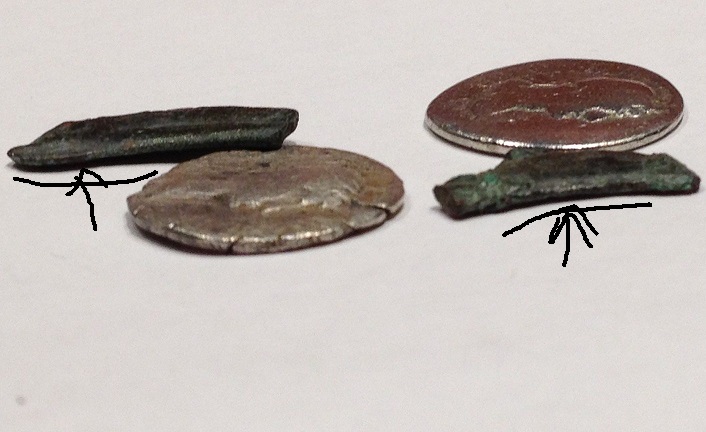 Edited by dohcollector
12/25/2015 09:35 am
|
|
Pillar of the Community
United States
7067 Posts |
Normal. These were all cast, not struck. The Ancient Imports link I provided, above, describes the casting method.
|
|
Valued Member
Belgium
464 Posts |
pfffw.... thank you for that info Bob
|
|
Pillar of the Community
United States
5010 Posts |
nice! I picked up a couple of dolphins as well...just to show some of a different style.  |
|
Pillar of the Community
United States
7067 Posts |
|
|
Pillar of the Community
 United States
6130 Posts |
Those are some really great dolphins!
And thanks to all for the links to some really great articles. I will be sure to do some digging on the subject on my own, when time permits.
|
|
Pillar of the Community
United States
949 Posts |
Some of the Olbia dolphin coins bore short inscriptions. There are two types. The longer text reads "APIX" (not pictured). The other, as here, bears the two letters theta-upsilon, QY: 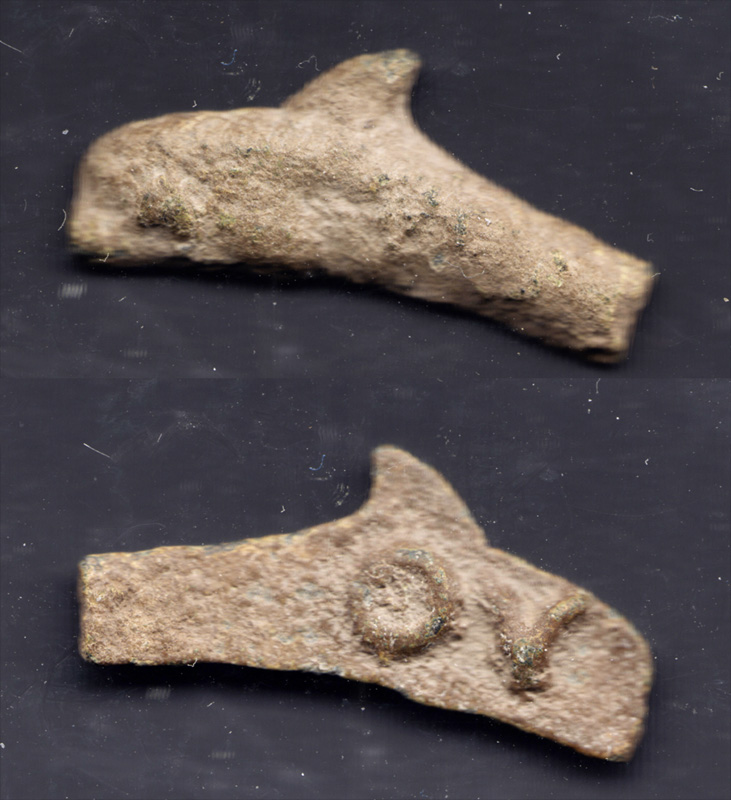 I have not found any reference that explains the significance of these letter inscriptions. Though not common, the inscribed coins are not howling rarities. |
| |
Replies: 14 / Views: 2,133 |
|






 Posted 12/23/2015 05:39 am





