| Author |
 Replies: 27 / Views: 4,058 Replies: 27 / Views: 4,058 |
|
|
|
Valued Member
 Canada
352 Posts |
its raise if its pressed with another coin I dont think its raise... I think the machine punch the rim twice?
|
|
Moderator
 Canada
10477 Posts |
The press is exerting many _tons_ of force on each strike. When coins are struck twice, it usually obliterates features from the previous strike. This is what your coin would look like if... Quote:
the machine punch the rim twice 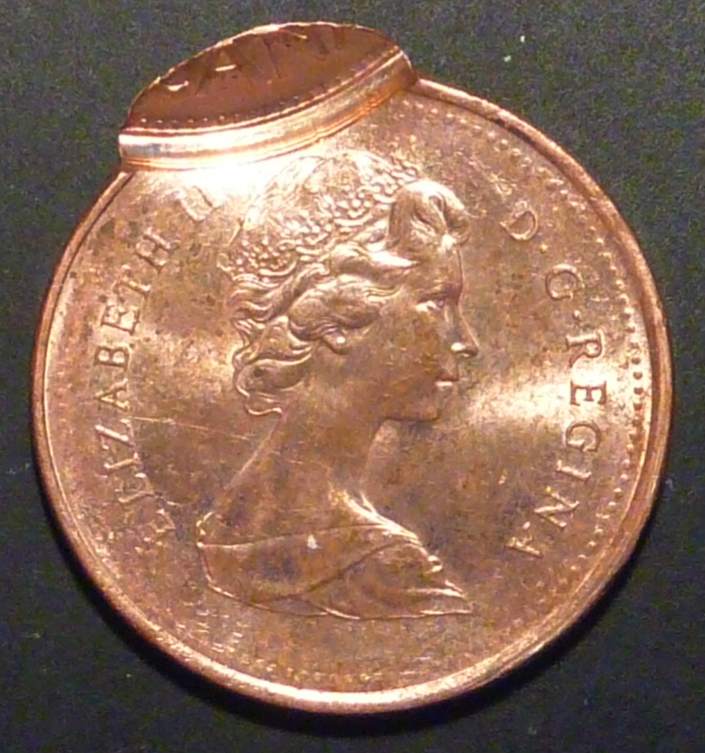 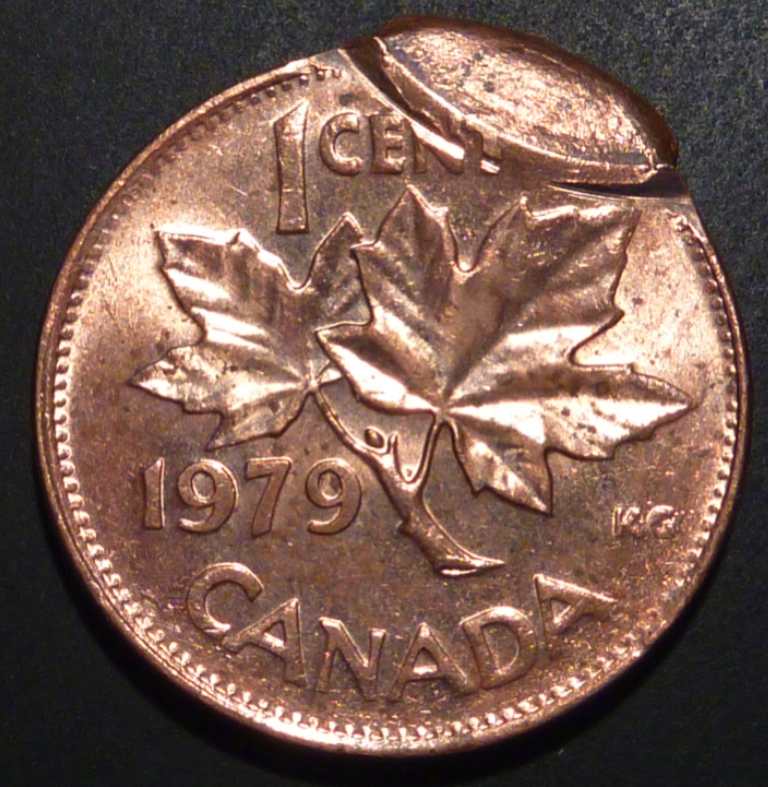 Sorry, your coin is post-mint damage, and worth only face value. "Discovery follows discovery, each both raising and answering questions, each ending a long search, and each providing the new instruments for a new search." -- J. Robert OppenheimerContent of this post is licensed under a Creative Commons Attribution-NonCommercial 3.0 Unported License. See: http://creativecommons.org/licenses...0/deed.en_USMy eBay store
|
|
Valued Member
Canada
352 Posts |
thanks SPP But I'm just wondering how whould PMD can make to row of beads? |
|
Pillar of the Community
United States
4963 Posts |
Quote:
its raise if its pressed with another coin I dont think its raise... I think the machine punch the rim twice? If it is pressed against another coin, the beads are incuse, not raised. That is the case here. |
|
Valued Member
Canada
352 Posts |
Numisma the beads is RAISED
|
|
Pillar of the Community
Canada
2430 Posts |
Sorry domys, I believe you have PMD on your coin. |
|
Moderator
Canada
10477 Posts |
Quote:
Numisma the beads is RAISED Quote:thanks SPP But I'm just wondering how whould PMD can make to row of beads If you are talking about the features on the reverse (3 o'clock), which your latest photos with arrows on them are showing, then you are seeing an optical illusion. The denticles appear to be raised, but you are seeing the spaces in between the denticles that were pushed into the rim. Imagine this (since it is Christmas) - you take a dinner fork, and press it into your mashed potatoes... the tines of the fork will form the lows, and the spaces between the tines will be raised, like your "denticles" on the reverse. The pattern is the exact same as the denticles, just opposite. On some silver coins, you may see the same feature, but all the way around the coin and those may be different (clash marks of the reeded collar die). That is not possible with 1c coins, since the collar die is smooth (coin has smooth edge). "Discovery follows discovery, each both raising and answering questions, each ending a long search, and each providing the new instruments for a new search." -- J. Robert OppenheimerContent of this post is licensed under a Creative Commons Attribution-NonCommercial 3.0 Unported License. See: http://creativecommons.org/licenses...0/deed.en_USMy eBay store
|
|
Valued Member
Canada
352 Posts |
SPP thanks for the input the denticle and the line you mean is optical? i touch it it is raise how can we make the line by pressing another coin? Please picture 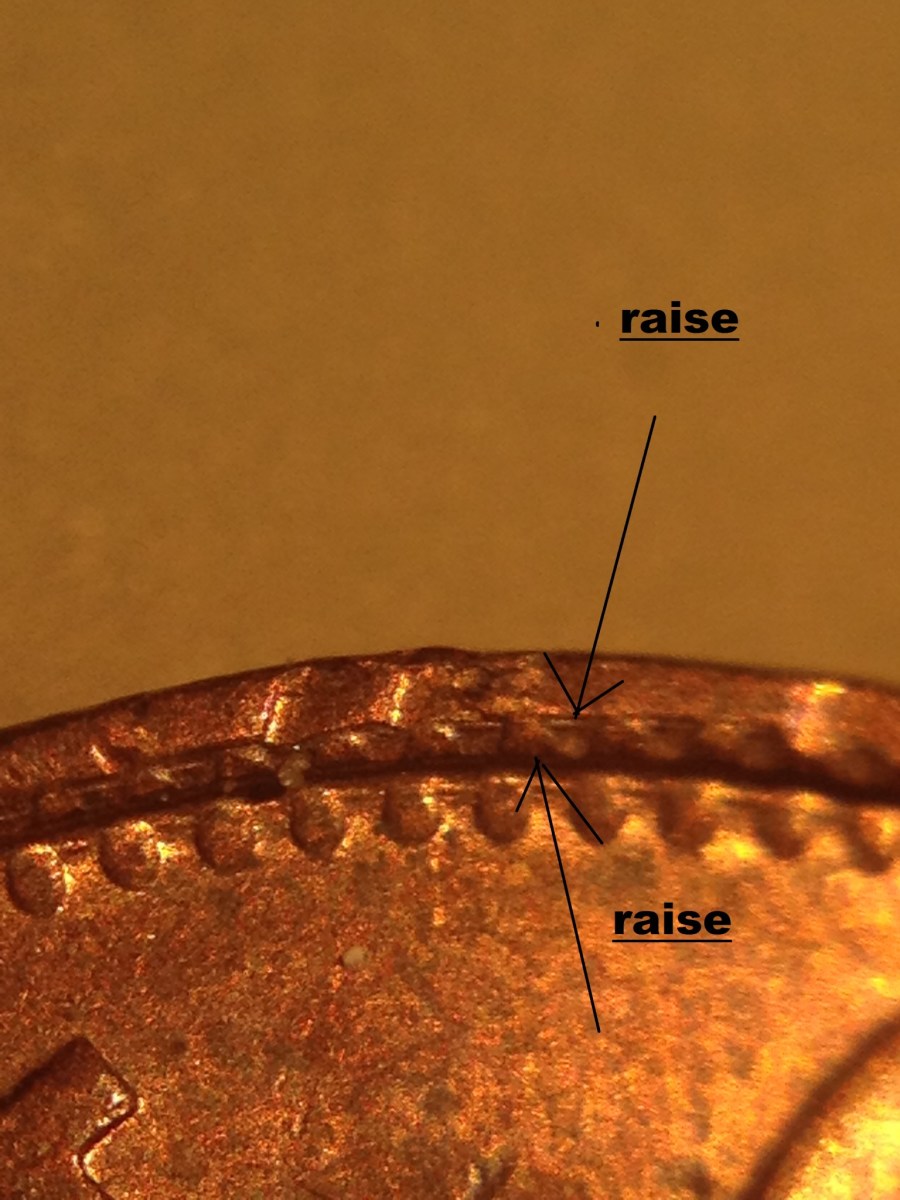 |
|
Pillar of the Community
United States
4963 Posts |
The raised area is the space between the incuse denticles from the other coin.
|
|
Pillar of the Community
Canada
2632 Posts |
That area in your last pic is machine damage, the denticles are along the very edge of the die face. IMO
|
|
Pillar of the Community
United States
4963 Posts |
I don't think so, if the device had MD it would be the normal size but partially flattened.
|
|
Pillar of the Community
Canada
2632 Posts |
By the way Happy New year This area is machine damaged, not sure how another coin could do that half way around the inside wall of the rim without flattening or damaging the top of the rim. 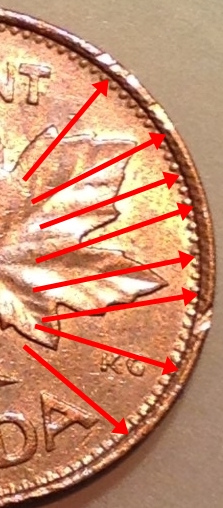 This is damage from another coin. 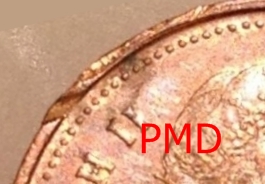 |
| |
Replies: 27 / Views: 4,058 |








 First Page


 Posted 12/27/2015 11:37 am


