| Author |
 Replies: 13 / Views: 1,955 Replies: 13 / Views: 1,955 |
|
|
Pillar of the Community
United States
663 Posts |
|
|
|
|
Pillar of the Community
United States
5825 Posts |
First, terminology.
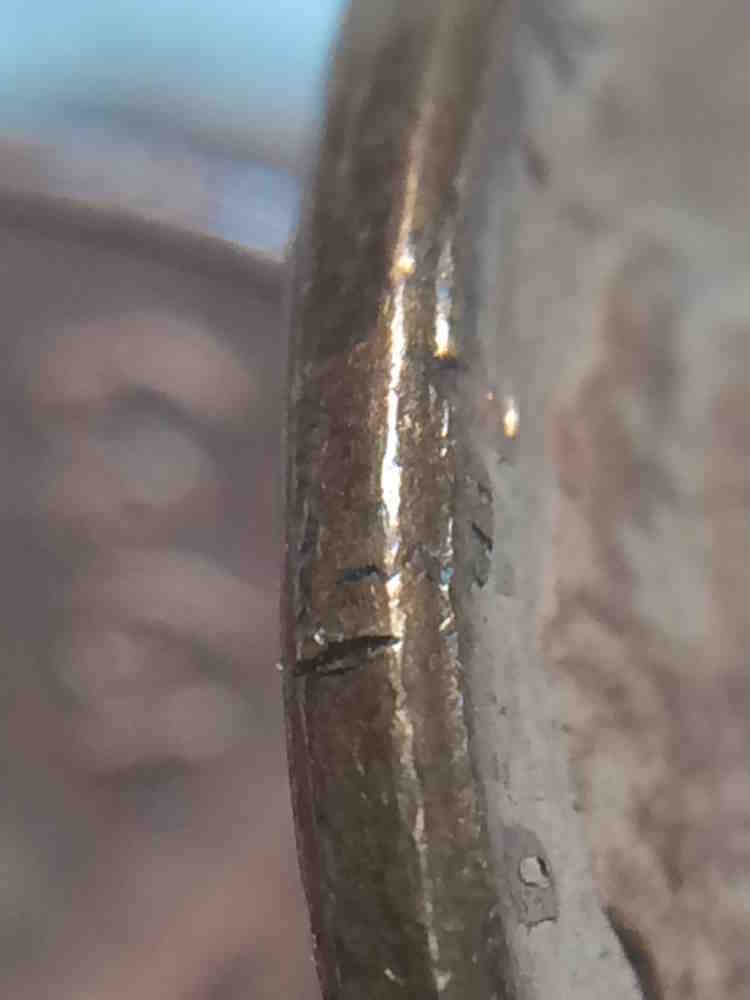
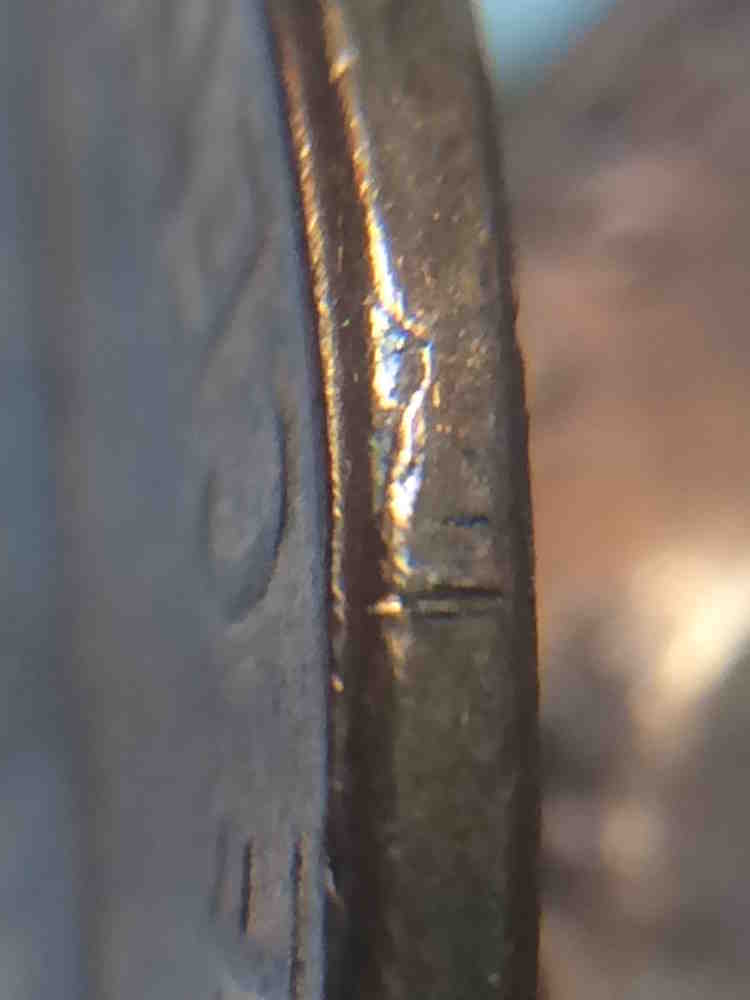
In your case when you say "the crack started on the rim" the correct terminology is "edge" (often called the third side of a coin).
The "rim" of a coin is totally on the obverse.
~~~~~~~~~~~~~~~~~~
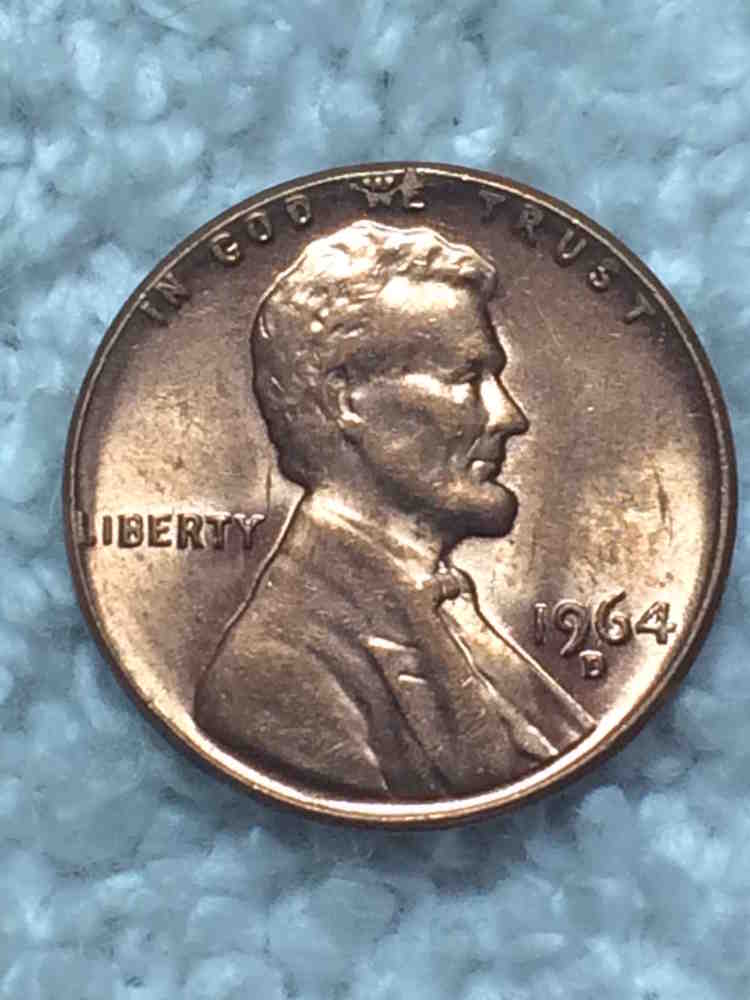
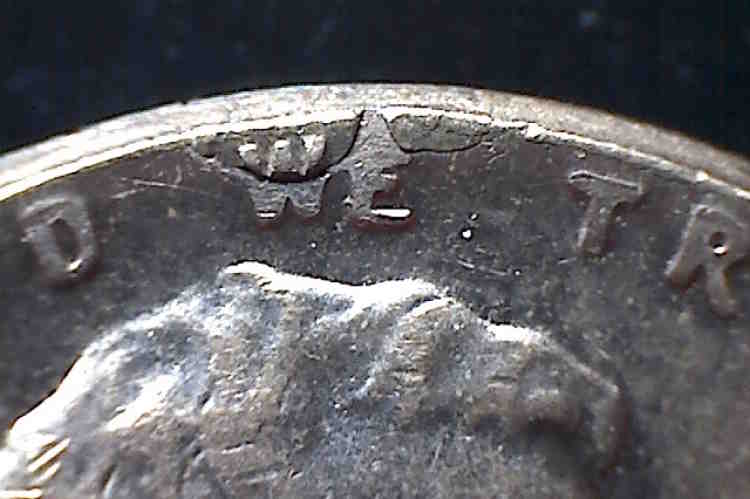
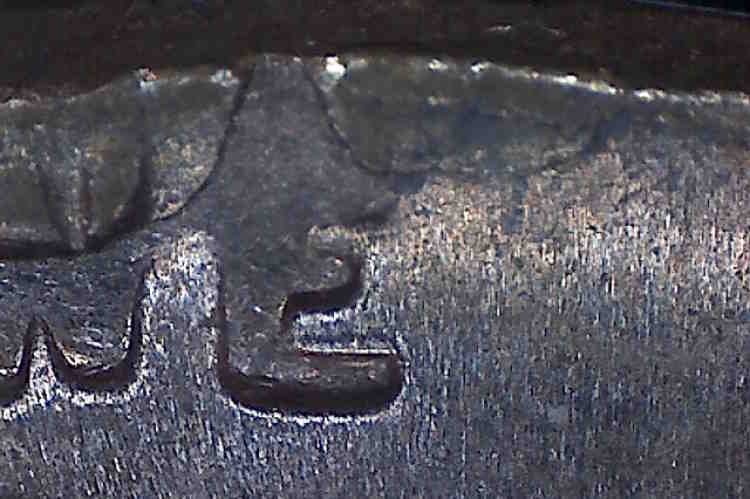
IMO what you have is a foreign scrap of metal that got included in the edge and lapped over the rim during the strike.
I base this opinion on the fact that the "WE" got blocked from being fully struck.
Interesting item.
No idea of a premium if any.
|
|
Pillar of the Community
 United States
663 Posts |
Agh! Yeah, I used the wrong terms.....thanks for setting me straight! :)
So would you call it "struck through" then?
|
|
Pillar of the Community
United States
3363 Posts |
Is the area on the edge raised or indented?
|
|
Pillar of the Community
United States
663 Posts |
|
|
Bedrock of the Community
United States
62064 Posts |
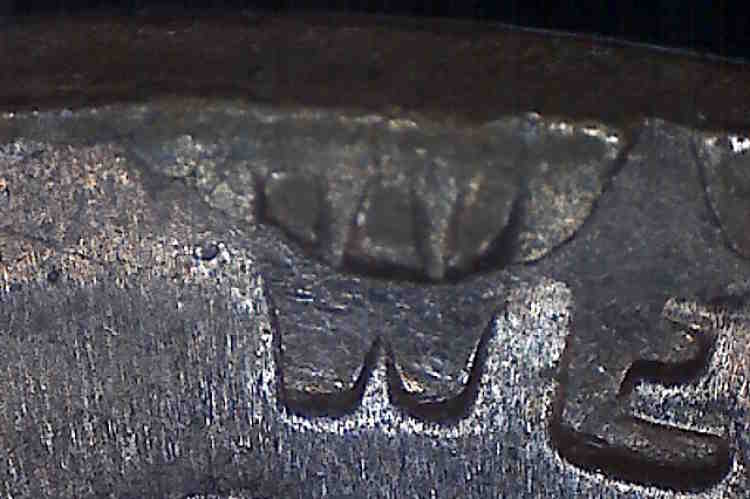
Looks like a partial Grease Fill on those devices on "WE" Note how the devices are wider on the bottoms of these devices. The devices on the die are wider at the base and taper as if gets deeper on the bottom of the die. Thus when a device is partially filled, then the narrowed tops of the devices are blocked during the strike, leaving the devices looking wider. Where there is no fill (the tops of "WE") then the devices are normal. So I feel this is a struck through error. (partial device fill on these devices) I ruled out a lamination, because when this happens, the devices will show a ghost image. These are strong on the bottoms of the "WE", so I ruled out a lamination peel. |
|
Pillar of the Community
United States
1512 Posts |
|
|
Bedrock of the Community
United States
62064 Posts |
No. There is nothing missing from the die. Just a blockage of the strike.
|
|
Pillar of the Community
United States
3363 Posts |
I do not understand how a Struck Through Grease can produce the raised area across the top of the W and above and to the right of the E? |
|
Pillar of the Community
United States
1915 Posts |
I think it is a combo struck through and PSD. Across the W the area that is raised is caused by metal flow. There was no place for it to go in the die(remember the devices are incuse on the die), so it went to the area with the least amount of resistence. Which would be in the unobstructed areas of the die devices. Edited by seal006
01/05/2016 3:28 pm
|
|
Rest in Peace
United States
1943 Posts |
I think it looks like an area with two small rolling fold errors.
|
|
Pillar of the Community
United States
3363 Posts |
|
|
Pillar of the Community
United States
663 Posts |
Thanks for all of the feedback on this one guys!  I kinda thought the consensus was going to be some kind of die break or Cud.I thought maybe part of the die broke off, like the top part of the "E". It almost seems like the planchet is blank in the area that sits lower, like in between the two broken pieces. Is that possible? Could a part of the die partially broken off? Maybe the rest of the "W" and right of the "E" eventually broke off later? In the meantime, would the part of the die that remained intact kept the die from striking the planchet in the broken area, therefore not only not leaving an imprint (or even leaving the weak strike look on the bottom of the "W", but also not creating the typical Cud that would be there if the whole thing were gone? I'm probably way off....yeah? |
|
Bedrock of the Community
United States
62064 Posts |
If the device broke off it would be raised on the coin like a Cud. But because it is showing the normal devices, it is not a Cud. It is a case of just part of the device being filled with a small amount of grease. The part of the device was not filled. where is was filled the device area is wider. Where there is no grease then the device is normal. |
| |
Replies: 13 / Views: 1,955 |
|









 Posted 01/05/2016 09:51 am





