| Author |
 Replies: 29 / Views: 3,430 Replies: 29 / Views: 3,430 |
|
New Member
Canada
28 Posts |
Attached are 2 pics (from an USB microscope) from a large cent 1882H C2 (front and right side view) I recently purchased on ebay. Though the coin was cruddy, the seller confirmed there was a big die chip on the I of Dei. After cleaning up the coin, I can safely assume that this is not a die chip. Frankly I cannot figure out if this is the result of damage on the minting tools, an error (striking damage) or post-mint damage! My first thought was PMB but I cannot explain how you can get a nice roundish "O" with a raised side instead of a crater shape side. The coin is in VG condition so the obverse's raised elements are uniformly worn. There are no disturbances on the reverse (leaf 2 area) indicating a strong blow/punch on the obverse. Even under a microscope, I am not sure if the bottom of the hole of the "O" is lower or even with the field of the coin. Considering that a lot of metal would be required to create an "O", it would make sense that the hole be deeper in order to get that extra metal. From the right side view pic, there are a lot of ripples, wrinkles or ridges on the right side of the "O". This may indicate that metal was pushed. Most importantly, has anyone seen this before! This could help in narrowing down the possibilities. Thanks. 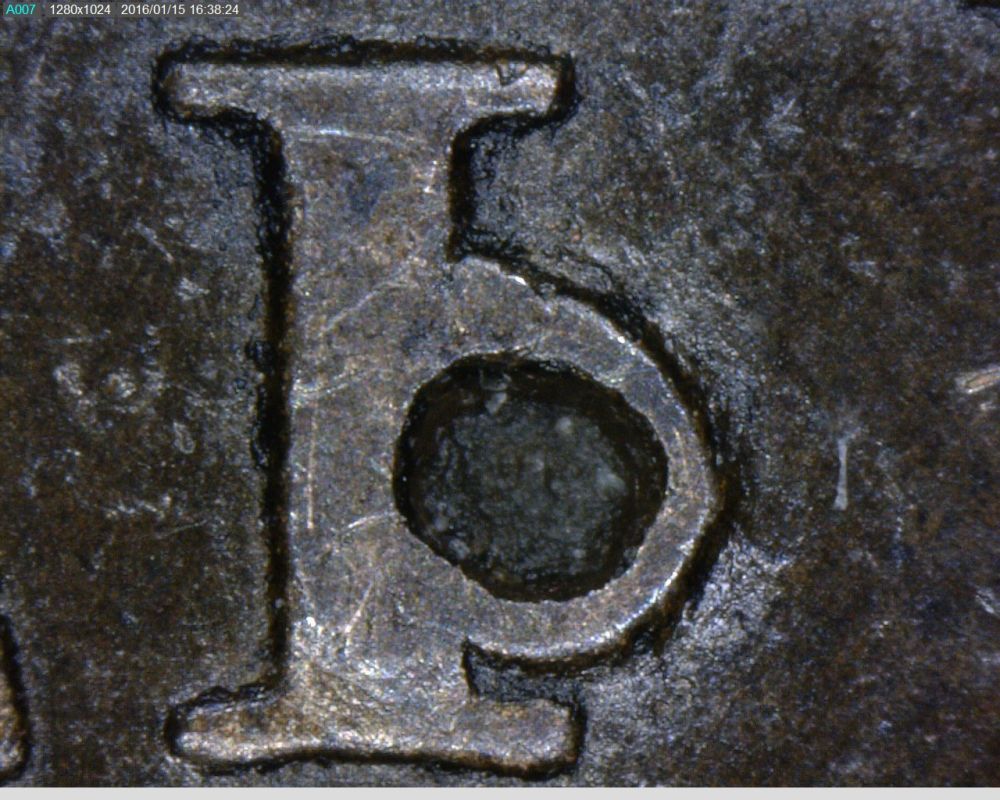 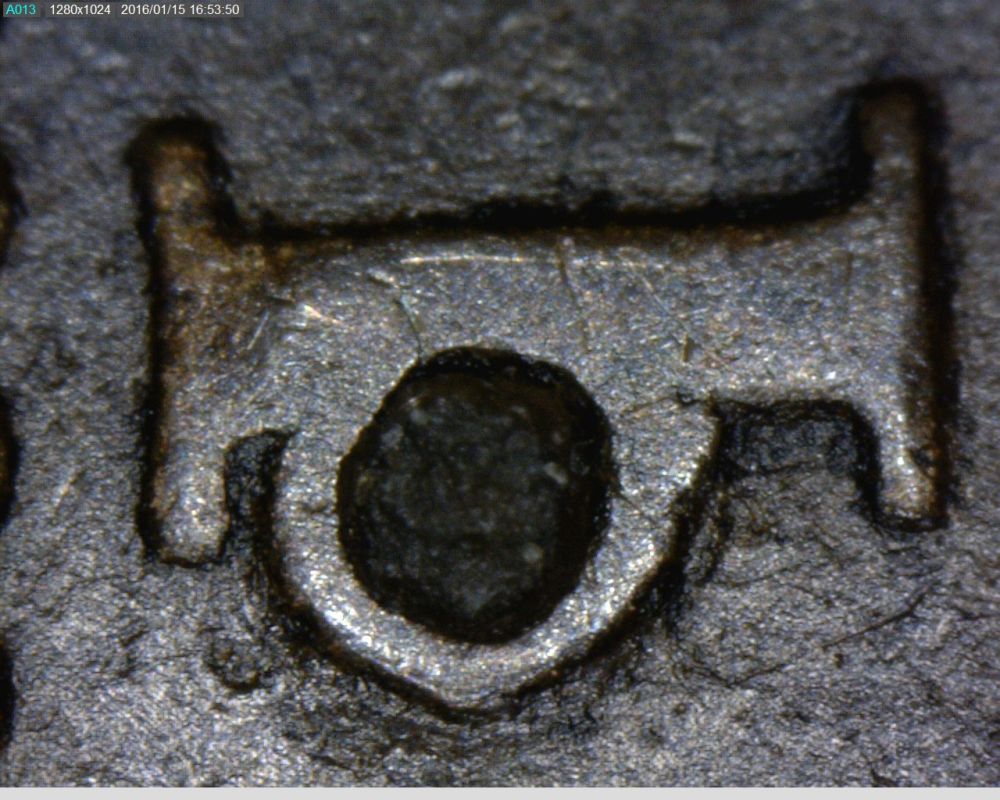 |
|
|
|
Pillar of the Community
Canada
1505 Posts |
Can you show a picture of the whole coin on both sides?
It could have had a hole punched in it, which was then filled/repaired, with the OBV being worn to leave a nice "o" and no jagged edges.
Looks kind of neat though
Edited by purelywasted
01/17/2016 1:59 pm
|
|
Pillar of the Community
Canada
2632 Posts |
Quote:
Can you show a picture of the whole coin on both sides  |
|
Pillar of the Community
 Canada
5646 Posts |
Grav posted this on another, private site and some of us have been tossing around how this could have accurred for the last few days. It is the strangest thing that I've ever seen, that's for sure.
|
|
Valued Member
Canada
320 Posts |
It does appear to be struck like that and not added after... The field inside the anomaly looks fairly flat and defined. The transition into the I is smooth.
Its a head scratcher.
|
|
Pillar of the Community
Canada
2632 Posts |
Not to sure what to think without seeing the rest of the coin and considering nobody so far has ever seen another one so that would suggest PMD. Perhaps from a welders bench long time ago thus effecting only one side then wearing down..try touching a magnet to it. It could be a number of senarios, maybe even a tiny piece of die chip from that area was struck in, later fell out (it looks like its incuse), again not effecting the opposite side.  Odd Duck thats for sure.. |
|
New Member
 Canada
28 Posts |
Here are 3 pics: obv, rev and a close up in the area of leaf 16 to leaf 3. Tried the magnet and no indication that the area is magnetic. The coin is VG so the legens are worn. 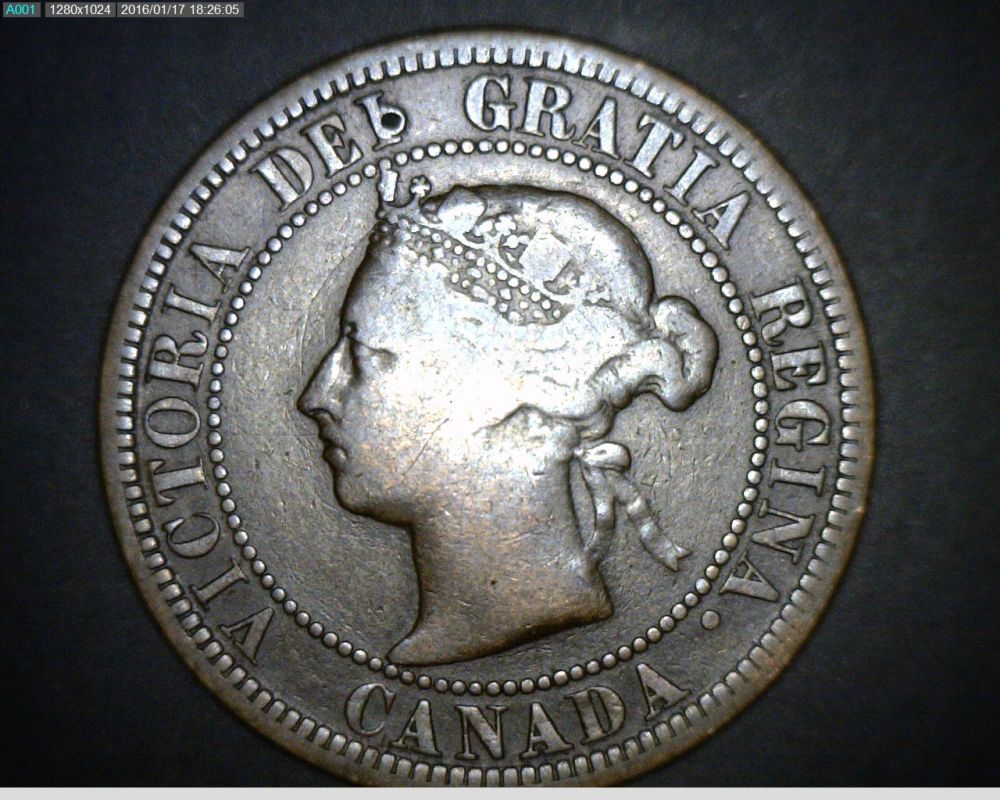 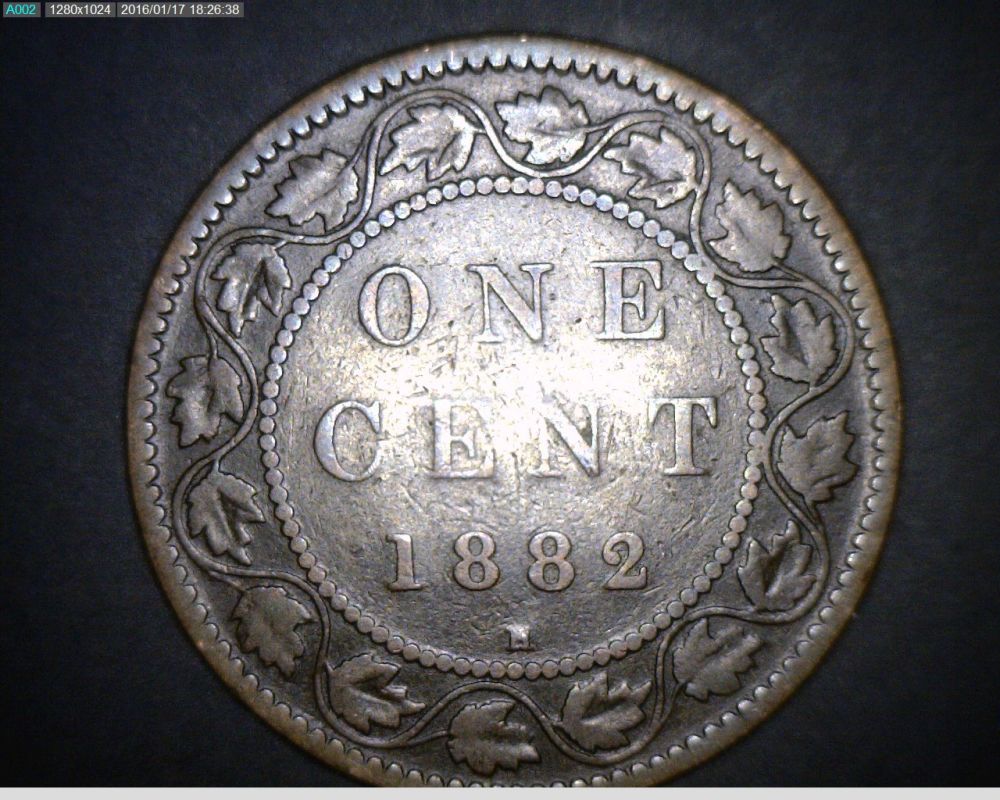 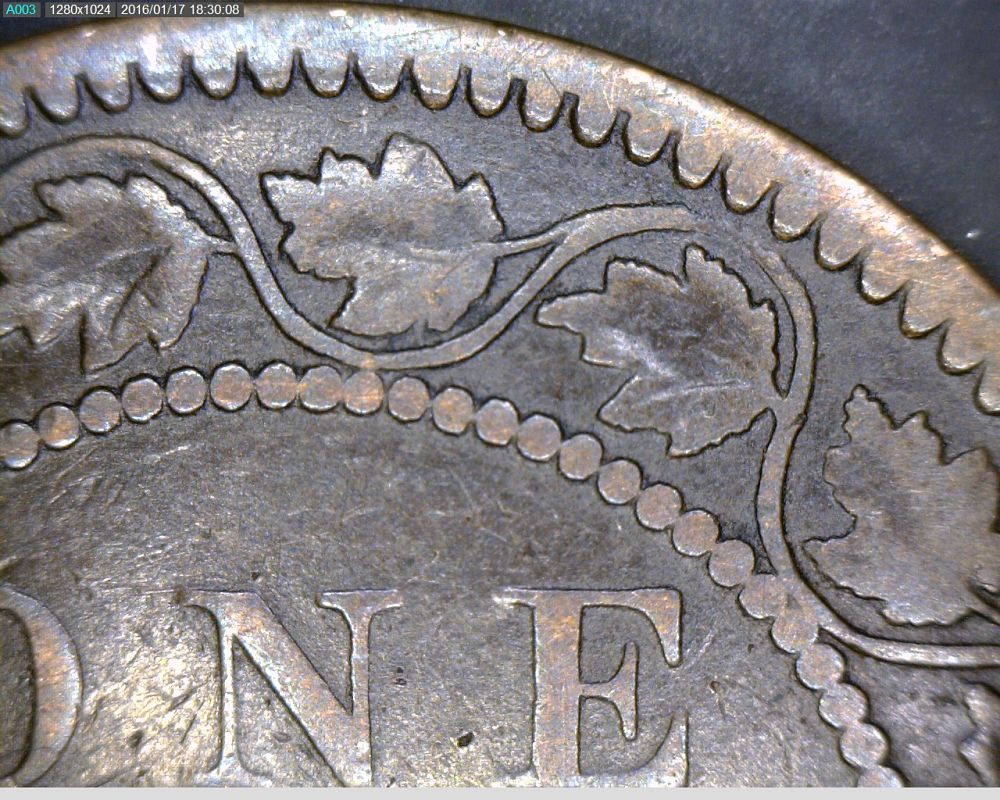 |
|
Pillar of the Community
Canada
2632 Posts |
Thanks for the pics its nice to get a wider prospective.
I'm no expert especially on large cents but it looks post mint to me. just my opinion
|
|
Valued Member
Canada
320 Posts |
|
|
Pillar of the Community
Canada
1463 Posts |
The up close picture looks sort of like it's was struck as such, but the full picture looks like damage. if in fact it was punched into the working die, there would be others out there. I also don't like the way it's sort of jagged around the inside of the canker and appears deeper then the rest of the coins surface. Almost like someone took a tool of some sort and twisted it which brought up some metal, than wore it down flush with the devices. I say it's damage, and very hard to certify if it's legit. I'd be hunting for others, because that would prove it. Also look at some old holed coins, similar effect is created, especially on unsuccessful holed coins, where the hole is just partial and the person gave up. Back in the day, they weren't using drills or dremels. for ever 10 old holed coins there's 1 that the person gave up on, from what I've seen anyways, and that's what this old large cent looks like to me. I saw this coin, similar effect, metal pushed up around is flush with devices http://www.ebay.ca/itm/1856-Seated-...AOSwjVVVnKECSomeone needs to do an experiment and see if it's easy to duplicate. Edited by Alan
01/18/2016 4:22 pm
|
|
New Member
Canada
28 Posts |
Alan; your explanation and the example do put things in perspective. Many thanks.
|
|
Pillar of the Community
Canada
5646 Posts |
In my opinion, if it were drilled, then you would get the same raised ring (in the field of the coin making the "O")on top of the already "in-relief" I. The coin, to me, remains a mystery.
|
|
Pillar of the Community
Canada
3234 Posts |
If you used a very dull drill bit, you would displace and pull up quite a bit of material and with age and circulation this "could be" the aging old result... My 2c.. Very cool piece..no matter what.. The red arrows in my added pic show what looks like a fine ridge of displaced material around the hole... The red circle shows a raised and separate blob of material..(and now worn down with time). The more I look at it the more it looks to be made after or..( PMD) 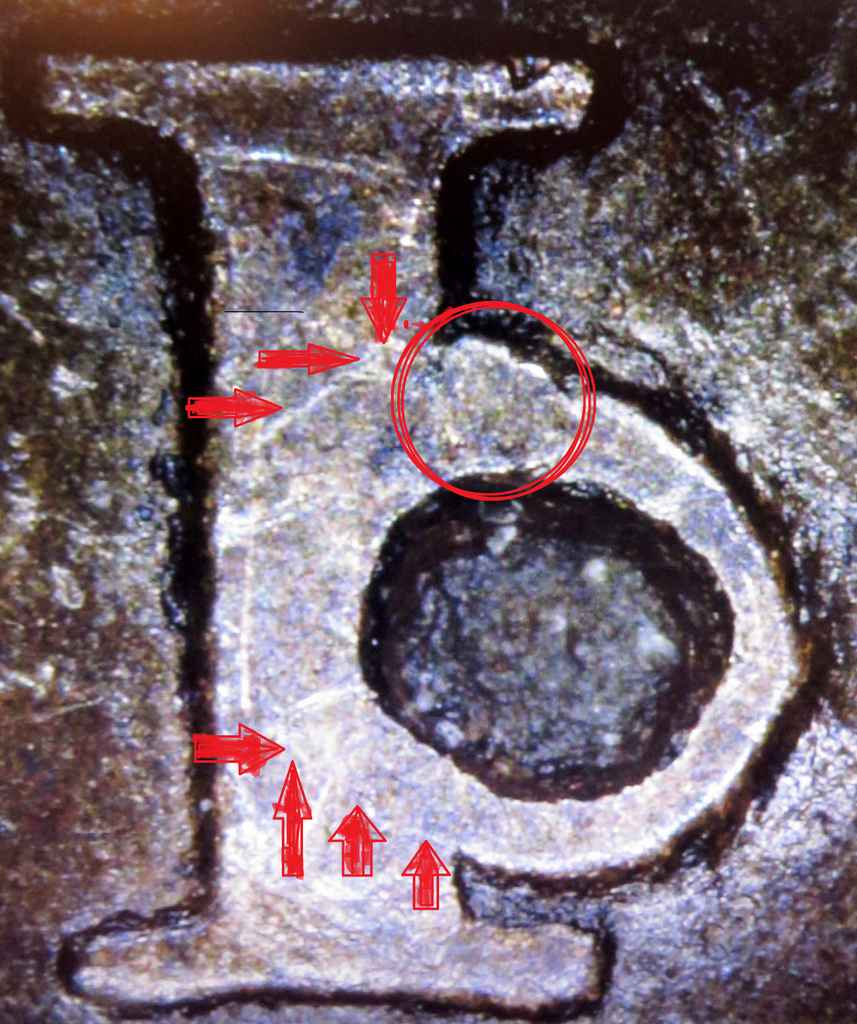 Edited by DEVLEC
01/18/2016 5:47 pm
|
|
Pillar of the Community
Canada
1463 Posts |
I'm still of the belief that either another has to be found to prove its struck or someone with a good selection of tools needs to try to duplicate it. I would suggest stArting with awl, then moving to a flat bottomed bit router type tool of sorts. Not a big tool man, so I am of no use. It is a really interesting coin, the type of thing that makes one want to keep on collecting coins. A great conversation starter. Here is another example, just try to imagine the hole not going through, note, the metal is flush with the ribbon devices, and dare I say, a similar technique was likely used, http://www.ebay.ca/itm/World-Coin-1...AOSwa-dWlYGaEdited by Alan
01/18/2016 5:20 pm
|
|
Valued Member
Canada
284 Posts |
If the coin was drilled a long time ago, wouldn't it make sense that the raised ring on the I was worn down to the I's level?
|
|
Pillar of the Community
Canada
1505 Posts |
I am at a loss on this one. if it was drilled, I would have expected the ring to be on the opposite of where the bit started, that is not the case here. And I don't really have an alternate theory on how this could have happened. An interesting piece, I would assume PMD, unless another coin appears with the same mark. I can't even think of what the O is from, assuming it was punched at the mint. Thanks for sharing. |
| |
Replies: 29 / Views: 3,430 |





 Posted 01/17/2016 2:28 pm





