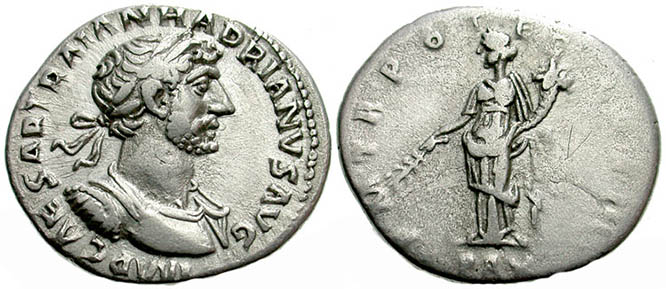
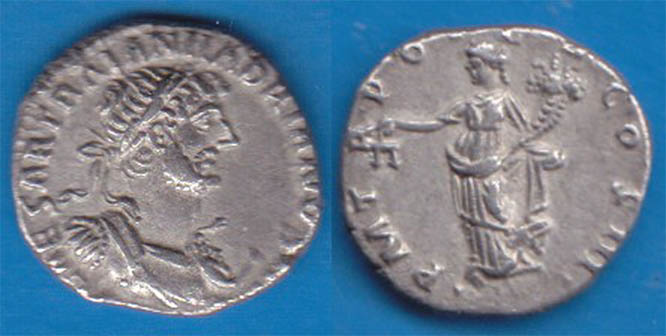
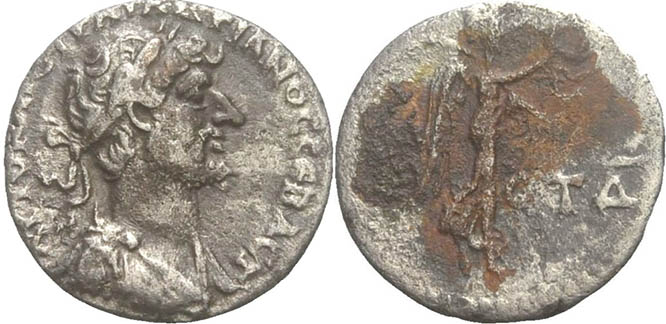
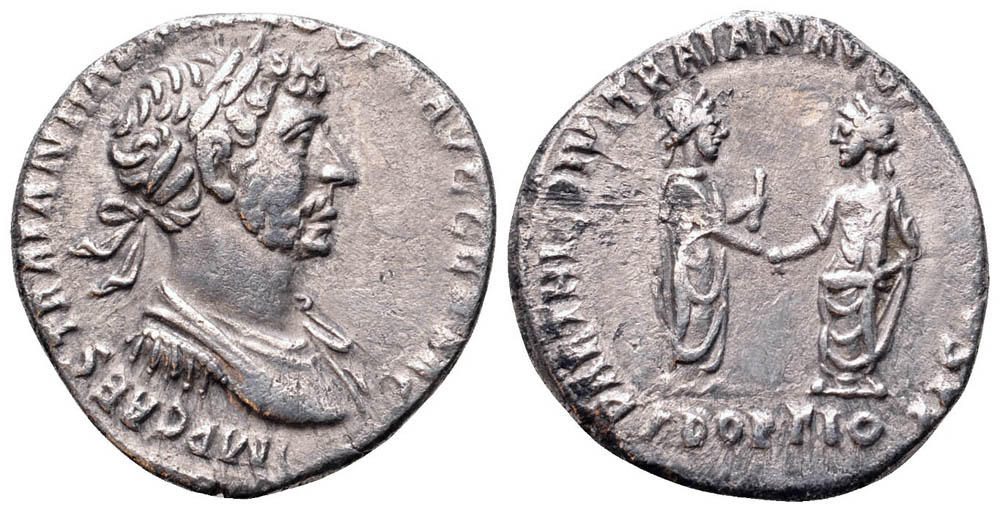
Here's a funky one. I got this coin in a mixed batch back in 1998. I wonder what Curtis would say about it.
I would very much like to hear what you think of it, especially if anything turns up in online resources.
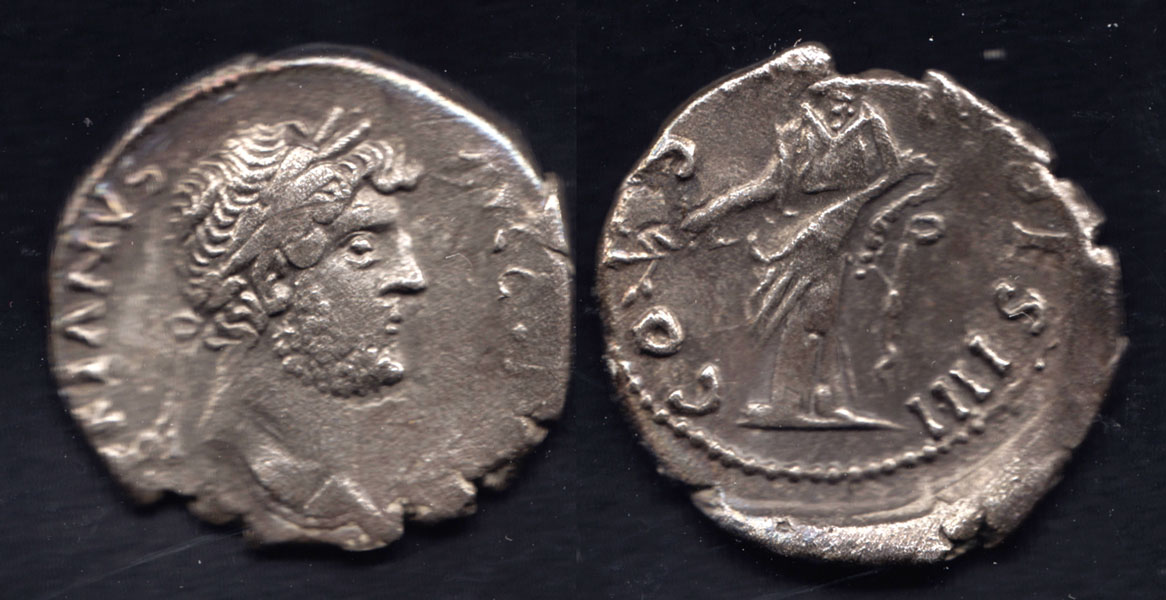
At the time I thought it was a barbarous imitation. Still do.
The coin weighs 2.22g and measures 17x18mm. It is silver throughout but about 37% lighter than normal for Hadrian's late period (135-138)
The flan is too small for the die, and obscures the inscriptions on both sides. Nonetheless, the inscriptions correspond as follows:
The obverse inscription is unique for Hadrian and begins "[HAD]RIANVS AVG COS ... and could only conclude with "... III PP"
the reverse is not known for Hadrian but is associated for type and inscription with his successor Ant Pius in 144 AD (BMC 504) with the inscription "COS III DES IIII"**
[Pax draped, stg l; holding branch downward in extending r hand and cornucopiae in l.]
**DESignatus qualifies an individual who has been elected to future office but has not yet taken up the appointment. Most commonly encountered on the Imperial coinage on issues belonging to the end of the year, just prior to the emperor's assumption of a new consulship on January 1st (e.g. COS II DES III P P). --David Sear
This reverse corresponds to BMCRE 504; RIC 117; Strack 132; Seaby Silver II 187/8 for Ant Pius
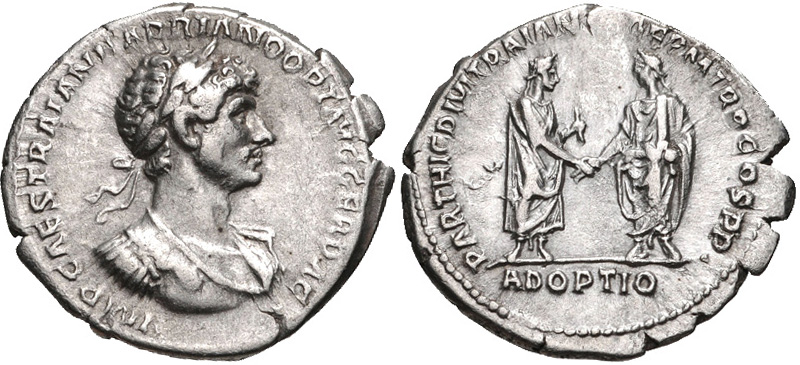
Needless to say, this reverse does not belong with a denarius of Hadrian. However, the fact that it does fit in the early period of Hadrian's immediate successor opens the door for some kind of mix up. BMC classes the mint for the normal obverse as "Uncertain" under the general heading of "Eastern Mints"
Hybrids like this are usually an indication of unofficial minting.
What do you make of it?
May I please have a reply from someone?












 Posted 01/19/2016 5:53 pm