| Author |
 Replies: 10 / Views: 1,692 Replies: 10 / Views: 1,692 |
|
|
New Member
United Kingdom
2 Posts |
|
|
|
|
Moderator
 United States
23731 Posts |
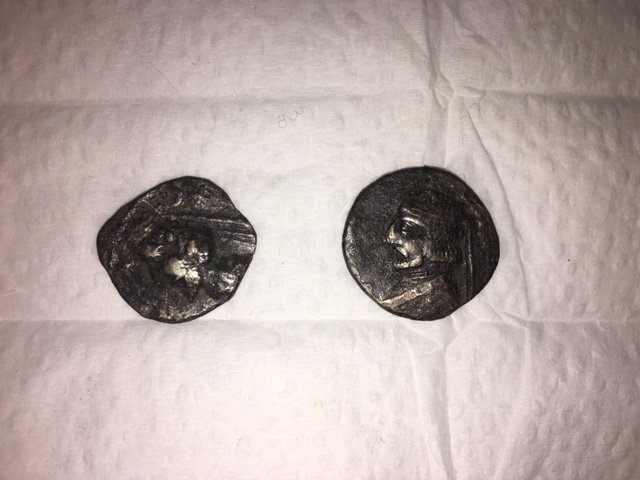
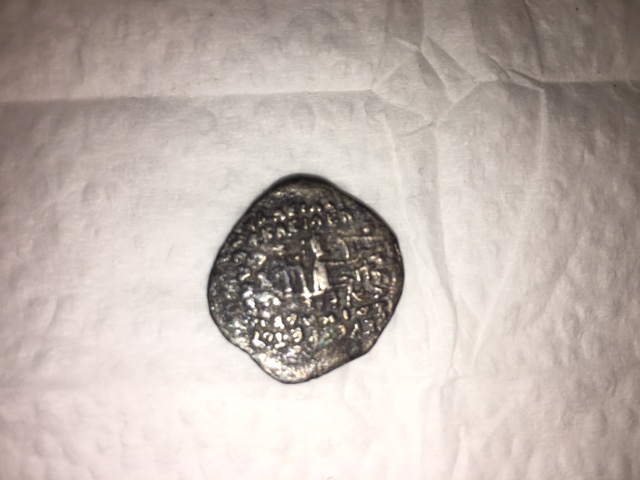
 to the community The coins are from ancient Parthia and date late first century BC to early AD. BobL is our resident expert on this coin type, he should be along later and be able to give you more information. |
|
New Member
 United Kingdom
2 Posts |
WOW thanks... so quick too... How exciting )))) Thanks you so much... I wait with anticipation...))
|
|
Pillar of the Community
United States
7067 Posts |
Welcome, Deansmiles.
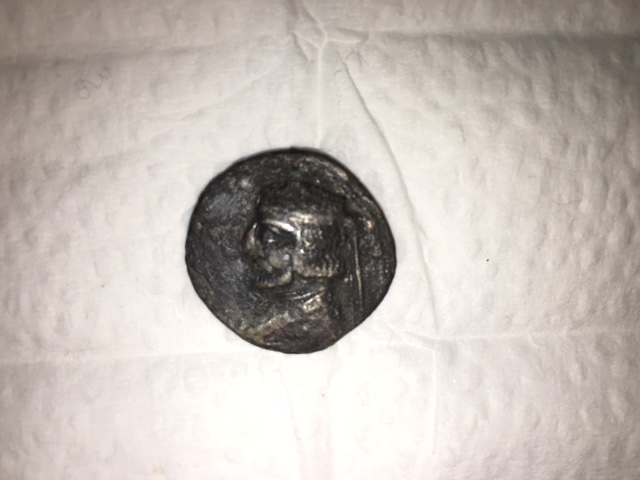
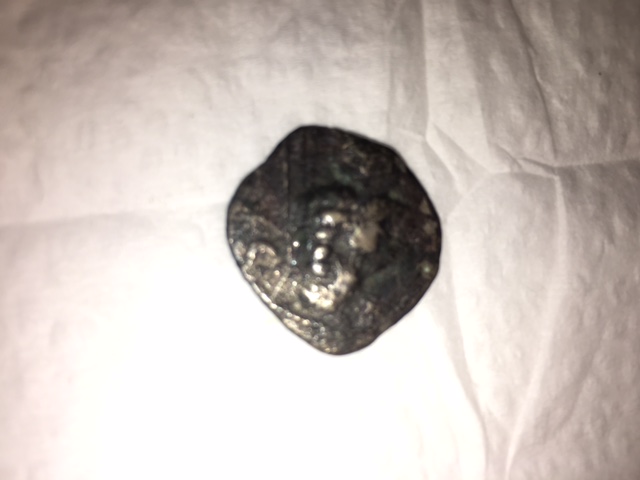
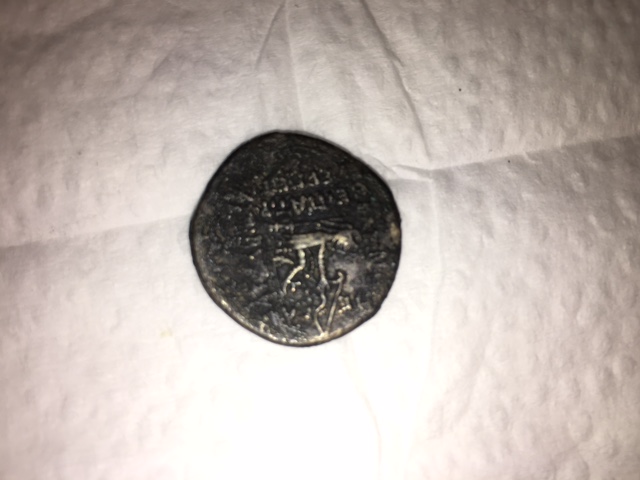
You've got two Parthian drachms there. At first I thought they might be bronze chalkoi (a particular denomination of Parthian coinage) but I now believe they are most likely deeply toned, and perhaps debased, silver drachms.
I wish I had a better image of the coin at left in your first pic (which, incidentally, should be rotated 45 degrees clockwise to see the ruler's image upright). There are a couple of different kings it could be, but it's most likely Phraates IV, who ruled Parthia c. 38 - 2 BC. The mint symbol on the reverse indicates that it was minted at Rhagae (in Iran).
The second coin (at right in your top pic) is attributed by Fred B. Shore as Orodes I, who ruled Parthia from c. 90 - 80 BC. Looks like a pretty nice example. It was struck at either Ecbatana or Rhagae (both in Iran). Fyi, you may see this type listed as "Unknown King" (as per David Sellwood) or "Arsakes XVI" (as per Dr. G.R.F. Assar) or as Orodes I (as per Shore). Parthian attributions are not always fixed and, most often, kings' names were not included on the coinage.
Congrats on acquiring them!
Edited by Kamnaskires
01/28/2016 10:19 pm
|
|
New Member
United Kingdom
2 Posts |
Good morning Bob L.
They are indeed very nice. It just the thought that some one used these 2000 years ago... I will try and take better pictures of both and send them to you. Is there anything else I can do to assist you, like clean them if so what with and how? Are they valuable? Should I have them insured. I don't want to sell but would like to display them in a frame.
Thank you for you time.
Dean
|
|
Pillar of the Community
United States
1191 Posts |
Cleaning is a big no-no in the coin hobby. Just my Two Cents. |
|
Pillar of the Community
United States
7067 Posts |
Quote:
I will try and take better pictures of both and send them to you. Sounds good, Dean. Feel free to send me betters pic via email. I believe you can access my email by clicking on my name above my avatar at left. These don't have much monetary value - the Phraates IV is certainly worth less than a hundred US dollars; the Orodes I is worth a bit more, perhaps around $100...for comparison: https://www.vcoins.com/en/stores/cy...Default.aspxhttps://www.vcoins.com/en/stores/sa...Default.aspxI agree that it's best to hold off on any cleaning for now - and bear in mind that toning is considered desirable with ancient silver. Ancients collectors tend to groan when they see bright and shiny coins that were minted two millennia ago. |
|
Pillar of the Community
Canada
1269 Posts |
@Hello There
All ancient coins are cleaned to some extent. While over cleaning is frowned upon as it can strip away an attractive patina, some cleaning is always necessary with ancient coins. Some of them have been in the ground for 2 millennia. They do not come from the ground in anything near pristine or even presentable condition.
To repeat, cleaning is not a sin in the world of ancients as it is with modern coins.
|
|
Pillar of the Community
United States
1191 Posts |
Quote:
cleaning is not a sin in the world of ancients as it is with modern coins I learned something new today  I always thought that when discovered, the dirt is removed by just rubbing it off with a brush. How do you clean ancient coins? |
|
Pillar of the Community
United States
949 Posts |
Quote:
How do you clean ancient coins? Now there's a big subject. When a coin lies buried underground for a couple of millennia it exchanges ions with minerals in the soil. The process starts immediately and only stops when a condition of local equilibrium is reached. This means that some elements in the soil bond with the coin in various chemical states. The surface of the coin is altered, and this shows up as patina. Further accretions can take place which build up on the patina, and are chemically bonded to it. Some materials only form weak bonds and may form an enshrouding crust around the coin. Some materials merely adhere to the outside of a coin without bonding. Your original idea about ancients was limited to that last class. Because of all the chemistry involved, and all the different combinations of mineral reactions and deposits, the task of cleaning an ancient coin is an art and a science of incredible complexity. There is no one way to approach it. However, if done poorly it can strip a coin of its patina and so decrease the original metal content, sometimes significantly so. Therefore, simply dropping it into a beaker of some acid or reagent is not the way to go. Numismatists who are up to the science involved, and learn the craft, may well tackle cleaning coins without harming them. The rest of us are best off to watch from the sidelines. |
|
Moderator
United States
23731 Posts |
There are many methods used to cleaned ancients some good as soaking the coins in either distilled water or olive oil for bronze coins, and soaking silver coins in diluted lemon juice. Some times just a wash in warm water with mild soap and a brushing with a soft tooth brush is all that is needed.
|
| |
Replies: 10 / Views: 1,692 |
|







 Posted 01/28/2016 3:06 pm





