| Author |
 Replies: 10 / Views: 9,000 Replies: 10 / Views: 9,000 |
|
|
Valued Member
United States
434 Posts |
|
|
|
|
Pillar of the Community
United States
1249 Posts |
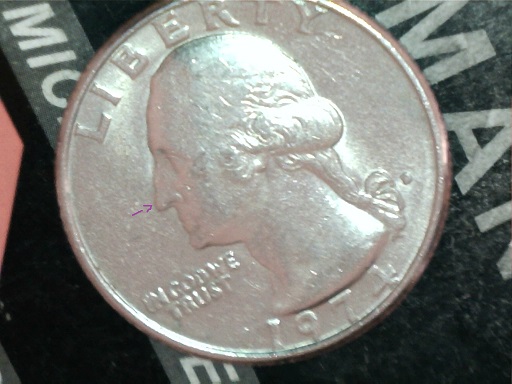
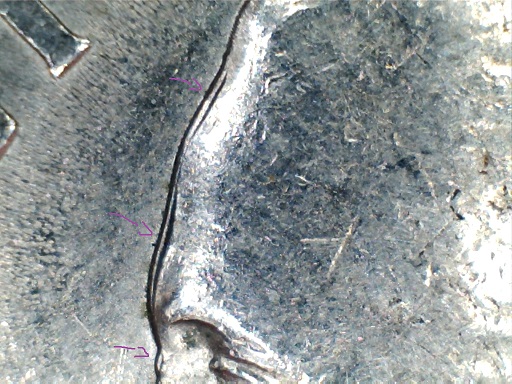
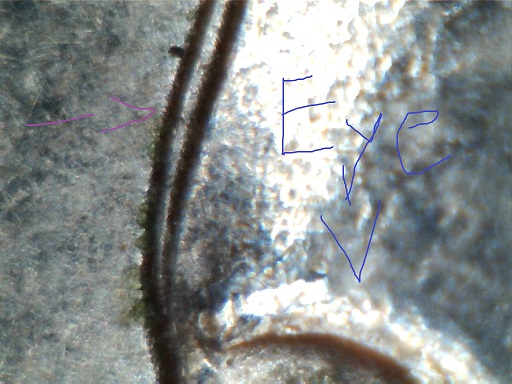
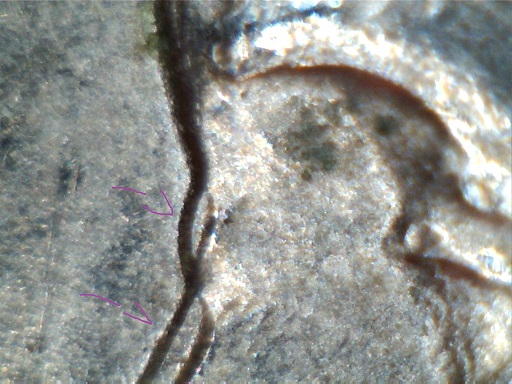
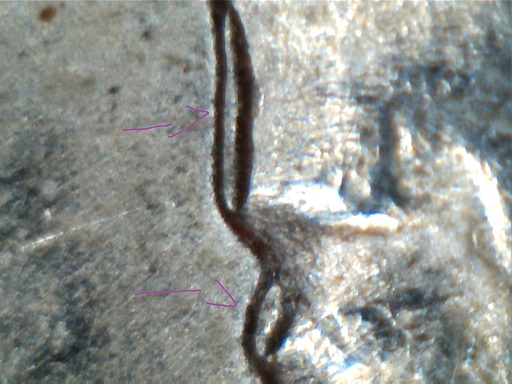
That is clearly MD . Sorry . Its very flat and shelflike and no separation . Actually a very common place for MD on quarters. Keep looking quarters used to be my favorite coins to look through. My only rotated dies I ever found are quarters
|
|
Rest in Peace
United States
17900 Posts |
|
|
Pillar of the Community
United States
1915 Posts |
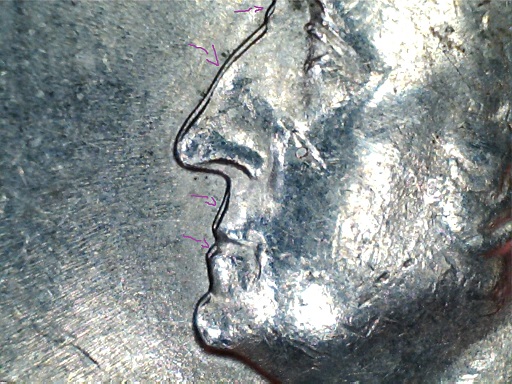
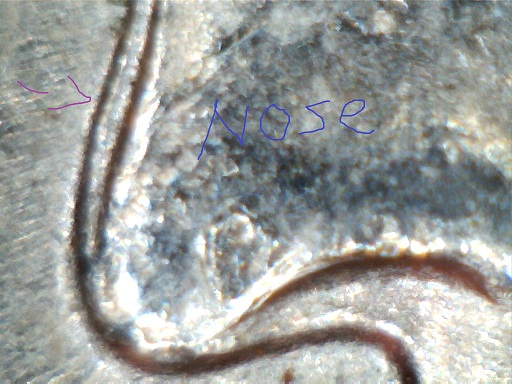
Look at your second to last photo. Look how the "doubling" cuts into the nose. Doubled dies do not cut into a device, they are exactly the same as the part of the device it is doubling. Very classic Machine Doubling on this coin. |
|
Valued Member
 United States
434 Posts |
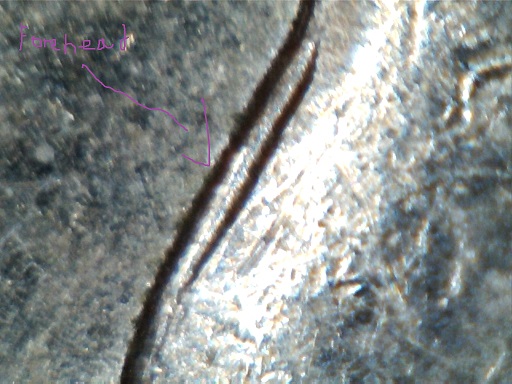
In my eyes it looks raised. The 4th picture shows it as the same level as the forehead. The little "bump" in the 6th picture also is raised. The edges are also rounded not straight. The lips are the one part I am not sure about.
|
|
Pillar of the Community
United States
534 Posts |
 Typical MD |
|
Valued Member
United States
434 Posts |
Doubled dies cannot cut into a device. I did not know that Seal. How come this MD is very raised compared to the real flat type?
|
|
Pillar of the Community
United States
3644 Posts |
seal said what I was thinking but I couldnt explain it properly so I waited on yall  |
|
Pillar of the Community
United States
1915 Posts |
MD varies from coin to coin. That is also what differs it from a doubled die which would be the same coin to coin. The anomoly is not on the die itself like a true doubled die. It is something that occurs during the striking and ejection process.
|
|
Pillar of the Community
United States
4809 Posts |
|
|
Valued Member
United States
434 Posts |
Thanks for the helpful information all.
|
| |
Replies: 10 / Views: 9,000 |
|










 Posted 01/28/2016 6:06 pm


