| Author |
 Replies: 15 / Views: 1,199 Replies: 15 / Views: 1,199 |
|
|
Pillar of the Community
United States
3362 Posts |
I have been trying to ID this one myself. I have gone here: http://www.tesorillo.com/aes/073/073i.htmI think my coin is: My coin format: CONSTANTINVS II IVNIOR Legend on my coin: OBV: CONSTANTINVS IVNNOBC; REV: CAESARVMNOSTRVRVM VOT (DOT) V Mintmark: Beta;SIS (Siscia) AD 320-324 Reverse Type 73 Legend within Wreath Æ3 Am I correct so far? I have found a couple of coins quite similar identified under RIC VII, but none with my mintmark. Also, even though the wreaths are similar, the leaves or spines on the wreaths are different as are the shapes and angles of the ribbons. How do I proceed from here? Here is my coin: 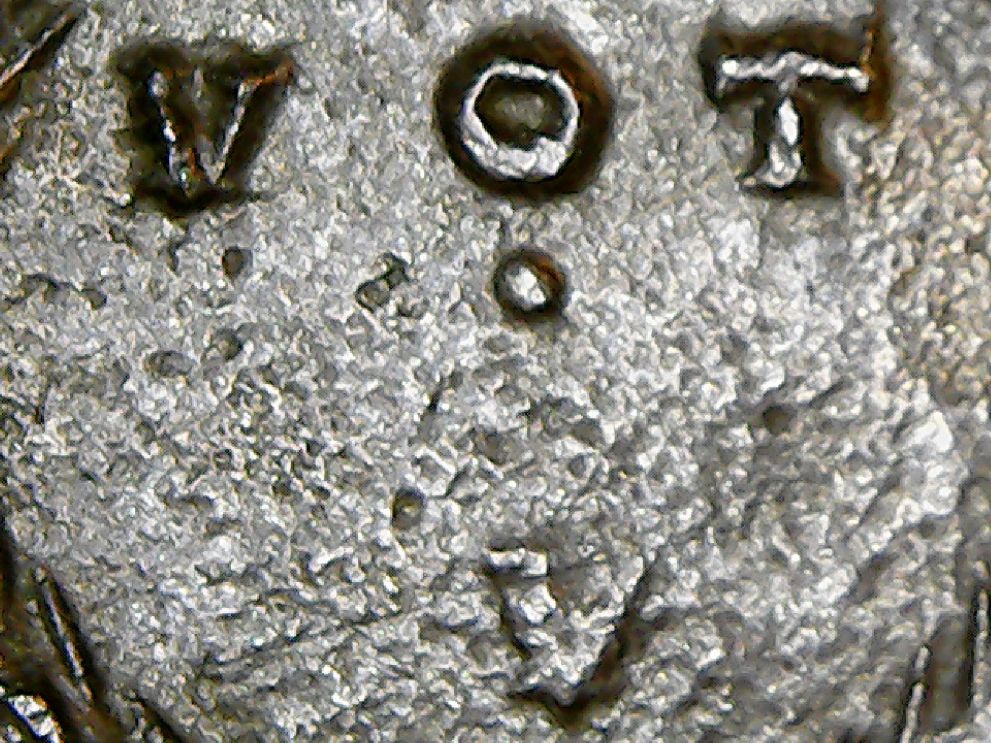 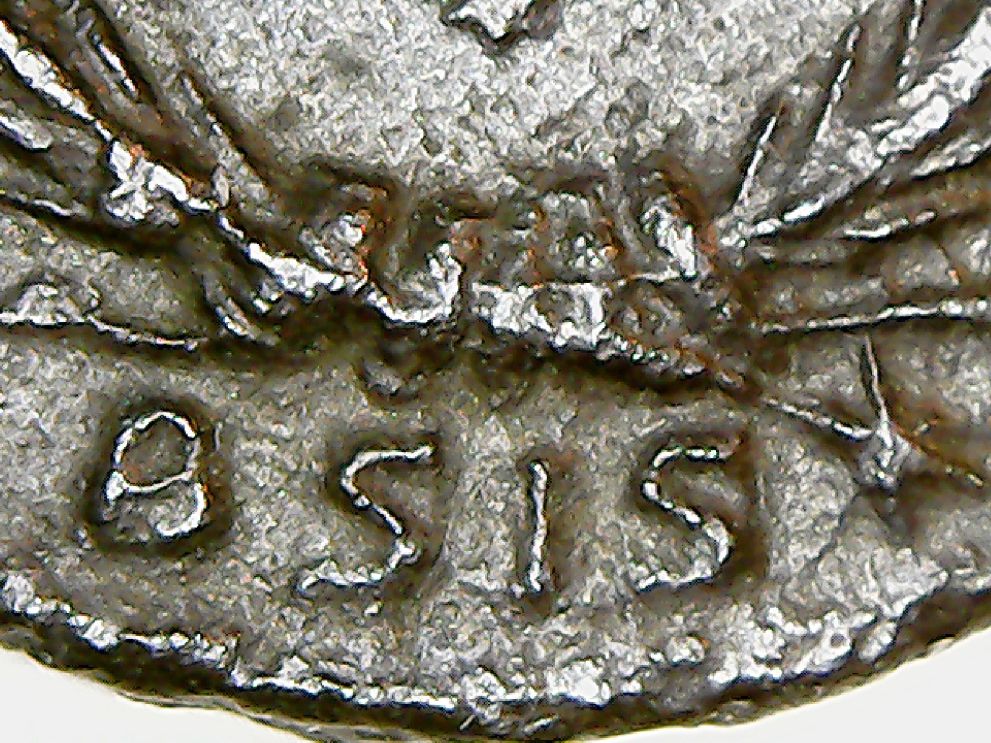 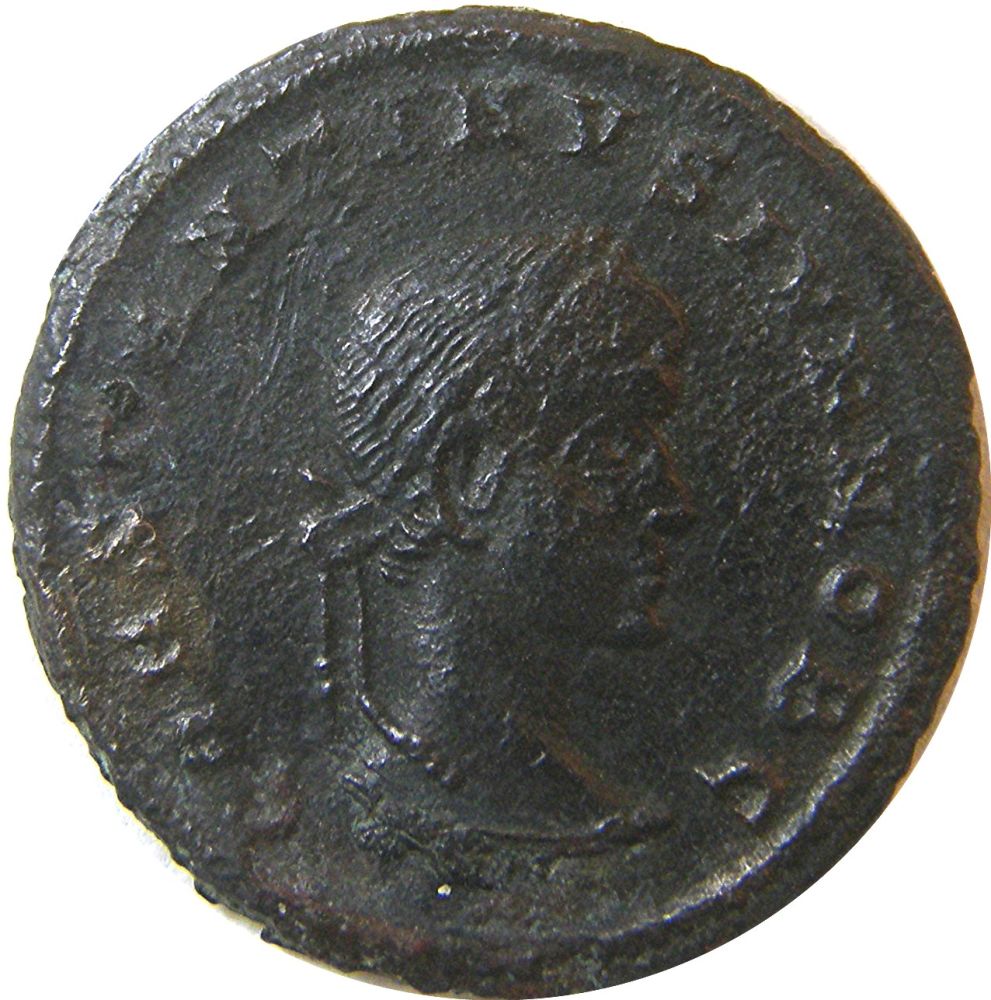 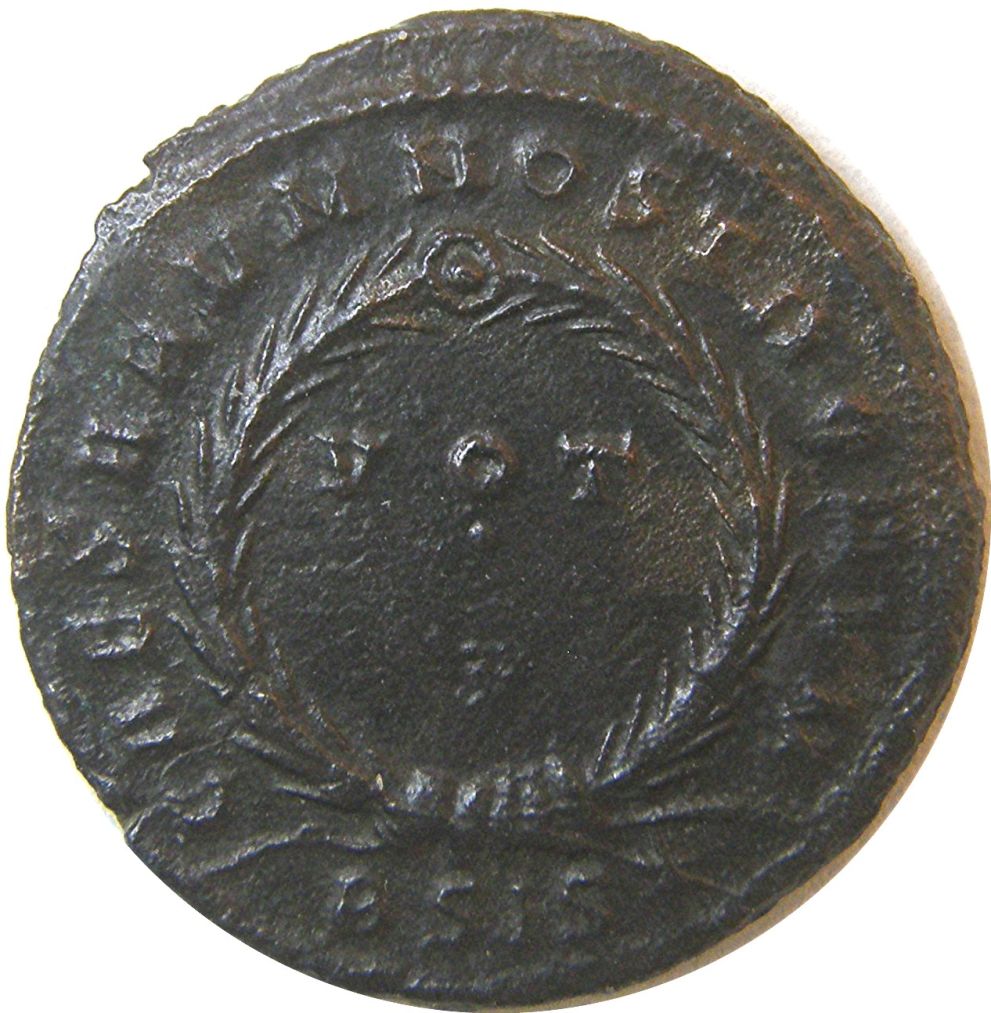 |
|
|
|
Pillar of the Community
United Kingdom
1351 Posts |
Have you tried Wildwinds?
|
|
Pillar of the Community
 United States
3362 Posts |
|
|
Pillar of the Community
United States
3495 Posts |
The RIC number simply specifies a specific variety. On these Constantinian ae's that can be maddeningly complicated !
The RIC was compiled over 50 years ago. Not quite the wax tablet period but .......
Literally still the quill pen and ink well era !
There are more holes in the RIC listings for the late empire than can be counted.
It is beyond time that something new was compiled using a teeny bit of technology.
Personally I would be satisfied for now with the attribution you have unless you plan on getting more of the same type.
But I am an impatient sort.
|
|
Pillar of the Community
United States
3362 Posts |
Quote:
Personally I would be satisfied for now with the attribution you have unless you plan on getting more of the same type.
But I am an impatient sort. Thanks! I, too am impatient! I always want to know one more thing! I have been doing a lot of searching for an image of this coin and have come up blank. Is there any resource which discusses the rarity of the various mint marks? Officina 2 Mint Mark seems to have very few examples that I can find (for any series). So I wonder if this is an uncommon and rare mark? |
|
Pillar of the Community
United States
1047 Posts |
Hello Pete, For Late Roman Bronze coins I find Helvetica's RIC spread sheets the most versatile and efficient for narrowing down the possibilities. First you must pinpoint the reverse type http://www.catbikes.ch/coinstuff/coins-ric.htmUsing your coin as an example. Download the "vot" types from the link, select the VOT V variety on the spread sheet then select attributes that you are certain are correct. For instance, select Constantine II from the emperor drop down menu, then select Siscia from the mint drop down menu, then BSISstar from the mint mark menu and you are left with the only possibility.....RIC 163 Note: the spreadsheets also have a column for rarity which in many cases is outdated From here, you can now search other online references to compare actual examples with pictures. Many use wildwinds or coin project or acsearch, etc Edited by Biancasdad
02/10/2016 5:14 pm
|
|
Pillar of the Community
United States
3362 Posts |
Thanks so much! I will give that a try as soon as I am back at my computer!
|
|
Pillar of the Community
United States
949 Posts |
What a can of worms FR opened up! I hope you don't have a short attention span. This takes some explaining.
I have to disagree with FR here. The first publication of RIC VII was 1967, a LOOONG way from the days of quill pen and ink. It is true that numerous new items have surfaced since then and need to be incorporated, but the structure of the catalog is not an issue. However, most collectors don't get it.
The later volumes of RIC (starting with vol VI under Humphrey Sutherland) followed a different primary arrangement (by mint) rather than arrangement by emperor as in the first five volumes. This was because of the huge proliferation of mints throughout the Empire during the years they cover. About 16 active mints for most of the period; usually in the same set of cities but not always. Later, as the number of mints decreased, the catalog returned to listing by emperor in the final volume RIC X. However, as I said before, in my experience most collectors of ancients have not kept up with that. Moreover, the arrangement of the online sites tends not to be well geared to help them with it either.
How many collectors do you know that collect their bronzes by mint? I do that, but I arrange them for access by emperor, and subdivide those coins by mint and type.
So let's get to your coin.
You coin is a coin of Constantine II. The name you get, I am sure, but see the IVN in the obverse inscription? That is the tipoff. It stands for IVNior (Junior). Now, as important as it is to know the emperor, for bronzes like this it is about EQUALLY important to know what that "BSIS*" business is on the reverse at bottom. That location on the coin reverse is called the "exergue," and for all the Vota coins like this one the mintmark will be there. The SIS part of this mint mark is telling you that the mint is Siscia.
In the RIC VII catalog you would look under Siscia for Vota reverses to find the listings of Constantine II for that type. There are plenty, because the ancients produced them in several SERIES over time. They distinguished one series from another on the coins with various design and mintmark differences. That is a HUGE field, but don't blame the catalog, blame the Romans, they made them. It took people like Patrick Bruun (the prime editor of RIC VII) to figure out the chronology of it all and encode it into a catalog.
For this coin, the star in the mint mark is the series element. (BSIS*) For AE coins from Siscia produced from part of 320 A.D. to part of 321, the mintmark included this star. When you go to the catalog and look in that section, you will find a listing for two types of Vota coins with this mark attributed to Constantine II. They differ by obverse inscription. Yours shows the shorter ("b") type, ending in NOB C. With that it takes us to #167, where we find listings for 5 different officinae (workshops). The officina mark is the first character in this particular mint mark, but that is not true for all coins in all places.
So the unique identifier for your coin is RIC VII Siscia 167, officina B. This will give you a rarity rating, which is the most controversial and poorly understood part of the listings. Most collectors don't take the time to find out what those things really are, and that makes them sitting ducks for overblown claims by dealers, many of whom don't understand them either. They cannot be taken at face because they are not based on rarity in the marketplace. They have a technical meaning, of more importance to researchers doing hoard studies than to collectors. In most cases collectors do well to disregard the rarity figures in RIC. Your coin was given an r2 rating, which referred to the frequency with which an example turned up in the large public and private collections surveyed when the catalog was compiled. That is the second highest output of the five officinae. These are not difficult to obtain if you are patient.
That's the short of it. For the long of it, all this information is included in the preface and introduction to the volume which together run for over 100 pages. That's probably why people don't read it, and that's why the whole thing seems confusing. But that doesn't make it worthless and obsolete. It is a scientific catalog reference for those who need that kind of thoroughness.
Edited by lrbguy
02/10/2016 5:51 pm
|
|
Pillar of the Community
United States
3495 Posts |
Believe it or not ........
When I attended elementary school in the 1960's the desks we sat at had a odd circular hole in the upper corner.
No we didn't use ink wells then ! But the evidence of the recent past was all around us !
We were technologically advanced
We had Bic ballpoints !
A decade later I saw my first VCR machine
They wheeled it into my 10th grade history class.
About the size of a small refrigerator
Edited by FVRIVS RVFVS
02/10/2016 6:01 pm
|
|
Pillar of the Community
United Kingdom
701 Posts |
 I get you FVRIVS I had a flip top desk with a hole in the corner but the vcr we got had a REMOTE CONTROL  Shame it was attached to the vcr so you had to sit 5 foot away  Oh the good old days. |
|
Pillar of the Community
United States
1047 Posts |
Just to avoid confusion RIC 167 is for the 'VOT X", RIC 163 is "VOT V" (your coin)
|
|
Pillar of the Community
United States
3362 Posts |
Okay! You have given me a lot to digest, you guys. Thanks so much! It is too late tonight for me to delve into it, but you know I will be re-reading this many times. I am totally new to ancients and this is really fascinating stuff!
I recently became interested in another numismatic subject and wrote a paper on it which was published in ErrorScope and on the CONECA website, so research excites me.
I first started collecting coins in the late 1940s (off and on since then) and have used an inkwell in school! No VCRs for me in elementary school! One of my first jobs was using a MINIAC II (Google it) a vacuum tube, punched tape, computer. In college we used slide rules. Mine was a Log Log Decilog.
I recently purchased a very small collection of ancients and have been gradually working through it. I really appreciate your help in navigating this confusing area.
I'll start working on the homework you have given me first thing tomorrow!
|
|
Pillar of the Community
United States
949 Posts |
Biancasdad is quite right. I had not looked at the right pic for the reverse details. The Vot V was more common in the catalog survey than the Vot X, and probably still is.
FR I too remember desks with a slot for a bottle of ink, but they hadn't gotten action for a long time. I graduated HS in 1967, and had never seen a VCR in the classroom or anywhere else. We saw movies on a 16mm Bell and Howell, and prior to graduation I had taken a course on using an electric typewriter. For computer science the next year we were keypunching cards for programming on a mainframe in Fortran. The tech revolution was just beginning, but I still say that was all a looong way from nibs and an ink bottle for manuscripts. Bruun's work, however, is not a throwback to yesteryear. It has more going for it than folks seem to realize, and should not be discarded until it has been mastered.
Pete, I still have my Kueffel & Esser slipstick, same scales as yours, but got out of Physics about the time the Hewlett Packard monster calculators were coming in at $800 a pop. Today's machinery is better, but I'm not sure that people are better critical thinkers today than they were then. Its all relative, I guess.
|
|
Pillar of the Community
Russian Federation
5186 Posts |
I also was wondering what the circular indents in the desks were for! I thought they were for coffee mugs, to be honest. That was in the 2000s (I'm quite a young guy).
I grew up with Corvina pens (or was it Corbina? they were misspelled a lot) and Koh-i-Noor Hardtmuth pencils ("made in Czechoslovakia", our oldest one said; the more recent ones were made in Czech Republic).
Had to google what a VCR machine was. Turned out I knew them, just didn't know the English word. Can't recall ever seeing one in school, but we had one at home (my aunt still does, and occasionally uses it to record some TV program).
|
|
Pillar of the Community
United Kingdom
1351 Posts |
I used the Inkwell desks and many desks were leached in ink.
It's a funny old world.There is life after BIC. I've just bought 2 ink pens and bottles of blue/black ink.
Many thanks to contributors on this thread & one of the many reasons I enjoy this forum.
|
|
Pillar of the Community
United States
3362 Posts |
Okay - I have worked through my homework and I am most appreciative for the instruction you all have given me. Thank you!
I also appreciate the reminiscing. Using the slide rule certainly required extra mental acuity - as I remember, one had to keep track of decimal places in your head as you worked through a problem.
This also made me remember a course in Mechanical Drawing I took. We were required to make ink drawings on some kind of plastic coated paper - I don't remember what it was called. I remember my "final exam" drawing was a cut away view of a jack mechanism. It was very tedious - one little misplaced drop of ink and the drawing was ruined or at best received a lower grade! I think I still have my drawing somewhere here around the house - some 60 years later!
|
| |
Replies: 15 / Views: 1,199 |
|










 Posted 02/10/2016 3:25 pm


