| Author |
 Replies: 26 / Views: 8,276 Replies: 26 / Views: 8,276 |
|
|
|
Pillar of the Community
United States
3361 Posts |
It looks like there are 4 indentations on the Obverse and 1 on the Reverse - is that true? (Not seeing the entire Obverse/Reverse)
A normal test would be 1 or 2 indentations. I don't know why there would be 5. So that would cause me to question their authenticity.
However, they appear to be about the right size and shape. Which speaks in favor of them being Rockwell Test Marks.
For the most part, there seems to be a lack of a pressure ridge around them, except perhaps the one beneath the L and on the dome - and I cannot be sure about that. There should be no pressure ridge around a Rockwell test Mark.
The mark on the dome of the building should show a bit of elongation and perhaps it does?
Most interesting coin for sure!
Edited by Pete2226
05/05/2016 12:40 pm
|
|
Pillar of the Community
United States
2775 Posts |
I'm thinking the location of the dimples / marks are suggesting PSD, because they seem strategy strategically placed after strike. Would like to see full obverse and reverse though. Thanks, Doug. edit: to correct my adverb that spell checker choose for me. Edited by Halo1st
05/05/2016 2:59 pm
|
|
Valued Member
United States
82 Posts |
full images of the half 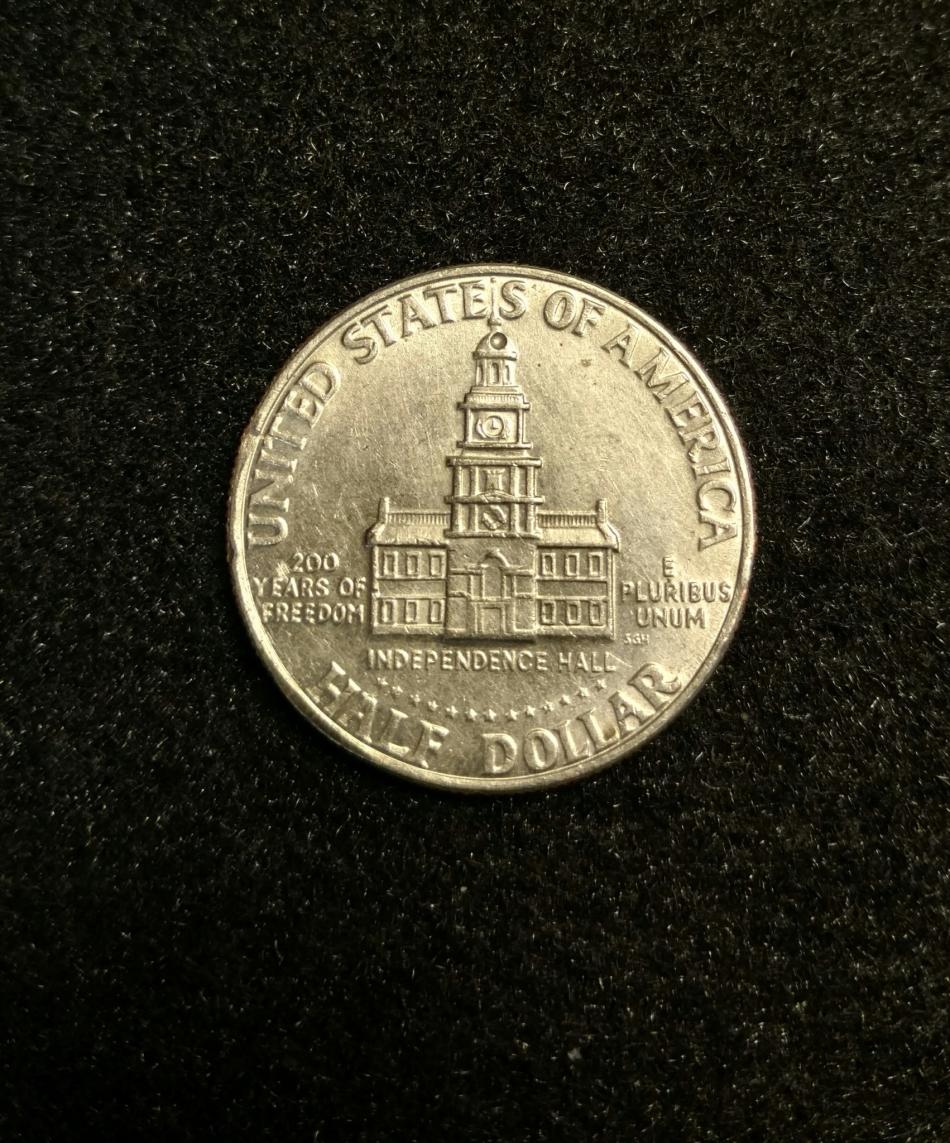 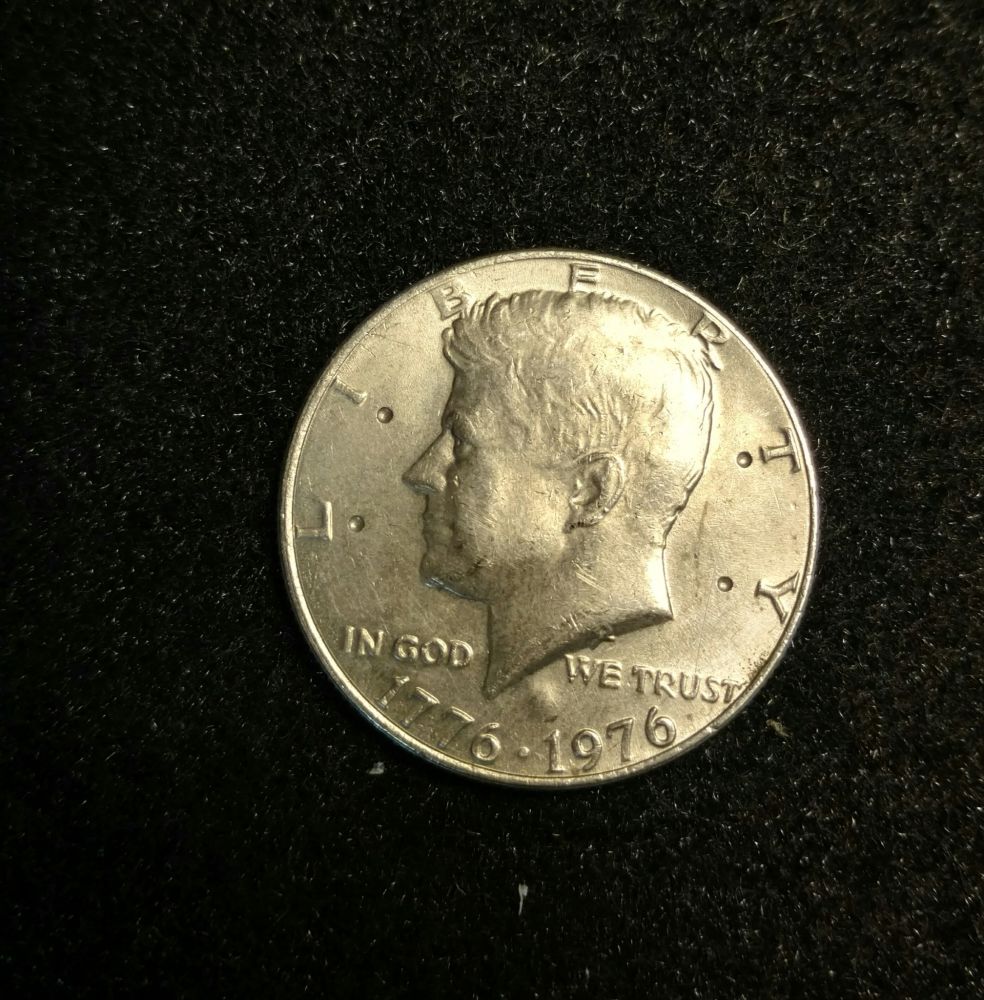 Edited by clbchiro
05/05/2016 2:01 pm
|
|
Bedrock of the Community
United States
62064 Posts |
The bulge on the obverse tells me it was done after the strike. (reverse mark)
|
|
Pillar of the Community
United States
3361 Posts |
Quote:
The bulge on the obverse tells me it was done after the strike. (reverse mark) Absolutely correct! I just wonder why the obverse indentations did not leave an anvil effect? (Or is it there and I just don't see it?) |
|
Bedrock of the Community
United States
62064 Posts |
They may have used like a ball point pin. The reverse may have been some kind of punch. (more pressure behind it)
|
|
Pillar of the Community
United States
3361 Posts |
Quote:
They may have used like a ball point pin. The geometry of the indentations do not fit any ball point pen tip geometry I have seen. A ball point pen tip geometry is hyperbolic, merging into a cone. These indentations are hemispherical. |
|
Pillar of the Community
United States
2775 Posts |
These could be Rockwell test marks. Still think they were applied after strike.
Pressure or applied force would dictate signs showing through the opposing side. Thanks, Doug.
PS: Pete when I did the ball point pen awhile back. It left no signs on the opposite side.
Edited by Halo1st
05/05/2016 3:14 pm
|
|
Pillar of the Community
United States
3361 Posts |
 My theory is that these are Rockwell test Marks done after the strike and most likely after the coin left the mint. I think that the four marks on the Obverse were done using the Rockwell 15T scale (15 kgf). This scale does not exert enough force to produce an anvil effect on the opposite side of the coin. However, I think the mark on the Reverse is a Rockwell test Mark using the Rockwell C scale (150kgf) which is enough to produce an anvil effect on the opposite side of the coin - as can be seen on this coin. Edited by Pete2226
05/06/2016 3:36 pm
|
|
Valued Member
United States
82 Posts |
Thanks everyone for your time and opinions. The next question, is there any value added to a coin like this? I just thought it pretty cool that shortly after reading about the marks, I find a coin that looks like it has them. I've had it happen quite a few times that after reading about or wishing I found a specific coin, it shows up in my searches ( 1¢ 1924d, 1999 WAM, 5¢ black beauty, 50¢ 1974d DDO, and many more) I am trying to find the 1¢ 1969s DDO now, maybe that one is next :). Hope you all have a great weekend. |
|
Pillar of the Community
United States
3361 Posts |
If my theory is correct, I think that there would be no added value. The coin could be produced by anyone with access to a Rockwell Tester.
|
| |
Replies: 26 / Views: 8,276 |








 First Page


 Posted 05/05/2016 12:50 pm


