Nice circulation find.
I'be cover this subject in a thread here before:
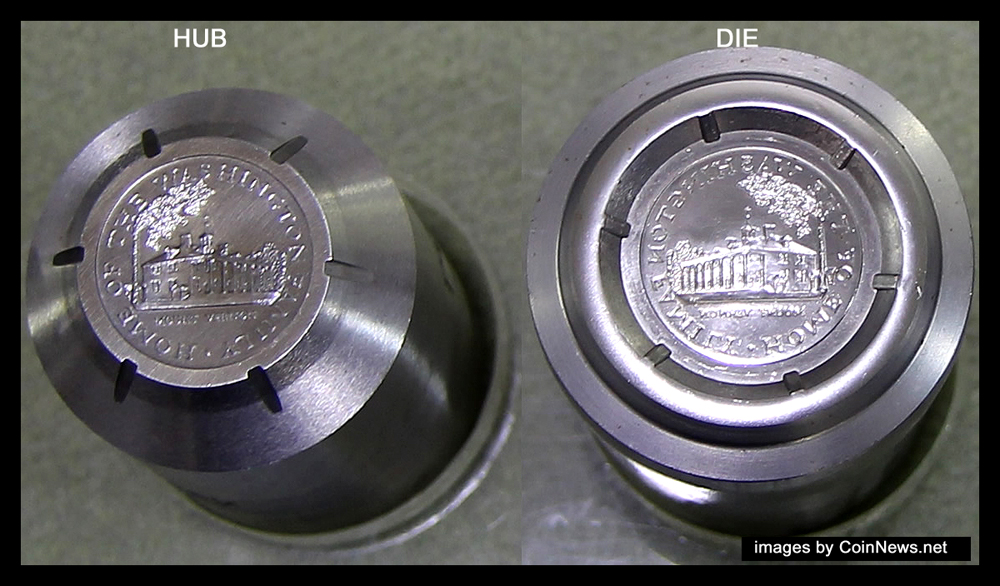
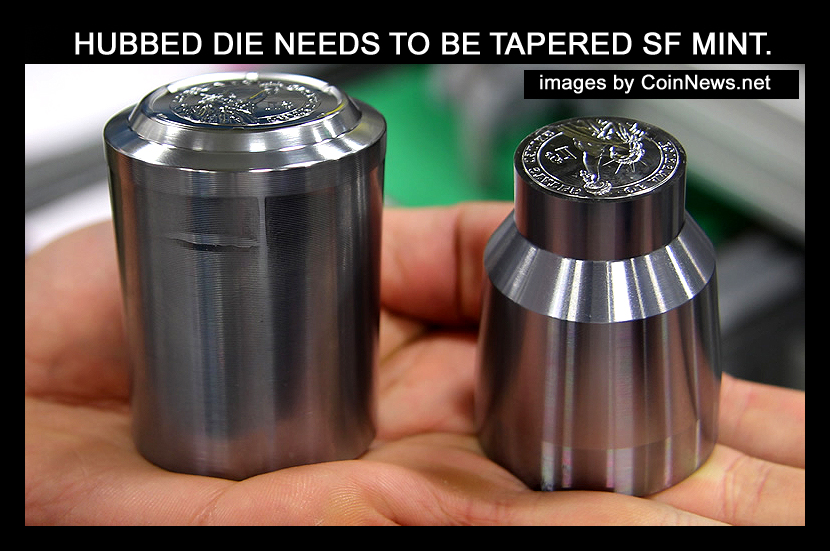
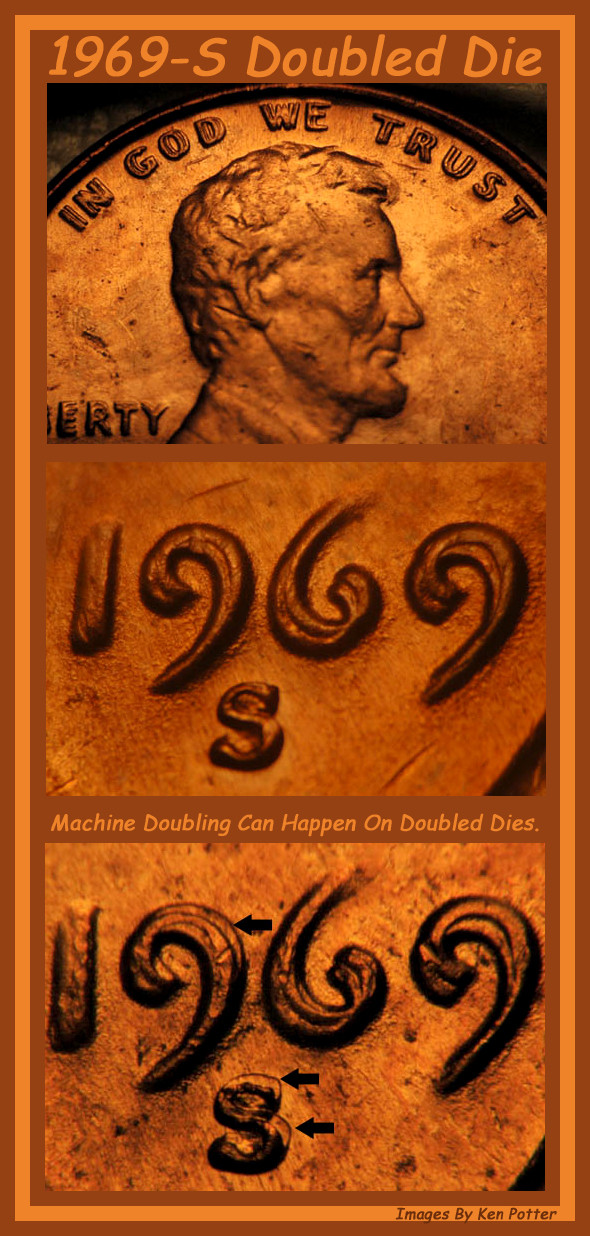
https://goccf.com/t/227708On your coin the devices are hub doubled. The devices are doubled one the die, thus the term doubled die. these devices are raised on the coin, incuse on the die. During the striking of a coin, if the machine dies move or bounce during the strike, then the devices are reduced with what I call machine damage. (others call
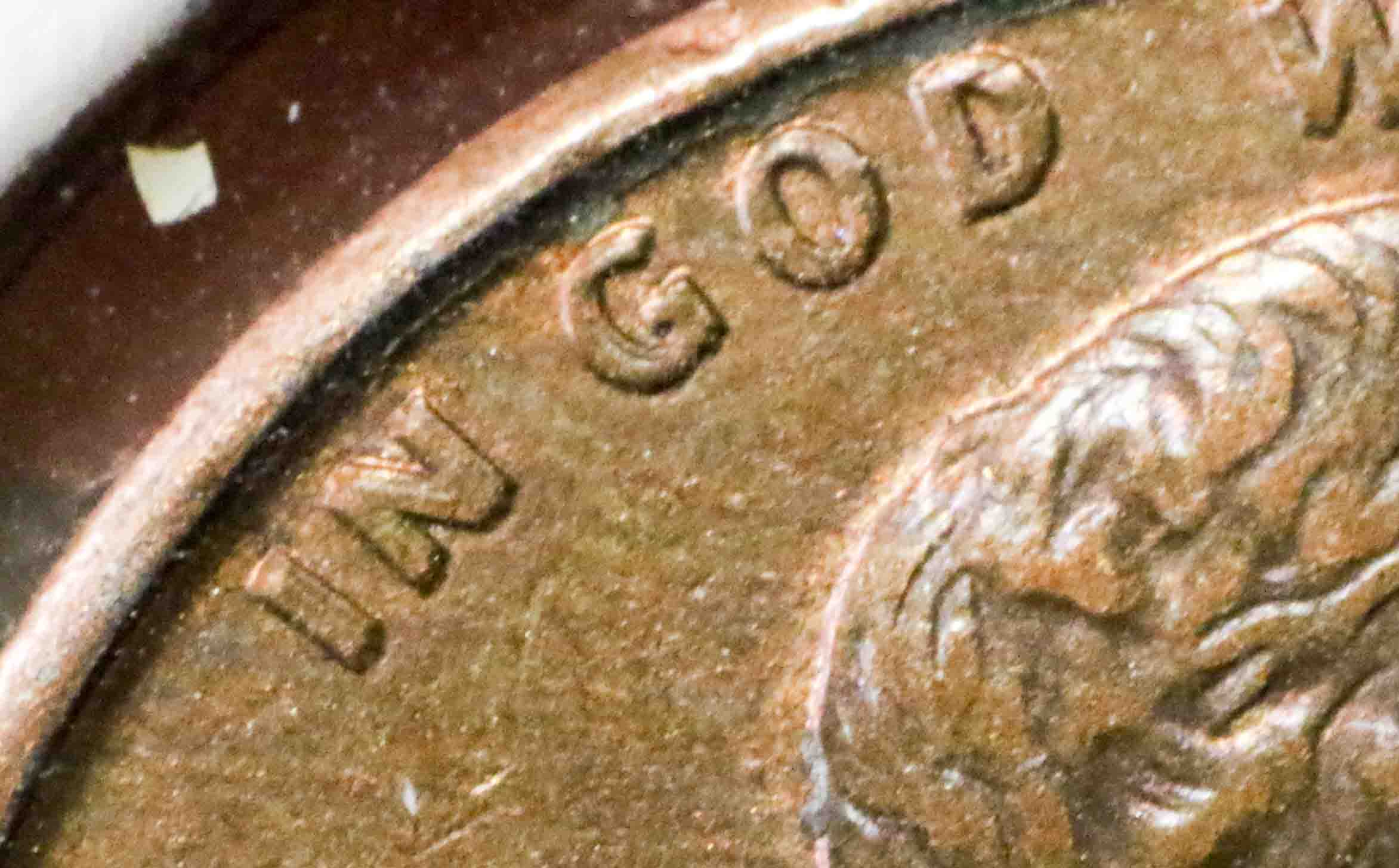
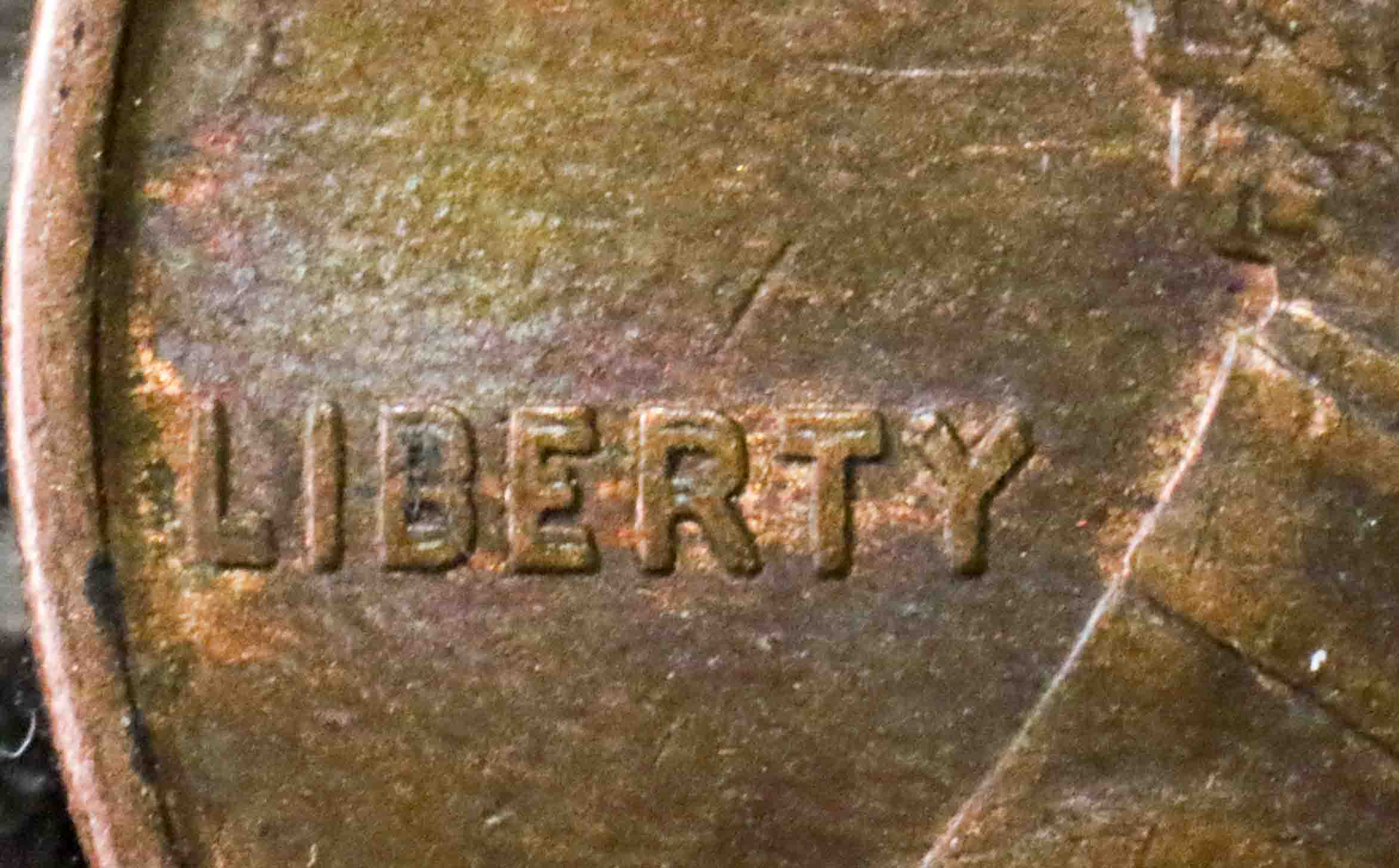
Machine Doubling, but I prefer machine damage as that is what it is, damage to the devices) When this bounce happens it will reduce part of a device. Sometimes about in half is reduced. Here is a 3-D image of the damage that happened during the strike of this coin:
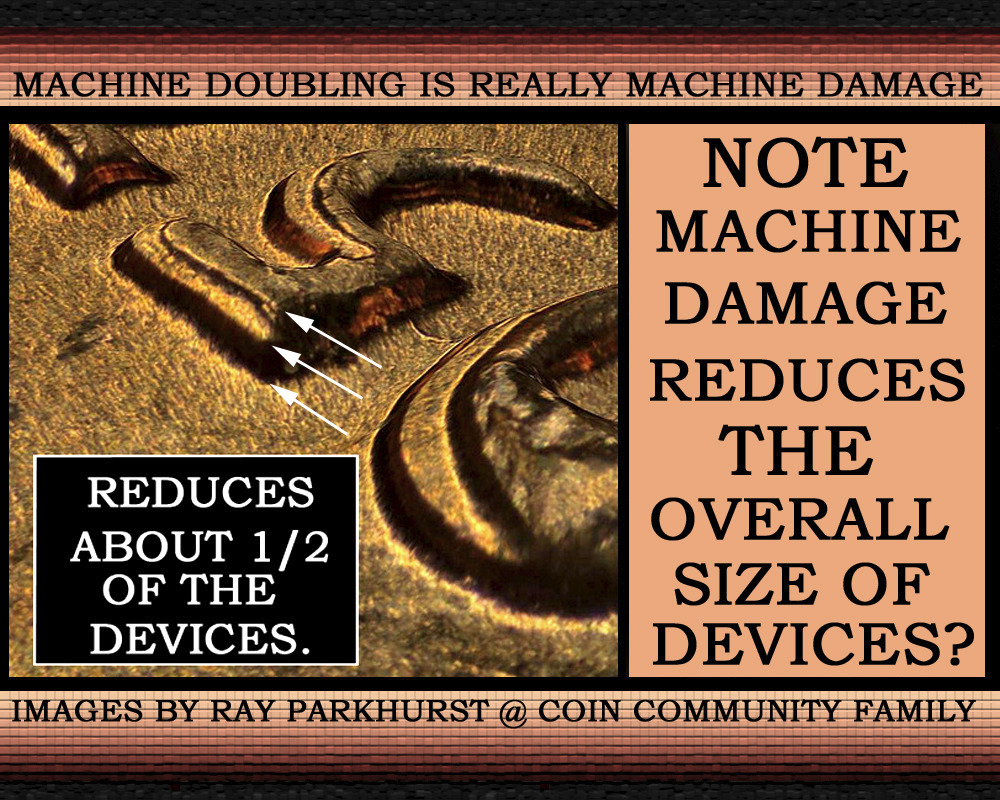
Do you see the coin is altered by the machine movement during the strike? It damaged about 1/2 up the device. (note the lower part is untouched by this damage) Thus the upper 1/2 of the height is altered reducing that device and others around it. The machine damage can also happen on a doubled die as well. (Yes, both things happening because of the hub doubling on the die, the machine can alter the doubled die as well.
But on incuse the opposite happens during
Machine Doubling on these devices. The enlargement happens as mentioned in the link above.
On a doubled die that was sent to me it by a friend here on the forum I discovered something new about incuse devices. I prepared the image of the doubled die to post on the forum and add them to my educational files.
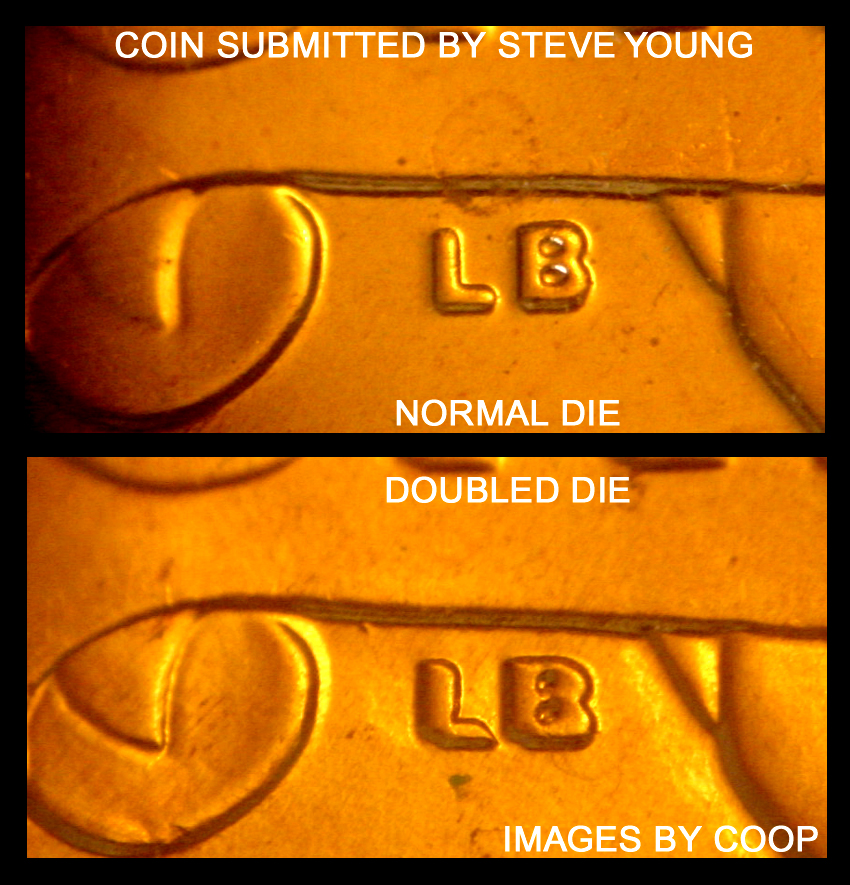
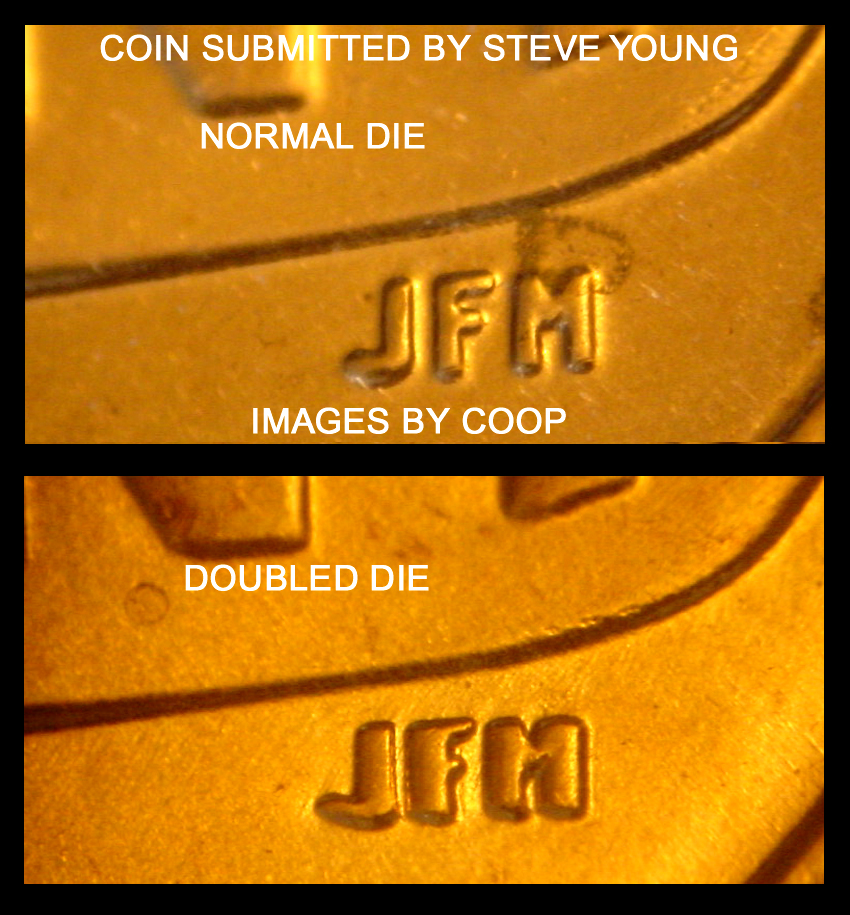
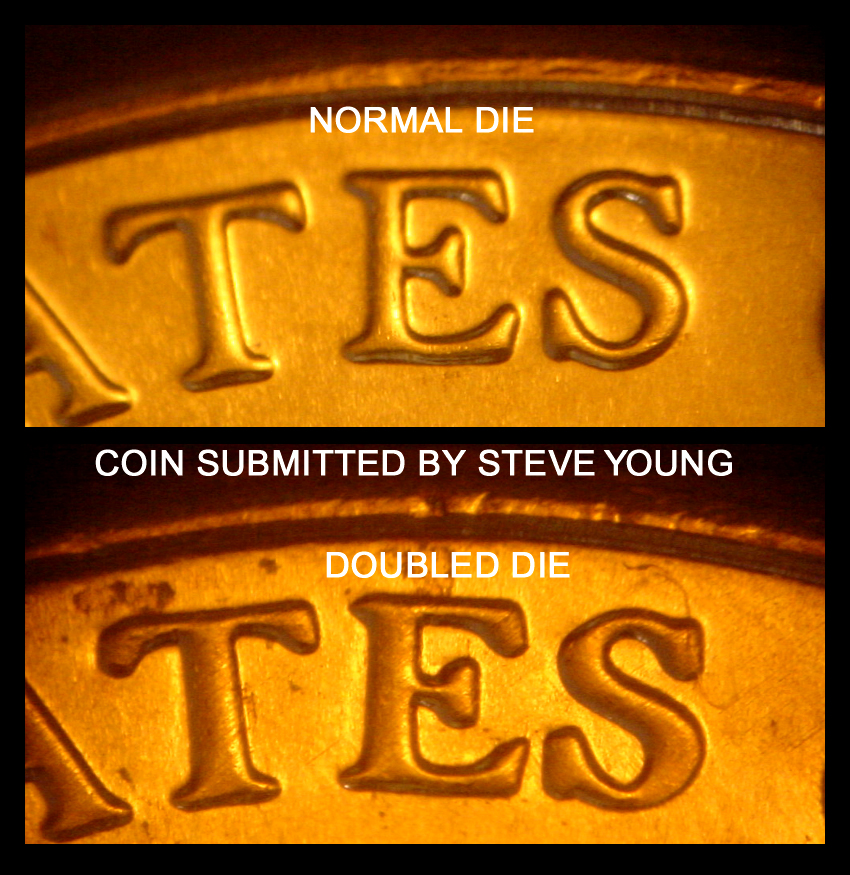

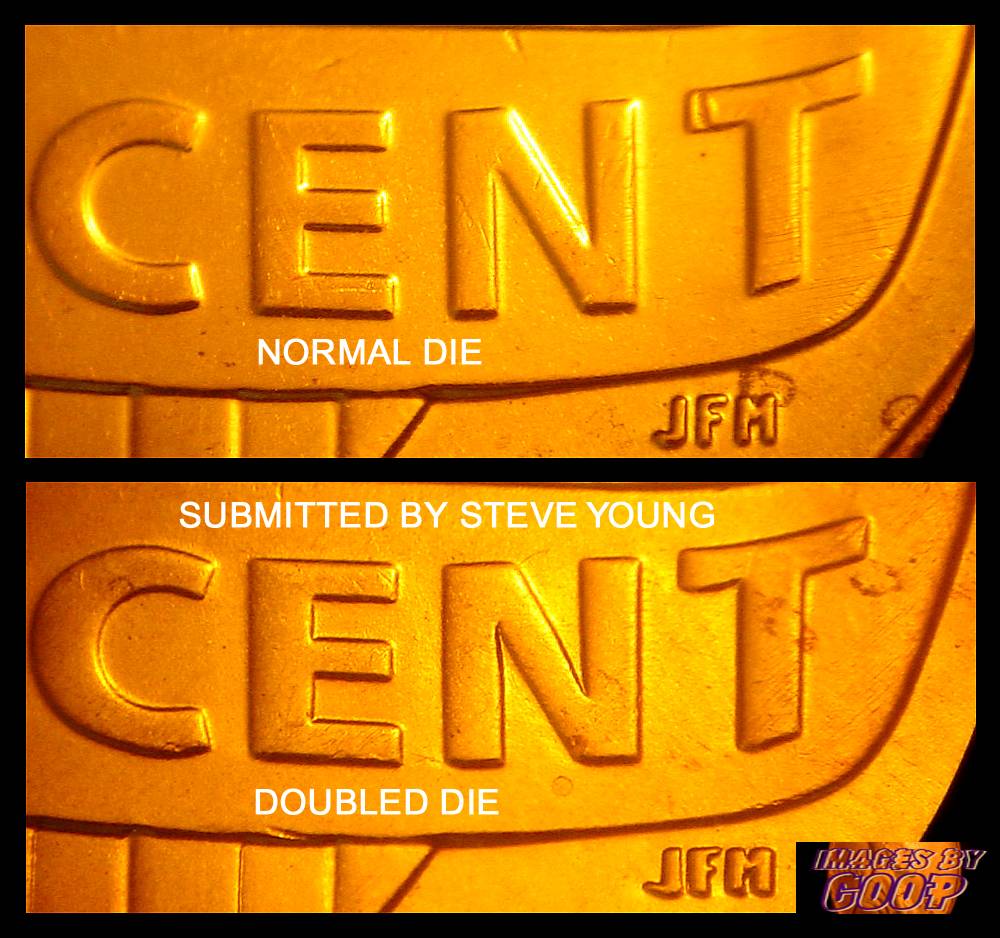
When I got to the incuse devices on the EPU, I noticed that as the hub doubling on the die make the devices larger, on the incuse devices, it made them smaller.

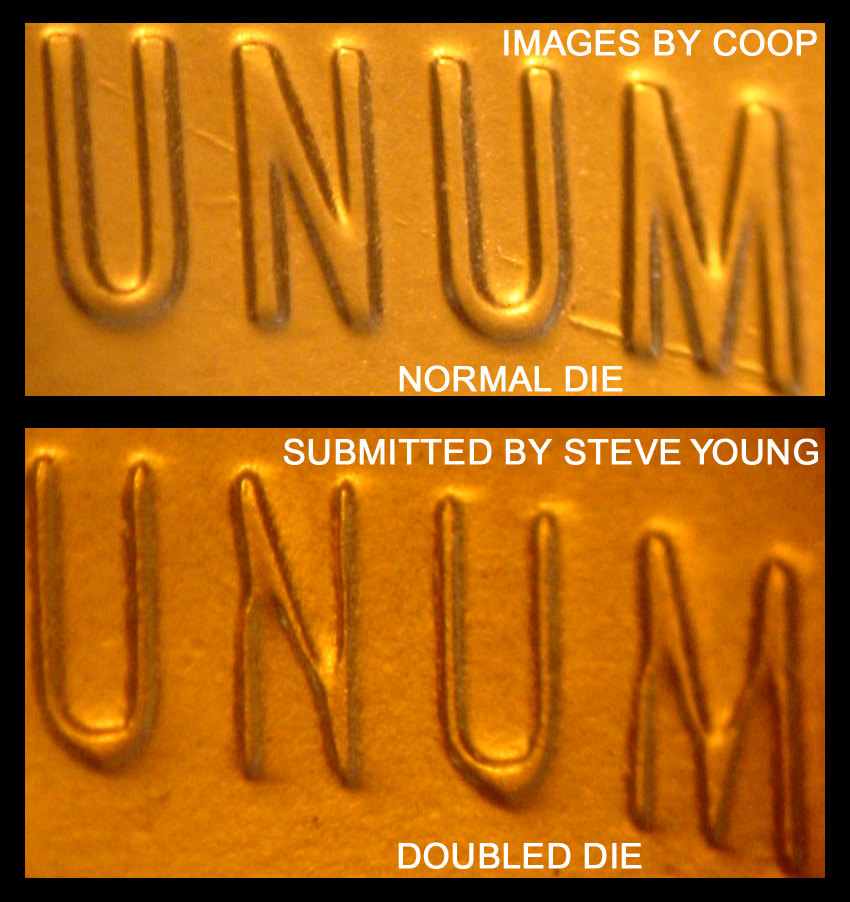
On a normal strike with a doubled die, the raised devices would be larger/taller/wider.
With machine damage on the doubled die raised devices these will be reduced/damaged during this event.
With machine damage on a normal die the devices would be reduced in overall size.
On a normal strike with a doubled die, the incuse devices would be reduced in size because of the way the devices were hubbed. When a coin is struck on a normal strike you will see these devices reduced in with/height because that is the way the die was hubbed.

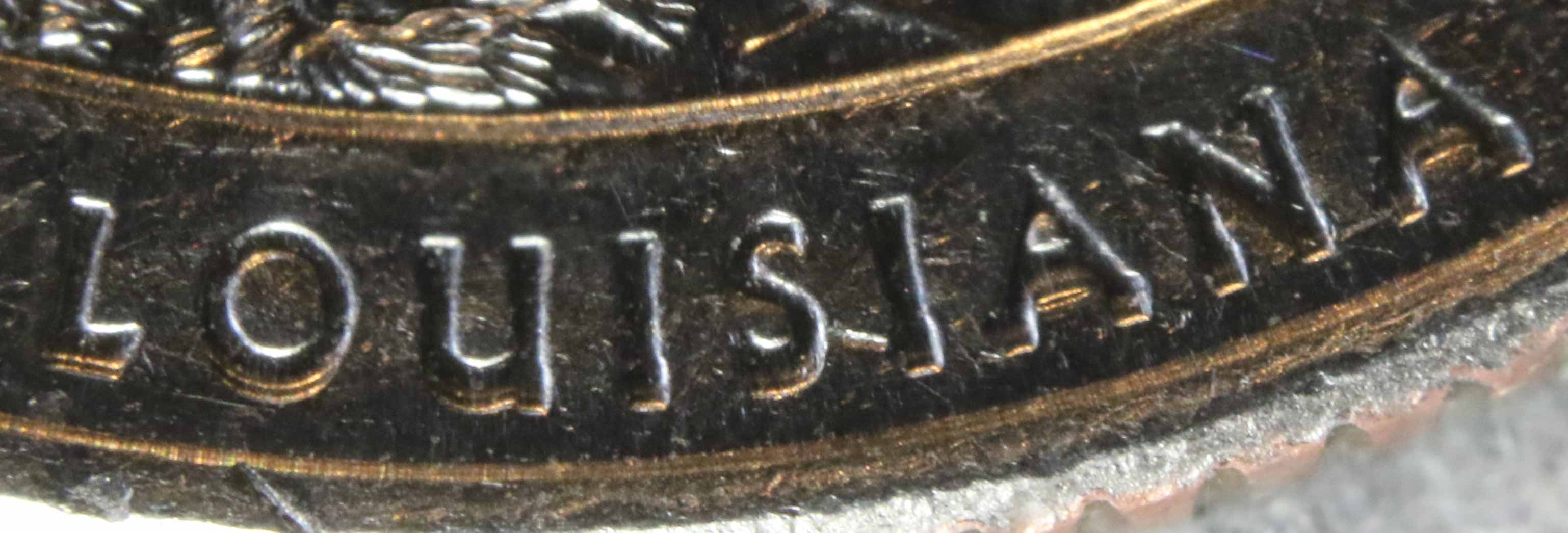
On incuse devices during machine damage during the strike on incuse devices, they will be enlarged because the devices that form incuse devices are raised on the die:

So when the die move or bounce during the strike the incuse devices will show enlargement, because of the machine (not on the die) that damages those devices.
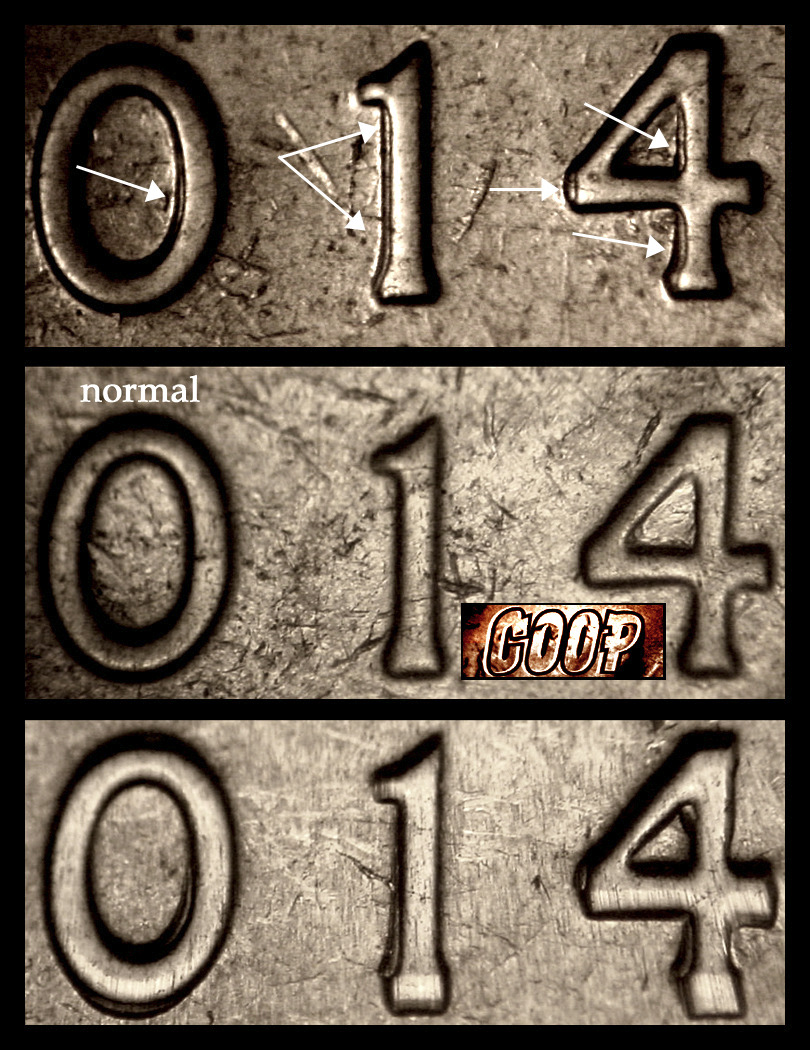
So to conclude, the machine causes the issue during a strike with a normal or hub doubled die. Often this is an isolated happening but MD can be different from strike to strike.
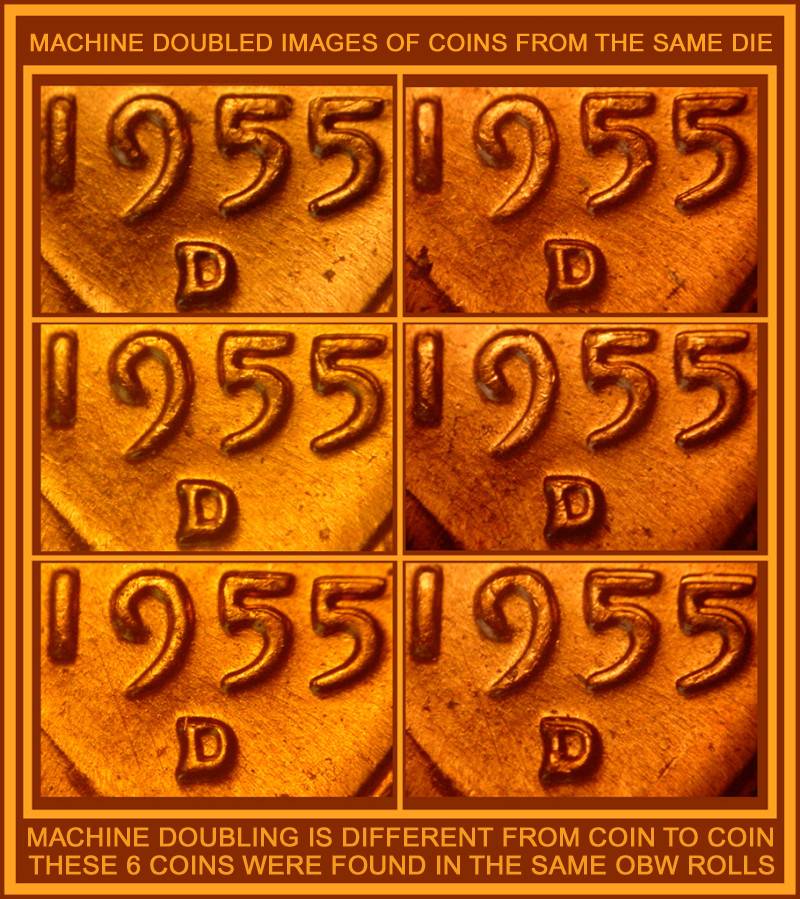
Note on this run of coins, the markers are the same, but the MD is different from strike to strike. (possible looseness of the dies moved at random moving here or there)
Hub doubling on a die creates a doubled die because it is on the die. Whether raised or incuse, each strike with this die will have the same end resort. Hub doubling on the coins it strikes. Hope this helps?








 Posted 03/09/2016 2:24 pm