| Author |
 Replies: 8 / Views: 2,503 Replies: 8 / Views: 2,503 |
|
|
Moderator
 United States
34546 Posts |
Hi I'd like to share the story of one of my coins with you. This little guy isn't dated, but I still think it still has some merit and I was glad to pick it up a couple years back. From Wikipedia, The Republic of Ragusa was a maritime republic between 1358 and 1808. Today the city of Dubrovnik (as it is called now) is located in Croatia, but previously it was conquered and subsequently annexed by the French under Napoleon. Ragusa was at is commercial peak in the 1400s and 1500s (right around the time that this coin was made). Of particular interest to numismatists is the motto of Ragusa: "Non bene pro toto libertas venditur auro", or "Liberty is not well sold for all the gold". See below for a picture of my 1 follaro coin of Raugsa. The diameter of this copper coin is 16 mm and the mass is 0.7 g, both a little on the low side, but not surprising considering the fact that it has seen quite a bit of wear since being minted in the years between 1495 and 1498 (inclusive). The silver highlights are indicative of my poor photography skills and are not present with the coin in hand. The obv inscription is MONE°RACVSI and has a left facing bust. I'm not sure who exactly is rendered, but in atypically gushing German, Rengjeo describes the figure as, "A round-headed teenager with luxuriant hair." The rev inscription is CIVITAS°RACVSII and it encircles the city gate with a central tower. The attribution is Rengjeo #1884, although this specific design is not included in the plates of "Corpus der mittelalterlichen Muenzen von Kroatien, Slavonien, Dalmatien, un Bosnien". I don't think that this follaro is particularly rare, but the bulk of the Ragusa numismatic material for sale on vcoins comes from a century (or two) later. 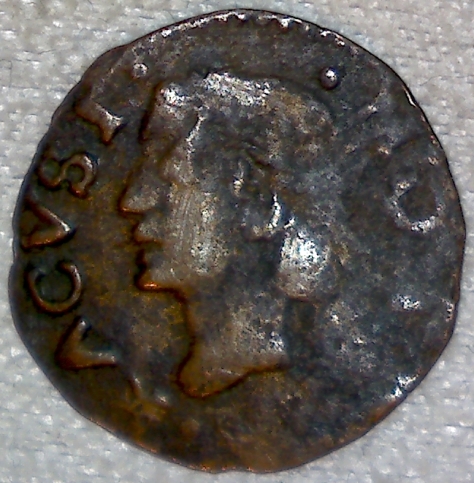 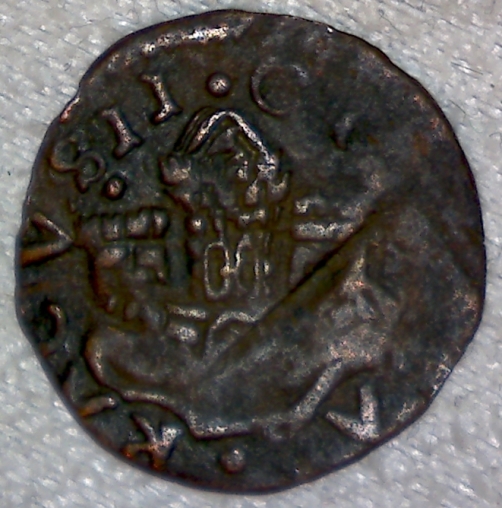 "If you climb a good tree, you get a push."
-----Ghanaian proverb
"The danger we all now face is distinguishing between what is authentic and what is performed."
-----King Adz
|
|
|
|
Moderator
United States
23731 Posts |
Very nice coin. Can you recommend any go on line site or books on Medieval coins?
|
|
Pillar of the Community
Russian Federation
5186 Posts |
Cool coin! Where and how did you get it?
It's stuff like this that makes me hopeful every time I see an old thin copper in a junk bin. But no, below a certain size, the coppers I find that way pretty much always turn out to be Polish (except for that one Bohemian from 1622, for which I still haven't figured out if it's real because catalogs say it should be silver).
|
|
Pillar of the Community
United States
7067 Posts |
Quite interesting coin - and with luxuriant hair, no less! Another great write-up. Thanks for sharing.
|
|
Moderator
 United States
34546 Posts |
@echizento, good question about books for the medieval European specialist. I wish there was a simple answer. As I've mentioned before, Levinson's book covers all areas, but only dated coins. I have the first volume of Grierson and Blackburn, but that only covers early dark ages. I believe that their intent was to create a grand opus covering later dates as well, but I'm not sure where that project is currently. Otherwise, it is my experience that you must buy specific books for specific geographies: Italy (Biaggi) Spain (Cayon) UK (Spinks) Saxony (Krug) Salzburg (Probst) Munich (Ilisch) Germany in general (Krause, for after 1500; Bonhoff; Saurma) Hungary (Huszar) France (Duplessy, both his series on royal coins and coins of the feudal states) Poland (Kopicki) Croatia/Dalmatia/Slovenia (Rengjo) Switzerland (HMZ) This list goes on and on. Virtually all of these books are out of print and some are somewhat difficult to acquire. The Biaggi book in particular was my white whale for almost 10 years. The Bonhoff resource is actually a pair of auction catalogs. Virtually nothing is in English. In many cases, the prices are decades old and in units of money that no longer exist (having been replaced by the Euro). It is a bit of a mess sometimes.  Sorry I forgot that you asked for online versions of these books. The only one that I have seen is Saurma. "If you climb a good tree, you get a push."
-----Ghanaian proverb
"The danger we all now face is distinguishing between what is authentic and what is performed."
-----King Adz
Edited by Spence
03/12/2016 12:41 pm
|
|
Moderator
United States
34546 Posts |
@january1may, not sure specifically where I picked this one up, but I shop mostly on-line at vcoins and ma-shops (never ebay for this material). There are relatively few specialists in this field in the US, so you generally can't pop on over to your LCS as they tend to have nothing between the Byzantine Empire and the 17th or 18th century. I have no idea about Russian LCSs. "If you climb a good tree, you get a push."
-----Ghanaian proverb
"The danger we all now face is distinguishing between what is authentic and what is performed."
-----King Adz
|
|
Moderator
United States
23731 Posts |
I found a few old Kunker auction catalogs along with some excellent PD's on Medieval coins on the web which have been very helpful. The Levinson book is very expensive so I wouldn't be buying one soon.
|
|
Moderator
United States
34546 Posts |
Quote:
The Levinson book is very expensive so I wouldn't be buying one soon. Well then please keep posting them as you pick them up and I'll do my best to help you with the attributions.  "If you climb a good tree, you get a push."
-----Ghanaian proverb
"The danger we all now face is distinguishing between what is authentic and what is performed."
-----King Adz
|
|
Pillar of the Community
Russian Federation
5186 Posts |
Quote:
There are relatively few specialists in this field in the US, so you generally can't pop on over to your LCS as they tend to have nothing between the Byzantine Empire and the 17th or 18th century. I have no idea about Russian LCSs. Basically the same, except that of course all the Russian wire stuff is right in that gap (near the modern end of it), and LCSs have a reasonably decent assortment of these (if often at inflated prices). And there's a surprisingly non-zero assortment of 17th century stuff (Polish and, to a lesser extent, French is by far the most common, but coins from other places also appear occasionally). OTOH, things like 16th century Hungarian denars and Lithuanian, um, anything - which should logically be common - are nowhere to be seen. And neither is anything else 16th or 15th century, dated or otherwise. (14th? Don't be silly.) I managed to find two early Salzburg coins (1517 and 1521) from one guy who specialized in paper money; he had a few earlier medieval bracteates as well, which I didn't buy because I didn't want to get anything I couldn't identify. (Now mentally kicking myself, obviously.) My next oldest non-ancient non-Russian coin is a French 1600 denier (or double, don't recall). |
| |
Replies: 8 / Views: 2,503 |
|










 Posted 03/12/2016 07:06 am


