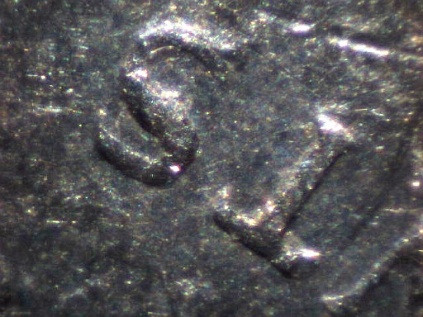
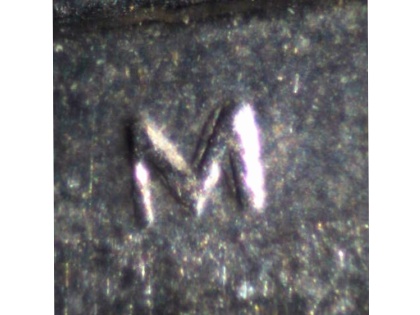
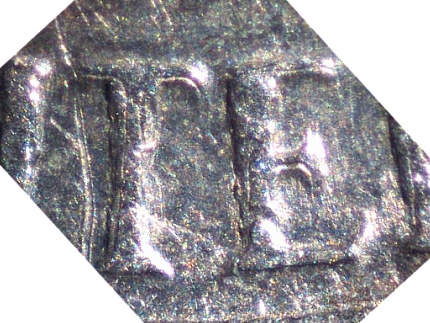
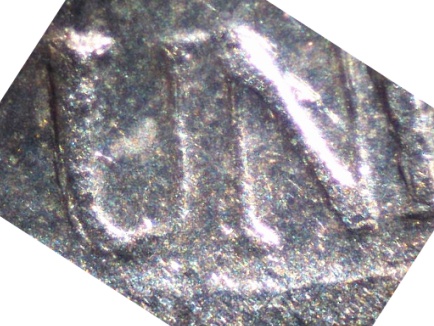
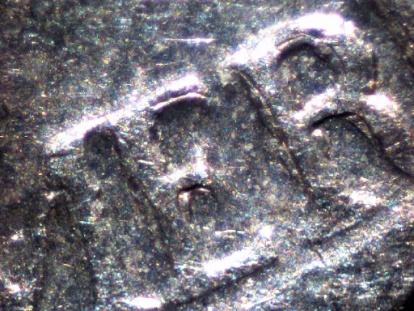
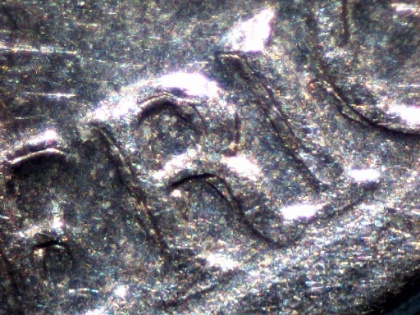
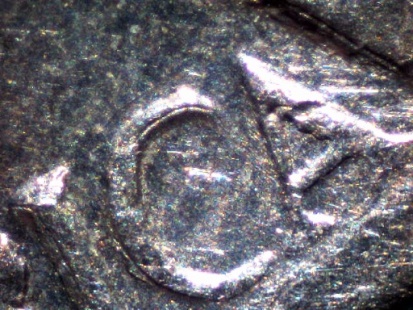
CC..The way I see it all coins are die varieties... of a sort. There is the die and the first coin struck. That coin I refer to as the mate. Once the first coin is struck, the die changes ever so slightly...usually. Another words, it varies from the original coin struck. Thusly you a get a Variety. Now does that fall into the Who Gives A S*** category, probably, unless we are talking seriously Deep Black and White Ultra Heavy Frosted Cameo coins, or major double dies. In that case one can find themselves counting planchet die stirations around the inside rim of the coin to determine striking order and/or looking for signs of die wipe to determine EDS. (Same basic idea) Usually one would only care about this to determine VVEDS or When looking for the first coin struck... the Mate.
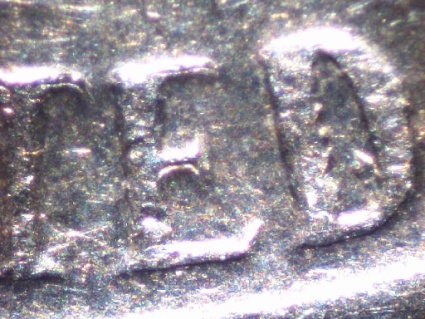
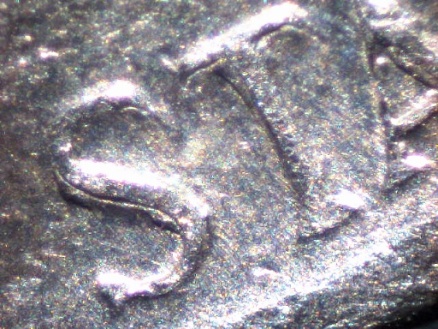
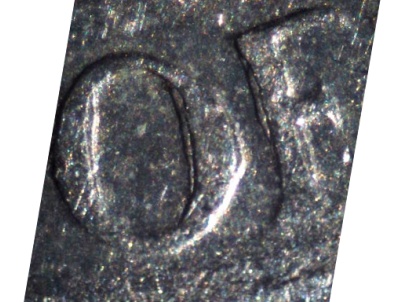
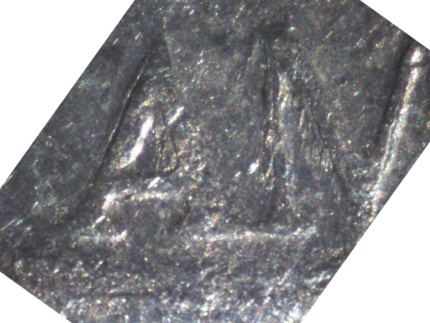
The coin pictured here is still major enough to warrant collector interest and further research. I am not suggesting going out and paying a fortune for one. But, if ya can gets one for common money, why not? This is not to say that I believe that these coins do not have their own rightful place or value.
I have handled very many of these types of coins for over 50 years. Suffice to say that when I read of them being referred to as
Die Deterioration, I have always questioned the correctness of that statement, and still do. So, let me ask this.
Does anyone know if the die steel use to produce nickel coins is the same as all other die steel used for different material coins? Or, is the die steel (or hub steel) treated (hardened) by the addition of agents such as titanium to make it harder? If the die steel is harder it is possible to wear out the hub faster causing hub distortion.
Perhaps it is time to reconsider these coins and how they really are made. Is it not possible to have distorted (worn) Hub doubled dies?
We all know what distended hub doubling is, (Expanded hub doubling) however we call it. The hub stretches outward from wear. Perhaps you can let us know of any in depth studies that can resolve this issue. Someone may have proof of this via overlays and the study of specific dies for any given year.
I really like the T on this coin. Look at how thin and well defined the uppermost t on the t is. That looks to me like the last pressing of the die, he deepest point in the die. The edges look sharp and well defined. To me that is suspect.
Lastly, how many coins are made that look like the one pictured here? I believe that I may even have one put away somewhere. If there are quite a few made, how can that not be a variety as opposed to an error? Does the coin not look radical enough?
Thanx for response. I still be Willing, Learning and Enjoying it all....G.
P.S. If I sent you out to my brothers car and the lot was full of trucks would you be able to get to my brothers car? It is a 1969 Ford Ranchero with a 428 SCJ engine. Now, is that a variety or what?




 First Page


 Posted 02/18/2008 4:50 pm