| Author |
 Replies: 21 / Views: 6,137 Replies: 21 / Views: 6,137 |
|
Pillar of the Community
United States
609 Posts |
Edited by wrongalot
02/18/2008 4:51 pm
|
|
|
|
Pillar of the Community
United States
1219 Posts |
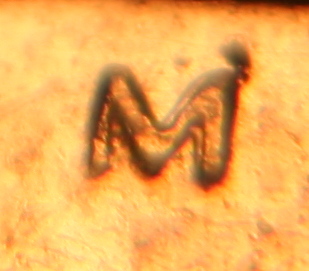
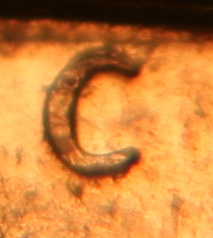
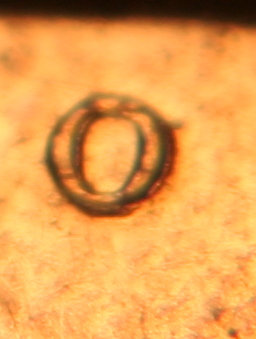
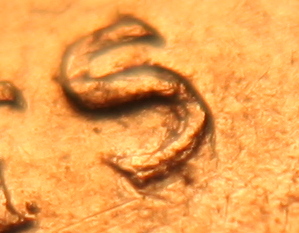
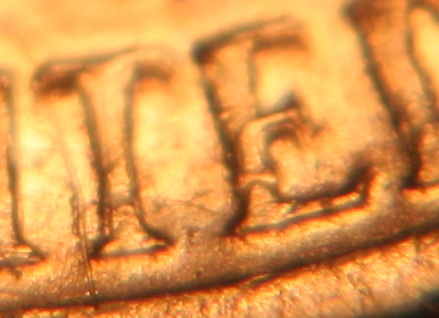
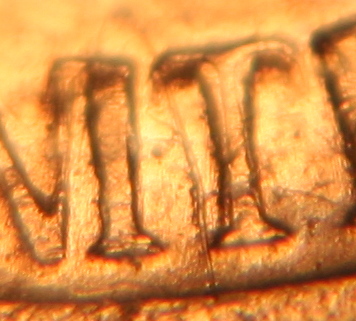
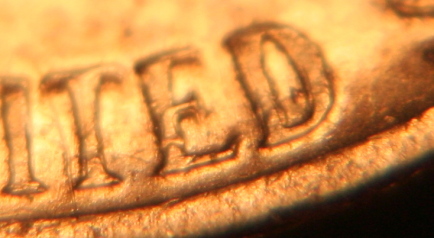
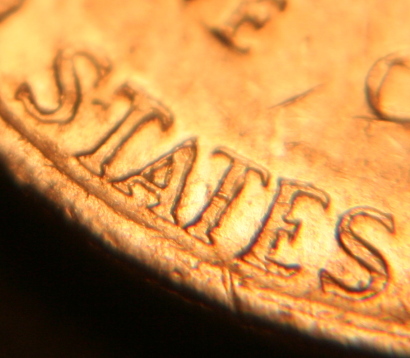
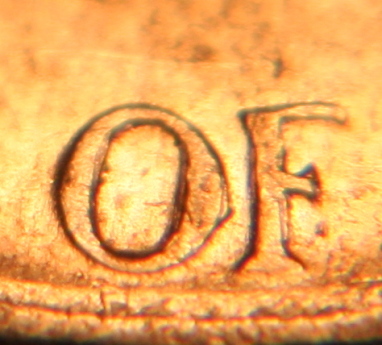
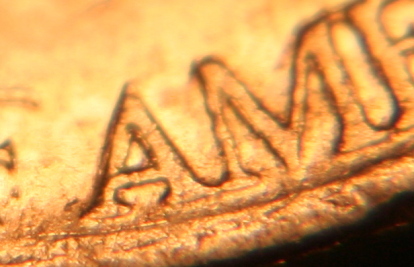
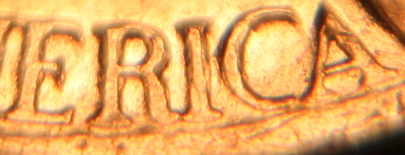
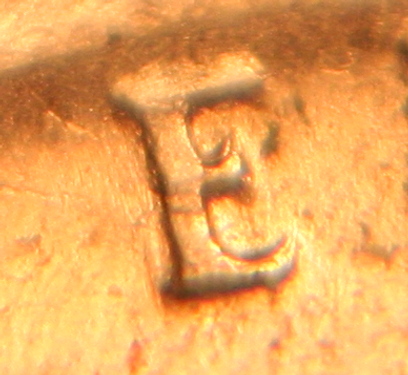
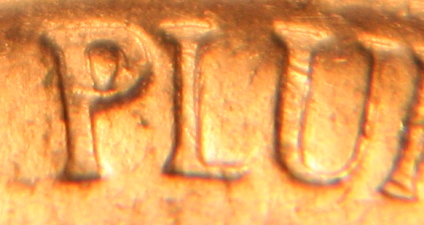
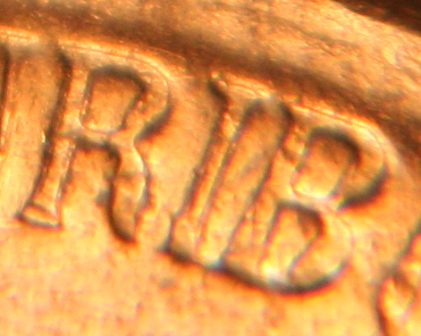
Wrong, looks like a good case of a poor old worn out die begging for retirement. Don't take my word for it, my knowledge of cents consists of small, round and sometimes made of copper.
|
|
Pillar of the Community
United States
2600 Posts |
No doubt the die is worn and I see some MD, too.
Jim
|
|
Pillar of the Community
United States
7629 Posts |
It's Die Deterioration Doubling. Hey MorgansRmine....it's a nickel. Not a cent. ;O) The color in the image is due to poor white balance settings in the camera. |
|
Pillar of the Community
 United States
609 Posts |
Ok now I am really confused. All I have heard about finding doubled dies is look for split serifs, raised doubling, not shelf looking, look for what is part of the serif, not seperate from it, well I see all this, but not a doubled die......man I give up..........
|
|
Pillar of the Community
United States
914 Posts |
It's because you're looking at nickels. This very hard metal will cause you grief and consternation trying to find doubling. Go back to the nice happy land of cents.
|
|
Pillar of the Community
United States
2600 Posts |
Vaslin, you're loyalties are showing. Jim  |
|
Pillar of the Community
United States
7629 Posts |
Easiest coins on which to find hub doubling...
proof cents and nickels from the early 1960s. You're almost guaranteed to find at least minor hub doubling on one of ten coins searched.
You want to find doubled dies? Get some 1962 or 1964 proof cent rolls ($20 or under usually) and start searching.
|
|
Pillar of the Community
United States
5318 Posts |
One thing that helps me discern Die Deterioration from DD is irregularity of the secondary impression. It's especially noticeable in "OF", and a DD would more closely resemble the stronger impression. |
|
Valued Member
138 Posts |
Nice Minor Rotated Hub Doubling, You should be able to pick up a few dollars for it, leave no dollar unearned. Error coin enthusiast never leave out the other denominations.
Edited by Homer1
02/13/2008 2:58 pm
|
|
Pillar of the Community
United States
3507 Posts |
There is no rotated hub doubling on the nickel shown. Die Deterioration Doubling can mimic hub doubling on nickels even to where the serifs seem split. I have several from the early 1980s especially from the Denver Mint that can drive you nuts. The coins still were not struck by doubled dies. It is worth five cents plus the education received by finding it:-) The longer you hang on to these, the more the buying power goes down:-) Spend it soon, you'll see hundreds of others over time:-) |
|
Valued Member
United States
288 Posts |
Often pondered this type of doubling. My guess as to how this happens is that a worn hub gets replaced by a newer hub while the die is in the process of being made. In effect it is worn hub doubling but I believe that it is also a doubled die. In this case the die is made using different hubs. The different hubs cause the die to double. I call that a double die. (Then again, there is always the possibility of a slightly different design hub being used with a more normal hub. Still a double die). However you look at it, it is a die variety and should be treated as such. Keep the coin. In time people will recognize them. Die Deterioration may not be quite correct. The die is new and being made. It is more likely the Hub that deteriorated and was replaced. G. |
|
Pillar of the Community
United States
3507 Posts |
No, It's not a die variety. The die gets worn, the metal around the lettering on the die becomes distorted.
Their is no rehubbing of worn dies with a different design.
There is no incidence of "worn hub doubling" known to my knowledge. I have seen hundreds and hundreds of nickels with doubling that looks like this. I hve sen quarter dollars and dimes like this as well. It is purely a function of the dies becoming worn out.
|
|
Pillar of the Community
United States
7629 Posts |
A healthy dose of misinformation going on here. There is no hub doubling on this coin, and there is no variety here. Anyone who actually knows what they are talking about would call this Die Deterioration Doubling and nothing else. It's die wear. |
|
Valued Member
United States
288 Posts |
OK. I would think that any Die Deterioration would show up more like Machine Doubling with evidence of the metal looking pushed. Shelf doubled. Dies do in fact wear out to be sure. They show a more muddled or widening or fattening of the designs, letters, ect. in the lower areas of the coin near the planchet do to the die stretching at its face. Usually you can see doubling all around any given letter. This appears to happen here. Look at the picture of the M. But, is that all that is happening? Hubing can look similiar. I would imagine that worn hubs sometimes do get used on any given die. Sometimes before and sometimes after a good hub was used. But remember, the mint does not get busy and certainly does not make mistakes. Hubs do in fact wear out. That is why dies go to the ovens to soften their metal. It prolongs the life of the Hub and also protects the die. Imagine a hub being used over time. Eventually it is probably going to expand outwards from all that pressure. Take that worn Hub and press a die a couple times. Then replace the hub with a newer non worn hub and press the die a few more times. What do you suppose happens to that die? Ya get a variety. The low relief areas should be wider than the high relief of the design elements. Kinda like Die Deterioration. Think that it does not happen just because the coin is a nickel? As to design hub changes not happening, Ever heard of a die that was hubbed by both proof and business strike hubs. Who thinks that hub design changes do not happen? Ever look at a 1878 7/8 tailfeather coin? How about a 1942/1 dime? No hub change? Look closely at the above pictures. Certainly looks like something else could be going on here other than just Die Deterioration. I really like the picture of the T. I also think that I see some split serifs. Keep the coin anyways, it still is a variety. If a die gets messed up enough while producing coins it can make all kinds of varieties...Die clashes, die breaks, relaps, Die Cuds, filled dies ect. This is beginning to be appreciated more and more with the seated coinages. Check out some of their values now. I suppose the confusion stems from the fact that Die Deterioration shows up a lot on nickels. Nickel trashes dies. Sometimes tho, I just wonder about it all. More so when there is evidence of a split serif. If the coin is radical enough to be of obvious interest, who is to say what is collectible or valuable? Beauty is in the eye of the beholder. Perhaps die variety is a subjective concept. Good answers folks. I am sure that it helps collectors learn. G. |
|
Pillar of the Community
United States
7629 Posts |
All due respect, "die variety" is a term given to specific things, it is NOT a subjective concept. You tell me to go out to your car and there's nothing but trucks outside, I'd be confused. A truck is NOT a car and a car is NOT a truck...no different than die wear and minor die damage are NOT die varieties.
|
| |
Replies: 21 / Views: 6,137 |






 Posted 02/13/2008 08:36 am





