| Author |
 Replies: 8 / Views: 1,407 Replies: 8 / Views: 1,407 |
|
|
New Member
Bulgaria
16 Posts |
Hello, Could you tell me what type/variete is this 1 Yuan 1914 Fatman, and what is worth? Regards! 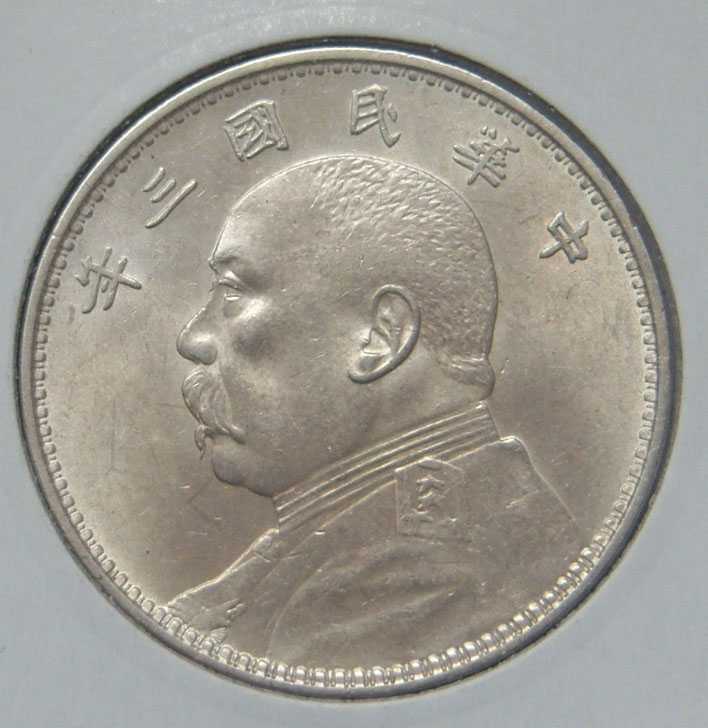 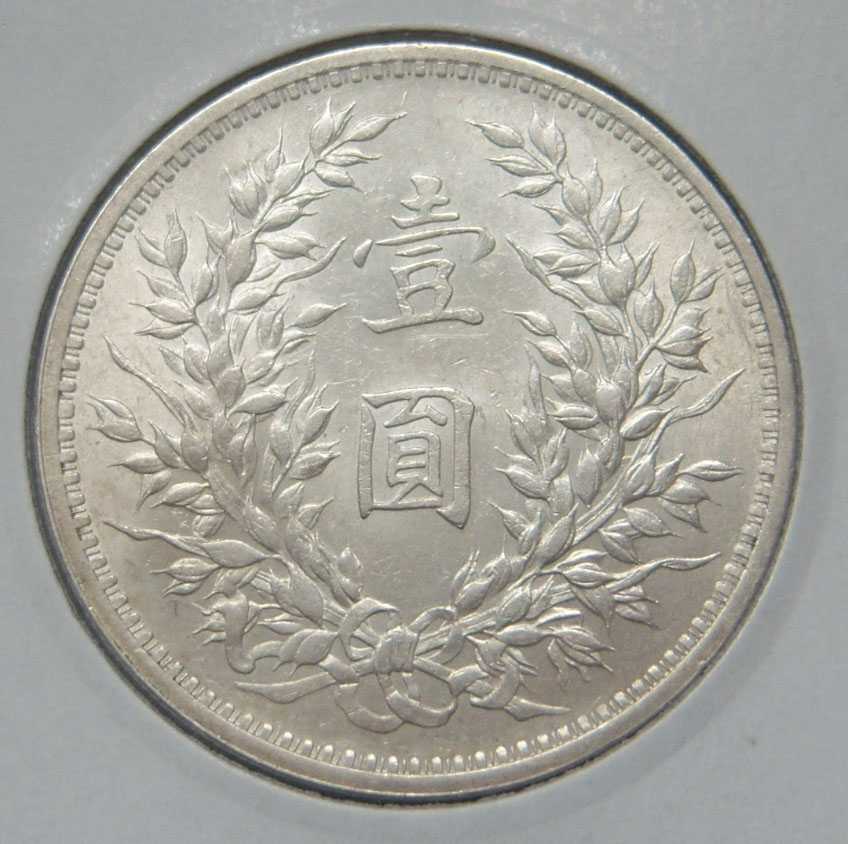 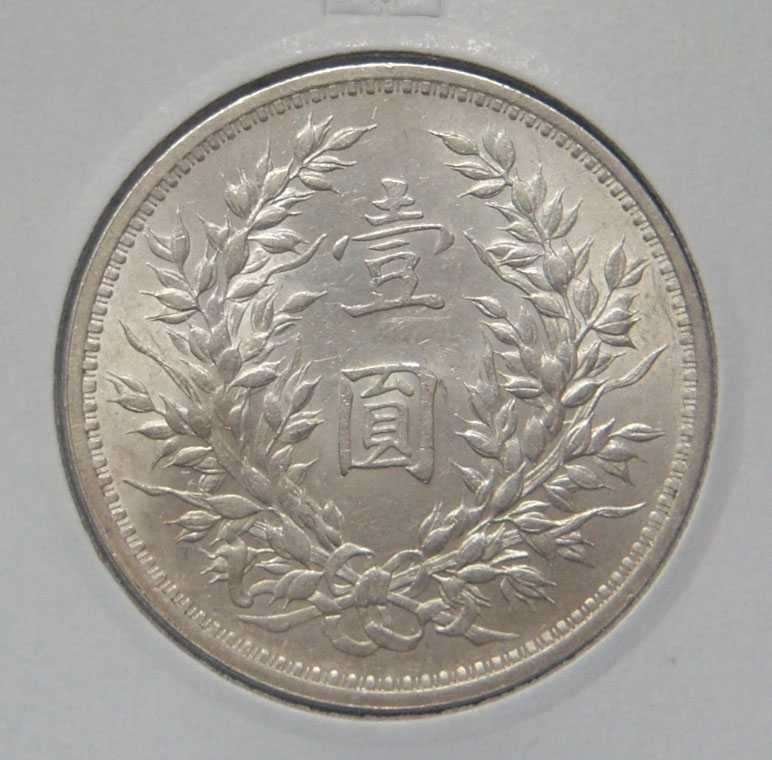 |
|
|
|
Pillar of the Community
United States
5362 Posts |
Can you post in focus pictures of the edge?
I am very suspicious of these coins - most are forgeries.
|
|
Pillar of the Community
United States
1915 Posts |
There are so many varieties, it's hard to look at a picture and say which one it is for me.
|
|
Pillar of the Community
United States
4883 Posts |
While widely forged, in the first year of issue at least several tens of millions were struck, so genuine specimens are not rare in any absolute sense.
Overall, I like the look of this coin, in particular the well defined "dragon's teeth" between the dentils which were an anti-counterfeiting measure.
The one anomaly I notice is on the reverse, where at 9 o'clock there is an oversized dentil. This may prove to be either a giveaway or an authenticator, depending upon whether there was ever a die that displayed this irregularity.
In the meantime, at least get an accurate weight, and if possible determine its specific gravity.
Colligo ergo sum
|
|
Pillar of the Community
United States
5362 Posts |
At least three of the four 1914 primary varieties involve the edge design - so I will wait to determine if the coin is actually real. I suspect it is a forgery.
|
|
Pillar of the Community
United States
1915 Posts |
This reminds me of a photo session I did using the same coin. I have a number of these and some are pretty darn good imitations. It's not so easy to see just by looking at the coin in hand in some cases. And especially not so easy to see by looking at a members posted pictures. In my special photo session of this coin- that was the precise purpose: in that a forgery certainly did look quite authentic. There is enough deviation among genuine coins that one just cannot outwardly say one is a fake because it has one detail or another that doesn't seem to conform. Kann shows quite a few deviations for this coin and also notes there is likely more than he recorded. In my study (for my simple needs) I found it frustrating and pointless to pin down a precise variety. And by the way, the coins I used in my study that looked so good....well it turns out there are other tests that proved them to be fakes. So I like swamperbob's approach to this thread and agree.
Edited by Albert
03/21/2016 1:08 pm
|
|
Pillar of the Community
Austria
566 Posts |
This is the regular type, which is the most common one. Seems quite authentic to me.
|
|
Pillar of the Community
United States
5362 Posts |
I understand that theoretically the 1914 (year 3) Yuan was a high mintage coin. I also am aware it was re-struck after that date in substantial numbers. I also know that prices for almost any genuine example with mint luster is high enough to be suspicious of forgery. If a typical graded AU brings from $150 to $200 - then I will more than take a second look at the coin. The 1914 Yuan can be collected by die because recut dies abound. I know of a many of them. But these die variations are in my estimation not enough to designate actual collectable varieties for "average" coin collectors. These are the "specialist" variations that guys like myself love provided they fall within our favorite series. They will drive most collectors crazy. Just two quick examples - the Epaulets from the first 5 MS graded examples in the Heritage website. 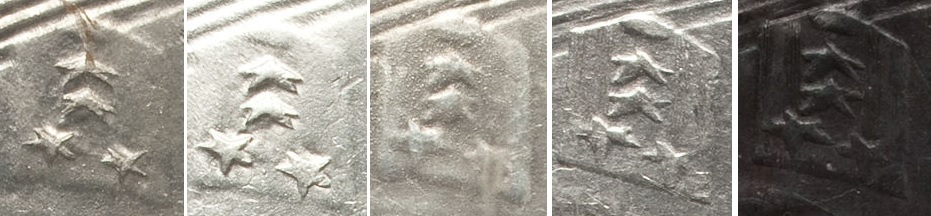 The back of the neck 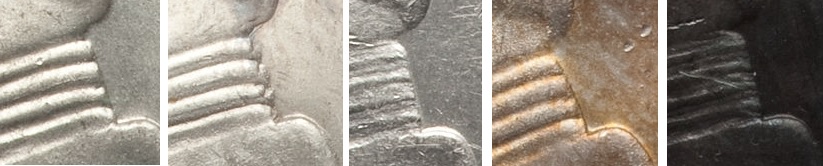 These are all MS graded NGC or PCGS examples. I am not saying they are all genuine. Looks at the differences. |
|
Pillar of the Community
United States
5362 Posts |
ploprof I would suggest that the coin should be authenticated and encapsulated BEFORE you attempt to sell the coin. Far too risky otherwise.
Also we are still waiting for edge photos, weight and specific gravity if possible.
|
| |
Replies: 8 / Views: 1,407 |
|







 Posted 03/20/2016 10:15 pm





