| Author |
 Replies: 7 / Views: 1,866 Replies: 7 / Views: 1,866 |
|
|
Valued Member
United States
426 Posts |
Hello Everyone and special shoutout to swamperbob. It's been a while since I have picked anything up worthy of posting but I recently acquired a 1833 8 Reales "Cap and Rays" Zs Mint at a local coin show and after careful study found some unusual details which I would like to share with you. 1. Weight is heavier than usual at 27.5 grams. 2. Diameter is on the large side at 39.6mm 3. There is what looks like a seam running on the edge of the cap side roughly starting around the 10D position up to the top rays at the 12:00 position. I know quality at the Zacatecas mint during this time was quite bad which might explain some abnormalities but I also know that the Zacatecas issues were heavily counterfeited during this time. I did check Riddell but could not find a exact match, and I do remember reading some of swamperbobs information that there seemed to be a blank making problem in Zacatecas in the 1830's where sometimes a bit of a spur of metal was rolled over the edge which might cause a seam, could this be the case? I have also read about the sheffield plate counterfeits and am wondering what the experts think? Here are the pictures. 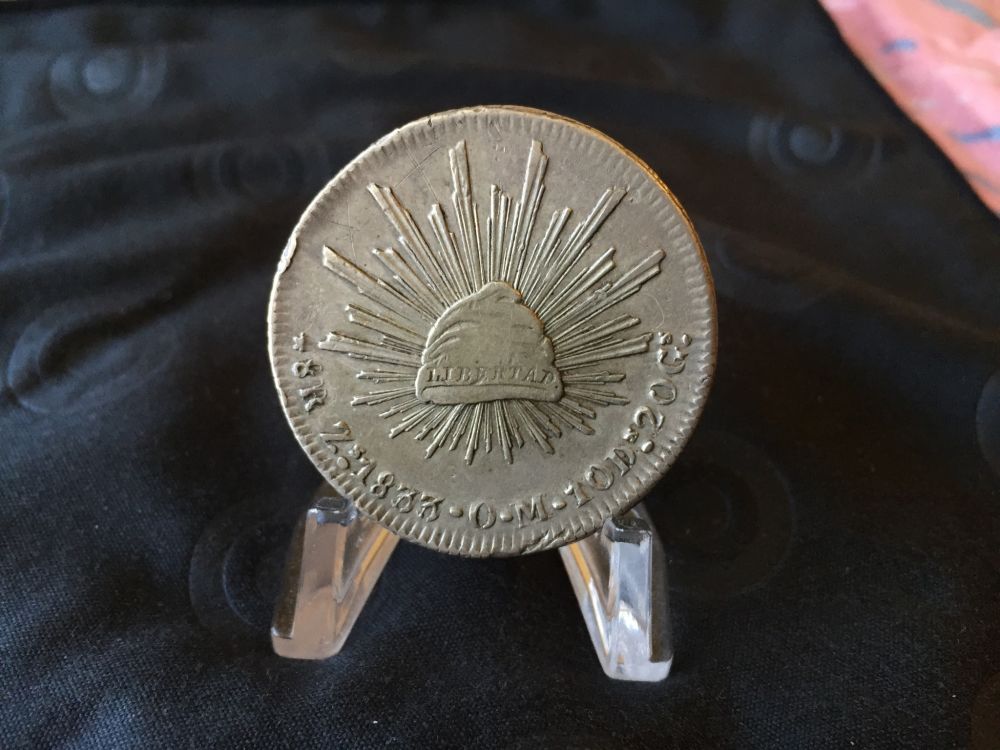 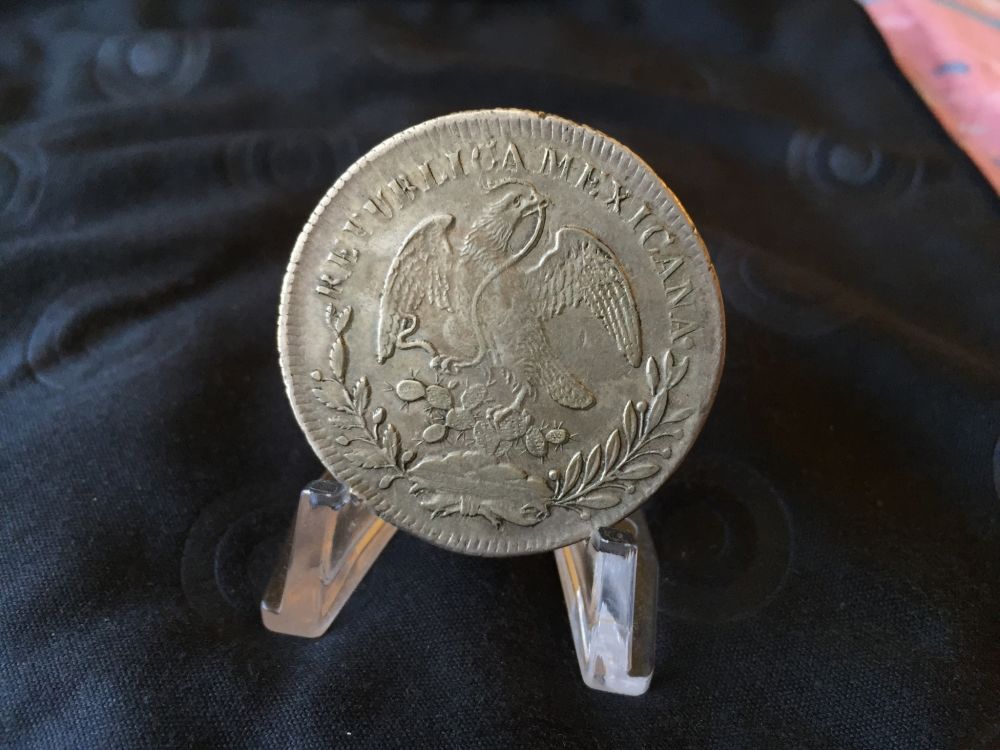 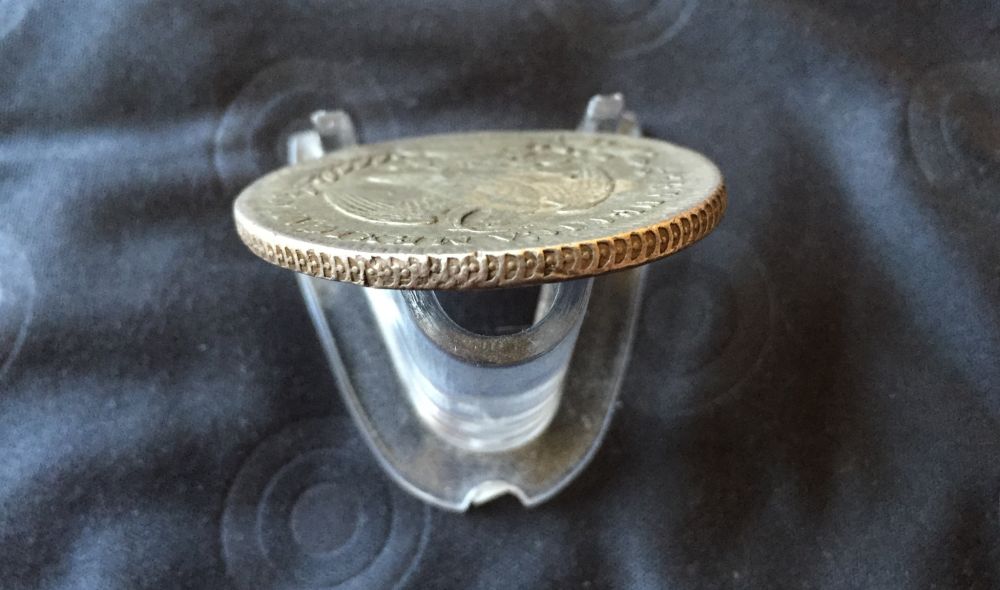 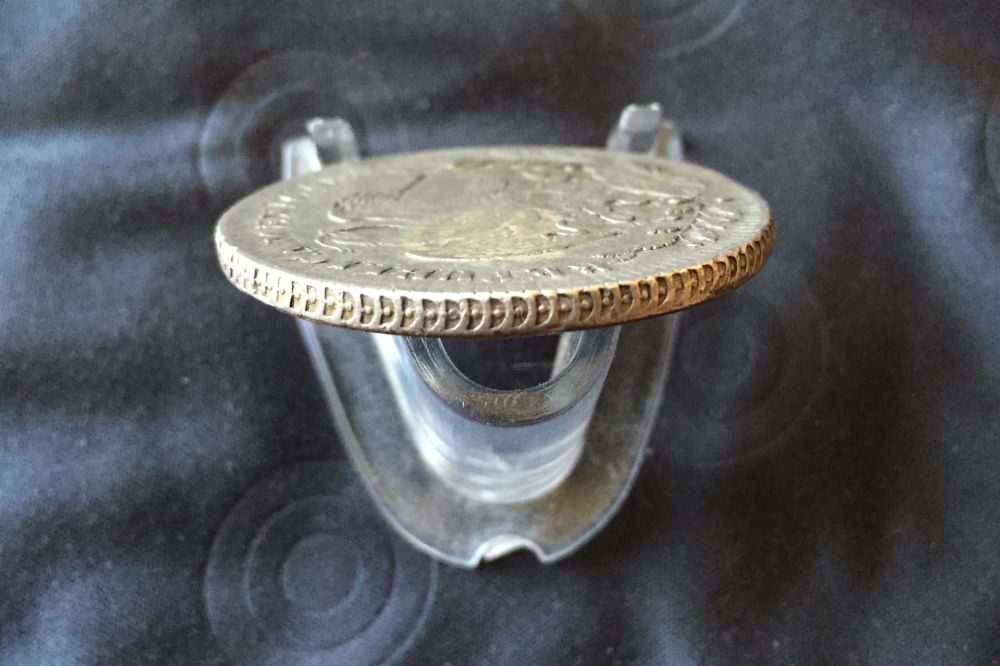 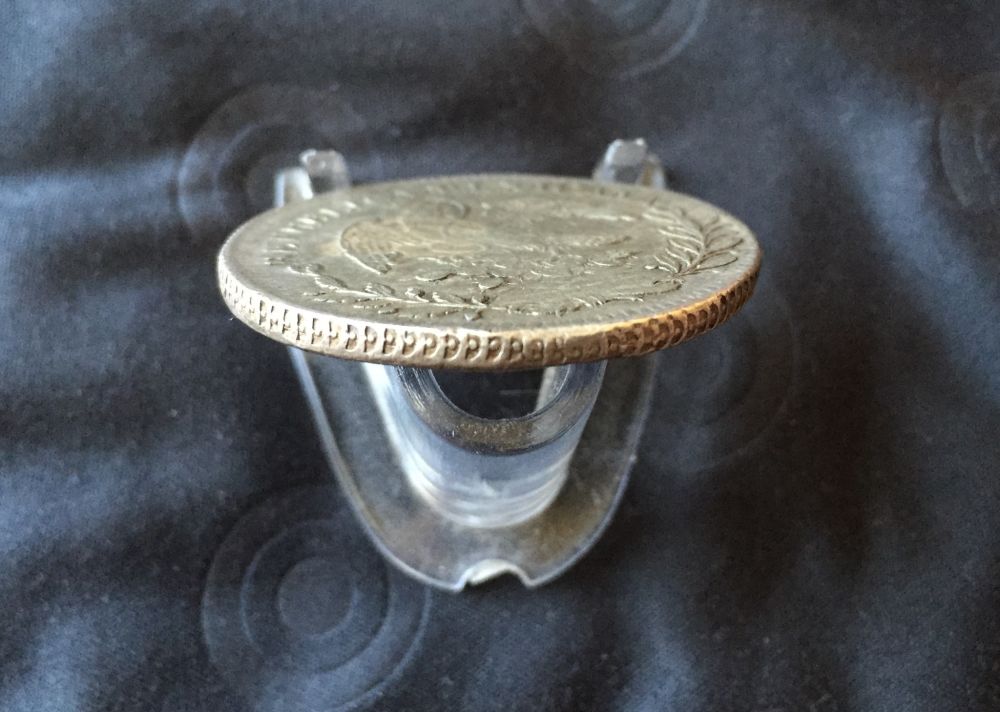 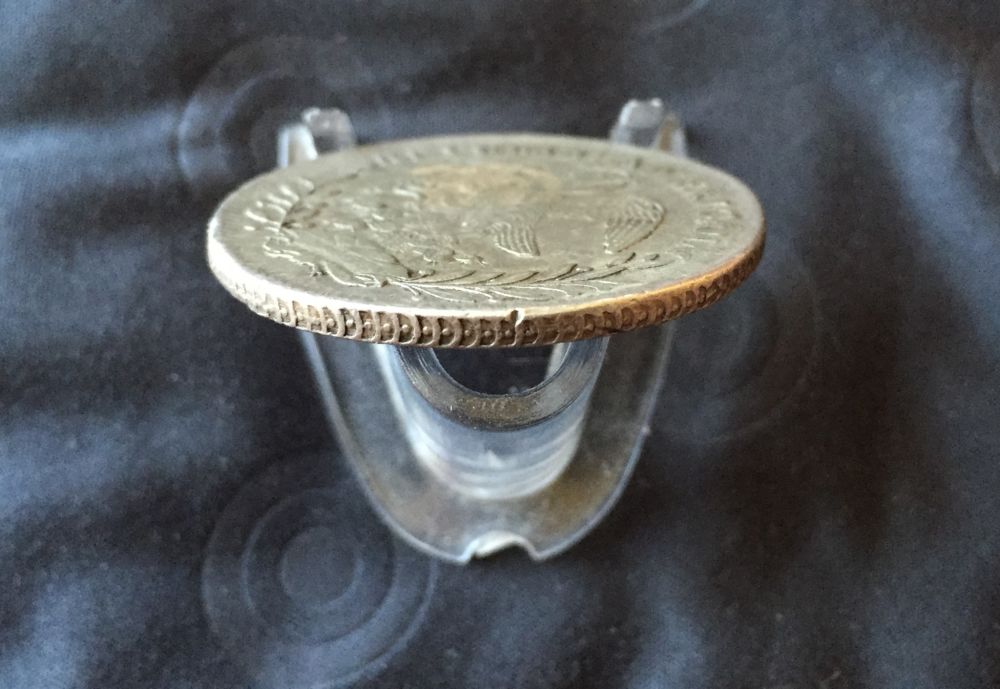 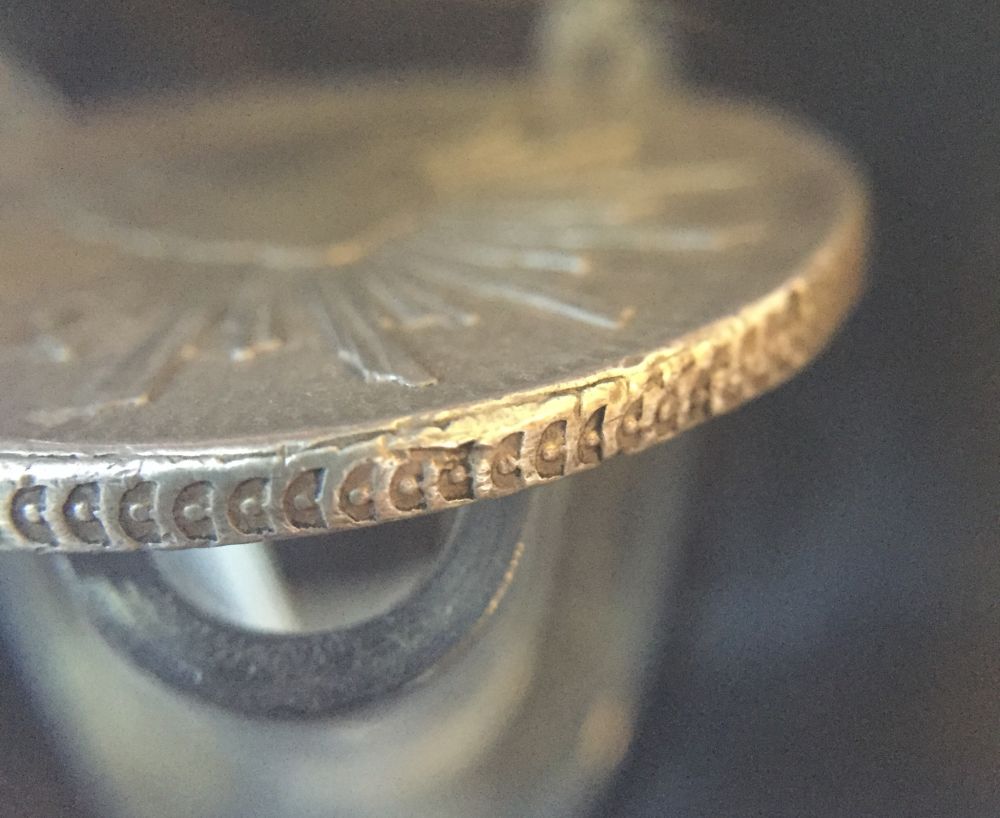 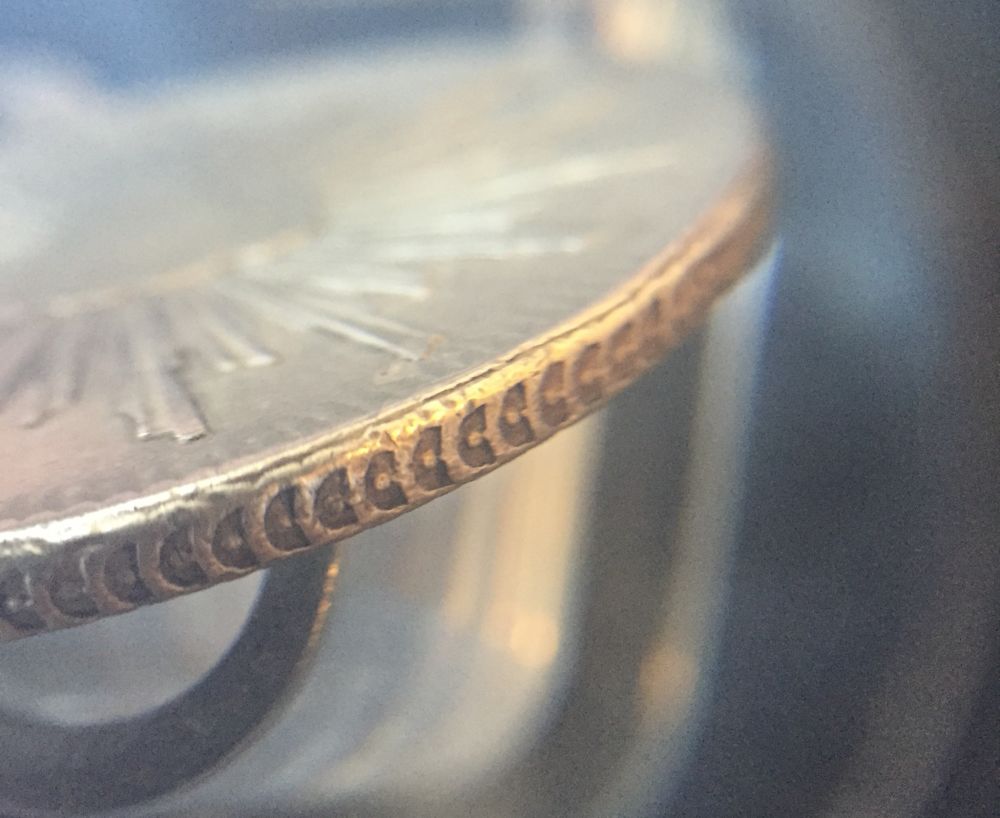 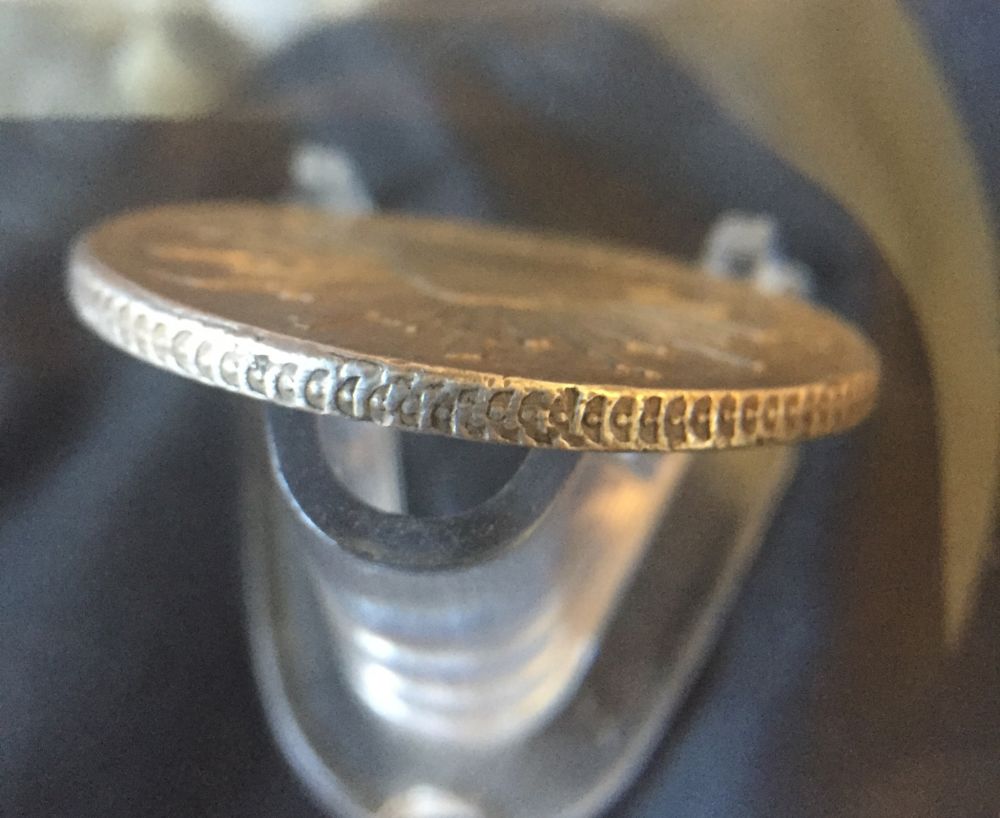 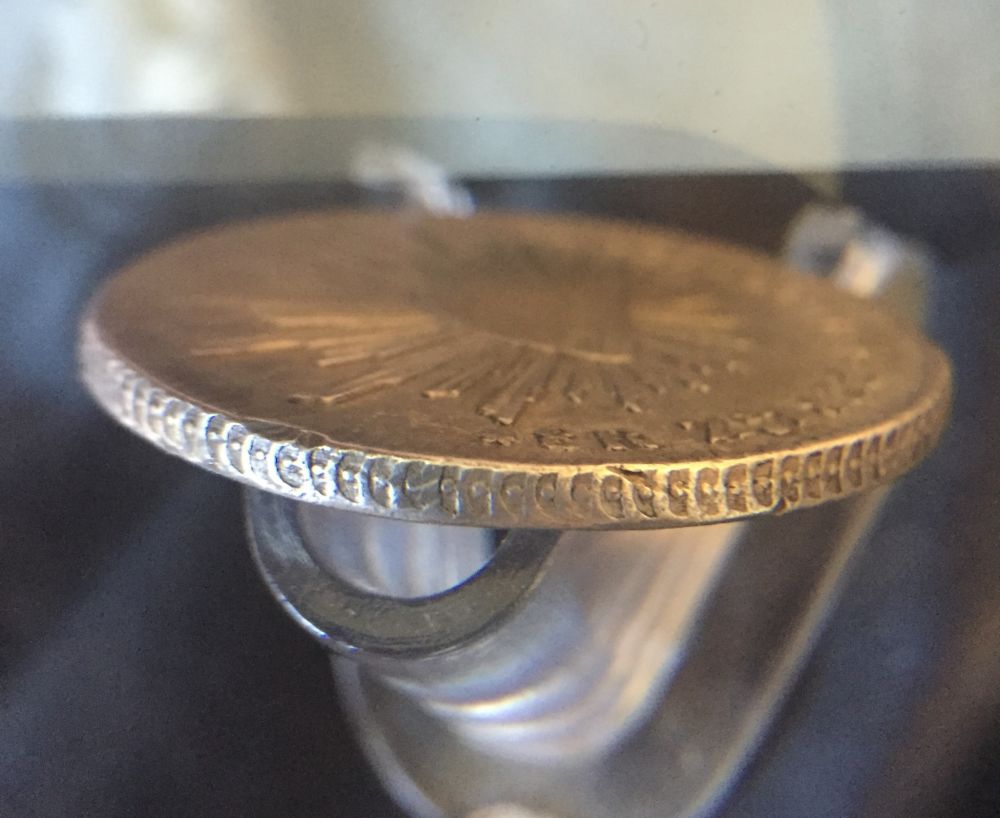 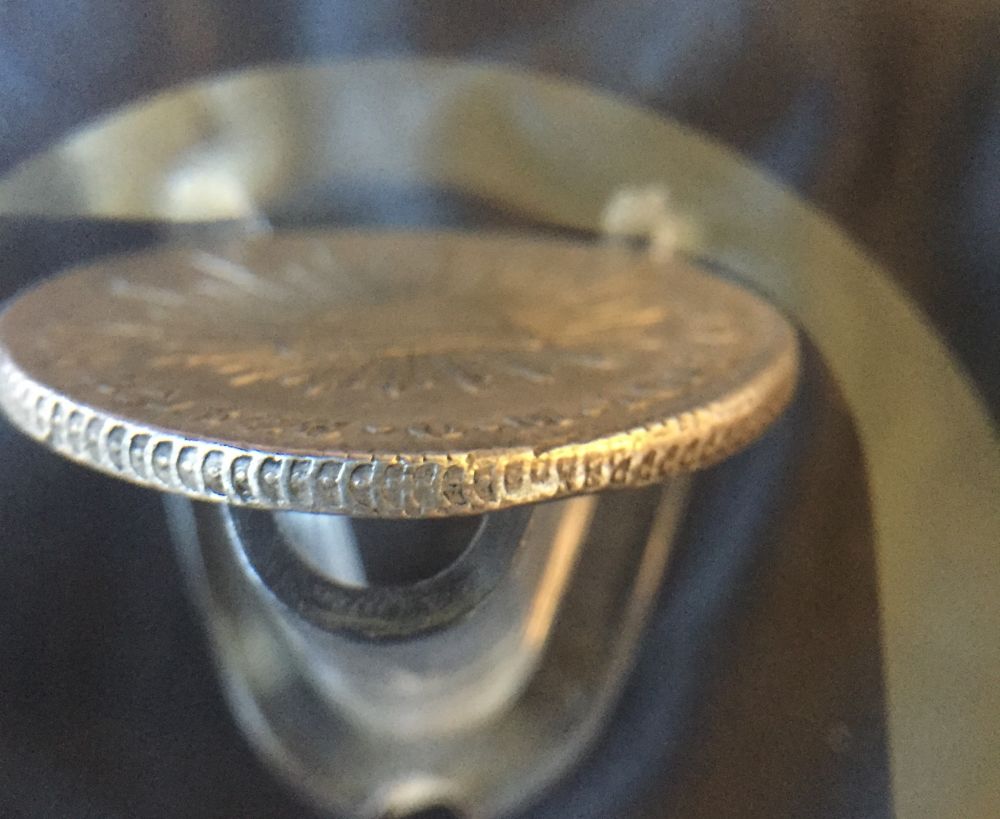 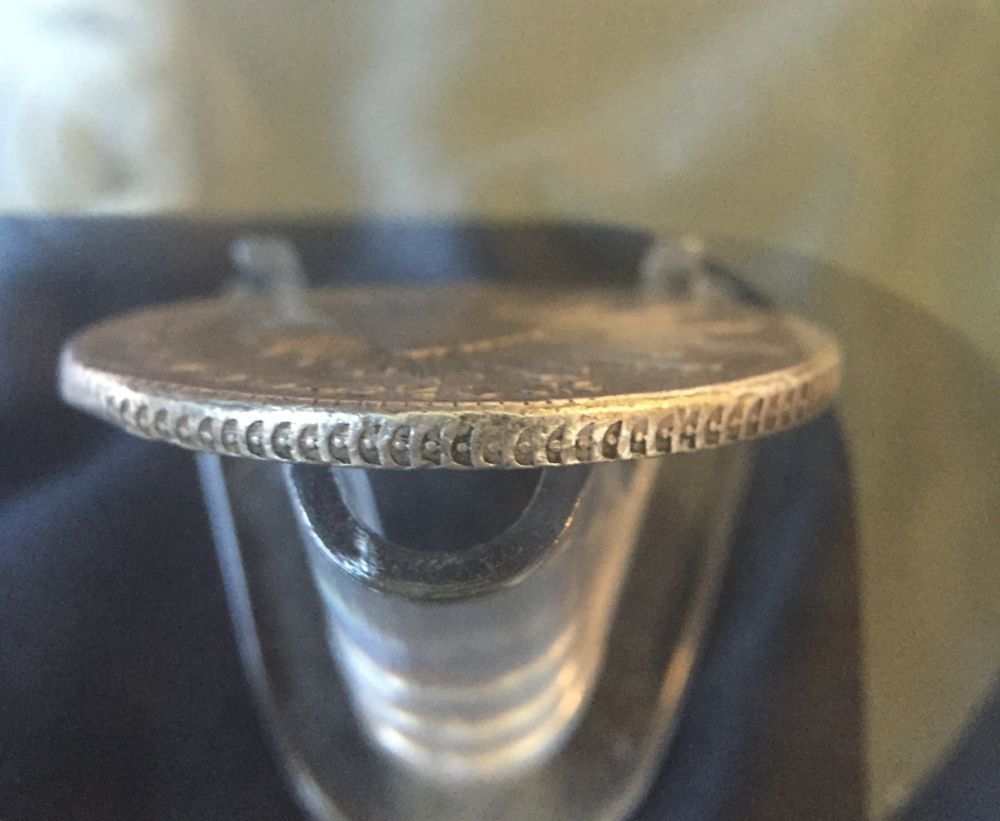 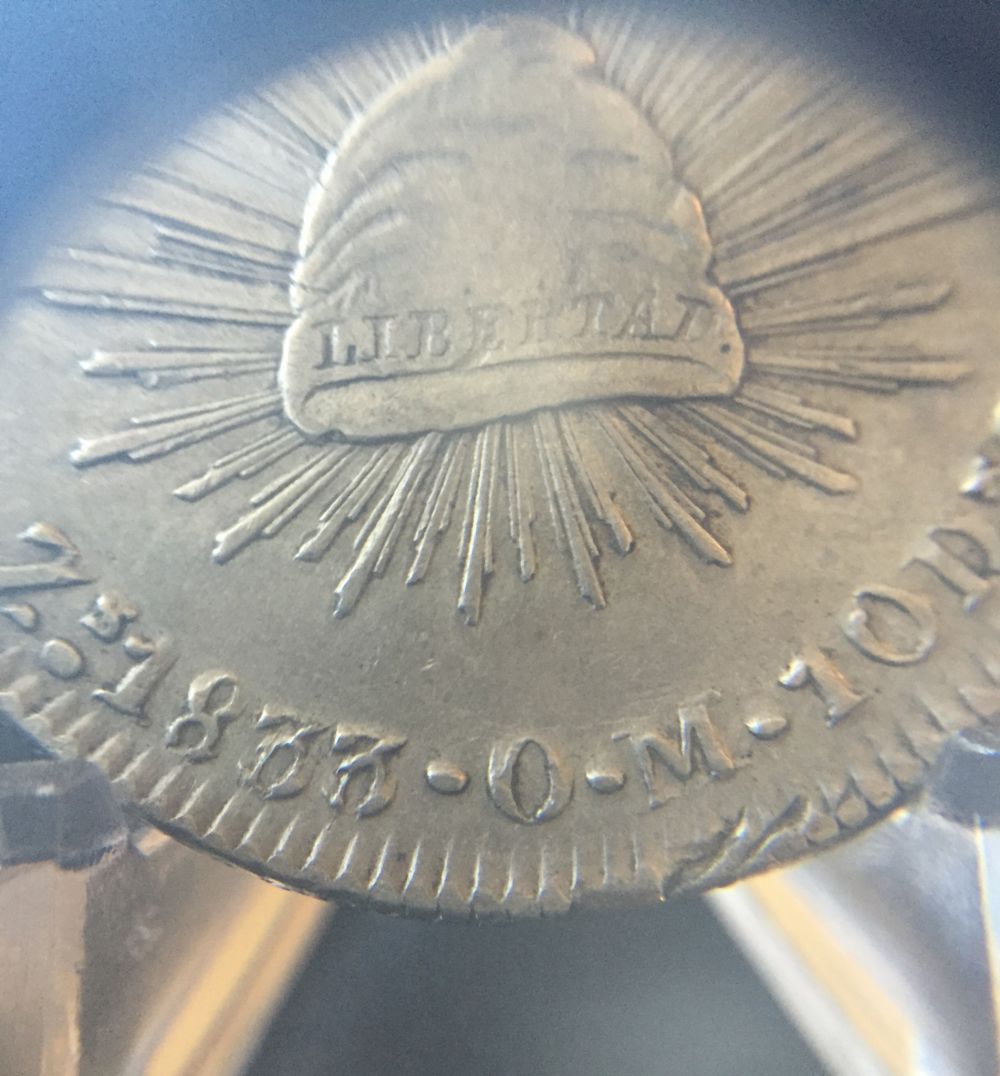 |
|
|
|
Pillar of the Community
United States
4883 Posts |
Very interesting specimen, thanks for sharing.
The first thing that got my attention was the simply dreadful execution of the dentils, especially so on the eagle side from 11 to 3 o'clock. They look as if they're simulated and might've been applied by hand after the coin was struck.
I think the quickest way to determine if this is a contemporary counterfeit (other than Bob saying he's familiar with the particular type) would be to measure its specific gravity.
Colligo ergo sum
Edited by Lucky Cuss
03/20/2016 8:35 pm
|
|
Pillar of the Community
United States
5362 Posts |
RealPeso I think Lucky Cuss is correct Specific Gravity is the best way to tell.
You are correct about the years 1832-1836 being noted for poor quality coins. This coin looks pretty good to me. Not a known counterfeit variety. I do have some suspicions about why the cap was notched at the right corner but that is unlikely an issue here.
There are two overlaps approximately in the correct location and the edge design is correct. Dies are typical. There are known strike trough's of course but I am not certain that is the case here.
The line on the edge is not the type of line I associate with forged dies. The line looks like it was due to the edge die alignment with the planchet. It is actually cut into the edge and the subsequent strike was not enough to completely fill it. The counterfeit lines are typically seen on one or both faces and are the edge of the transferred impression of the faces from an original coin. That is NOT the case here.
To be certain that the coin is genuine SG will work.
I would tend to believe it is genuine at least until I saw the SG results.
|
|
Pillar of the Community
United States
4883 Posts |
A couple other things intrigue me about thos specimen.
First, both threes in the date have the same extra bit of raised metal vertically crossing the lower loop. Pretty obviously applied one immediately after the other with the same (damaged, defective, or reworked) punch.
Second, in the same area the dots are distinctly oval shaped.
I'd say neither goes one way or the other towards authenticity, but the coin's just interesting in ways that later issues produced with more standardized dies and methods aren't.
Looking more closely at those dentils, I think I ought to back away from my earlier comments - the lighting is such that they initially looked "funny" to me, but I'll bet they likely look not so much so with the coin in hand.
Colligo ergo sum
|
|
Pillar of the Community
United States
5362 Posts |
LuckyCuss The numeral 3 with the bar connecting across the loop is actually a distinctive punch used at Zacatecas on some 1832 and most 1833 8 reales. Dunigan wrote that he believed it was a repurposed 2 punch but I believe it is a more standard feature of the punch used to stabilize the 3 - it is seen on other coins.
In Dunigan's book he shows an enlargement of an 1833/2 Zs date which illustrates the difference between the overdate and the normal die.
Regarding the stops that are oval as opposed to round - that is a function of die wear caused by silver flow across the face of the die. It is seen on many 8R varieties on older worn dies.
The variation die to die is one reason I love the early 8Rs far more than the later dates.
|
|
Valued Member
 United States
426 Posts |
Hey guys, after several SG tests I am getting a average SG result of 10.14 which would put it around 77% or 78% silver. I do have a 1835 Zacatecas 8R which I posted here a few years ago and with the communities input we came to the conclusion that it was a debased issue from the Mint.
swamperbob Even though this piece does not have the reverse rim/edge could it still be a mint debased issue?
|
|
Pillar of the Community
United States
5362 Posts |
RealPeso Yes, actually it could. The point I mentioned before about the notch in the cap now seems to apply. I have noticed that in addition to the reversing edge design on 1835 dated coins that in the earlier years a notch on the corner of the cap often occurs on slightly debased issues of Zacatecas.
I am uncomfortable saying these are all mint made debased coins or counterfeit coins made outside the mint.
That is because these debased issues fall into the same general time frame as the sale of old Zs dies to scrap dealers. So it is possible that the coins were mint made or made outside the mint.
|
|
Valued Member
United States
426 Posts |
Thanks swamperbob and LuckyCuss for your comments, I am happy to have this piece in my collection now.
|
| |
Replies: 7 / Views: 1,866 |
|








 Posted 03/21/2016 3:13 pm


