| Author |
 Replies: 9 / Views: 2,807 Replies: 9 / Views: 2,807 |
|
|
Valued Member
United States
236 Posts |
I have two conflicting website information about 40% silver Eisenhower dollars. One says that the 1974-D is the one and another says the 1974-S is. Does anyone know the correct answer, and how to tell a 40% Silver Eisenhower dollar VS a regular one. Thanks, |
|
|
|
Pillar of the Community
United States
1219 Posts |
No silver coins minted in Denver. All were produced in San Francisco. Hold any silver coin next to a clad and you will immeditly see the difference. IKE coins that is.
|
|
Bedrock of the Community
United States
62064 Posts |
But not all S mints are silver. They made clad and silver ones those years.
|
|
Valued Member
 United States
236 Posts |
This is where it gets confusing with the big coins. I don't have a scale accurate enough to weigh them and have mad a good old fashion lever "teeter totter" LOL..... type of scale, and the 1974-D I have definately tips up the others I have. Don't have an actual silver one to compare it to. How can I tell if it's clad or not? Is there a significant weight differance?  There is a slight color difference side by side also. Would do pics, but the kids did something to the camera...........  Edited by coffeegod
02/16/2008 4:35 pm
|
|
Pillar of the Community
United States
891 Posts |
There are an estimated 10-30 40% silver 1974D ikes. Same thing with the 1976D type 2 obv & rev and the 1977D ikes. Rejected 40% silver planchets from the san fran mint got mixed up with the rejected copper nickel planchets and where sent to the denver mint to be used as business strikes.
The 1977D 40% ikes are thought to be left over planchets from 1976. Hope this helps.
|
|
Bedrock of the Community
United States
62064 Posts |
Here is a test I use for seeing if a coin is silver or not. I place a piece of tissue (one layer, remove second if you have to.) and lay it over a coin. It is always nice to have a real silver coin to compare it with, but you will see what happens when you lay a tissue over a coin. 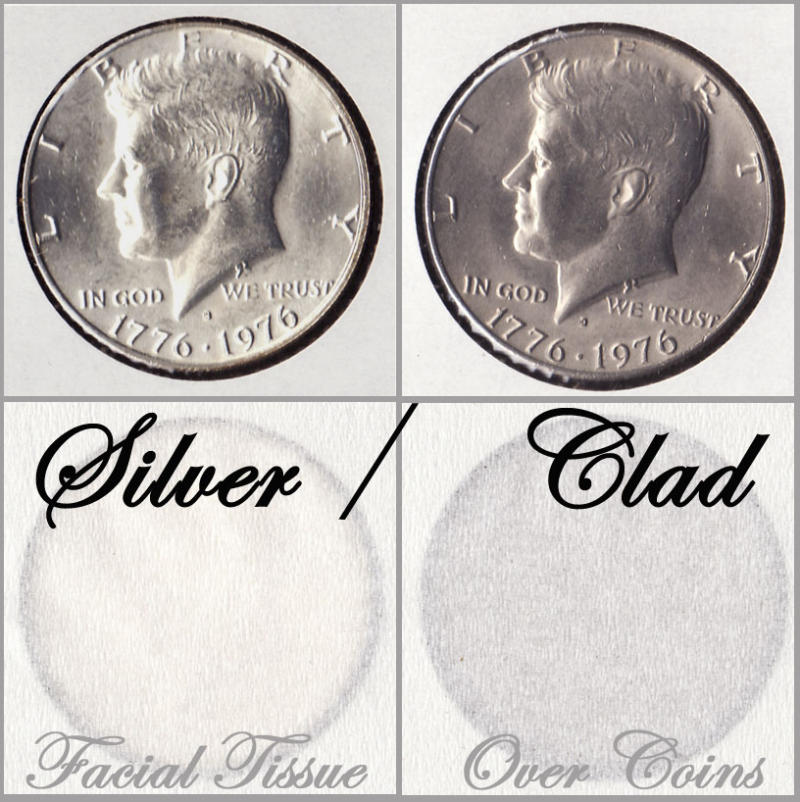 You will notice that the silver coins look white in color, the clad/non silver coins will look dark/gray in color. See if this helps? |
|
Valued Member
United States
236 Posts |
That is amazing..... One of the best rule outs with the lowest tech specs needed. Will Try. Thanks. I'll let you know if there's any difference. The only other silver I have to compareit with are Quarts & Dimes..... but will give it a shot.
|
|
Valued Member
United States
236 Posts |
Well............... (Drum roll).................................Won't post the pics, since they didn't come out to great..................(Drum Roll)..........  ...............................  It worked. It did exactly as you said. TP was already 1ply though not as thin as the secondary layer in multi-ply.... Bored yet........ Thanks a lot. Will research more over the 1974-D Ike though. Again thanks. |
|
Valued Member
United States
236 Posts |
Well..... a little confused. I did the tissue test. The 1974-D looks a lot whiter than the other. It sounds different. BUT.... It has a half silver (?) milky semi-pinkish edge. I know that full silver coins will be completely white as the Obv/Rev. How about Silver Clads. I need to take this in monday to get weighed. It still gently tips my little lever "teeter totter" scale that I also made. Comments about the edge though.... |
|
Bedrock of the Community
United States
62064 Posts |
Lets see if this image helps? 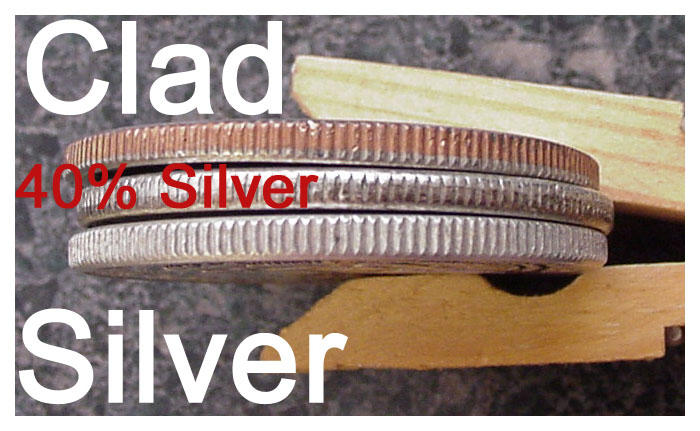 The clad you can see the copper very plain. The 40% you can see a little hint of color change between the copper center. But the silver coin, there is no change in the color on the edge. Hope this helps? |
| |
Replies: 9 / Views: 2,807 |
|







 Posted 02/16/2008 4:15 pm





