Quote:
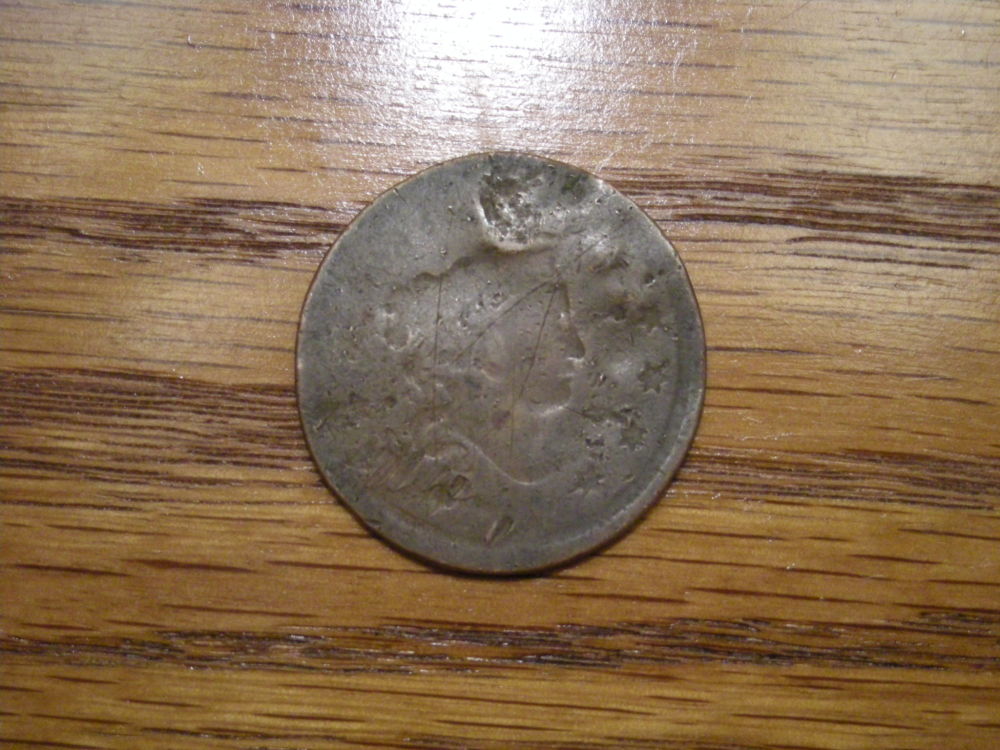
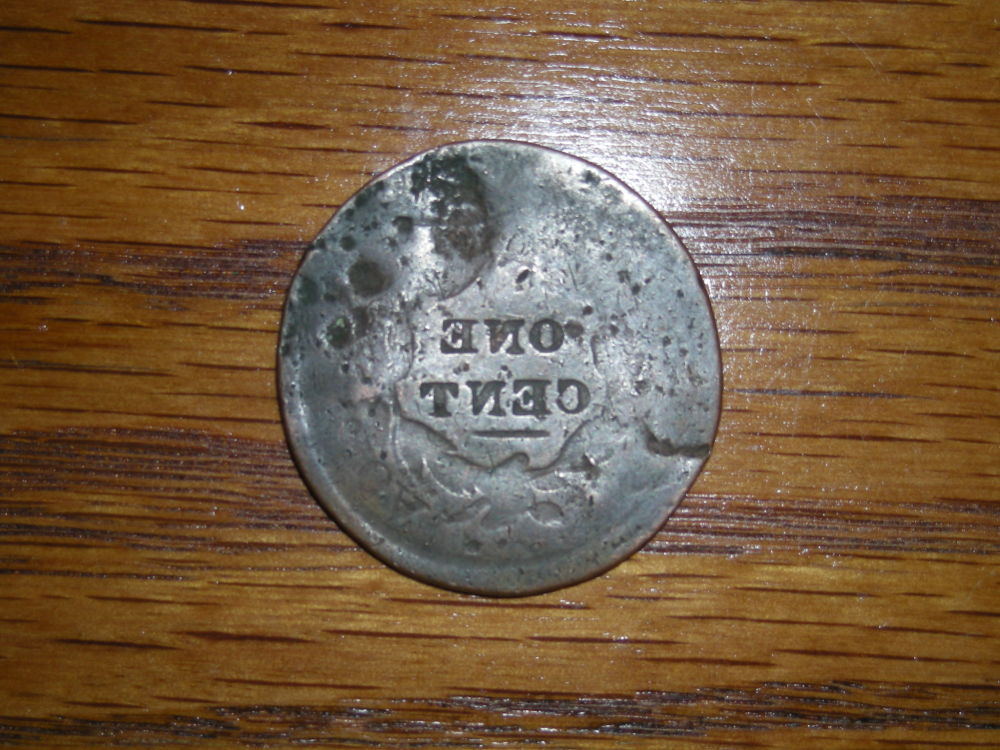
It probably was a large cent at one time, that some one clearly hammered in another.
It looks like it was well worn and probably dug up after a LONG time in the ground.
Thank you for looking at it. I thought it might have perhaps been a blank planchet that someone was "messing with" but it didn't occur to me that the host coin might have just been worn completely smooth.
Quote:
Probably put in a vise with another.
Yes, it does bear that particular "look"!
Quote:
Someone tried to make a brockage error. This is a damaged and altered "cull."
Thank you for looking at it. I actually came across brockage errors when I was researching general coin error variants, and they have a completely different "look" that this coin does. I guess the person who tampered with it only had a general idea of what they were trying to imitate! And fortunately I only paid 75 cents for it (I just thought it was an interesting conversation piece).
Quote:
I don't see evidence of a regular strike anywhere so it is probably just a piece of copper (Possibly even a large cent planchet) that has bee squeezed between to large cents. It is not a mint error, just a post mint fabrication.
Neither do I. If it was struck over another coin, I assume there would be at least some evidence of design doubling, but that is completely absent. However, I believe it may actually be a Large Cent planchet (a blank one, then), since it exactly matches the weight of a standard Large Cent.
Quote:
I think that it is a failed attempt to make a brockage. This look no sense to me, at least for a piece was made at the first U.S. Mint. I don't think a "double brockage" on both sides was ever made at the first U.S. Mint.
Thank you for looking at it. Its overall look is definitely rather odd, but that's why I originally picked it up; I simply thought it was interesting. It actually came out of a dealer's junk box.









 Posted 04/19/2016 5:19 pm





