| Author |
 Replies: 14 / Views: 3,006 Replies: 14 / Views: 3,006 |
|
|
Pillar of the Community
United States
3499 Posts |
|
|
|
|
Pillar of the Community
United States
4212 Posts |
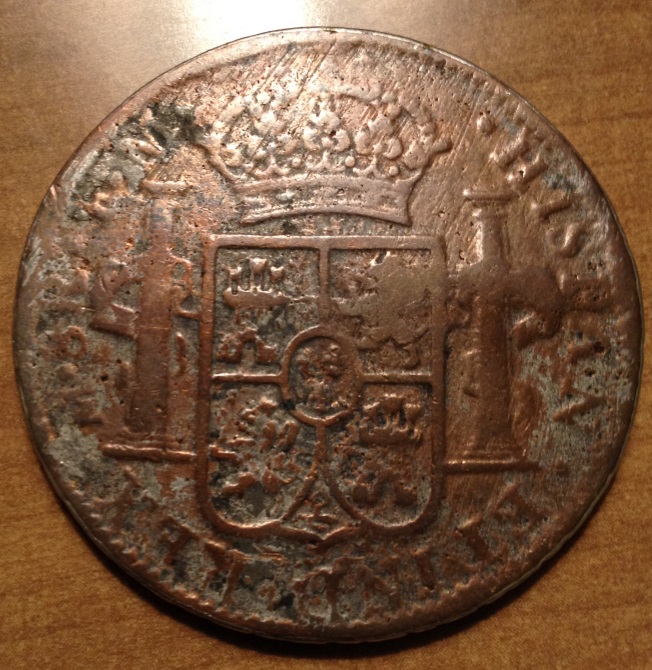
That certainly doesn't look like .896 purity, to me.
|
|
Pillar of the Community
France
1591 Posts |
Looks like it is one, yes.
Robert, if you are around ? :)
|
|
Pillar of the Community
 United States
3499 Posts |
Yep, way too light - 22.2 grams. 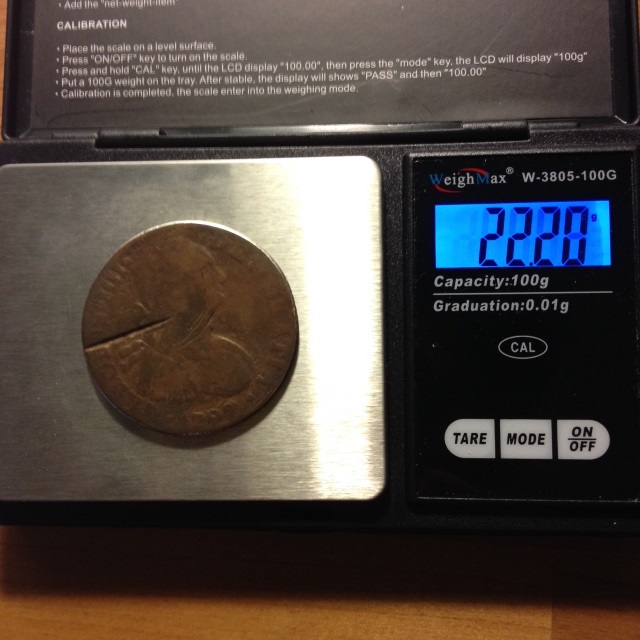 |
|
Pillar of the Community
United States
1784 Posts |
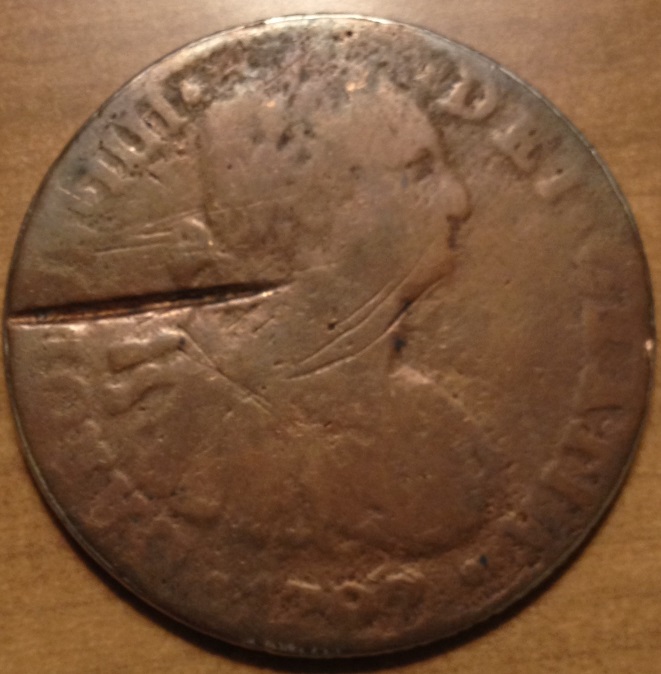
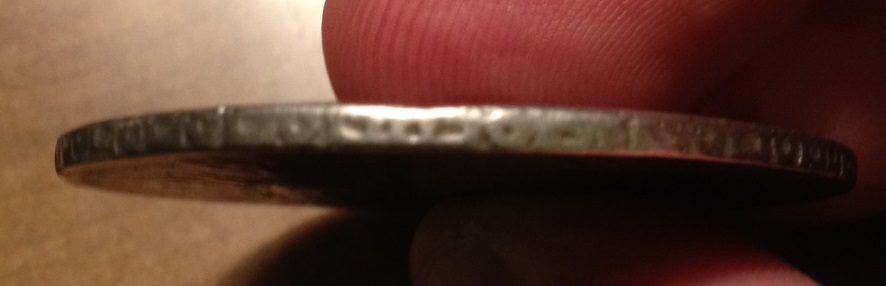
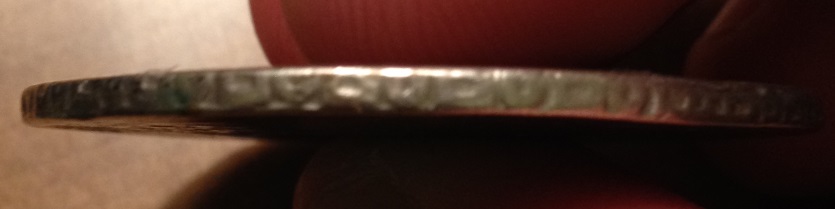
Very seldom seen mercuric silver amalgam wash over a copper alloy (brass alloy-unlikely) host coin. This coin is interesting also to the possibility of it being a cast host as we see blurred motifs all around - hinting of its production in a cast mold and then mercuric silver washed then over a likely bronze (Cu/Sn/Pb) host with Pb = 1-5% to assist in its cast production. It has a cancellation mark or testing mark ...
Great piece. See my cast piece up on E-Bay of a more modern production with a confirmed bronze production and plain edges filed all around to remove rim burrs after the exit casting mold. E-Bay handle: johnmenc
I also have a cast silver piece GNL listed that I am finally dropping to $9.99.
If you want send $10 to cover postage for a XRF analysis. Contact me privately after mid-June as I have other in-progress assignments at the moment.
Good piece for E-Bay.
John Lorenzo
Numismatist
United States
|
|
Pillar of the Community
United States
3499 Posts |
colonialjohn- Great! Thanks for the help! So you do agree that it is a contemp counterfeit, right? So you think that this could be a British-produced piece?
|
|
Pillar of the Community
United States
1784 Posts |
Probably not a Birmingham ... we only suggested Birmingham due to the High Quality of the silver plated pieces. A quality that some including myself suggesting that The Royal Mint may have had some involvement. But without records and counterfeits never leave a paper trail just like Machins Mills pieces its debatable even if in the U.S. Red Book for these Machins. This piece is crude but wonderful in its construction with mercuric silvering probably over copper. I am tempted to consider this a cast host but it does have an applied third side. You could call this a GNL Class 1 probable non-Birmingham piece of a possible casting manufacture origin. Extremely crude and desirable. There are not that many Silver Mercuric coated copper struck? GNL Class 1's in the overall population but the series is still virgin and their worth is not yet appreciated by advanced numismatists. Remember Machins were first introduced by Bob Vlack and Eric Newman in and around the 1960/1970's. It took 20 years for them to be collectibles and another 10 years for them to make their way to the Red Book. The Mexican Coin Company has yet to sell one ... just saying ... JPL |
|
Pillar of the Community
United States
3499 Posts |
colonialjohn- Thanks for all the help with this! I do appreciate it. Any guesses what a replacement value of my coin may be? I paid only $5 for it, so I think that it did ok.
|
|
Pillar of the Community
United States
1784 Posts |
|
|
Pillar of the Community
United States
5362 Posts |
I agree with John's assessment - cast copy - early.
It would be extremely difficult to type specifically.
|
|
Pillar of the Community
United States
3499 Posts |
swamperbob- Thanks! I really appreciate the help.
Honestly, I think that it's an awesome specimen. I have no intention of selling it, but for the sake of just knowing the replacement value of my collection, what type of value do you think that it might have? Thanks!
|
|
Pillar of the Community
United States
1784 Posts |
The longer you hold on to it the more it will be worth ... for now I would say $50-up ... the silver plated Birmingham countermark types are the MOST desirable. Usually only the top 1% of collectors in a series co-collect contemporary circulating counterfeits as its normally an acquired taste by advanced collectors and not really for coin accumulators of PCGS/NGC type coins. Just consider this a good add-on piece. Being cast it does not get a specific GNL Class 1 number since its a cast production and could be argued late being a cast ... the desirability comes into play as most CCC 8r's are well made overall and few are this low on the totem pole in terms of their manufacturing style - for me anyway based on my metallurgical research.
Most mercuric silvered WORLD CCC casts as in my new upcoming book of this style are nlo later than pre-mid 19thC or thereabouts (in general) ... mercury is TOXIC so more advanced methods soon took over like silver plating and silver electro-deposition but due to its simple application method it still was utilized in these basement type or so-called third class production CCC operations ... so to speak.
JPL
Edited by colonialjohn
05/18/2016 4:01 pm
|
|
Pillar of the Community
United States
3499 Posts |
colonialjohn- Great! Thanks for all of the help!
|
|
Pillar of the Community
United States
5362 Posts |
The market for counterfeit 8 reales is trying to find its footing. I attribute this to the fact that most buyers are relative beginners. Not many people are familiar with the actual rarity levels of the various types of counterfeits because very few people have been interested to this point in time. Most counterfeit varieties are VERY RARE, but most are sold without anyone recognizing what they are. For me this means cherry picking is still possible. To date, auction results are very limited. The 2012 sale of the Mike Ringo collection (perhaps the largest single accumulation to be sold) illustrates the current problem. The sale included 70 counterfeit Portrait Eight Reales - 63 of which could safely be classified as Class 1 Contemporary Circulating Counterfeits. In that auction the highest price went to a very VERY common Birmingham type while the one exceptionally rare variety in the collection went begging. Counterfeits that are mentioned in period literature are in my opinion in a class by themselves. Very few can be identified by die variety prior to the date of Riddell's "Monograph" (1845). Those 39 examples because they are of known date are a group that can be considered to be a distinct group. Earlier reports are not common but all of them have the same deficiency - no accurate illustrations. A native Chinese emission is reported but only the date is given for the coins so no exact correlation is possible. There are newspaper reports some with fair descriptions that may possibly be able to be linked to specific examples, but always with a degree of uncertainty attached. One of the earliest of these written records is the 1796 report by a French spy named Gimbernat. In that brief report he mentions 5 types of Counterfeits that were being made at Birmingham, England. Examples of each type coin were included with the report but they have apparently not survived. Of these 5 types only two methods of manufacture are RARE - the other three are all very common with numerous known exemplars of different dates and mints. The report indicated that 12,500 eight reales were being produced in ONE WEEK from a single factory and implied that many factories were involved. This is the type that is still most common today and is the same type that brought the highest prices in the Ringo auction. Why? They are pretty because there were millions made and a considerable number have survived in high grades. 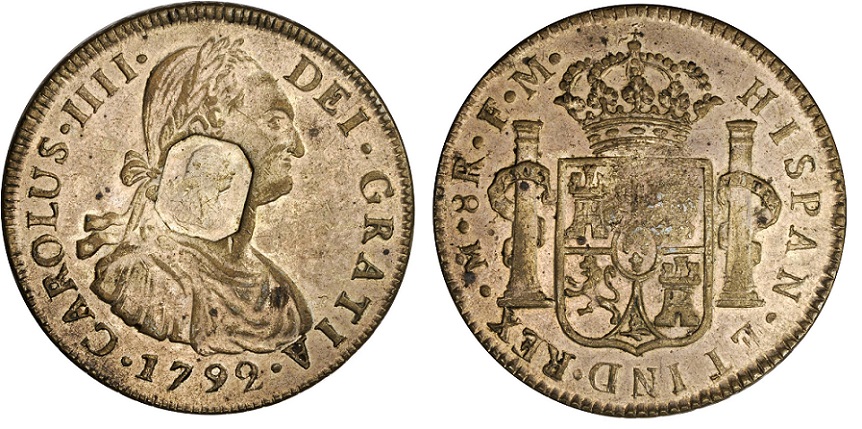 Included in the same sale was one example of the rarest of the 5 Birmingham types. Mike Ringo owned the ONLY copy that I have ever seen. I am sure he was aware of what it was, but he apparently did not store the coin along with a description of the rarity. I have been hunting for another copy for decades but never encountered one. This coin sold for a bid of $15 - yet now that I own it - I would not take $1000. It is not pretty coin at all but it represents a very distinctive type that remains unique in my experience. 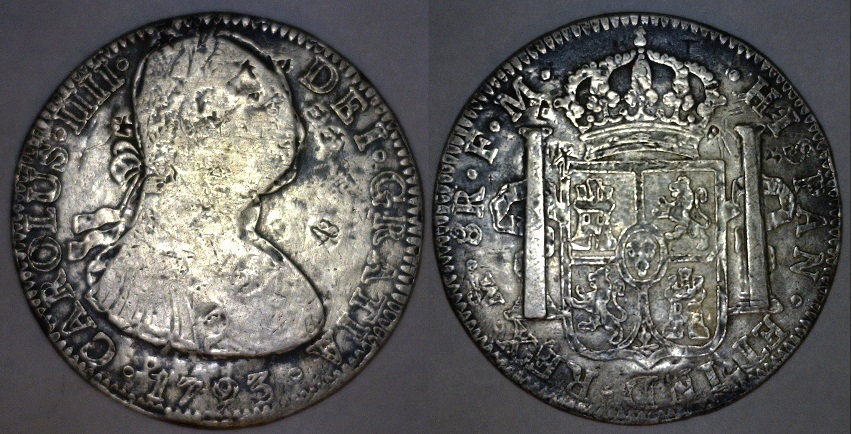 I fear that grade will always play a large part in values, even though many counterfeits were produced to look worn. The high grade Birmingham issues made for China are scarcer than the same coins with the Bank of England counterstamps. Yet, the counterstamped issues always bring higher prices. Of course I view the subject from the perspective of history and rarity - not from the aesthetic (marketing) approach so familiar to most collectors. Until that mindset shifts (if it ever does) low grade rarities or ugly rarities will be under appreciated. I fear the cast coin presented here will fall victim to that mentality. As John suggests it may be a rarity based on the way it was created and surfaced but it does not look pretty. I agree that market price at present would not exceed $50. However, in a situation where you are the only bidder familiar with what the coin actually is, you can often buy similar coins for $10-20. |
|
Pillar of the Community
United States
3499 Posts |
Swamperbob- Thanks for the amazing info! That really is great to know. I have one question for you: Where did you see Gimbernat's 1796 report? Was it published or have you seen the original manuscripts? I'm curious.
|
| |
Replies: 14 / Views: 3,006 |
|









 Posted 05/11/2016 05:00 am





