Quote:
I see many notations about cracks, blisters, dimples and denomination change. I'm guessing that when abnormalities
surface and are detected, plates are pulled, sheets are destroyed, and star notes come into play. The BEP does not want to distribute error notes, and through constant inspection and re-inspection of the final product very, very few engraving errors and errors in general ever see the light of day.
@ xxJOExx
I was going to post a separate thread awhile back on BEP Plate Number varieties, but really feel that with your in depth personal experience on BEP Plate Positions, and SteveIn Tampa's comment above, it would be better posted here..
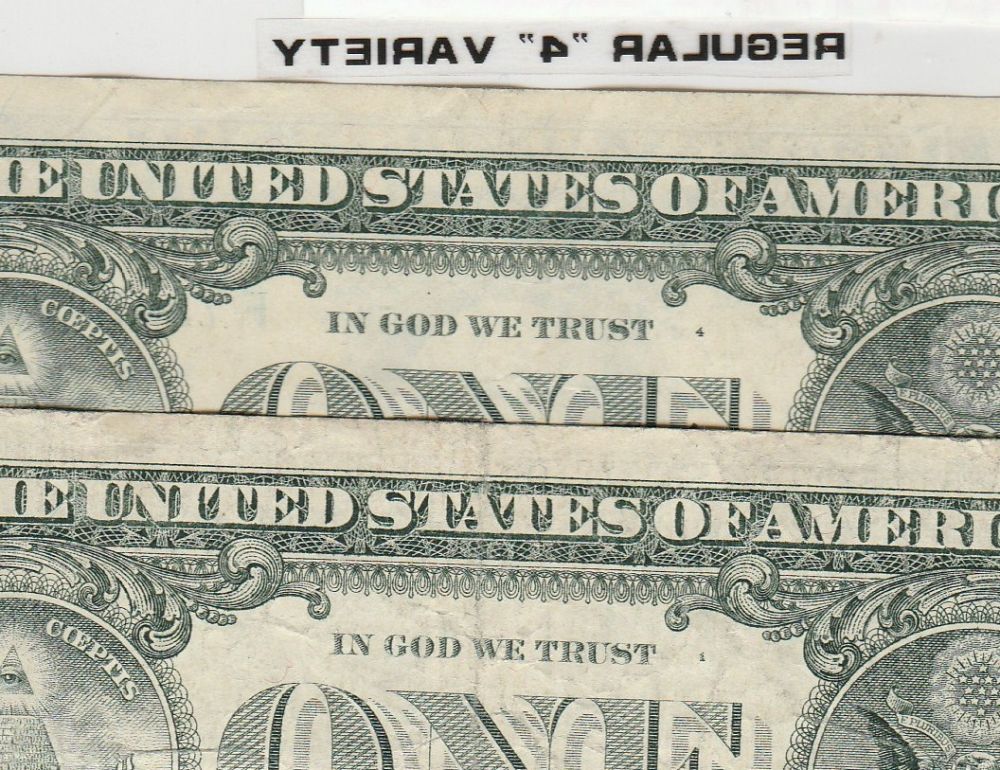
I would be interested in your inputs (and others) on the *Broken "4" (back plate) Variety that was not listed when Bob Kvederas (Jr. & Sr.) published their 2004 edition - "The Standard Handbook of $1 Web-Fed Test Notes - 1988A, 1993, 1995 - Second Edition"..
About 2 years ago, I purchased a few series 1988A Web-Press notes from the F-N Block, and when marking the Combo's checklist, had noticed a "unreported" 5/1 Plate Combination..
I had eMailed photos to Bob Kv. and received a reply that my 5/1 note was actually a Broken "4" variety from the 5/4 plate Combo..
Unlike the sheet-fed press that assigns plate positions & numbers on the front, Web notes lack this sheet plate location information, and it is only possible to determine the COPE plate position through it's serial numbers.
The notes in question are both from Run #12 - COPE info for both 5/4 Web combo's are as follows;
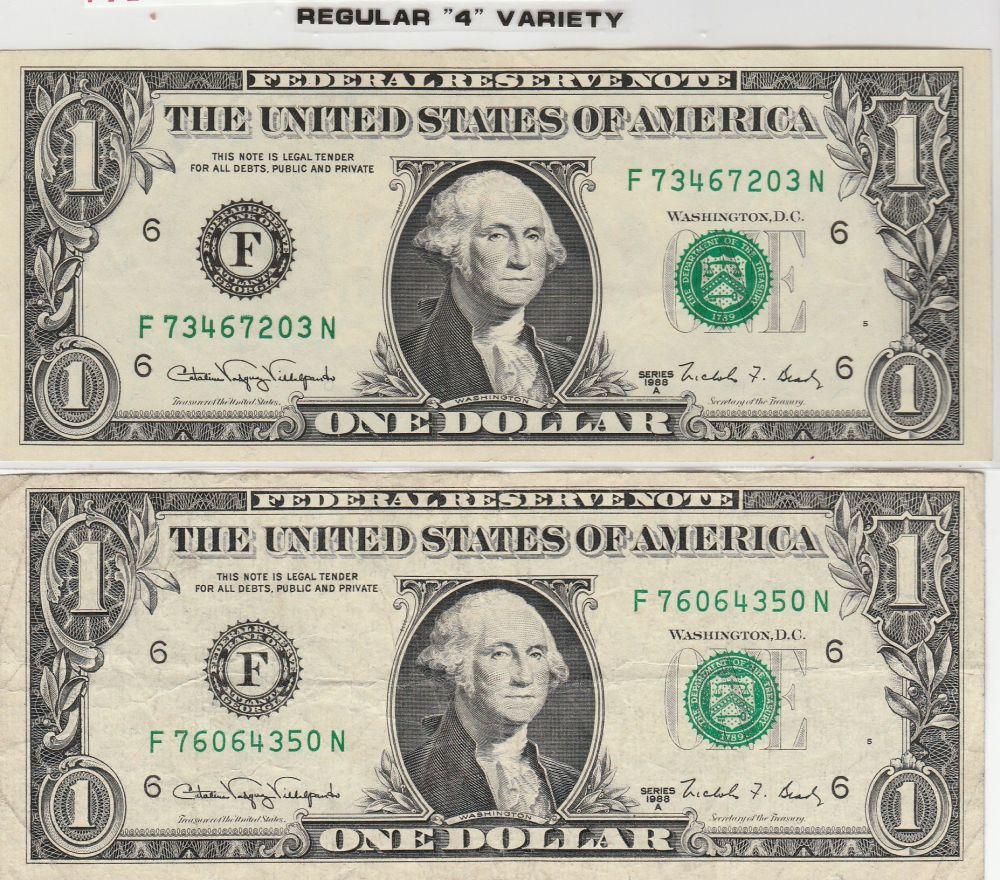
F73467203N - 5/4
COPE P/Position - H2
Sheet # 67203 of 200,000 sheets for Run #12
Normal Web
((*E4 serial number on this sheet should be F76067203N & may be the Broken "4" variety also))
F76064350N - 5/*4 - (*looks like a "1")
COPE P/Position - E4 (Ser.# range 76000001 - 76200000)
Sheet # 64350 of same 200,000 sheets for Run #12
*Broken "4" Variety
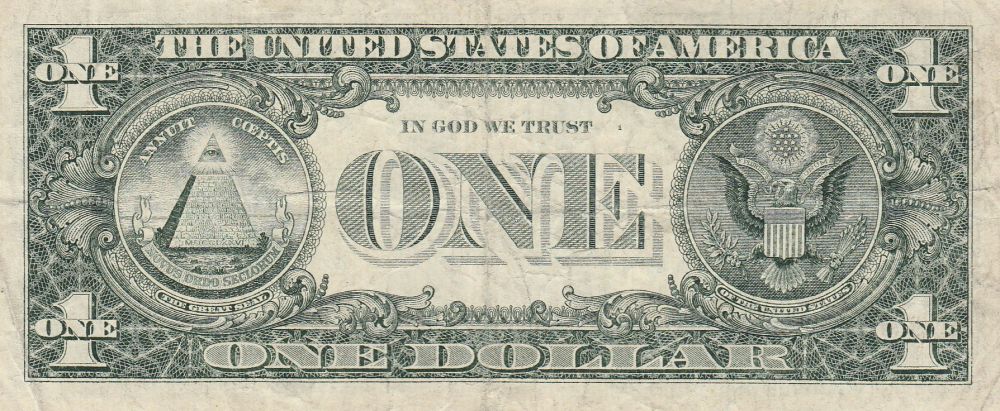
Without the E4 COPE Plate Position printed on Web notes, the only way I know of in trying to confirm how many Broken"4" variety notes from this Block's 200,000 notes assigned to E4 that may have actually entered circulation is to locate series 1988A $1.00 notes serialed F76000001N - F76200000N and check the back plate number for a 4 that looks like a 1..
The kicker is, COPE's Serial Numbering System was designed for the 32 subject pre-cut sheets printed for the sheet-fed press (as the 50 subject SOI press is for LEPE Numbering)..
Each format has its own plate position numbering system where the machine operator or inspector that finds a flaw in any of the 32/50 subjects, can pinpoint and tag the Printing Plate location (that I assume from reading this thread, can remove the problem notes as they are Serialed & replace it with Star Notes)..
The Alexander Hamilton Web Press held 96 face & back plates, and printed
all 96 in a single pass on 24,000 ft rolls, then trimmed into 32 Subject Sheets for COPE processing..
Common sense tells me that the 96 Plates are 3 sets of 32 Plates, and the Broken "4" back plate variety was limited to every 3rd Sheet Serialed on plate position E4, making it more difficult to census this variety..
Since the Bureau of Engraving & Printing ended the Web Press Test Run some 20 years ago, does anyone know how the 96 Plates from either front or back printing can be traced to one individual flawed Plate?
I know the pre-cut sheet-fed systems can easily pinpoint a flawed Plate location, and other then the 3 optical camera's used to inspect all 96 notes for flaws on the Alexander Hamilton press prior to trimming into 32 subject sheets for COPE overprinting, I have no idea if there was method used to pinpoint a flaw on any of the 96 notes after being trimmed into 32 subject sheets..
I wanted to wait a week for this thread to remain idle before posting..

I may have posted a reason to start looking at Web's again.




 First Page


 Posted 06/20/2016 10:13 pm