| Author |
 Replies: 16 / Views: 6,474 Replies: 16 / Views: 6,474 |
|
Moderator
 United States
34563 Posts |
Hi, I'm going to share a series of coins with you—all from the 15th century and all from the German city state of Pomerania. I have previously posted one of these coins here within CCF, but have not previously discussed this city state nor its predominant numismatic symbol. While this essay is far from a comprehensive survey of the coinage from this region, I find the concept of linking together multiple coins with a common thread to be both interesting and satisfying. Please add on your own 15th century Pomeranian coins if you'd like to. Modern-day Pomerania is located on the southern shore of the Baltic Sea, on the border between Poland and Germany. This historical co-location explains why coins from this region can be found in both German numismatic books (e.g. Saurma) and Polish numismatic books (e.g. Kopicki). According to Wikipedia, the name is derived from the Slavic "po more", meaning "by the sea". Human settlement of this region goes back at least 10,000 years, but it is the dying out of the Ruegen line of princes in the 14th century that is most interesting for the current discussion. Following them was the House of Griffins. According to Wikipedia, this house was founded by Wartislaw I (1091-1135) and the name Greifen (in German) or Gryfici (in Polish) was taken from their coat of arms. This line reached its high point in the late 14th century and early 15th century before dying out in the 17th century. The exact reason for this family adopting this specific symbol is unknown; however, in Greek mythology the griffin is a combination of the most powerful land animal (the lion) and the most powerful air animal (the eagle) and thus would be an appropriate image for an up and coming royal family with a desire to project strength. Below you will see a series of coins all from 15th century Pomerania. The Griffin is a constant symbol on the coins of this time period. The first is an undated denar minted in Garz. The attribution is Kopicki 8454 and Saurma 4954. There is a lily on the obv and a griffin on the rev. 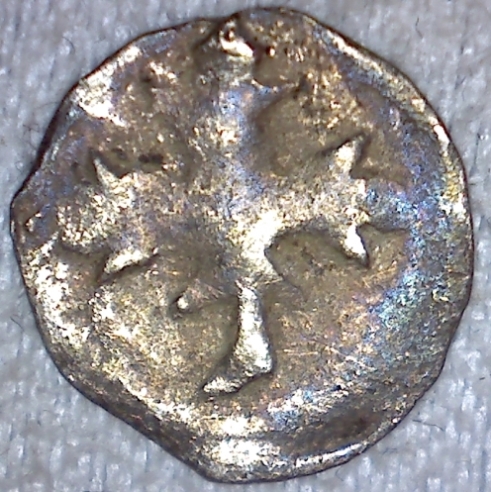 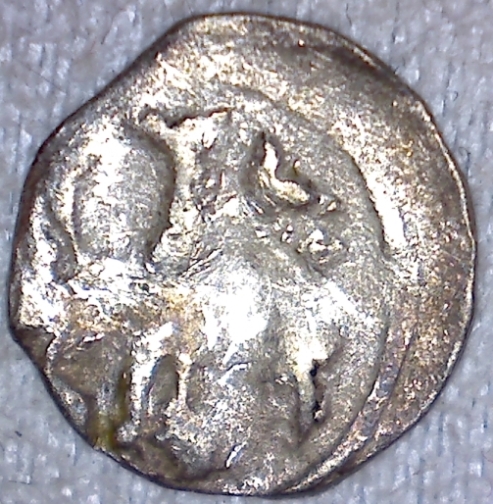 The second is another undated denar minted in Stargard. The attribution is Kopicki 8498b and Saurma 4973. There is a griffin on the obv and a six-pointed star on the rev. 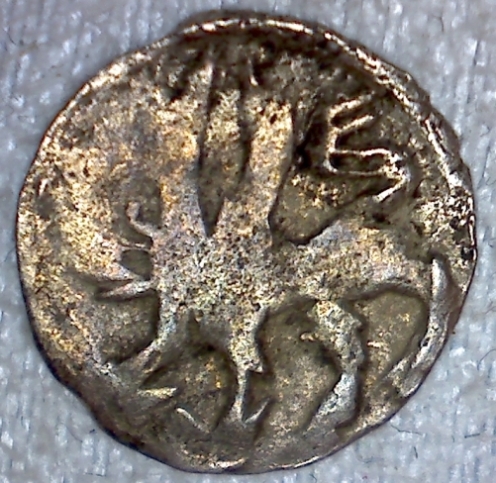 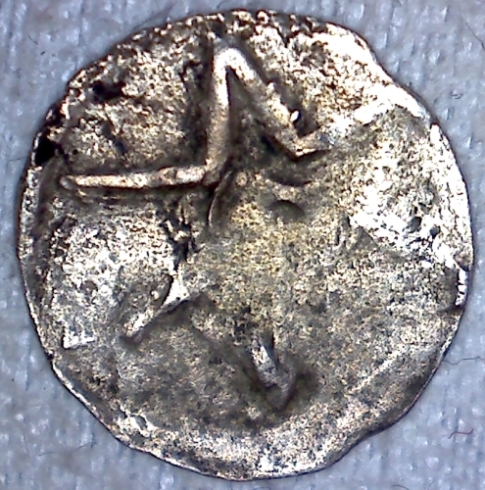 The third is an undated kwartnik minted in Stettin. The attribution is Kopicki 8563b. There is a crowned bird on the obv and a griffin above a star on the rev. 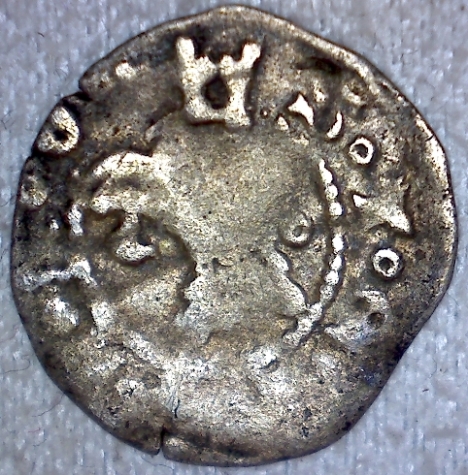 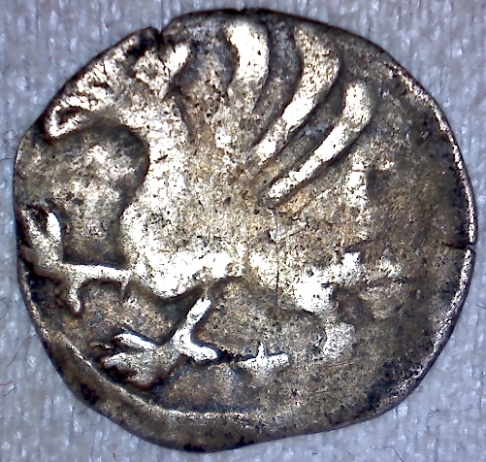 The fourth is another undated kwartnik minted in Pyritz. The attribution is Kopicki 8493d. There is a shield on the obv and a griffin above two linked annulets on the rev. 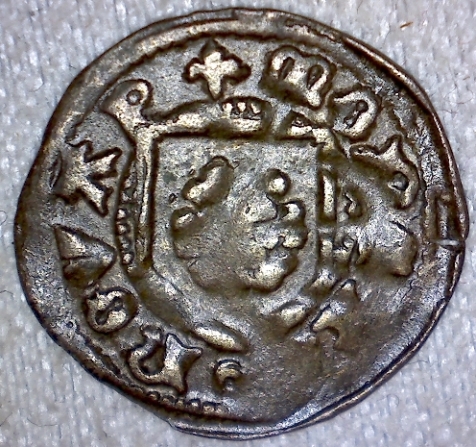 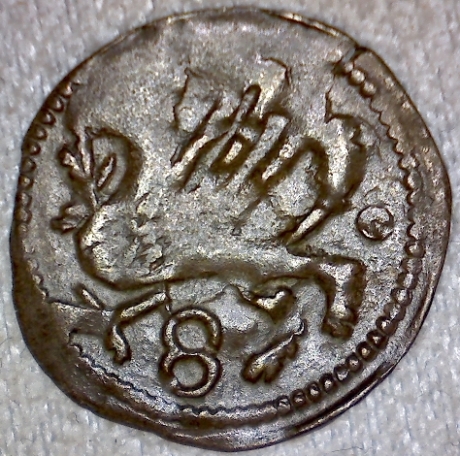 The fifth coin is a schilling dated 1489 and minted in Garz. The attribution is Levinson I-243. There is a Griffin on the obv and a shield on the rev. 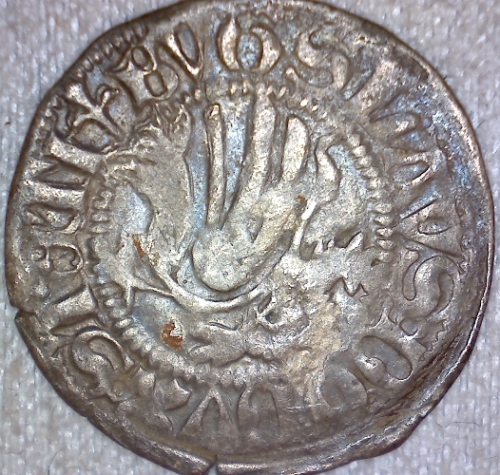 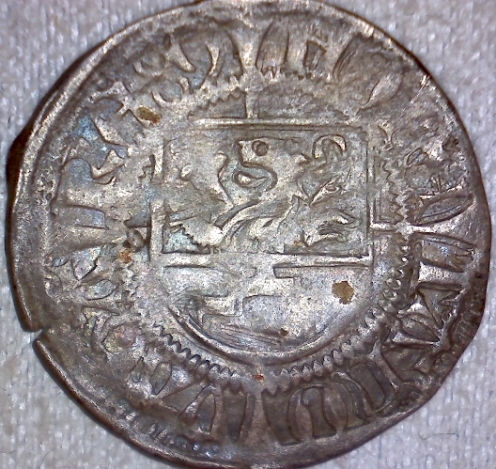 The six and final coin is another schilling, but is dated 1494 and minted in Damm. It has virtually the same design as the previous coin, but was minted five years later and is attributed as Levinson I-320. 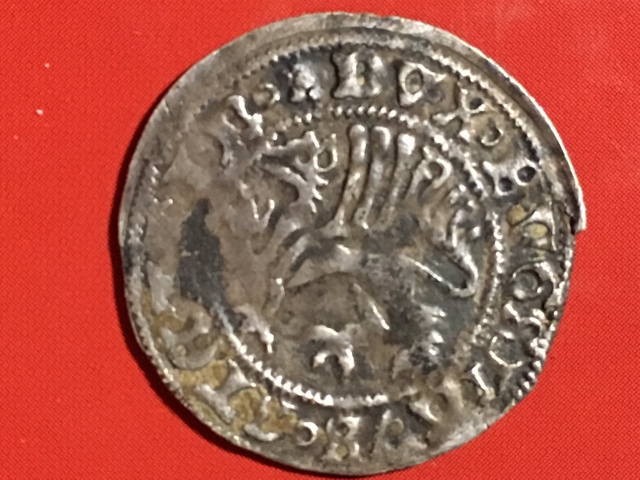 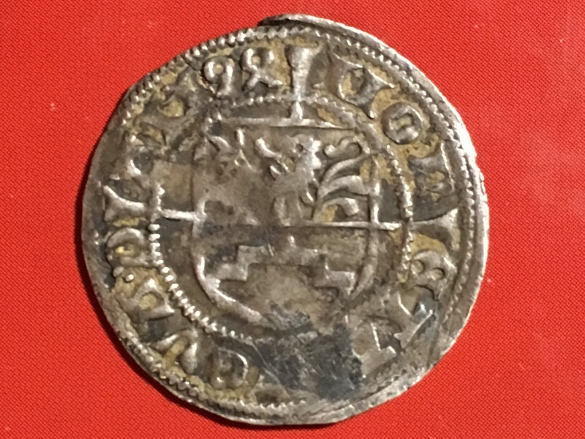 "If you climb a good tree, you get a push."
-----Ghanaian proverb
"The danger we all now face is distinguishing between what is authentic and what is performed."
-----King Adz
|
|
|
|
Pillar of the Community
United States
7067 Posts |
Another five-star write-up, Dave. And a great group of coins. Interesting to see the evolution of the griffin over time (I'm assuming that, although most are undated, the sequence here is more or less chronological).
|
|
Valued Member
Germany
303 Posts |
That is a nice collection you've got there. I especially like the early coins from Pomerania, as in terms of their design they somehow remind me of Brandenburgs medieval coinage, that I collect.
As you've already mentioned, Pomerania has a very interesting history that (unfortunately) has a lot to do with it being occupied by foreign forces. However, I like the fact that a collector from the U.S. is particularly interested in that small but very beautiful region there up north.
|
|
Pillar of the Community
Poland
3201 Posts |
All I can add is the location of the Stettin mint. There is a plate put on a wall at that spot that reads "Fabrica Monetae Civitatis Stetinensis. Na tym miejscu bito monety miejskie w latach 1345 - 1491" (the latter part translates to "city coins were minted at this location between 1345 and 1491"). Map to be found here on the city's website. The description says the street layout is not as it was back then, though. Edited by DL20K
05/29/2016 2:12 pm
|
|
Moderator
 United States
34563 Posts |
Thanks all for the kind words and additional information! I haven't (yet) been to Poland, but it would be nice to see the old country at some point. For the budget-minded collector of medieval coins, this geographic region seems to offer lots of possibilities. @bob, I definitely ordered the non-dated coins by complexity of the griffin, but I am unsure of their timing. It could be that either one of the denars was circulating contemporaneously with either one of the kwartniks. Possibly, all four were being used at the same time.  "If you climb a good tree, you get a push."
-----Ghanaian proverb
"The danger we all now face is distinguishing between what is authentic and what is performed."
-----King Adz
|
|
Moderator
United States
23731 Posts |
And enjoyable and interesting thread.
|
|
Valued Member
Germany
303 Posts |
@spence: Pomerania is not only Poland though. Check for instance the coat of arms from the city of Rostock. One of Germanys federal states is even called Mecklenburg Vorpommern (Mecklenburg-Hither Pomerania or something like that).
As far as I know the coins of Rostock also have the griffon on them.
Edited by Potsdam
05/29/2016 3:16 pm
|
|
Pillar of the Community
United States
2643 Posts |
Had a boss who said he was a mix of Swedish and Prussian. Oh, I responded, you mean you are Pomeranian.
|
|
Moderator
United States
34563 Posts |
@potsdam, yes correct. Pomerania seems to me to be one of those melting pot type municipalities. Certainly, the back and forth conquering between Germany/Prussia and Poland over the centuries has something to do with this, but as Arkie pointed out, there was considerable Scandanavian influence too. I was interested to find out that Eric of Pomerania ruled Denmark, Norway, and Sweden starting in 1397 and ending somewhere around 1440.
"If you climb a good tree, you get a push."
-----Ghanaian proverb
"The danger we all now face is distinguishing between what is authentic and what is performed."
-----King Adz
|
|
Pillar of the Community
Canada
1269 Posts |
Interesting coins and a great writeup. Thanks for sharing them here.
|
|
Pillar of the Community
Russian Federation
5186 Posts |
I'm planning to go to Kalinigrad (again) in August, might try to buy some old coins there (my collection has a relative lack of dated 16th century coins, which are something I'm fascinated by... before getting lucky with a Swedish 1566 coin this month, I had nothing dated between 1521 and 1597 - make that 1600 if only AD dates count).
I'd love to get some 15th (or 16th?) century Pomeranian coins, but I'm not sure I'd be able to get any. (Or recognize any, for that matter.) I didn't even manage to find any 16th century Lithuanian coins (which I expected to get lots of) when I visited Kalinigrad last year.
|
|
Moderator
United States
34563 Posts |
@january1may, yes I didn't think to check on the usual interwebs places for what coins are available for purchase right now. I don't see very much from the 1400s, although there is an ebay listing from Estonia right now (listed as being from Denmark, but under the authority of Eric of Pomerania). I recall that you were having some difficulty getting coins sent to Russia so I am not sure if getting coins from Estonia is even an option. It also is a bit spendy in my view... If that coin won't work for you then I hope that you have good luck in the coin shops of Kaliningrad over the Summer. Looks like you will be only about 500 km from Stettin, so maybe there will be some good material awaiting you--let us know if you have success! "If you climb a good tree, you get a push."
-----Ghanaian proverb
"The danger we all now face is distinguishing between what is authentic and what is performed."
-----King Adz
|
|
Pillar of the Community
Russian Federation
5186 Posts |
Quote:@january1may, yes I didn't think to check on the usual interwebs places for what coins are available for purchase right now. I don't see very much from the 1400s, although there is an ebay listing from Estonia right now (listed as being from Denmark, but under the authority of Eric of Pomerania). I recall that you were having some difficulty getting coins sent to Russia so I am not sure if getting coins from Estonia is even an option. It also is a bit spendy in my view... If that coin won't work for you then I hope that you have good luck in the coin shops of Kaliningrad over the Summer. Looks like you will be only about 500 km from Stettin, so maybe there will be some good material awaiting you--let us know if you have success! I won't even check (don't have an ebay account, a PayPal account, or a credit card), but if it's "a bit spendy" in your view, then in mine it will probably be orders of magnitude too expensive. (The amount of money I paid for the 1521 and 1517 coins, some three years ago when dollars didn't cost so much, was an incredible $15 each - aside from some large silvers, these were probably my last big purchases. These days my own version of "a bit spendy" is somewhere around $10, or even lower. I paid $2 for the 1566 coin, but it was a bit of gamble because neither I nor the seller had any idea what it was, and the coin had pieces broken off, anyway.) ...This might be why I didn't find anything at my last Kaliningrad trip - I didn't go looking for $20+ coins. Now that I think of it, one guy had some nice-looking Teutonic Order coins for $10 each (no dates, IIRC); I hesitated for a while, but ultimately didn't buy any - too expensive! Did buy some Roman and 18th century Prussian coins, however ( here is my thread about the Roman coin). |
|
Valued Member
United States
215 Posts |
What I find interesting is the number of LOCATIONS that these are coins are minted from. All associated with the same family tree but at least 4 different mints. I would think it would be very difficult to produce coins back at that time, yet there seems to be a lot of people that could.
|
|
Moderator
United States
34563 Posts |
@buymyemu, yes good question about there seeming to be multiple mints within Pomerania. I'm certain that there must be someone on CCF with more knowledge of medieval minting techniques than I have, but it is my understanding that at this time pretty much the entire process was still done by hand. Without big expensive machines, perhaps it was a bit easier to have a more distributed minting network.
According to Levinson, "Pommerania consisted of several smaller duchies, principally those of Stettin and Wolgast. Stettin, the largest of the duchies, struck early dated coins from its mints in the town of Garz on the island of Ruegen, in Stettin, and in the town of Damm, east of Stettin."
Perhaps these three were Pommerania's main mints and the others that I mentioned (e.g. Pyritz and Stargard) were small mint outposts.
"If you climb a good tree, you get a push."
-----Ghanaian proverb
"The danger we all now face is distinguishing between what is authentic and what is performed."
-----King Adz
|
|
Pillar of the Community
 United States
8056 Posts |
Looking for a place to post this new acquisition, and this seemed like the best match, even though it does not add any new variety to the essay. Though on the question of many mints operating in this region posed earlier, I think there are a number of factors, including the rise and fall of commercial activity in different places, and the whims of the rulers. For example, Stargard was the residence of the Dukes of Pomerania in the early 15th century, but by the end of the 15th century, they had moved to Stettin. So, we no longer see coins minted at Stargard in the period of dated coins starting 1489, and by 1500, we see only the Stettin mint being used for Duchy of Pomerania coins, as best I can tell. Something similar happens a few hundred miles east 50 years later. Sigismund I of Poland dies in 1547, and the historic Royal Mint in Krakow closes. Under his son Sigismund II, most minting activity moves first to Vilnius (Lithuania) and then to his residence nearby in Tykocin castle. Similar to the 1494 schilling minted in Damm posted upthread, here is a 1493 from the same mint. 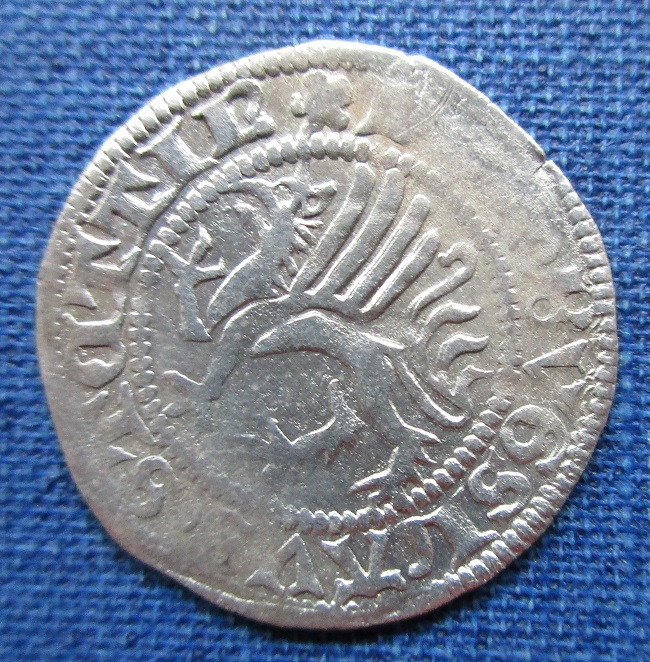 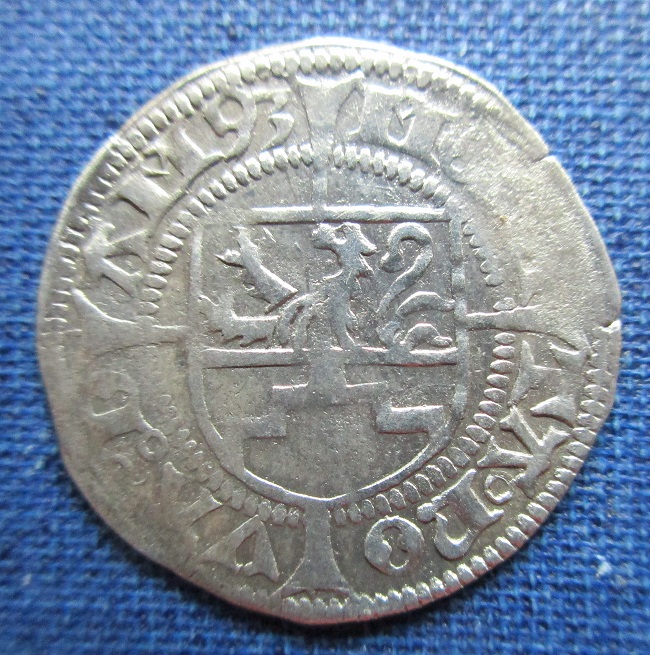 Edited by tdziemia
01/04/2020 4:54 pm
|
| |
Replies: 16 / Views: 6,474 |










 Posted 05/29/2016 11:52 am


