

 Posted 07/25/2016 7:21 pm


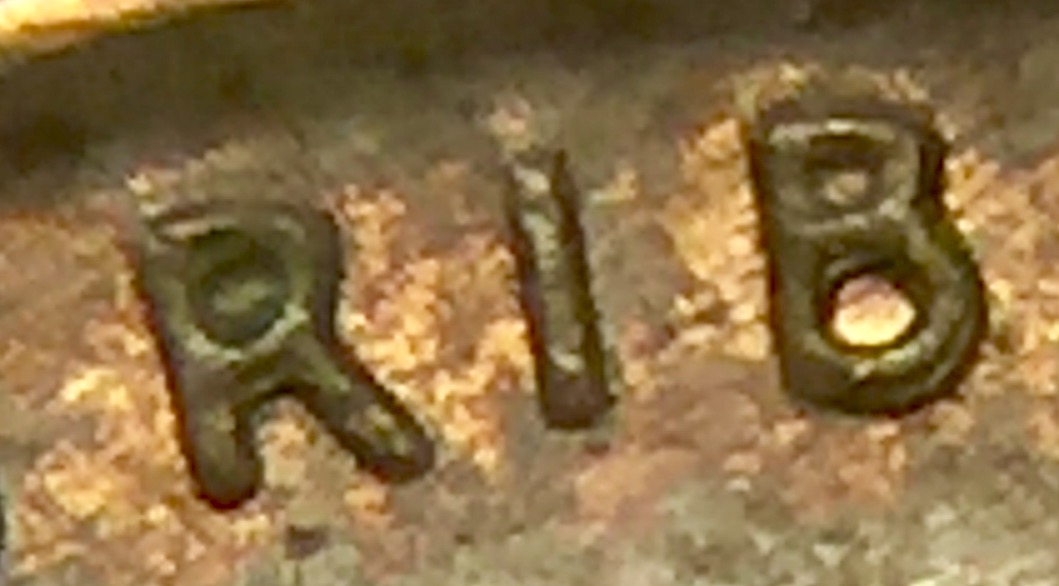
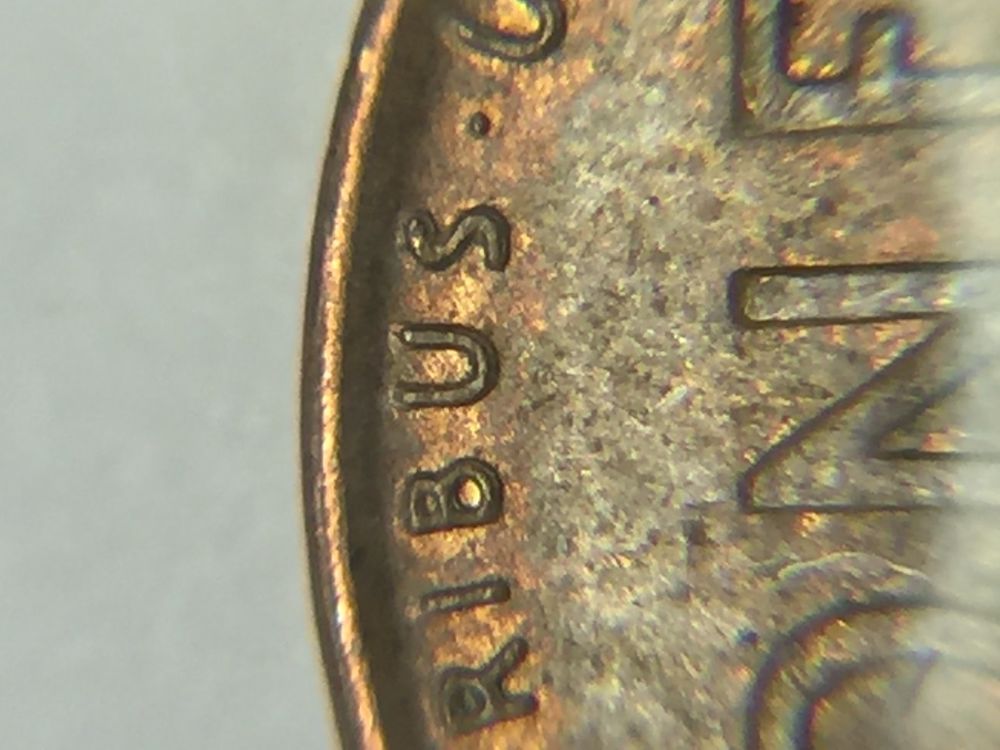
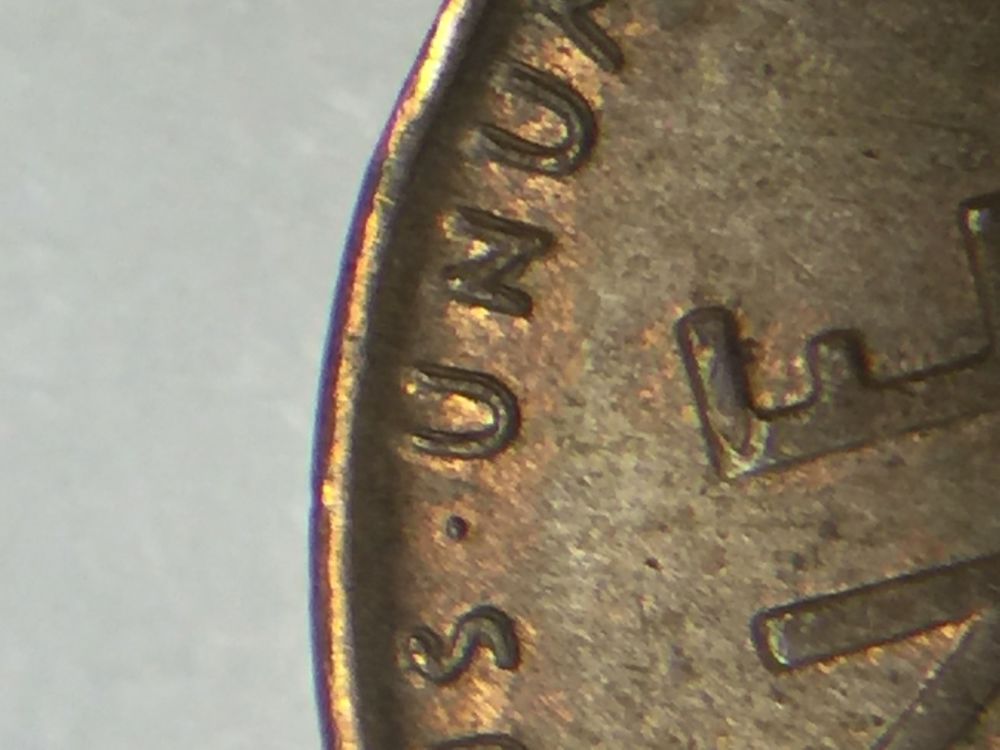
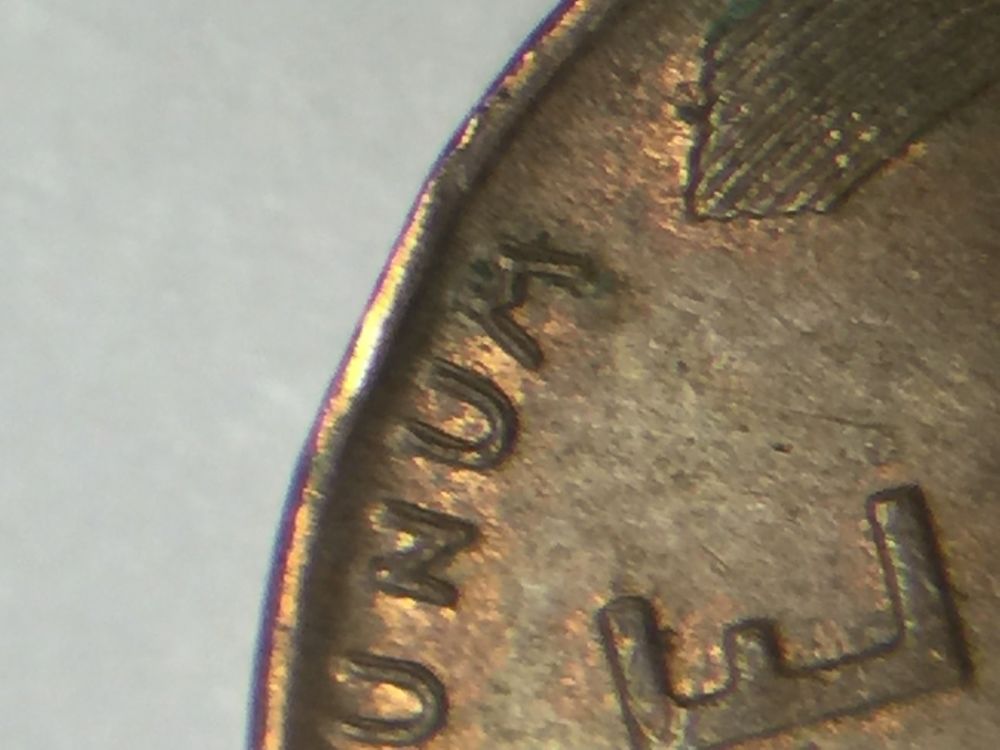
It is machine damage after the strike that altered the devices. How do you tell? Note that the devices are showing a reduction of the shape of the normal devices. On a hub doubled example, they are enlarged, not reduced.
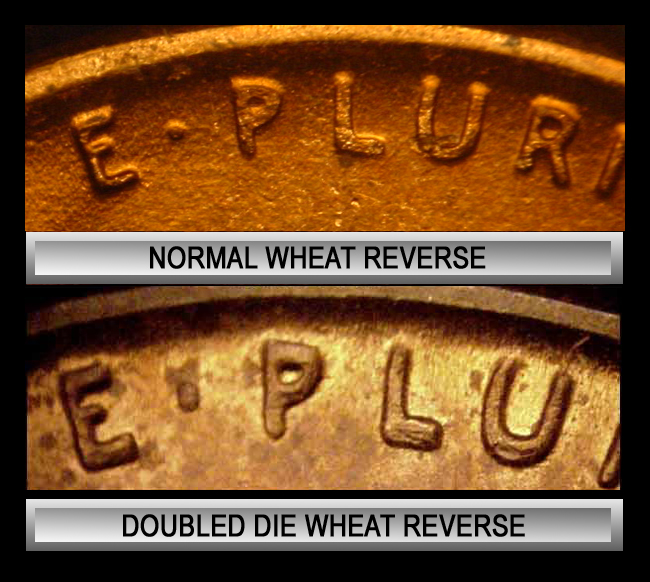
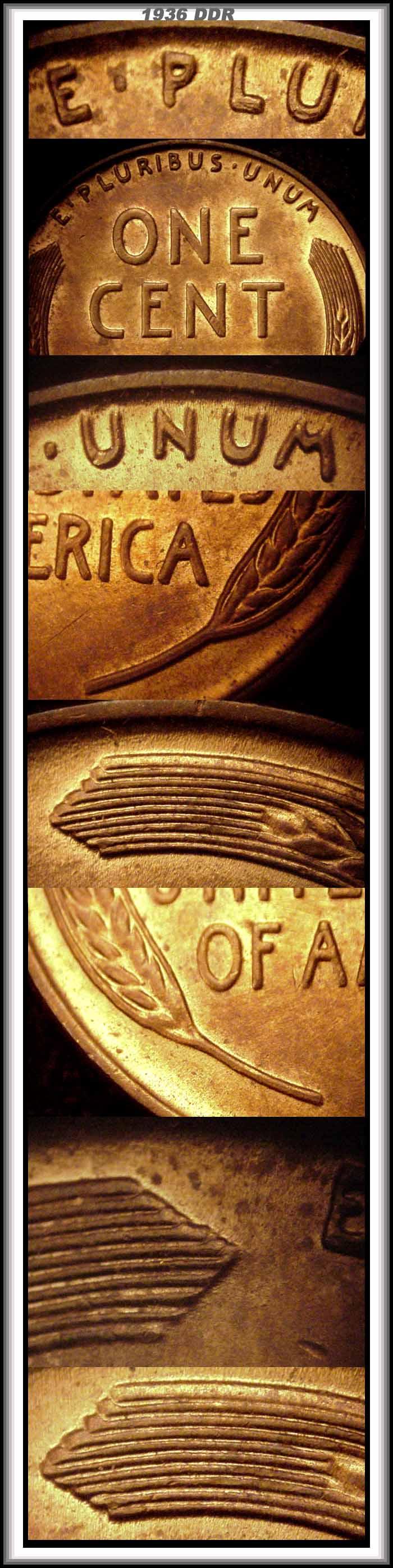
First thing to notice is the dot on the EPU. The normal die examples show rounded dots. On hub doubled examples, they are egg shaped or out of round.
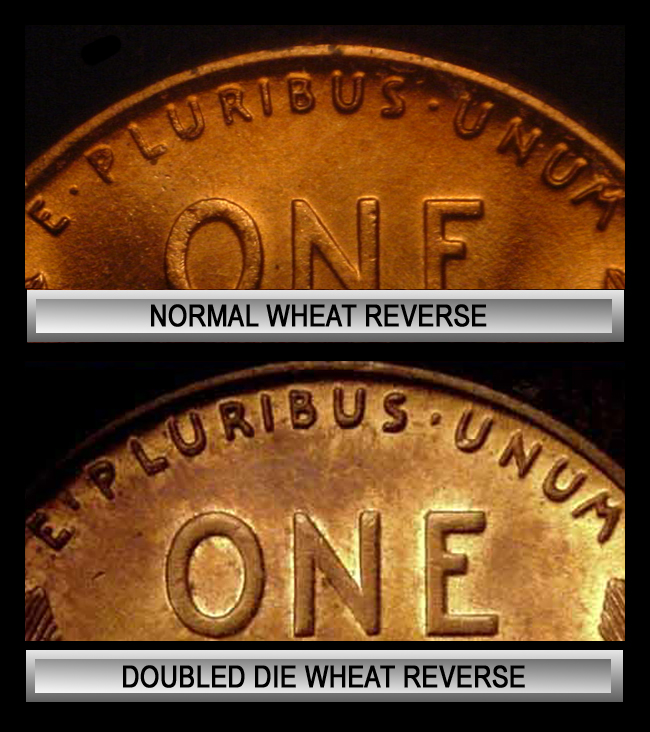
Note that parts of certain devices are thicker, taller or wider. This may show on some devices and not so on others depending on the way the die was hubbed.
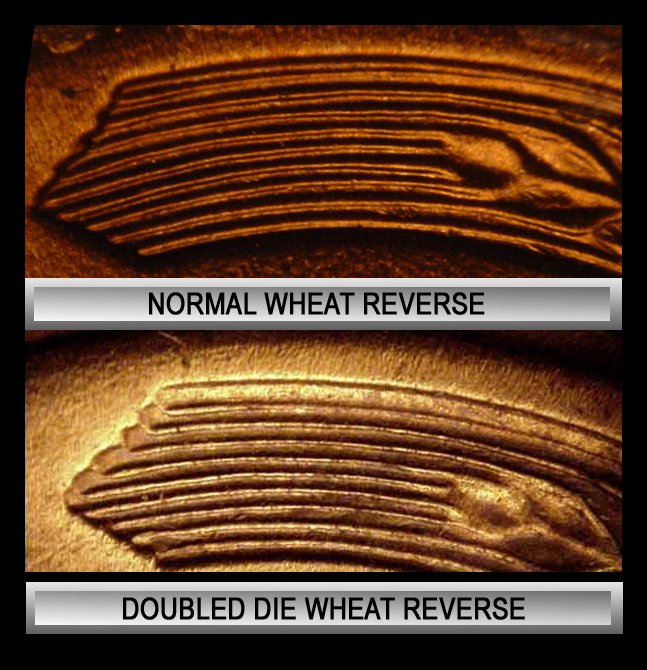
Note the thickness of the wheat lines on the bottom image. The upper image is a normal die with think wheat lines.

Sometimes the devices may be thicker/taller/wider. On the wheat stems note the extra thickness on that area on the bottom image. So the best way to spot a DDR on a Wheat cent is this:
1. check the dots first to see if any are egg shaped. (this may affect just one dot and other times both)
2. Note the letters 'E', 'L' bottom loop on 'U' to see if they are thicker. (they can vary according to how the die was hubbed.
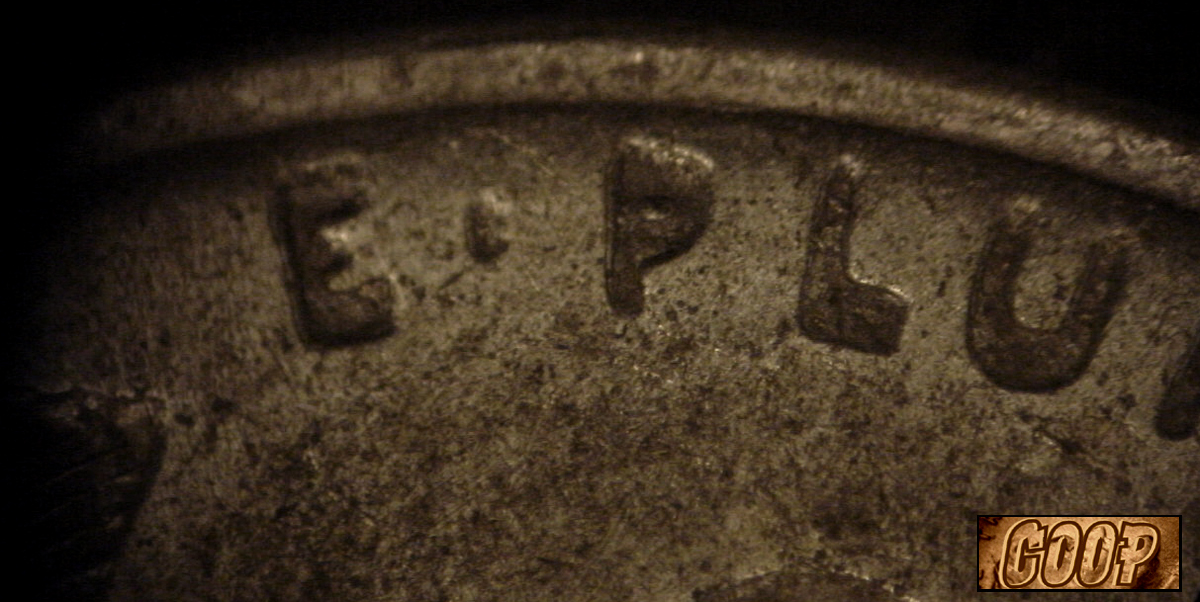
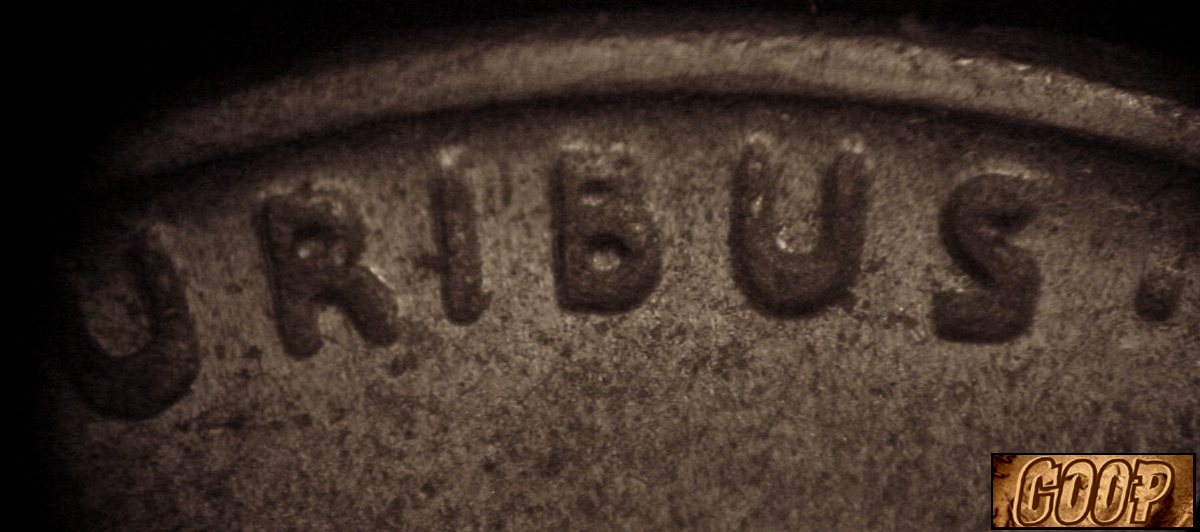
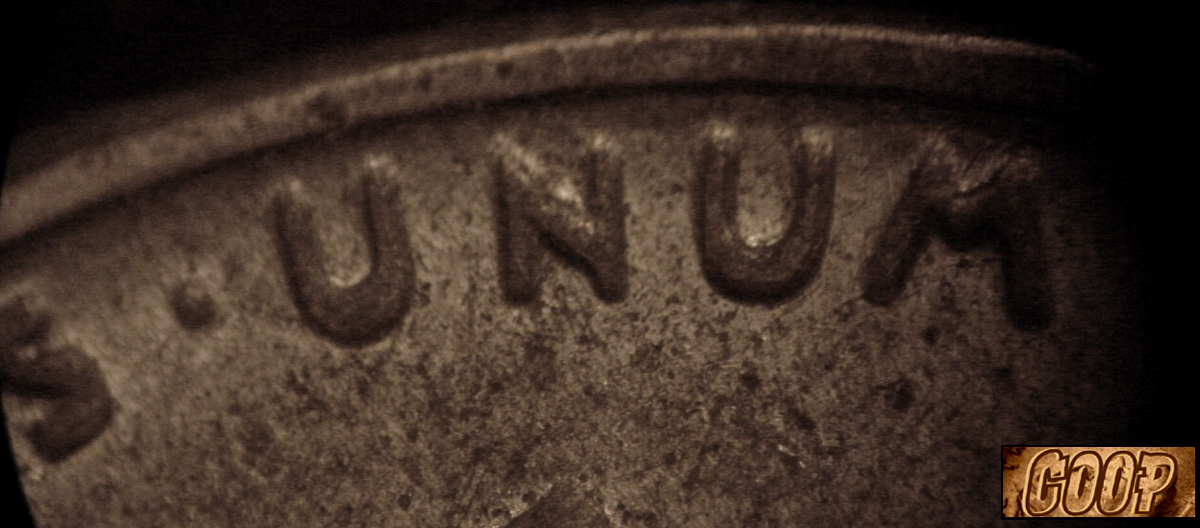
The wider the spread between the hubbings, the wider the devices will be. The wider the spread the more desirable the DDR will be. Less can be considered as common sometimes.
3. Keep in mind that the spread can affect just one area, or all the devices. The more the better.


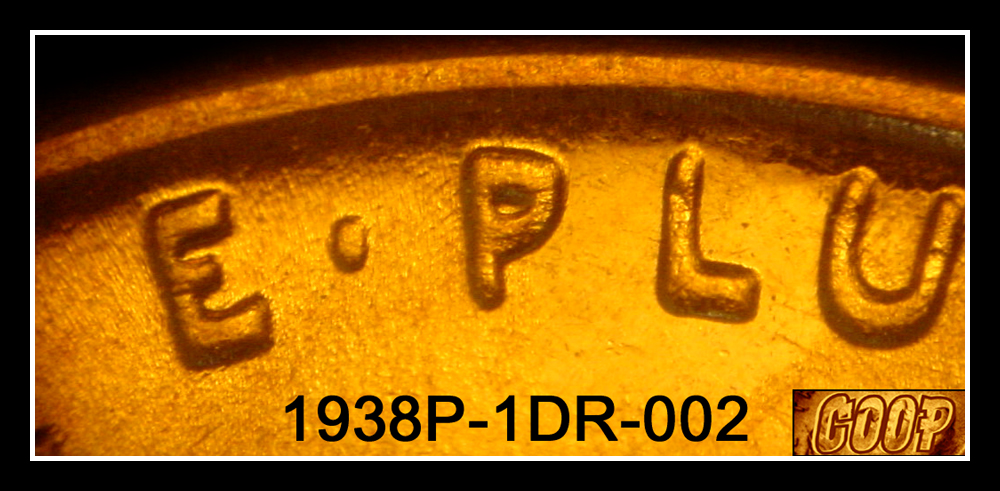
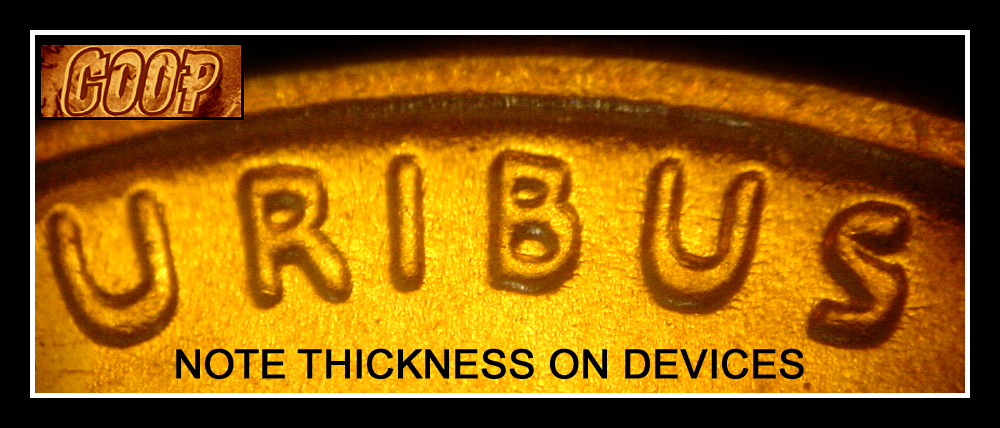
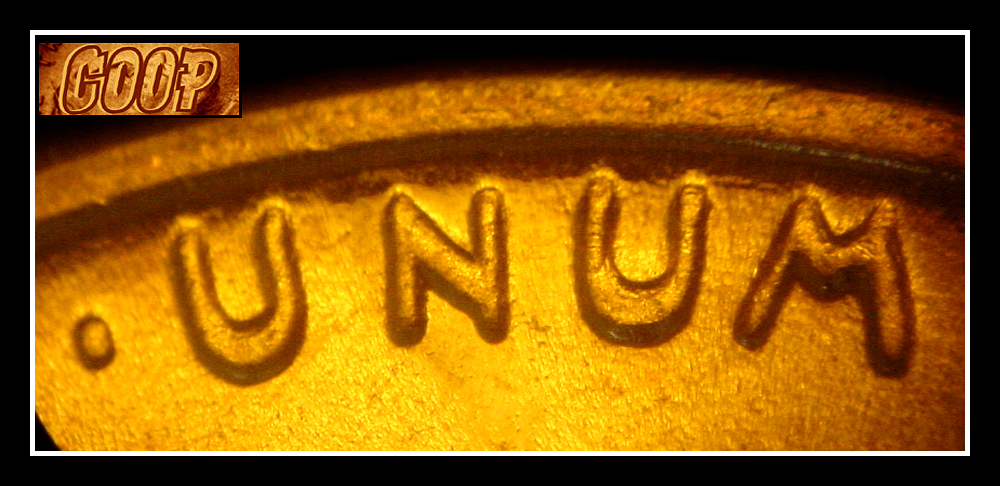
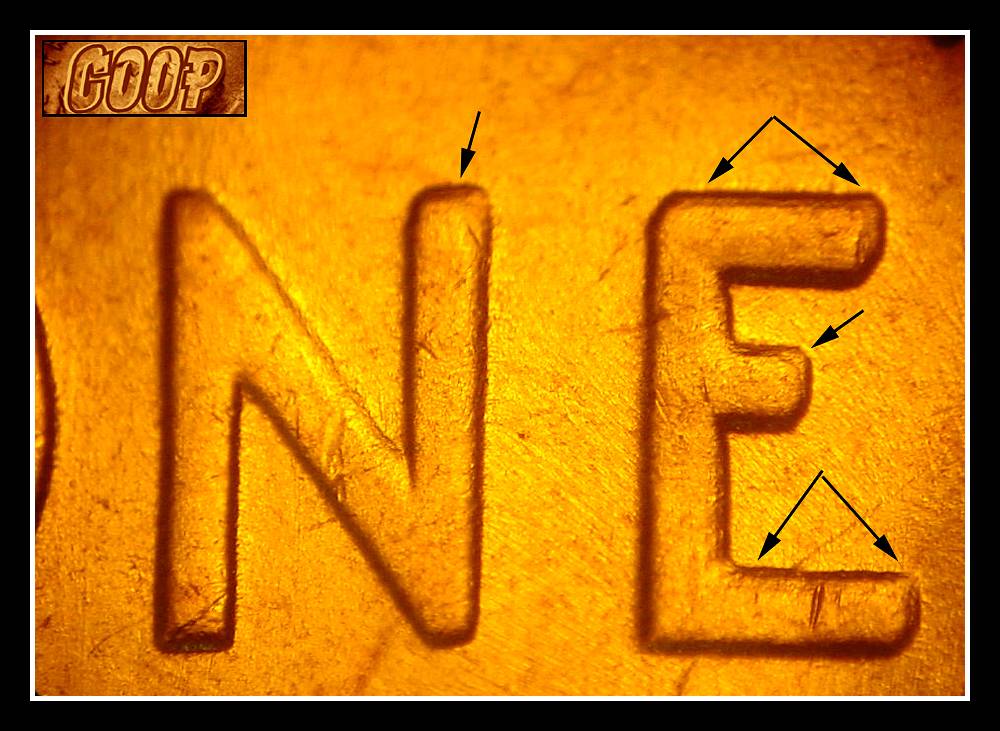
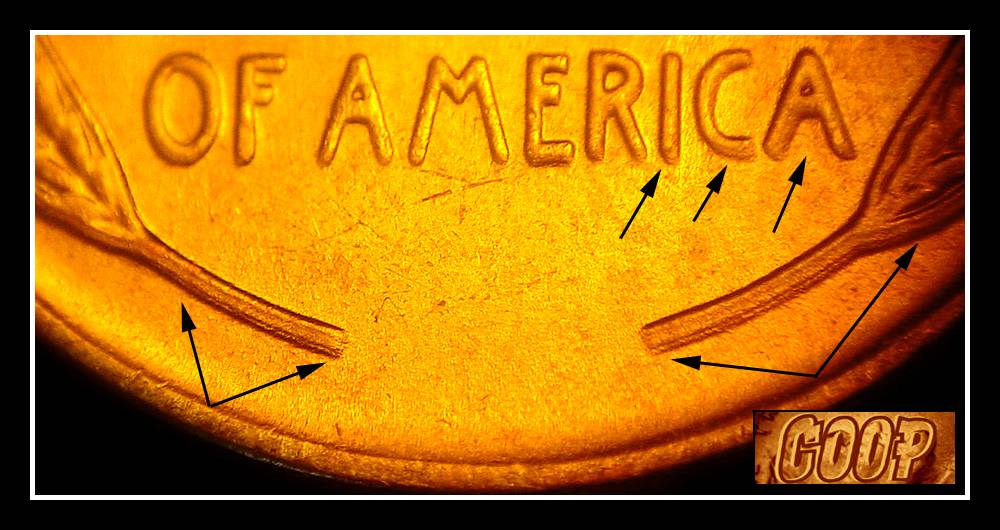
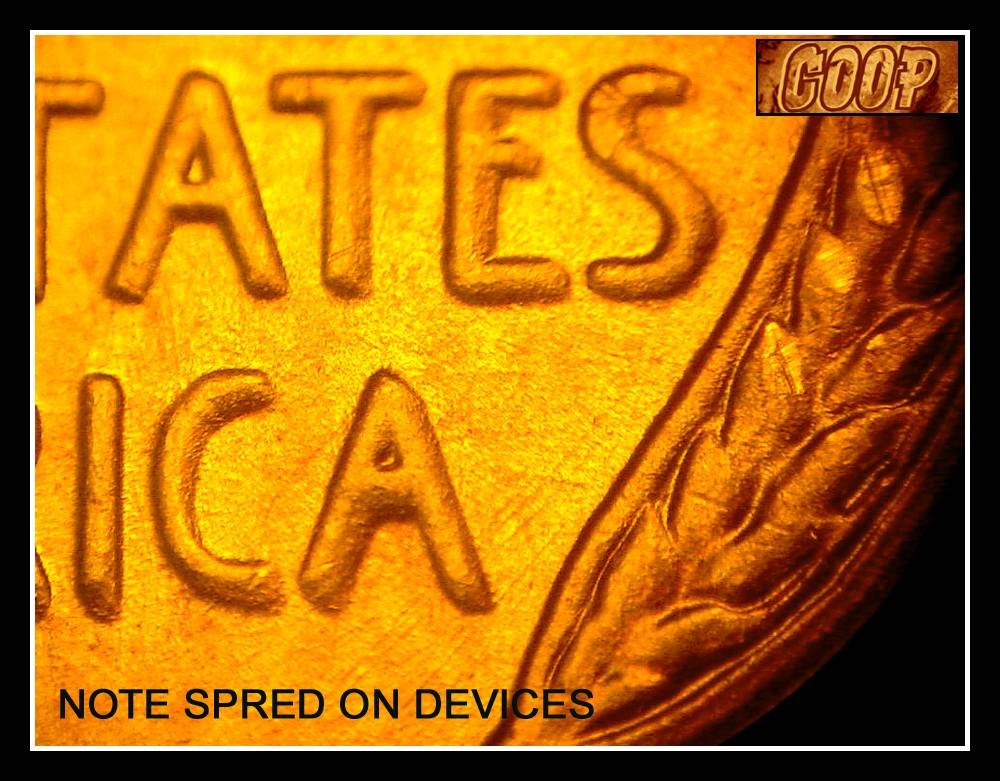
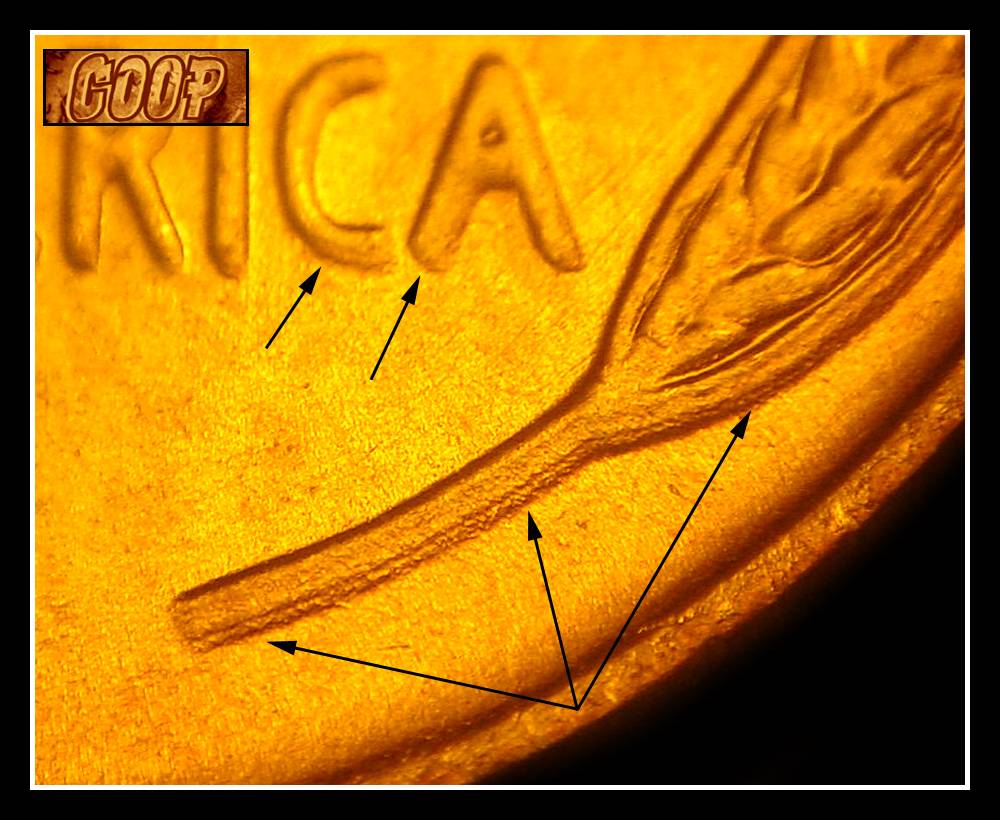
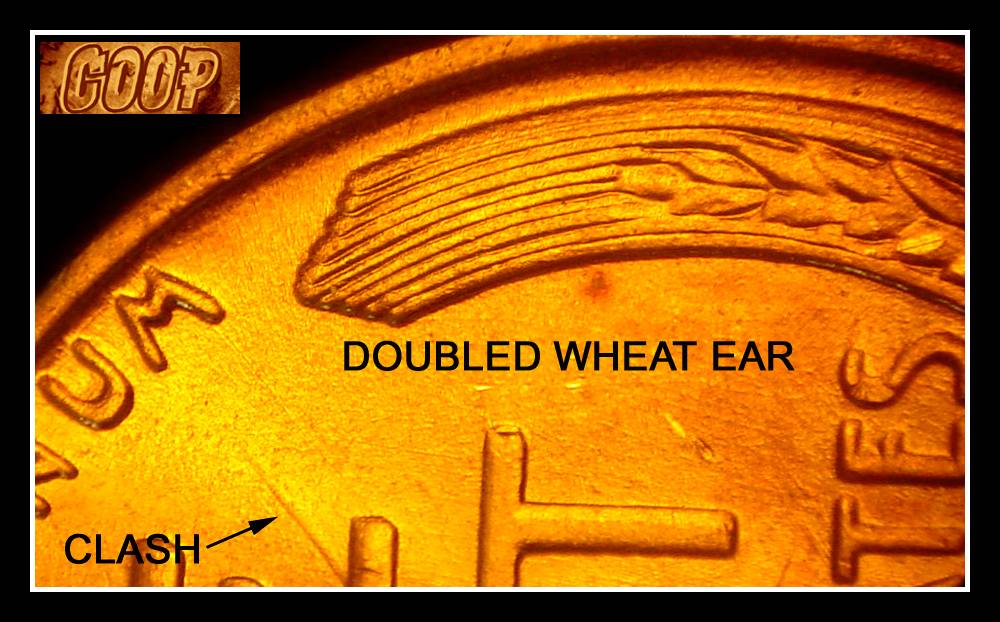
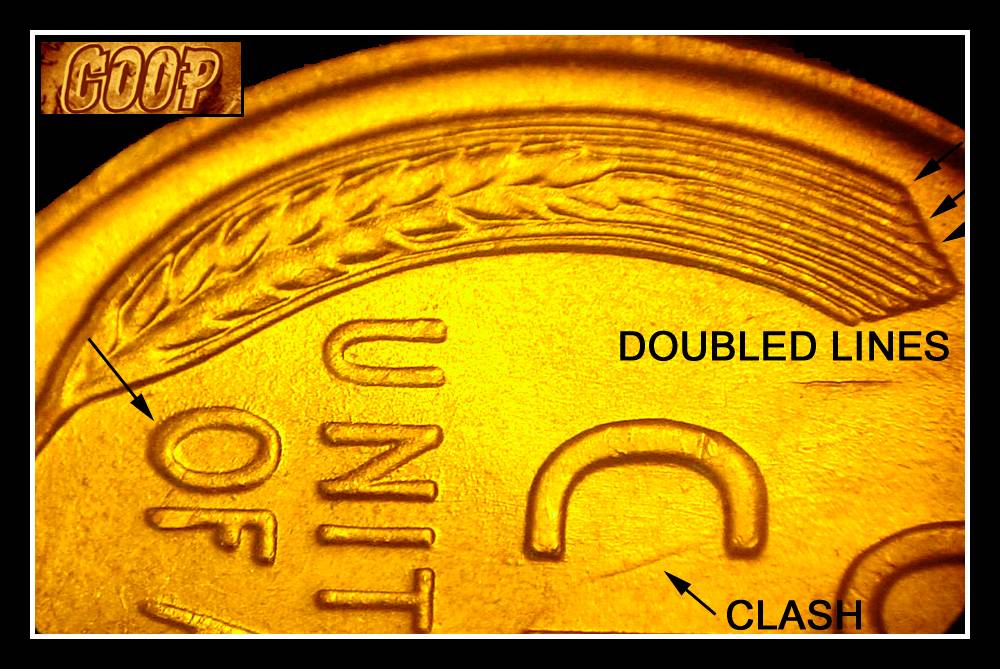
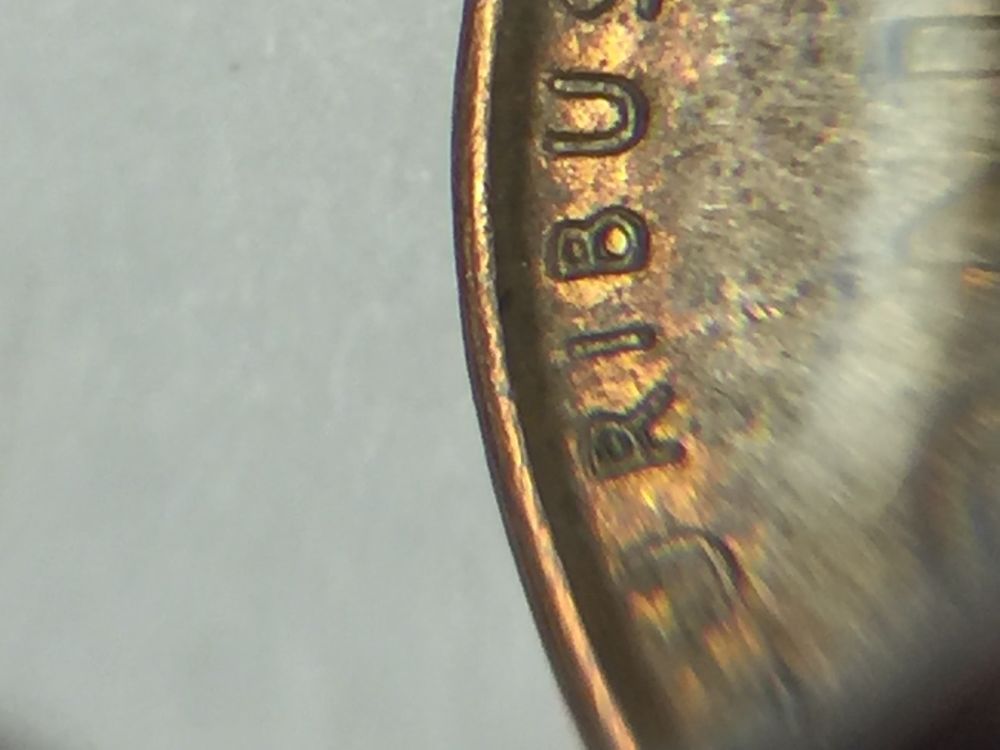
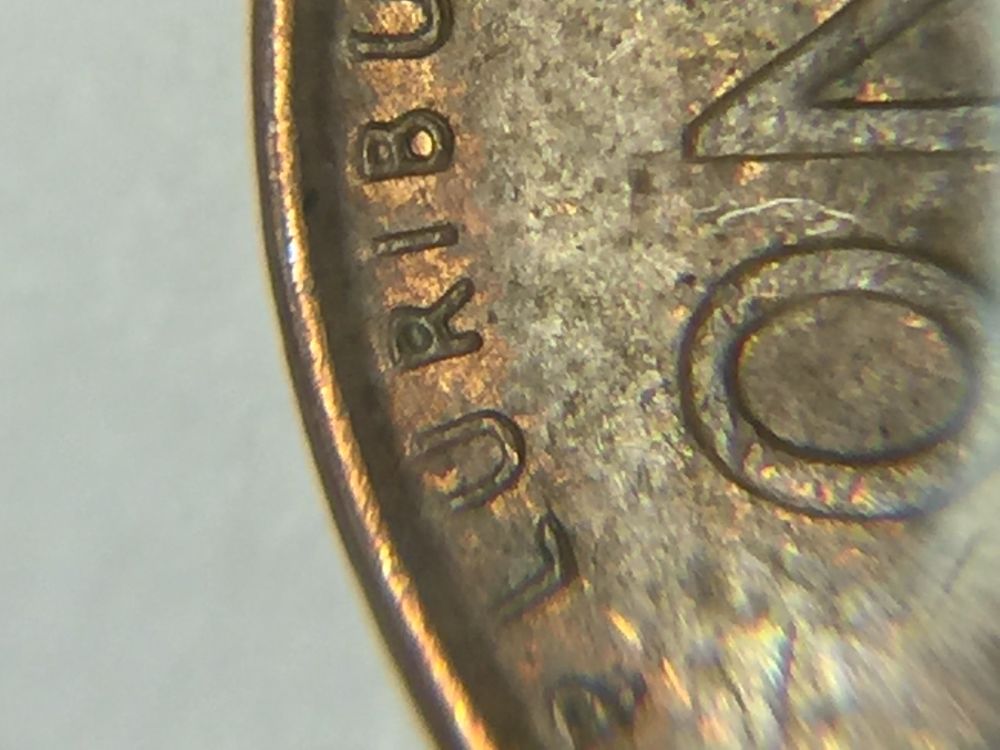
Machine Doubling is just an alteration of a normal device and reduced in size:
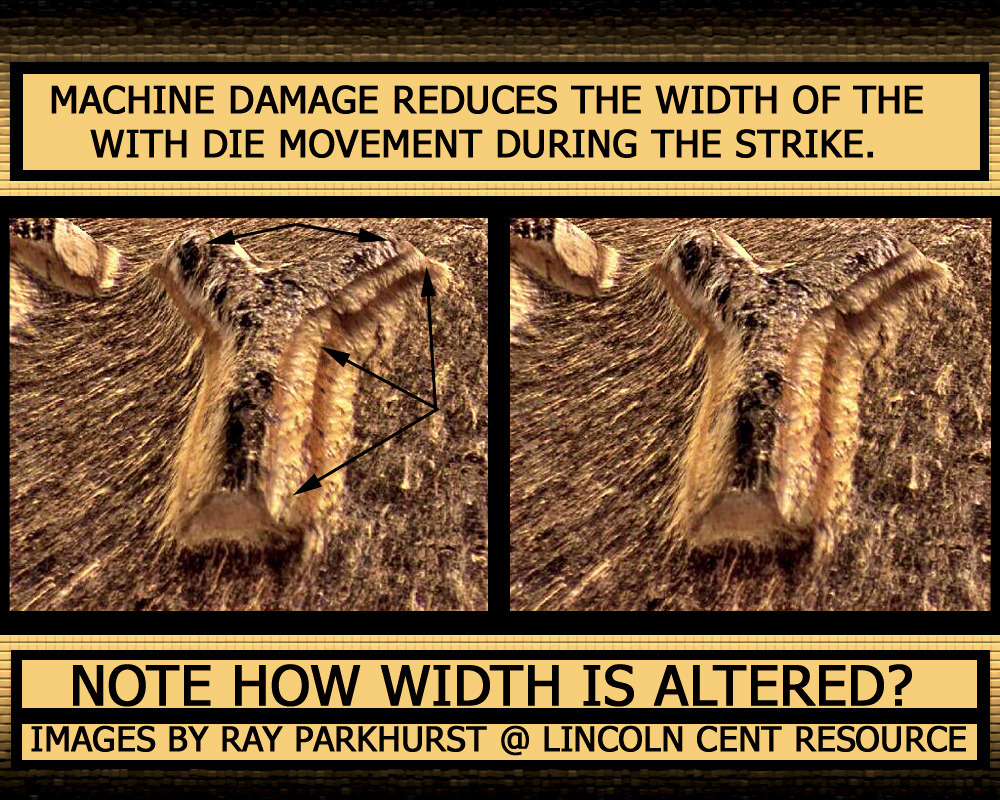
Note how the device was reduced from damage after the strike happened.
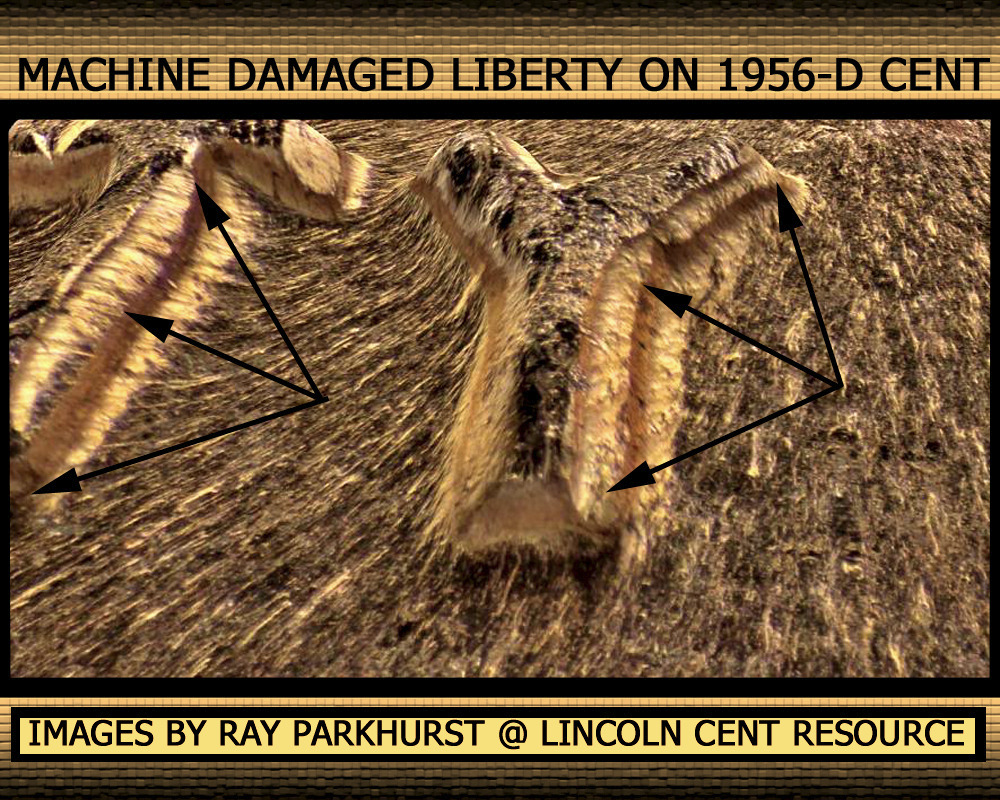
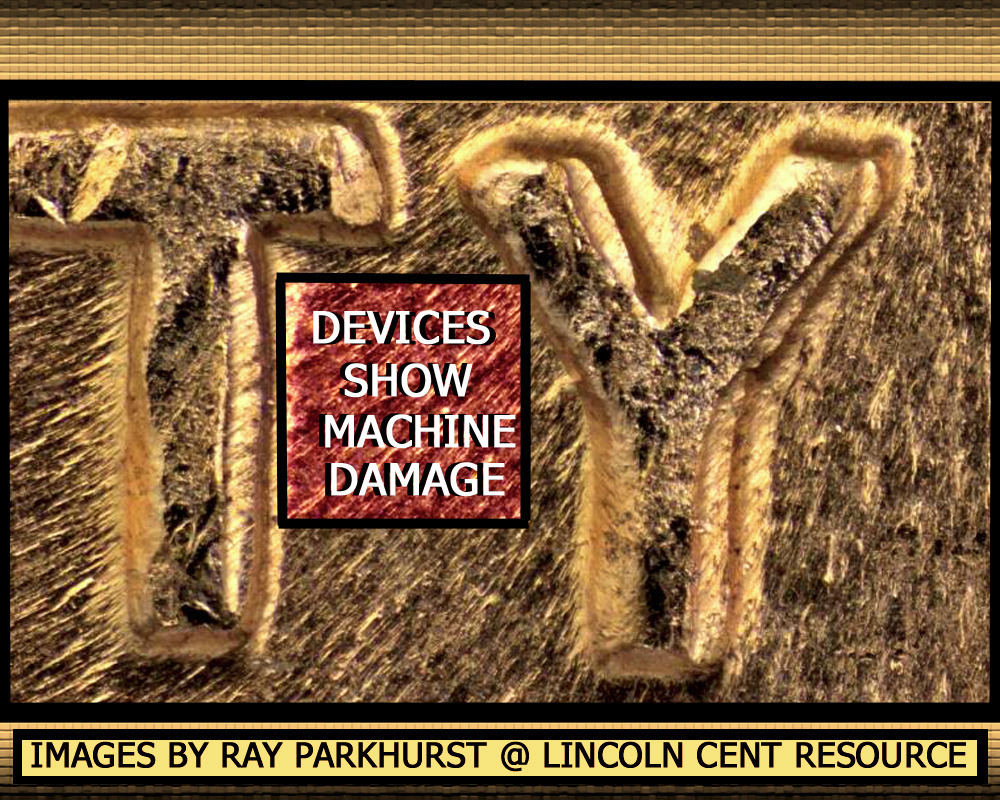
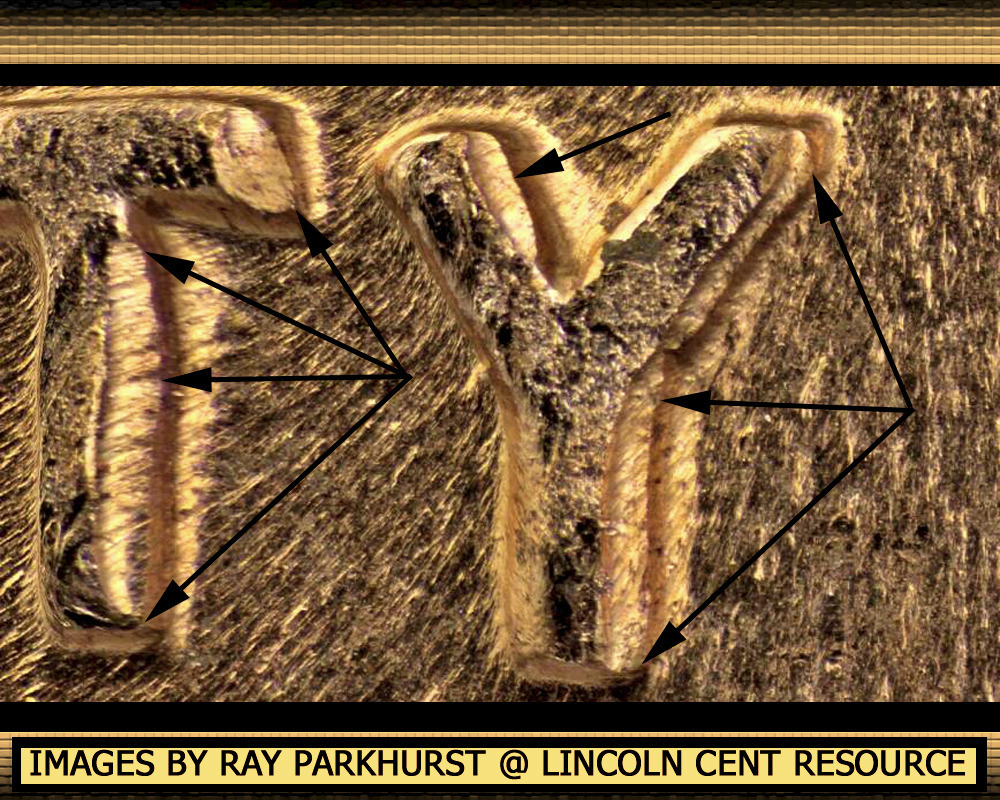
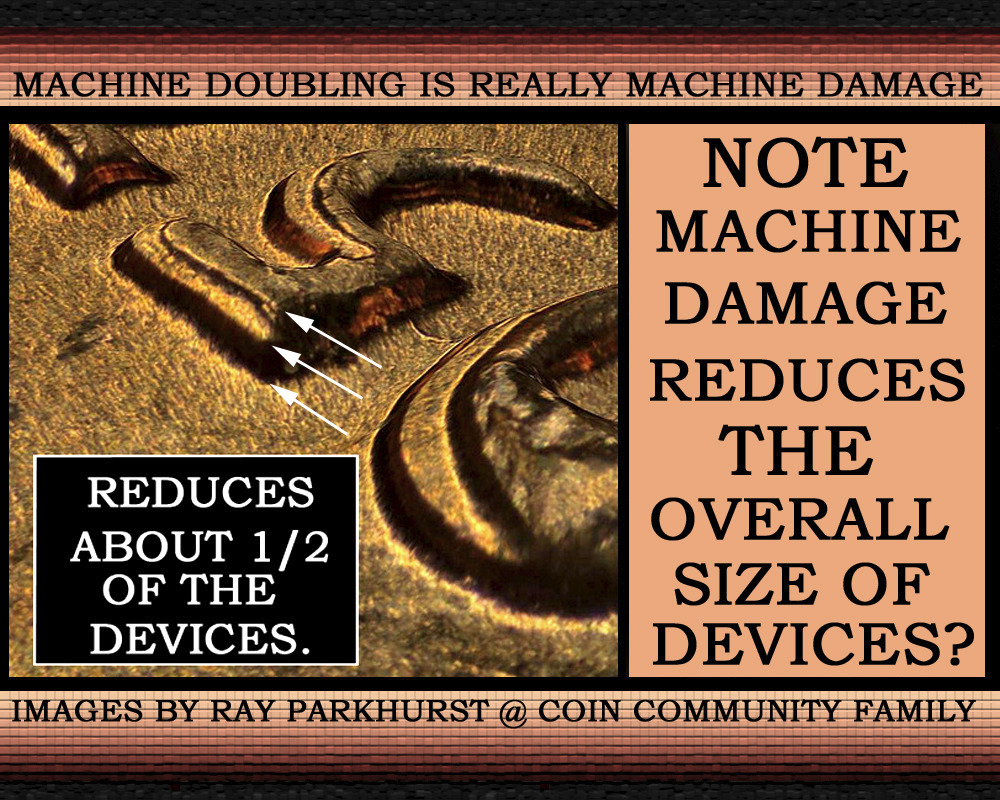
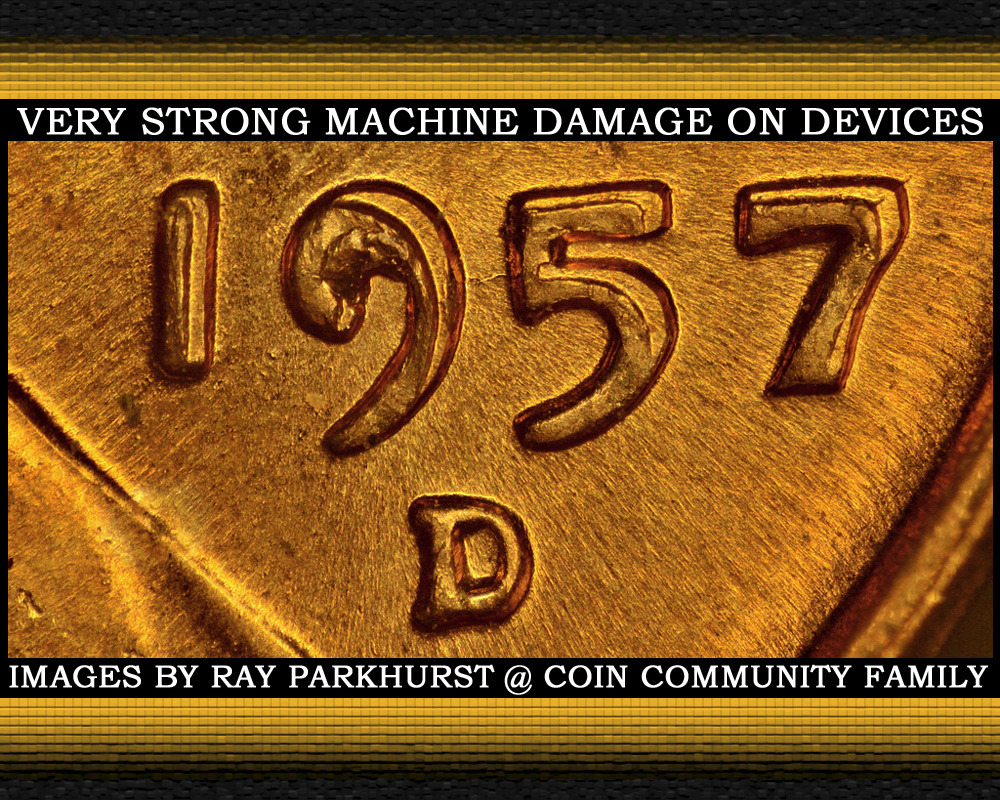
Nothing is enlarged. It is reduced from die bounce/hop/sliding after the completed strike, damaging the devices during the recoil of the dies.
Hope this helps?
Edited by coop
07/25/2016 7:22 pm
07/25/2016 7:22 pm