| Author |
 Replies: 96 / Views: 29,459 Replies: 96 / Views: 29,459 |
|
Pillar of the Community
India
1996 Posts |
Kashmir has given a lot of outstanding coins to Indian numismatics. They have contributed unique coin patterns that have been used over centuries by various rulers and different dynasties. But identification and precise attribution of Kashmir coins is one of the toughest challenges faced by enthusiasts. Here is an attempt to familiarise some coins of some of the Hindu rulers of Kashmir. They are bronze/copper coins known as "Kaserah" or as "Punchshi". Sankara varman (AD. 883 - 902)Sankaravarman became the ruler of Kashmir following Avantivarman, his father. (Avantivarman was made the king of Kashmir in 855.AD, replacing Utpalapida, son of Ajithapida. He was killed in an expedition. 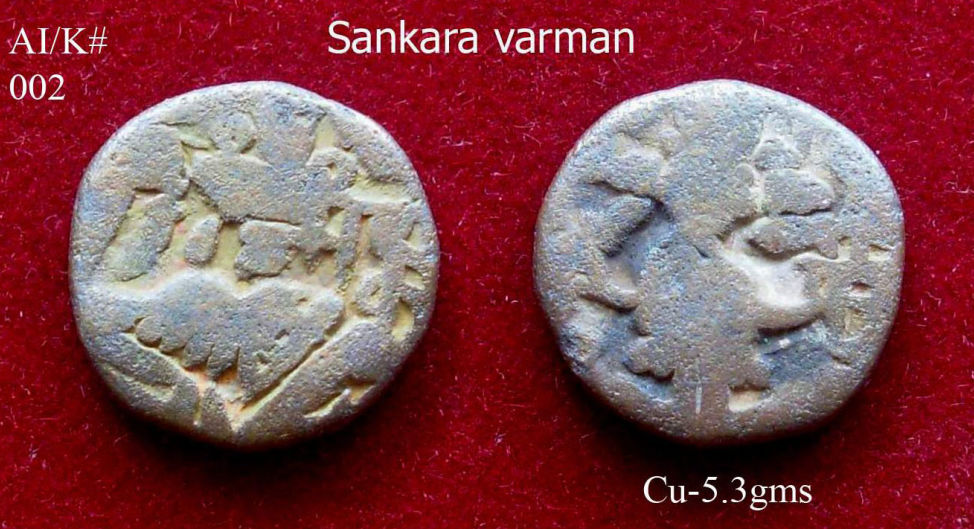 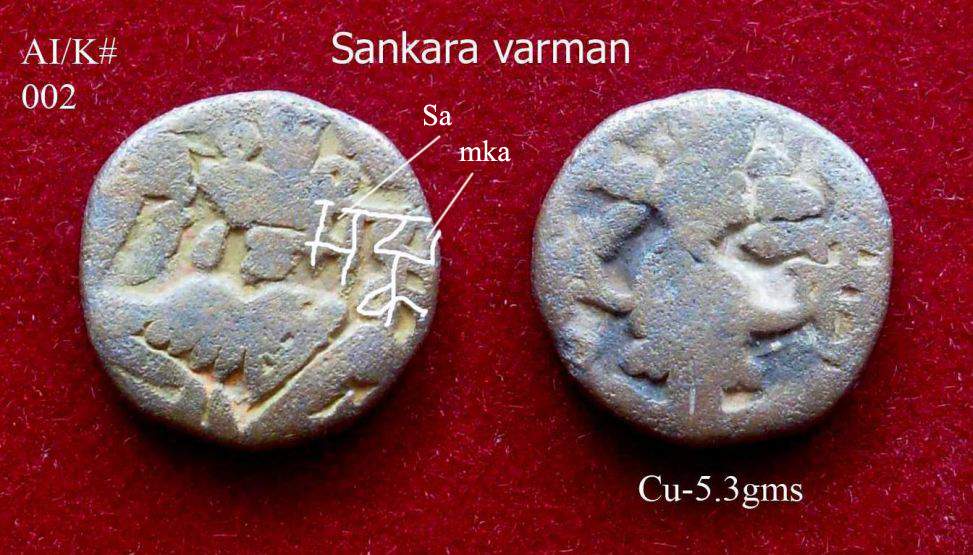 Edited by drnsreedhar
08/01/2016 02:07 am
|
|
|
|
Pillar of the Community
 India
1996 Posts |
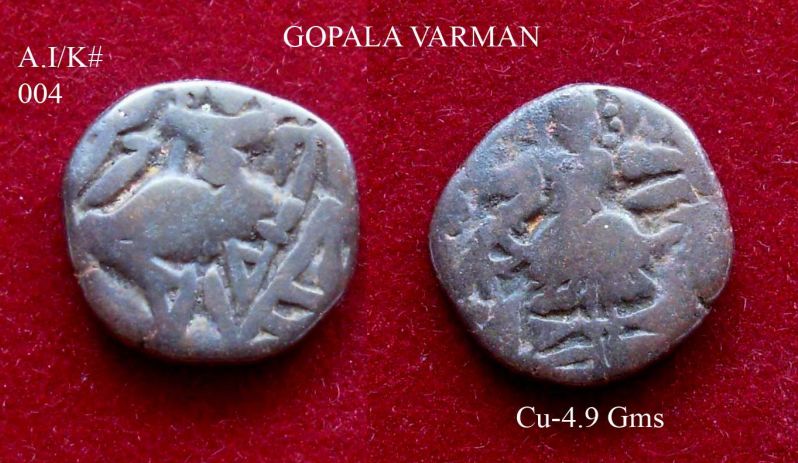
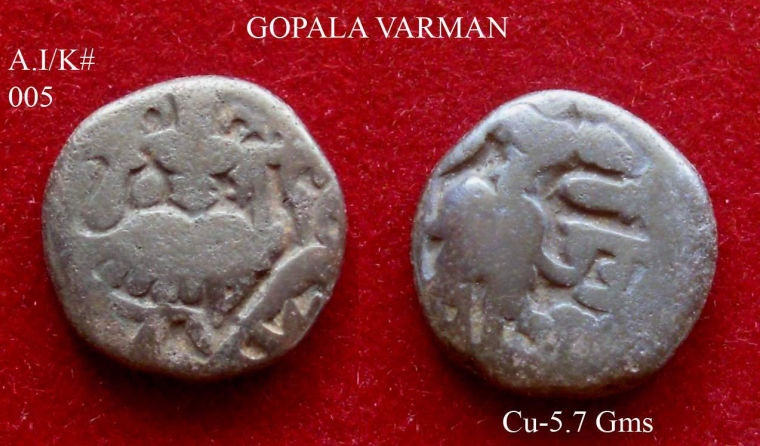
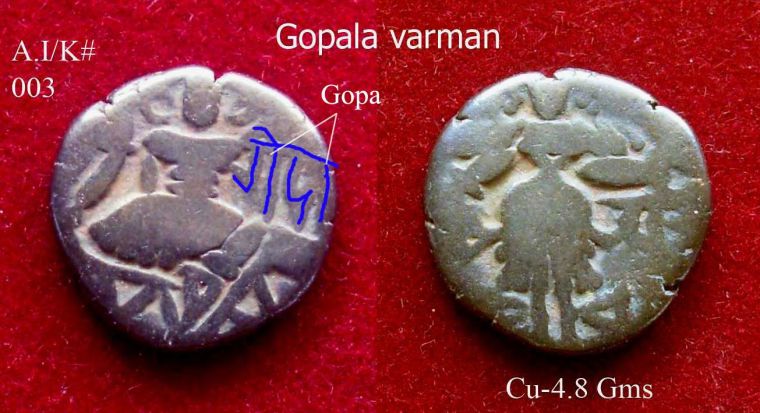
Gopala Varman (AD. 902 - 904)He succeeded his father but was killed in 904 by his minister Prabhakaradeva. At first he was followed by a supposititious son Sankatavarman who died after ten days. Then Sankaravarman's widow Sugandharani came to power. 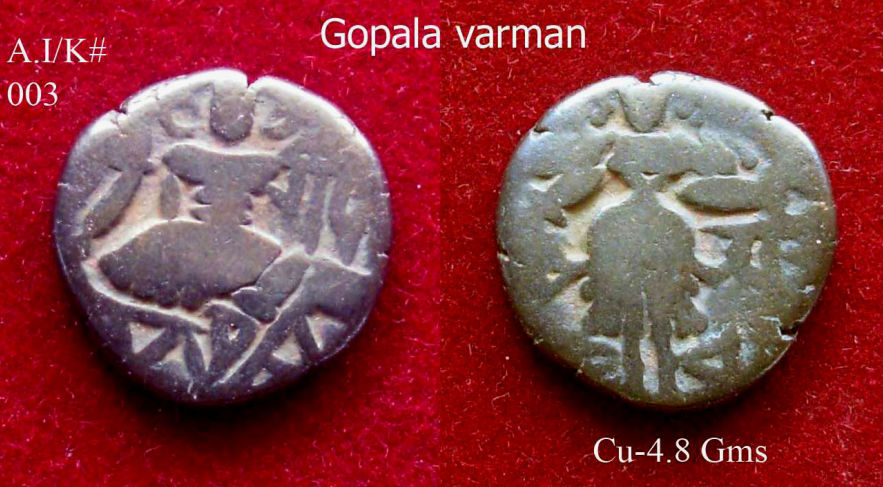
|
|
Pillar of the Community
India
1996 Posts |
|
|
Pillar of the Community
India
1996 Posts |
|
|
Pillar of the Community
India
1996 Posts |
|
|
Pillar of the Community
India
1996 Posts |
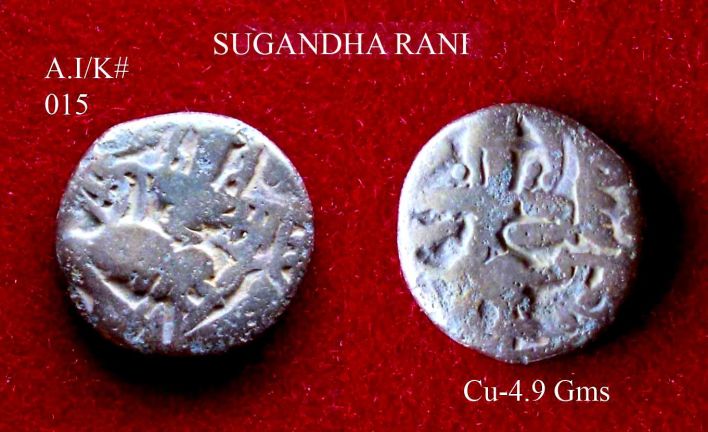
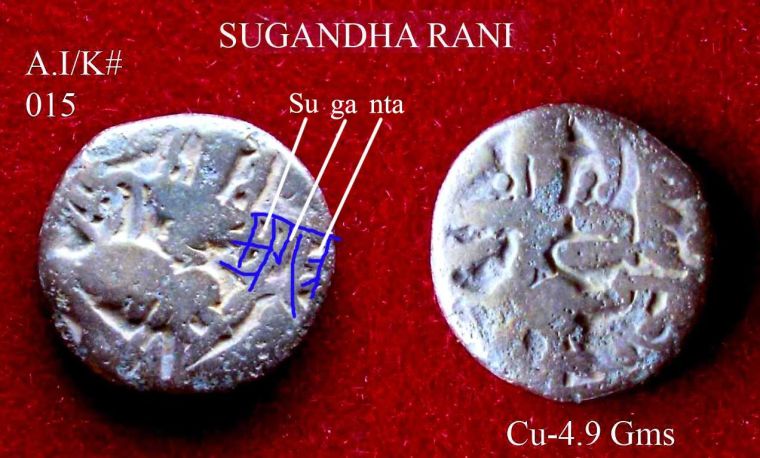
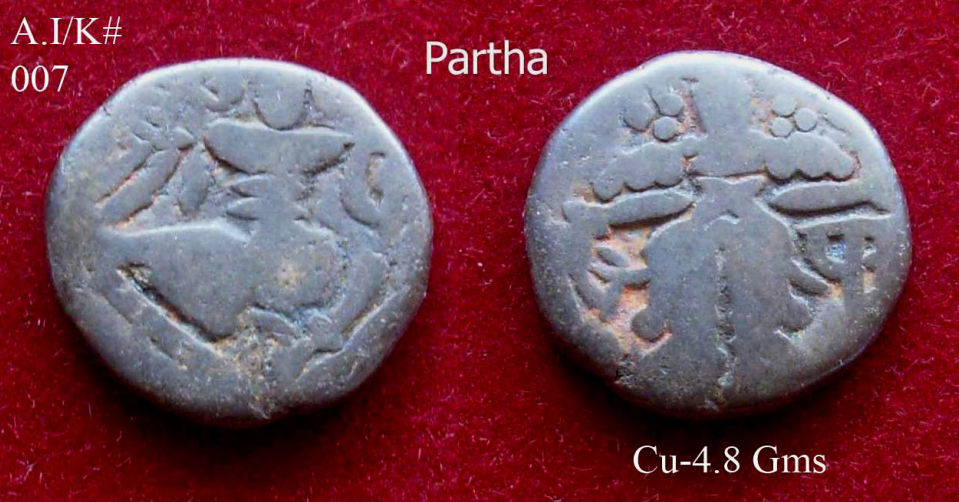
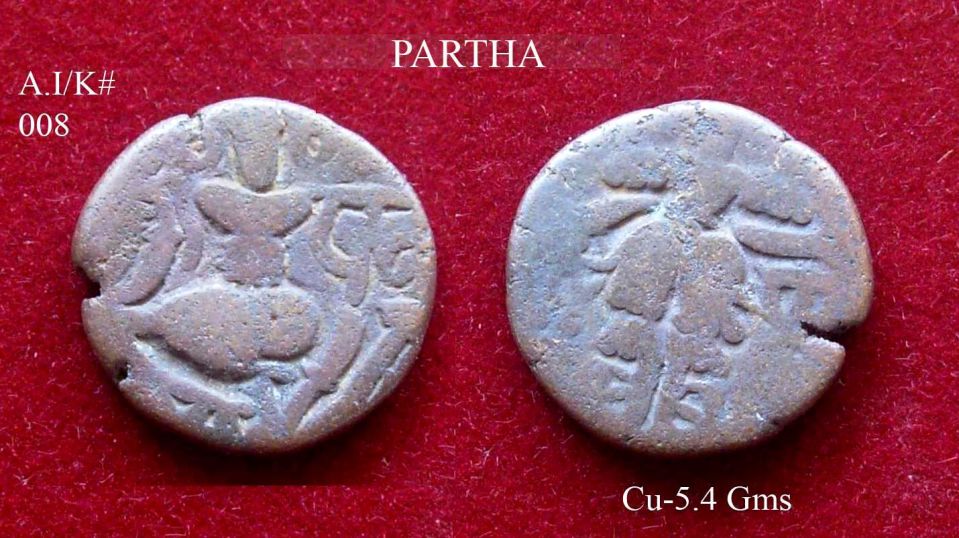
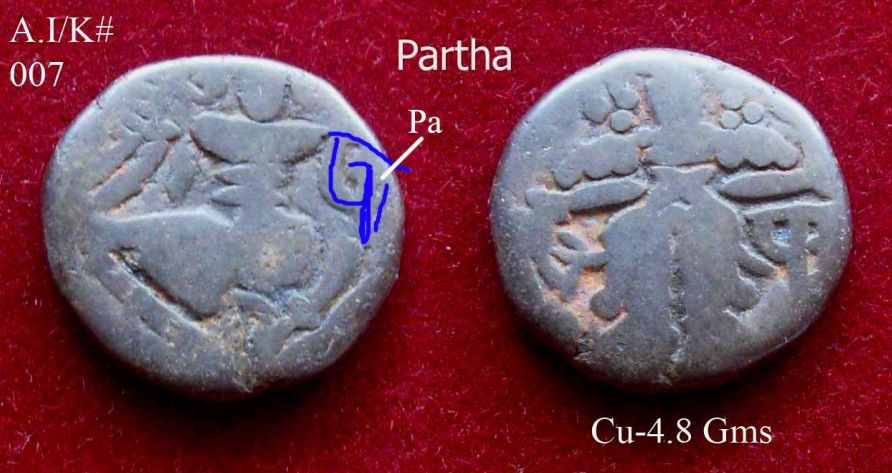
Sugandha Rani (AD. 904 - 906)Sugandharani ruled following Sankatavarman. In 906.AD Partha, son of Nirjita varman, a dedcendant of Avantivarman's half brother Sooravarman was made king of Kashmir. 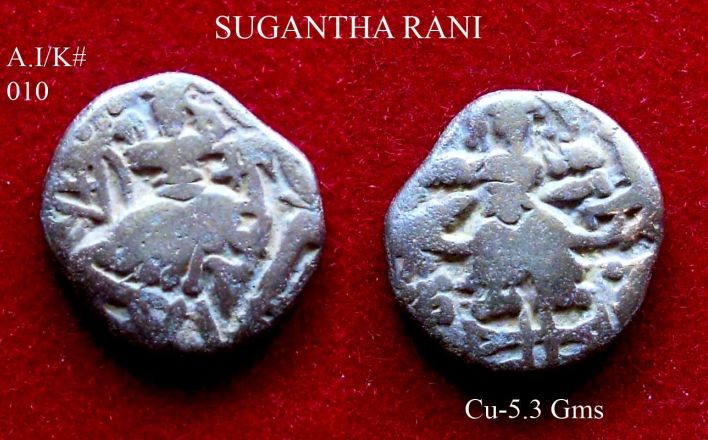
|
|
Pillar of the Community
India
1996 Posts |
|
|
Pillar of the Community
India
1996 Posts |
|
|
Pillar of the Community
India
1996 Posts |
|
|
Pillar of the Community
India
1996 Posts |
|
|
Pillar of the Community
India
1996 Posts |
|
|
Moderator
 United States
34539 Posts |
@drnsreedhar, very interesting, but a quick question for you. What is on the reverse of these coins? It looks a little like a standing figure, but any information you have would be great. thanks!
"If you climb a good tree, you get a push."
-----Ghanaian proverb
"The danger we all now face is distinguishing between what is authentic and what is performed."
-----King Adz
|
|
Pillar of the Community
India
1996 Posts |
@spenceThanks for the post and raising the question.
These coins depict sitting Goddess "Lekshmi" on one side and standing figure of the King on the other. This pattern has evolved from the Kushana coins with slight influence of the Indo-Sassanian coins. On the earlier issues, Lekshmi is seen sitting on a lotus. In the latter issues, the Lekshmi figure gradually got degraded. Arms were replaced with letters mentioning the King's name. Alexander Cunningham in his work "Coins of Medieval India" remarks that this standard type remained in Kashmir from the time of Kanishka in AD.78 to Muhammaden conquest in AD.1339 stretching around 1260 years. Of course he accepts that the figures have been degraded to such an extend that it is difficult to say which is the standing figure and which is the sitting when it comes to later Kings like Jagadeva.It is very difficult to get these coins in good condition. The sitting figure can be seen somewhat in this coin that I copied from "World of Coins". http://www.worldofcoins.eu/forum/in...0;attatmp=no
Hope this was useful.Please do keep posting your views and querries.Thank you.
|
|
Pillar of the Community
United States
7067 Posts |
Great new thread, pics, and info.
|
|
Pillar of the Community
India
1996 Posts |
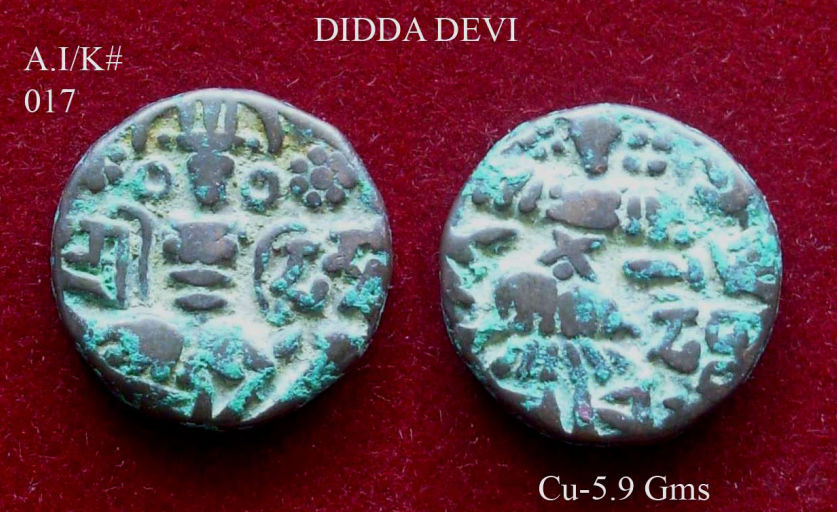
DIDDA DEVI(AD. 980 - 1003)Didda came to power murdering Bhima Gupta.She has the reputation of being a strong ruler. Usually there are some letters found on the sides of the standing King figure also. It is difficult to read them on many coins. In this coin it can be read as "devi". The full legend running on both sides is thus "Sri Didda devi". 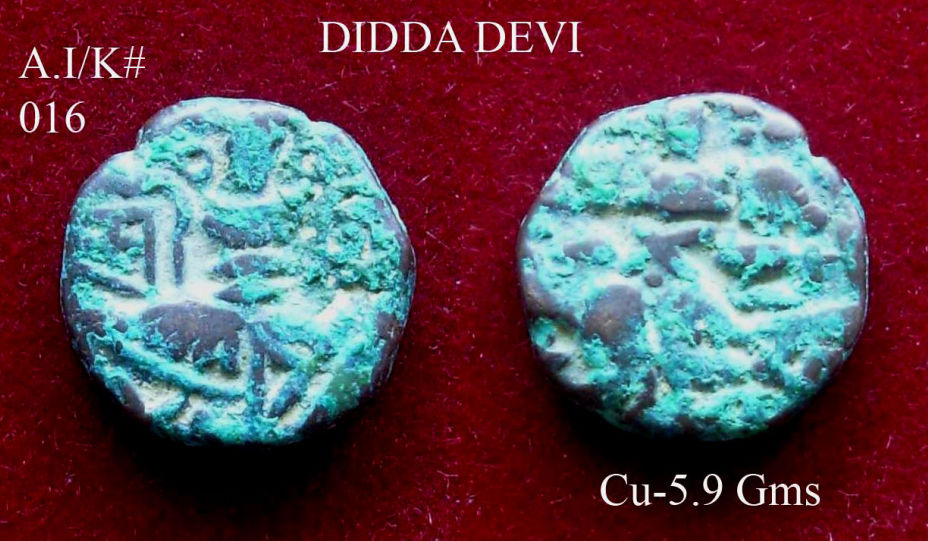
|
|
Pillar of the Community
India
1996 Posts |
|
| |
Replies: 96 / Views: 29,459 |







 Posted 07/31/2016 3:14 pm