It was bound to happen sooner or later. Well, it finally did. I had found and won this lot on
ebay:
http://www.ebay.com/itm/26252189702...RK:MEBIDX:ITFortunately, it was not too much of a loss. What I paid for the lot covered the cost of the other genuine coins. This coin was the only counterfeit coin in the lot.
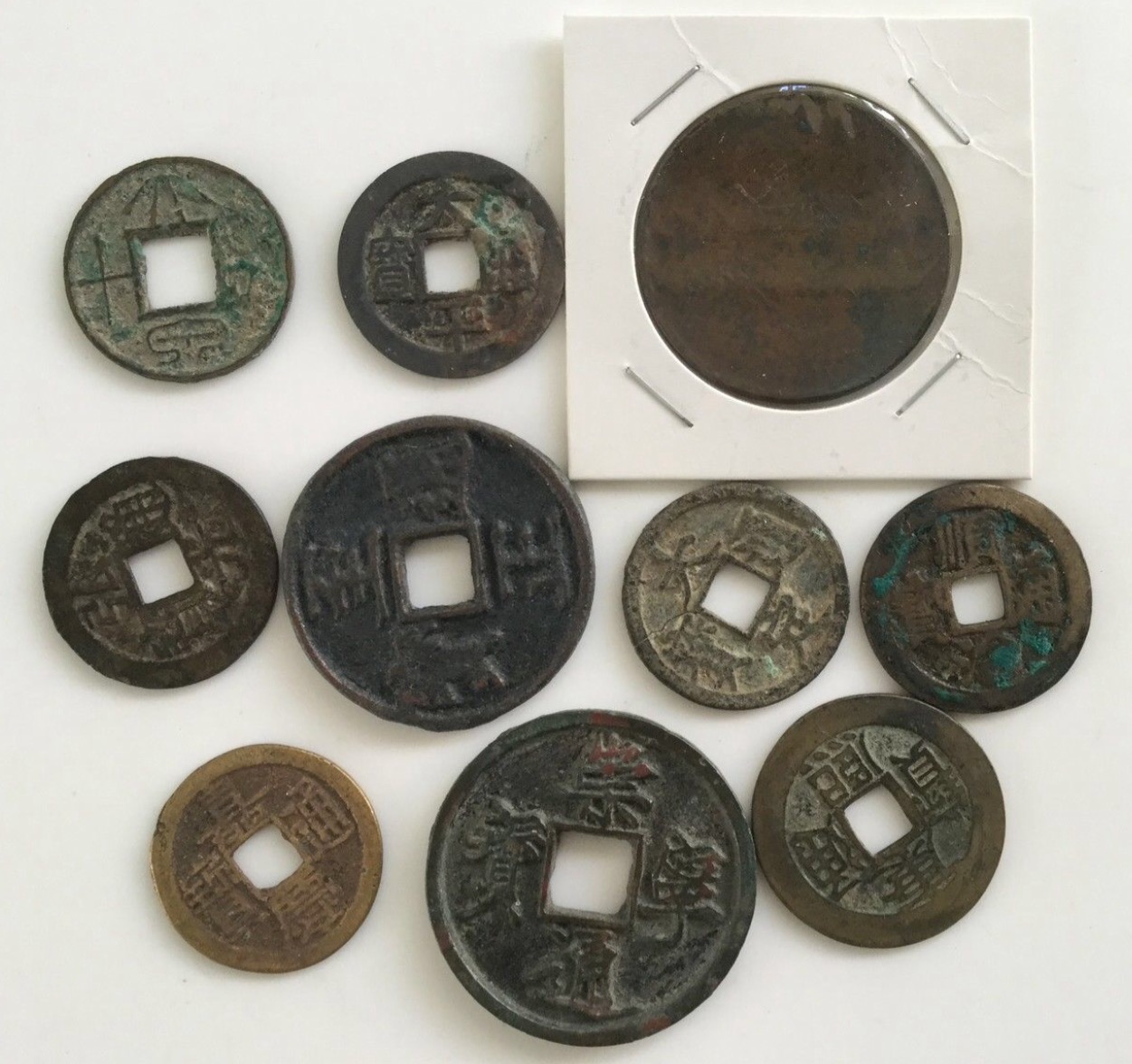

The coin in the center was what drew me to the lot. It was a scarce Zhi Zheng Tong Bao 3-cash coin (worth $100-150 in the condition seen in the pictures). But this struck me as odd since this coin was worth so much more than the rest of the coins in the lot, and especially since the seller seemed knowledgeable enough to know what was and wasn't valuable. But since it looked rather worn in the pictures, I didn't question it further and subsequently bid on it.
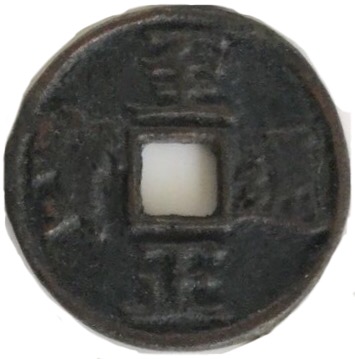
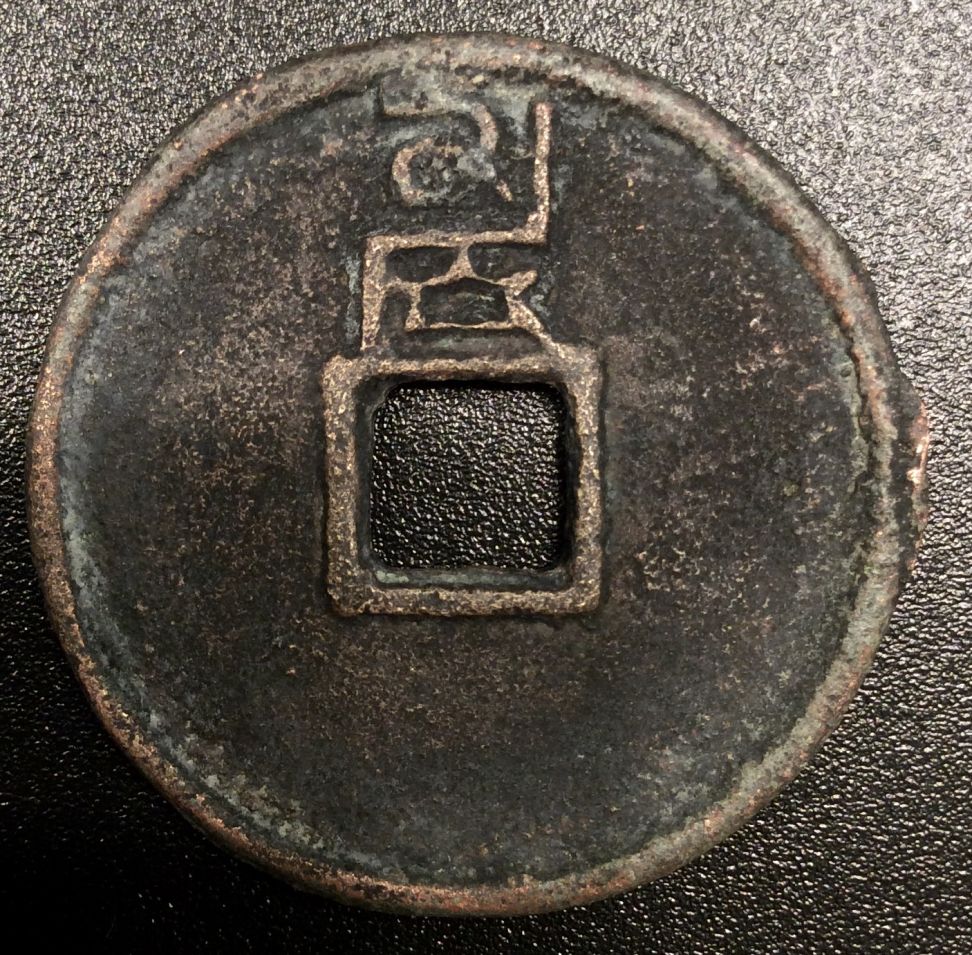
The coins arrived yesterday, and this coin looked to have more details than the pictures showed. There was a soft dirt covering the coin and clogging up the characters. I decided to clean it up a bit with a nylon brush (not metal) to make it a $300 coin instead of a $150 coin. As I did so, the dirt came of easily, but so did a lot of the patina, leaving raw copper. I found this very odd, so I looked closer.
Before:
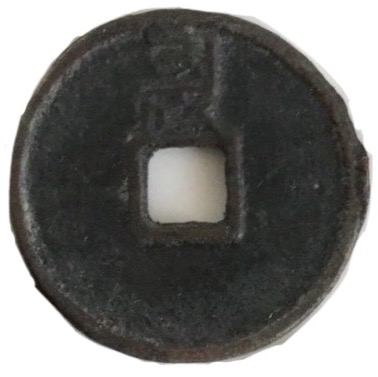
After:
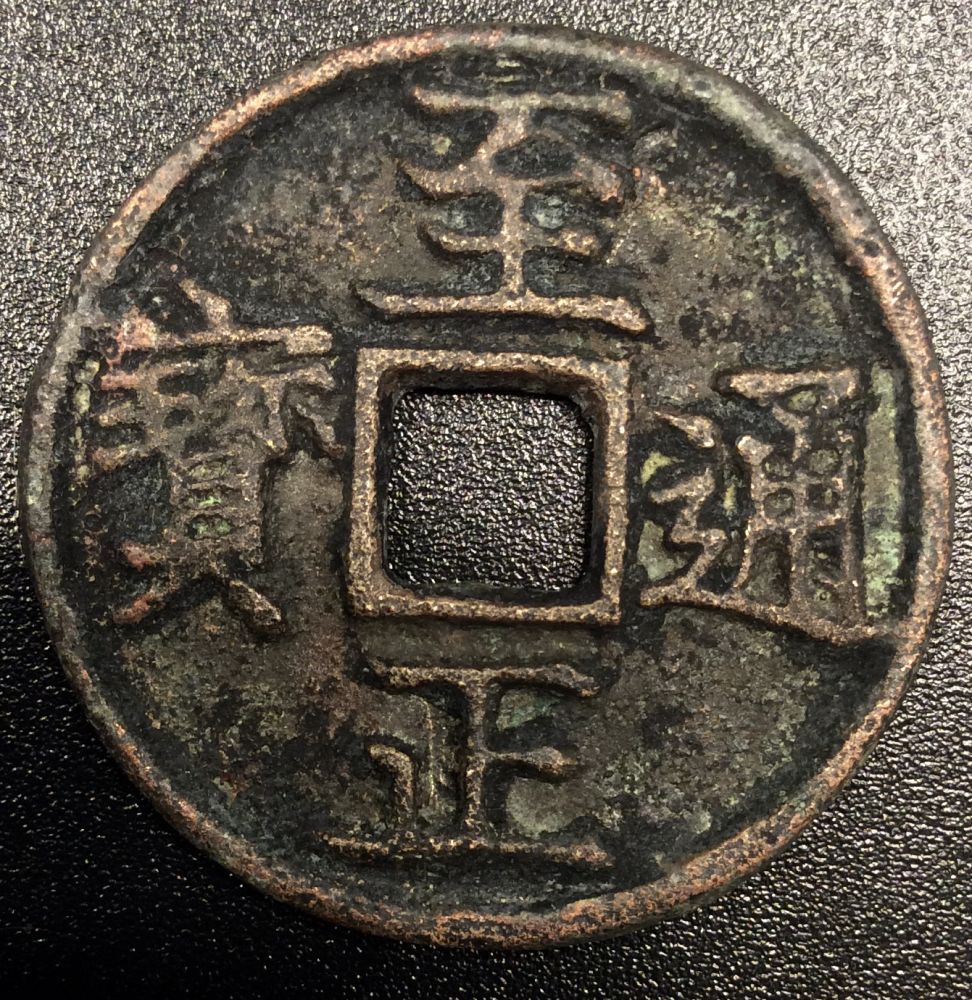
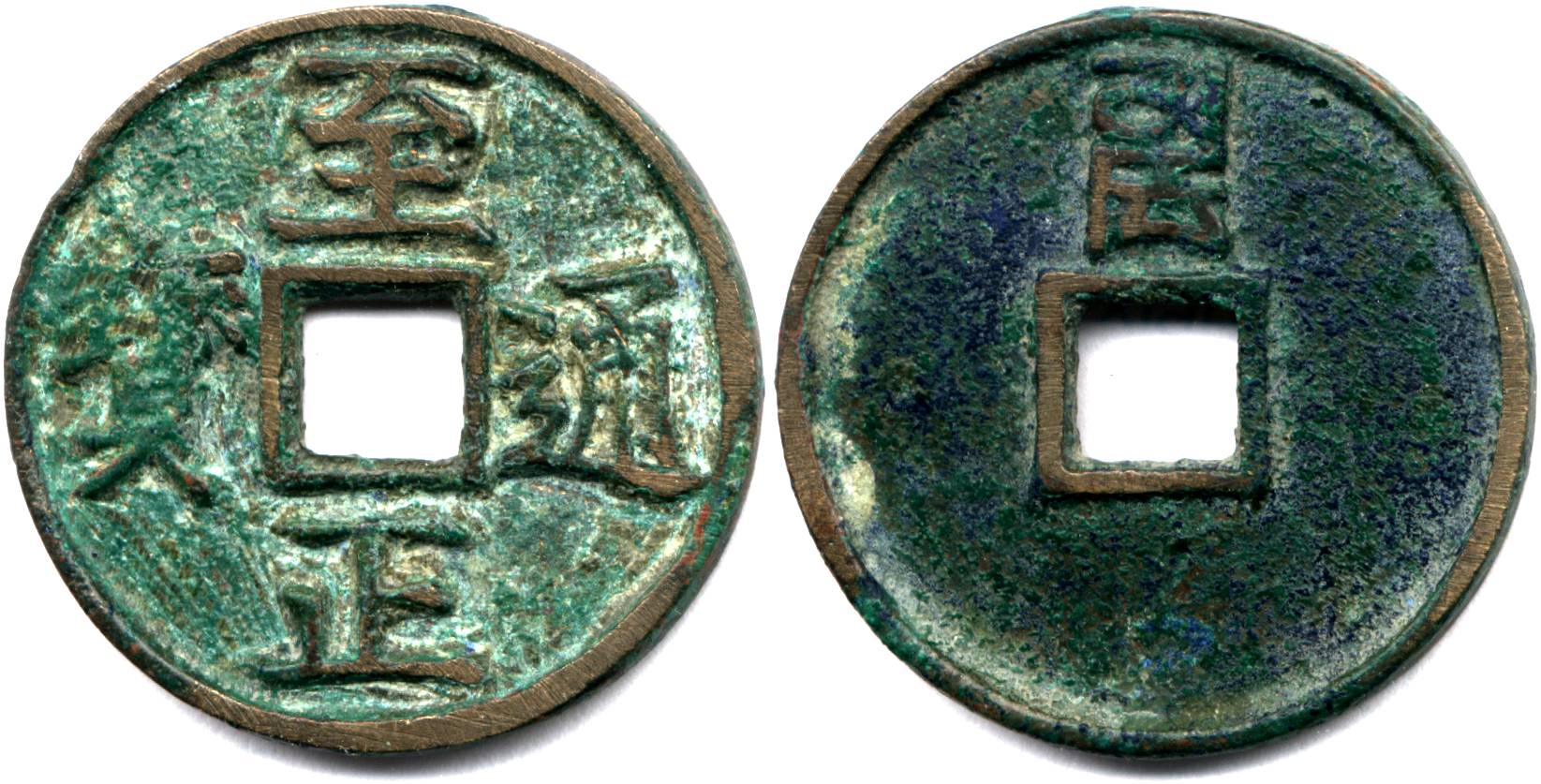
The larger coins of the Yuan Dynasty were known for their high-quality of casting. They typically have sharp characters that have rounded tops. When they wore a little bit, the worn areas display a distinctive plateau effect that is smooth, flat, and usually a different color. You can see what I am talking about in the genuine coin below. If you look at the Zheng character (bottom of obverse), the left side shows the roundness, while the right side is worn. This effect is very hard to replicate, so it is rarely seen on counterfeits.
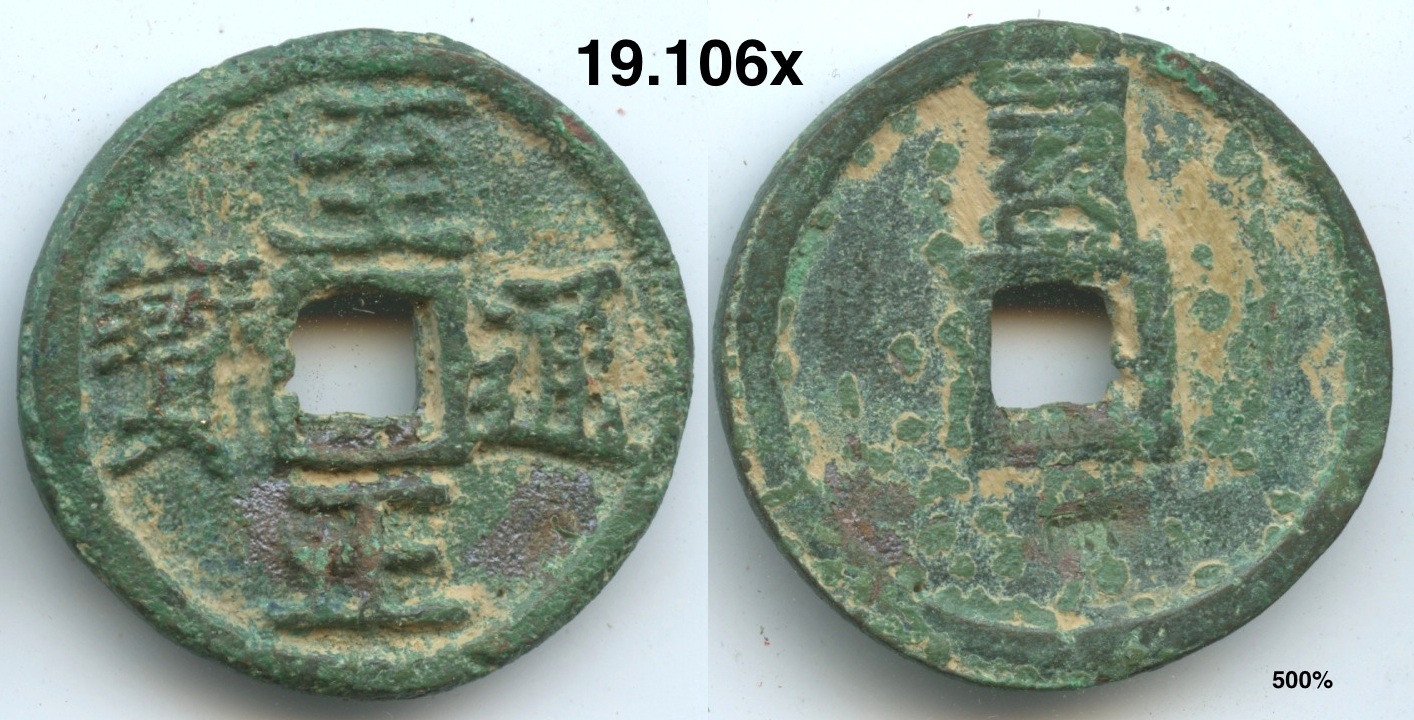
Here is a counterfeit owned by Scott Semans. Note the rounded look to all of the characters.
My coin displayed neither the sharp roundness nor the flat plateaus. It was just bulbous and porous. If it was corroded after years in the ground, I would expect a more-permanent patina.
Then I compared my examples to genuine coins and noted several differences. The left vertical stroke of Zheng is supposed to be wedge-shaped, but it is 7-shaped on my coin. The bottom horizontal stroke of the reverse character Maw is supposed to be thick and curved, while on my coin, it is thin and straight.
Conclusion: counterfeit. Unless I am wrong in some of my observations and assumptions.
I have contacted the seller, and he seems willing to work with me. I feel he put this coin in the lot as bid bait and should be avoided in the future.









 Posted 08/05/2016 1:49 pm


