Hi. I've been thinking a bit about the mess in picking the next POTUS and while I don't want to compare this democratic exercise with the untold horrors and bloodshed of the crusades, I did think that it might be interesting to share a couple coins, one from either side of that conflict. As with my other discussions, I'm not looking to write a dissertation or exhaustive analysis, but rather to give a little historical color to the coins. Please feel free to add your own knowledge (or coin pics!)
From Stephen Album's Checklist of Islamic Coins,
Quote:
'Imad al-Din Zangi was a military commander in the service of the Seljuqs, from whom he acquired the title of ataberg [governor]. Zangi and his son Nur al-din Mahmud are best known for their defense against the Crusaders.
According to Wikipedia, this family Dynasty, "The Zangids" was centered primarily in Mosul (Iraq), but with a long finger of control over most of modern Syria and Jordan, and down into Northern Saudi Arabia. One of the elder Zangi's most significant victories was the capture of the County of Edessa in 1144 AD. On his death two years later, the territory was split between his three sons, with Sayf ad-Din Ghazi taking Mosul and part of modern Iraq, Nur ad-Din Mahmud taking Aleppo and Edessa, and Qutb ad-Din Mawdud received the emirate of Homs. One son (Sayf ad-Din) died only a few years later, but the other two notched some pretty impressive wins against the Christians, taking over much of the Principality of Antioch and making additional gains in Edessa. Nur ad-Din also wrested control of Damascus from the Burid Dynasty and briefly held Fatamid Egypt. The two seemed to squabble at times and shift their alliances with each other. The Zangid Dynasty lasted until about 1250 AD.
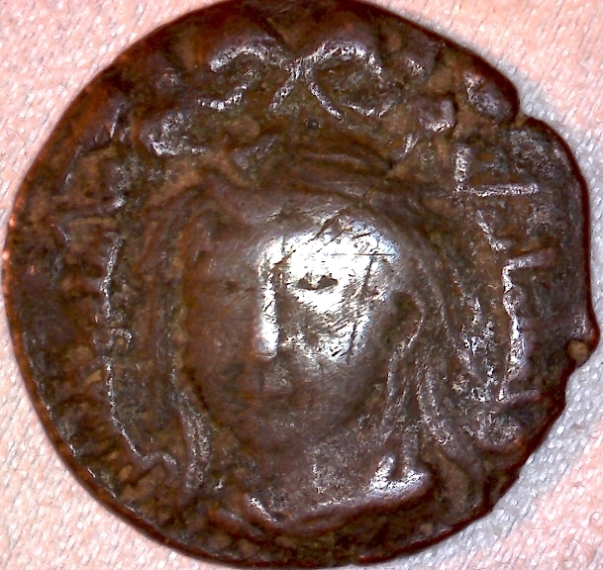
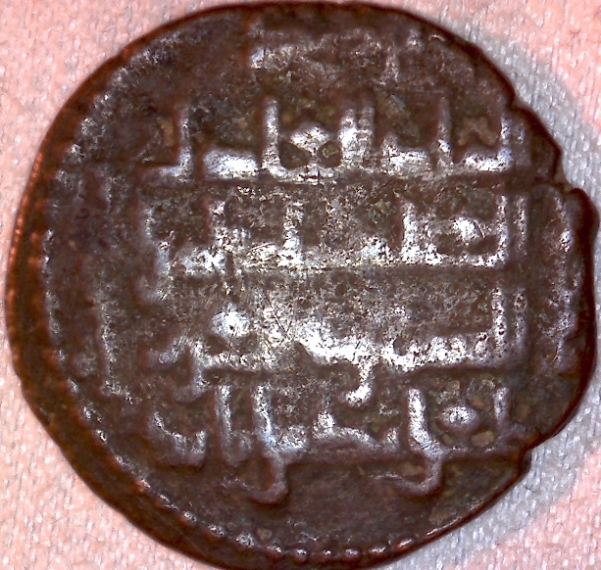
Pictured here is a copper Dirham of the Zangid Dynasty. It is a large coin: 30 mm in diameter and 12.3 g mass. The date is AH 556, which corresponds to 1160 or 1161 AD. It was minted in Mosul for Qutb al-Din and is attributed as Album #1858. Perhaps most interestingly, it is one of very few Islamic coins to have a bust as a design element. Above the bust are two angels. These coins are not particularly rare and I see several for sale on the interwebs.
On the other side of this conflict was the Principality of Antioch, located in Southern Central Turkey, along the Mediterranean coastline. From Wikipedia, Bohemond of Taranto led the first siege of Antioch in 1097 AD. After a stalemate lasting over the long cold winter, Bohemond convinced a former Christian to let the Crusaders into the city. They were only in place for four days before a Muslim force arrived from Mosul to try to re-take the city. With the psychological support (and potentially mystic involvement) of the Holy Lance, Bohemond defeated the Muslim army and made the logical pronouncement that he should rule the city. Unfortunately for Bohemond, that was pretty much his peak—he was captured in battle in 1100 AD and then traveled back to Italy to raise more troops for a second go at the Byzantines. He was defeated and then forced to assign Antioch to the Byzantines. For the next thirty or forty years, a series of rulers of Antioch fought with the Byzantines and the Muslims, sometimes separately and sometimes together. Around the time of Nur ad-Din and Qutb ad-Din's rule, Antioch was firmly aligned with the Byzantines as together they were stronger than either would have been alone. However, after the fall of Edessa, Antioch came increasingly in the sights of the Muslims, especially when this alliance failed in 1180 AD. The city would remain until 1268, when it was over-run by the Baibers.
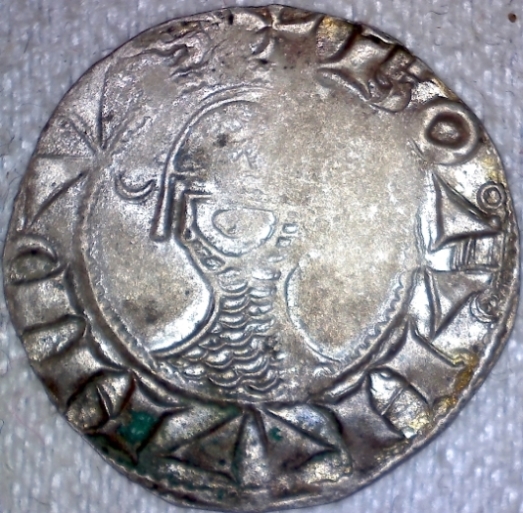
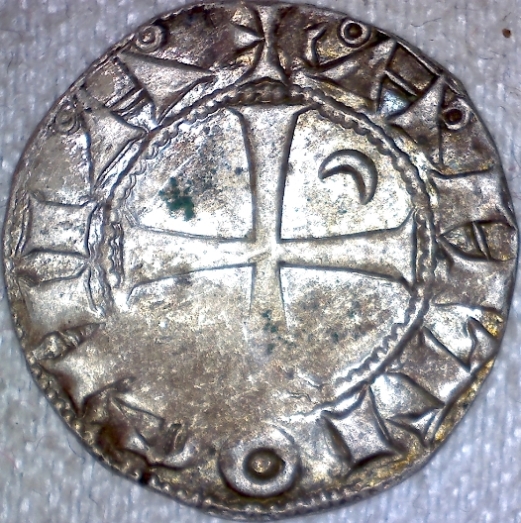
Pictured here is a silver Denier of the Principality of Antioch. It is 17 mm in diameter and has a mass of 0.9 g. It is undated, but was minted between 1163 and 1188 AD. How fitting that the bust is wearing chain mail armor. It was minted during the reign of Bohemond III and is attributed as Metcalf D-395 and CCS #65. These coins are also pretty common.








 Posted 08/09/2016 01:41 am


