| Author |
 Replies: 13 / Views: 1,516 Replies: 13 / Views: 1,516 |
|
|
Pillar of the Community
United States
2637 Posts |
Bought a few years ago for a small premium over melt. 26.93 grams. 37.5 mm. medal alignment. not magnetic. ring test seems silver. Can provide scans of edge if necessary. Thoughts? 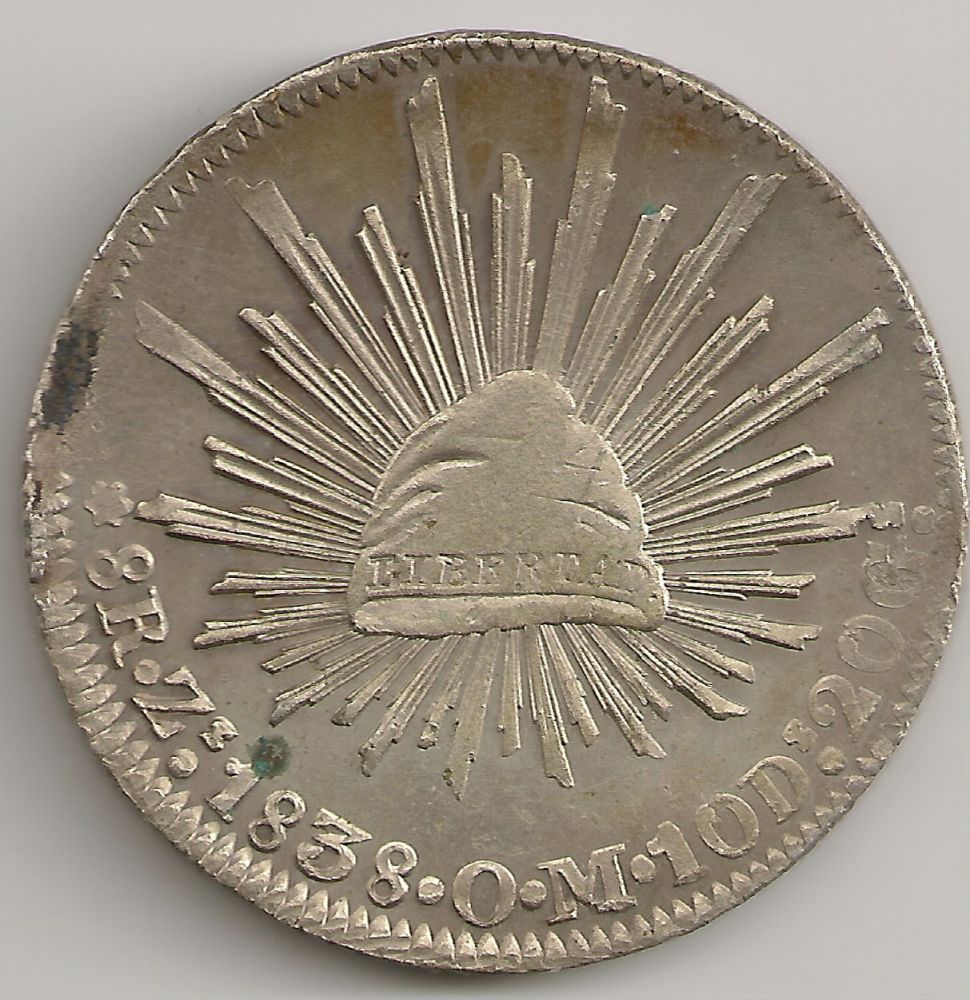 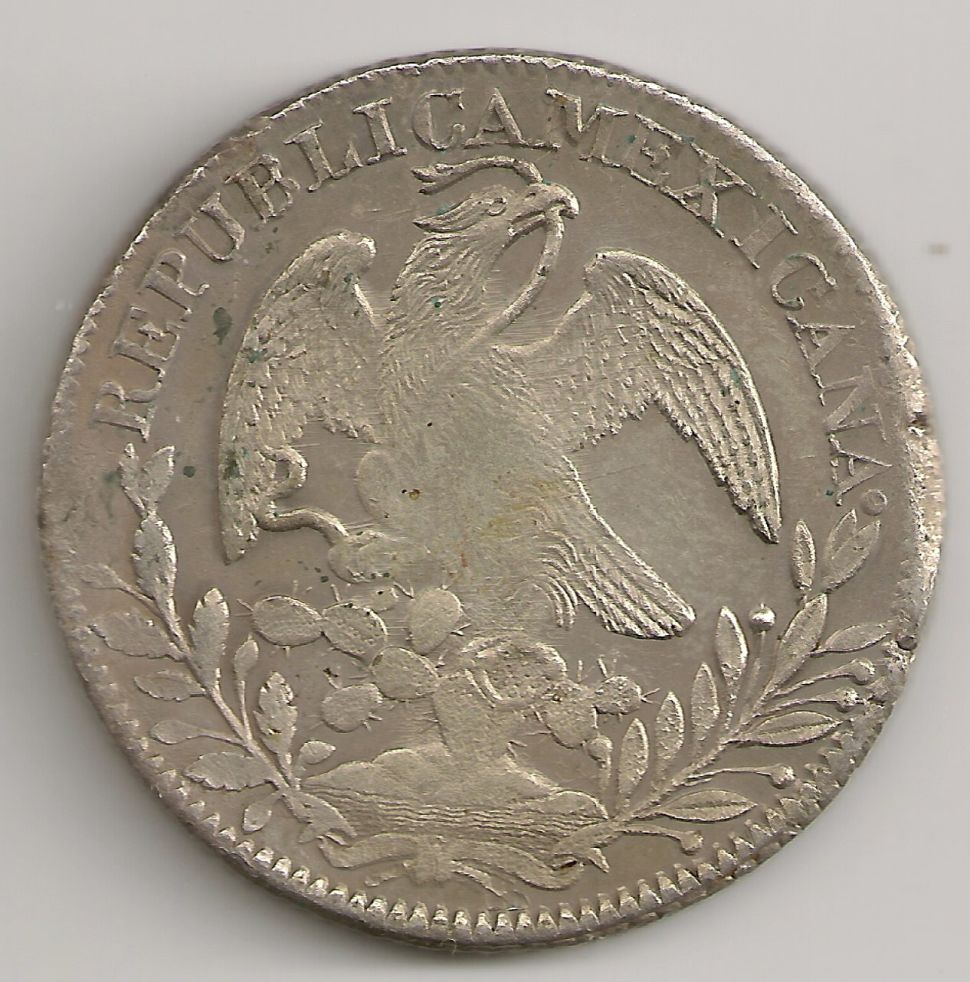 |
|
|
|
Pillar of the Community
United States
4883 Posts |
Actually a common issue. Boy, that "3" in the date is just enormous, isn't it? But it compares in that regard with this specimen: https://images.vcoins.com/product_i...mRxoK3qW.jpgPlus the weight's right. You might want to measure its specific gravity to possibly detect a contemporary counterfeit, which were rife during this period. Diameter's a bit on the small side, but that was variable in this early era. I'd like to see the edge. But there's nothing at this point that alarms me. Colligo ergo sum
Edited by Lucky Cuss
08/13/2016 3:13 pm
|
|
Pillar of the Community
United States
5362 Posts |
I agree - the 1838 Zs OM looks in all respects genuine and unless one of the standard checks fails, I would not suspect it based on appearance.
|
|
Pillar of the Community
 United States
2637 Posts |
Cool. Any thoughts on why it bears two acid test marks? At least that's what I was told they were at an LCS.
Edited by Arkie
08/14/2016 5:05 pm
|
|
Pillar of the Community
United States
5362 Posts |
Arkie It sounds like the dealer you bought it from was treating the coin like bullion (based on what you said about the price you paid) so he may have done the test to see if the coin really was silver. I would suggest he was not familiar with the type as they have been worth more than melt for some time now.
The acid test should NEVER be used directly on an intact coin in my opinion because of the damage it does. It is far better to run the coin on a stone and treat the silver streak with acid. That applies to both genuine and counterfeit types. There is never any NEED to damage the surfaces of a coin - you simply need to find a collector familiar with the type. It is extremely shortsighted. Many actual rarities have been damaged this way.
|
|
Pillar of the Community
United States
4883 Posts |
I was already wondering if that flat spot at about 3 o'clock on the eagle side wasn't the result of an older testing for silver content.
Colligo ergo sum
|
|
Pillar of the Community
United States
5362 Posts |
It could be. It could also be from a slightly bent planchet. Hard to tell in photos.
|
|
Pillar of the Community
United States
1962 Posts |
VERY much has the look of a piece from the Le Meridien Hotel hoard out of New Orleans in the early 1980s.
|
|
Pillar of the Community
United States
5362 Posts |
It is possible that it is a hoard coin, but most of them were encapsulated to prove it. I own a couple of those.
|
|
Pillar of the Community
Austria
566 Posts |
Looks perfectly authentic to me. Very nice quality for the price.
|
|
Pillar of the Community
United States
4883 Posts |
Here's another specimen I picked up just today, posting just to show once more that gigantic "3" in the date, which while odd, certainly seems to be the norm for this year's production at Zacatecas. 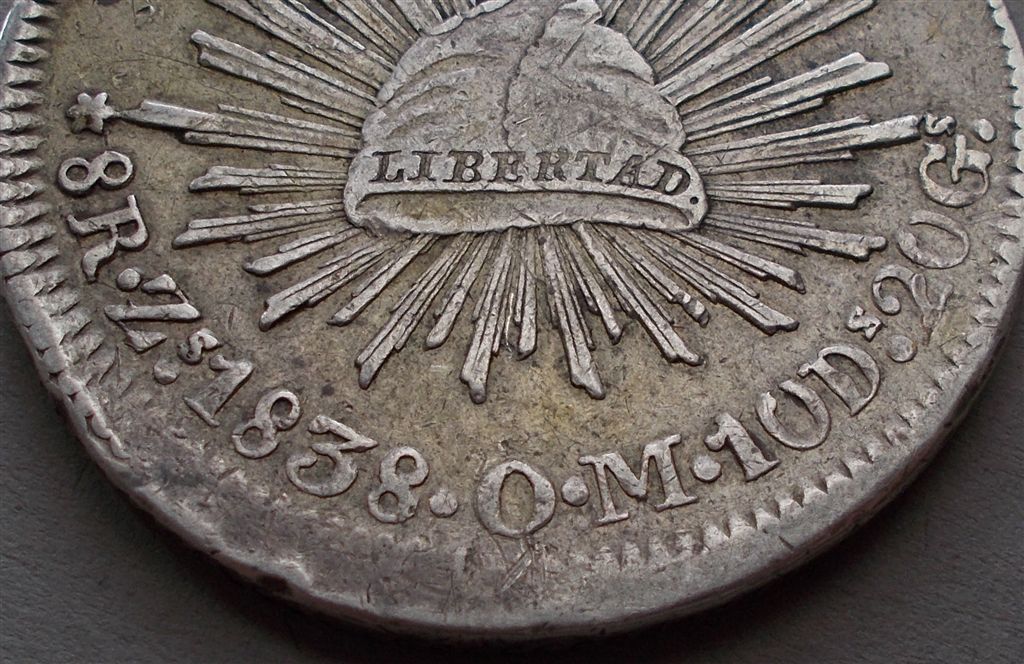 Colligo ergo sum
|
|
Pillar of the Community
United States
5362 Posts |
Lucky Cuss I agree with your assessment that the Zs 3 digit was larger in the late 1830's than in the early 1830's.
I notice on your coin part of what seems to be a clash on the cap. Can you show the rest of the reverse. Clashes that show on the reverse are much less common than the ones that appear on the obverse.
|
|
Pillar of the Community
United States
4883 Posts |
Quote:
I notice on your coin part of what seems to be a clash on the cap. At the risk of hijacking this thread, here's a closeup that shows the anaomalous features you mention in their entirety. I don't believe these are due to a die clash as they don't mirror any design element from the other side of the coin. The raised area at the upper left of the cap looks to be something akin to a Cud, but you can see that the border of this extends into the ray above the cap. The line arcing up through the center of the cap continues throgh two other rays. It's rather if the die was beginning to break apart with the area between the two fractures being raised up (resulting in a slightly depressed area on the coin). 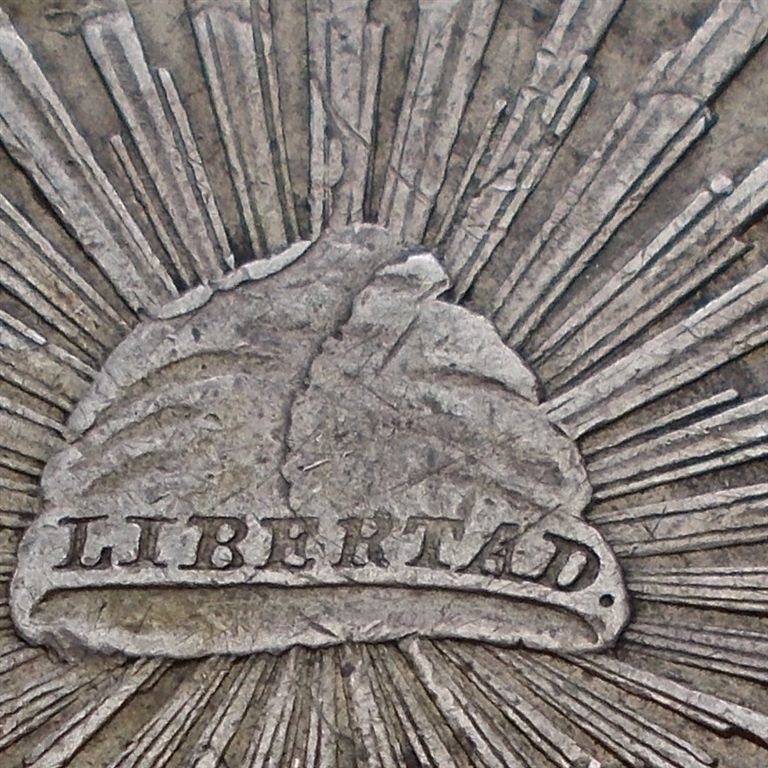 Quality control was sorely lacking in Mexican coinage of this period - besides these flaws in the die, I think it's telling on my particular specimen how substantially off center the strike is also. Colligo ergo sum
|
|
Pillar of the Community
United States
5362 Posts |
I wonder if the planchet delaminated slightly?
|
| |
Replies: 13 / Views: 1,516 |
|







 Posted 08/14/2016 4:07 pm





