| Author |
 Replies: 13 / Views: 3,071 Replies: 13 / Views: 3,071 |
|
|
Pillar of the Community
United States
666 Posts |
Referring to BadThad's very helpful THE FIRST STEPS OF CONSERVATION, employing the solvent POLARITY LADDER, here are some specific questions. All the quotes are from BadThad's post [ http://www.coincommunity.com/forum/57008#447106 ]. I decided to break this up into three posts as it was becoming rather long. This is Part III. Quote:
STEP 3: XYLENE: Xylene is what we call a non-polar solvent and it's completely safe on copper. It's important to use a non-polar solvent because it's the only thing that will dissolve some organic residue. If the surface debris is non-polar, chances are that xylene will be able to dissolve it. Remember "like dissolves like"! Do not over-soak in xylene or you may affect the patina, it can lighten a brown patina with enough time. * How long should one soak Lincoln cents in Xylene? Is one soak enough? * How many coins per ounce of xylene would you recommend? * Should one gently swirl the coins and xylene in the tightly sealed glass container, or would that potentially cause more problems than it's worth? * Which of the following xylene products would you purchase? (Or others?) Xylene, Solvent, 1 Quart Price: $9.61 + $9.13 shipping https://smile.amazon.com/Fiberglass...E/ref=sr_1_1Klean-Strip QXY24 Xylol Xylene, 1-Quart by Klean-Strip Price: $18.03 & FREE Shipping https://smile.amazon.com/gp/product...ef=pd_cp_0_1Xylene High Purity 1000ml (32oz) Amber Glass Bottle by Consolidated Chemical & Solvents LLC Price: $26.00 + $6.99 shipping https://smile.amazon.com/Xylene-Pur...pd_sbs_328_5Edited by dd27
08/25/2016 5:54 pm
|
|
|
|
Bedrock of the Community
United States
20753 Posts |
So far I've never purchased it, never used it on coins since I never purchased any of course. If you plan on using all sorts of chemicals on coins, you may want to think of all the coins you could buy with the same money. Just buy coins that are clean and you will not need chemicals, dishes or jars, a place that is safe from fires due to the combustibility of chemicals.
Remember that many chemicals used to clean a coin are combustible.
|
|
Bedrock of the Community
United States
19997 Posts |
Quote:
* How long should one soak Lincoln cents in Xylene? Is one soak enough?
* How many coins per ounce of xylene would you recommend?
* Should one gently swirl the coins and xylene in the tightly sealed glass container, or would that potentially cause more problems than it's worth?
* Which of the following xylene products would you purchase? (Or others?)
1) It depends on the coin and residue. Generally, I would not exceed 24 hours. 2) NEVER conserve more than one coin at a time. 3) No need to swirl unless you want, I just soak them. 4) Any, xylene is the same everywhere. I recommend your local hardware store. Lincoln Cent Lover!VERDI-CARE™ INVENTOR https://verdi.care/
|
|
Pillar of the Community
 United States
666 Posts |
Awesome! Thanks y'all. :O)
(More responses welcome...)
|
|
Pillar of the Community
United States
666 Posts |
What do you use as a container when soaking in xylene? I've tried canning jars since they are made of glass and are airtight. However, if any xylene gets on the seal (in the lid), the seal breaks apart and yucky residue pollutes the solution. Of course, I try to not let any xylene touch the lid, which works most of the time ... except for those times when I'm a klutz.  Is an airtight container necessary for a xylene soak? Or would a lid that is not necessarily airtight do the trick? Thanks! Mark Edited by dd27
09/07/2016 02:37 am
|
|
Pillar of the Community
United States
666 Posts |
What would you recommend as 'good enough' protective gear when working with xylene? I've been wearing safety goggles and disposable nitrile gloves. If I'm working with acetone at or near the same time, I put neoprene long cuff gloves over the nitrile gloves. From what I read online, Viton® gloves provide the best protection when working with xylene, but they ain't cheap: $65-$75 per pair. Some references: Kandyala, R., Raghavendra, S. P. C., & Rajasekharan, S. T. (2010). Xylene: An overview of its health hazards and preventive measures. Journal of Oral and Maxillofacial Pathology, 14(1), 1-5. http://doi.org/10.4103/0973-029X.64299Showa® Best® Viton® II Gloves - AllSafetyProducts.com http://www.allsafetyproducts.com/sh...-gloves.htmlChemical Resistance of Gloves - Quick guide - The experimental Atomic Molecular and Optical Science group, Chemcial Sciences Division, Lawrence Berkeley National Laboratory, University of California Berkeley/U.S. Department of Energy. http://amo-csd.lbl.gov/downloads/Ch...20Gloves.pdfGlove Selection Guideline - Advanced Photon Source, University of Chicago, Argonne National Laboratory/Office of Science, U.S. Department of Energy. http://www.aps.anl.gov/Safety_and_T...lection.html |
|
Pillar of the Community
United States
6406 Posts |
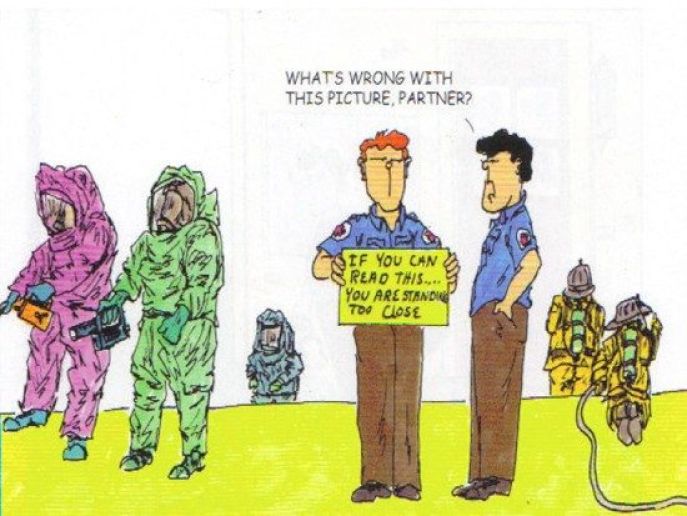
I haven't used xylene on coins but from a safety standpoint I'd consider it to be similar to gasoline: volatile and flammable, but otherwise not too bad. If you can, say, put gas in a lawnmower without needing to call in a hazmat team I think you can handle small amounts of xylene without special protective gear.
|
|
Pillar of the Community
United States
666 Posts |
|
|
Pillar of the Community
United States
3546 Posts |
Quote:
...many chemicals used to clean a coin are combustible. ...not to mention the toxicity which personally would be an equivalent concern of mine. warning verbiage found on the side of a 'Klean Strip' xylene brand tin container: '...reports have associated repeated and prolonged overexposure to solvents with neurological and other psychological damage.' When working on those pesky large cents I make it a rule to always have a small fan blowing sideways at my eye level to disperse any potential accumulation of toxic vapors. This setup works satisfactorily for medium to large size areas but is ineffective for smaller enclosures since doing so would essentially be recirculating the same exposed volume of air etc. In general, I can provide no minimum acceptable room area dimensions since it would depend upon factors such as the time in use and concentration/type of the solvent in question. Be conservative if in doubt and simply transport the operation outside on the driveway working over a piece of cardboard that one can properly dispose of after complete evaporation ensues etc... fyi mdp |
|
Pillar of the Community
United States
666 Posts |
Thank you mdp!Yes, I make sure that I have very good ventilation when working with acetone or xylene. The article from the medical journal was interesting - the authors noted that while most industries had developed safety protocols for working with xylene, most medical labs had not. It's a good, "Ok, let's practice what we preach" article with a succinct summary of potential health problems associated with prolonged exposure to xylene, along with recommended safety practices. Quote:Xylene is an aromatic hydrocarbon known for its wide usage in tissue processing, staining and cover slipping in the histology laboratory. The hazards of xylene are well documented, making it a potential occupational hazard for the histopathological technicians. As every other profession became cautious of the occupational hazards, the very speciality that identifies the illnesses became one of the last to become aware and remedy its own hazards. This review article aims to discuss the toxicity of xylene and safety measures to counteract the hazards and enlists the pros and cons of using various substitutes that claim to be much safer, better and faster. Kandyala, R., Raghavendra, S. P. C., & Rajasekharan, S. T. (2010). Xylene: An overview of its health hazards and preventive measures. Journal of Oral and Maxillofacial Pathology, 14(1), 1-5. http://doi.org/10.4103/0973-029X.64299 |
|
Bedrock of the Community
United States
19997 Posts |
Quote:
However, if any xylene gets on the seal (in the lid), the seal breaks apart and yucky residue pollutes the solution. Remove the lid liner. You don't need a complete seal for acetone nor xylene. You just need to stop the majority of the evaporation. Lincoln Cent Lover!VERDI-CARE™ INVENTOR https://verdi.care/
|
|
Bedrock of the Community
United States
19997 Posts |
Quote:
summary of potential health problems associated with prolonged exposure to xylene The keyword here is "prolonged". Brief, occasional exposure is harmless. As a chemist of 26+ years, I have no fear of neither acetone nor xylene. I don't wear gloves and take no special ventilation precautions since I'm typically working with small quantities and I avoid skin exposure. |
|
Pillar of the Community
United States
666 Posts |
Quote:
Remove the lid liner. You don't need a complete seal for acetone nor xylene. You just need to stop the majority of the evaporation. Excellent - that's just what I did yesterday. Always nice to receive confirmation from an expert.  |
|
Pillar of the Community
United States
666 Posts |
Quote:
The keyword here is "prolonged". Brief, occasional exposure is harmless. As a chemist of 26+ years, I have no fear of neither acetone nor xylene. I don't wear gloves and take no special ventilation precautions since I'm typically working with small quantities and I avoid skin exposure. Great to know. Thank you BadThad! I have some skin problems as it is, so I'll keep wearing the gloves, just to be on the safe side. And my dad was an ophthalmologist, so I must wear eye protection or his trickster spirit will get me. ;-) Edited by dd27
09/08/2016 8:17 pm
|
| |
Replies: 13 / Views: 3,071 |
|










 Posted 08/26/2016 12:59 pm