| Author |
 Replies: 13 / Views: 5,194 Replies: 13 / Views: 5,194 |
|
|
Valued Member
Uruguay
217 Posts |
|
|
|
|
Pillar of the Community
United States
1215 Posts |
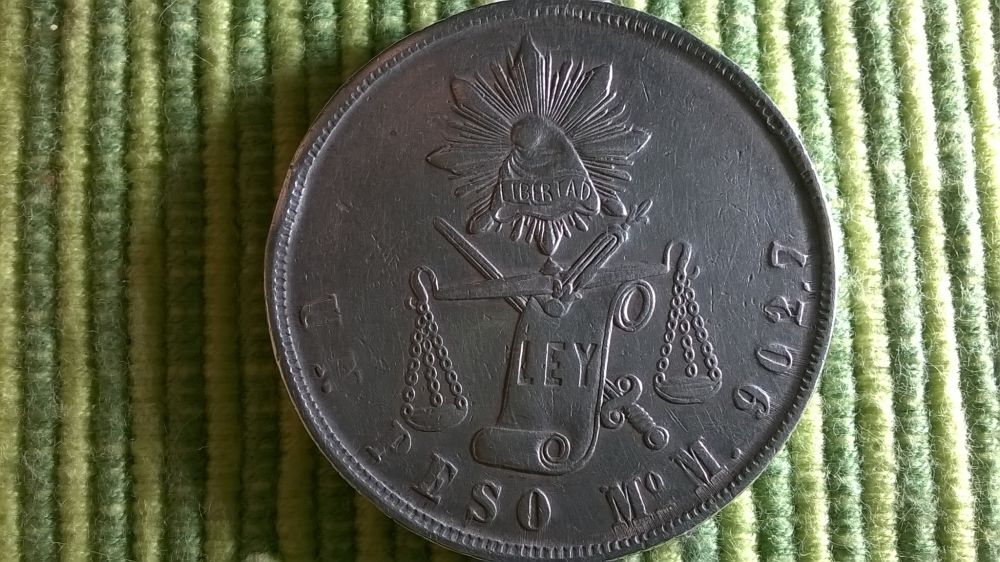
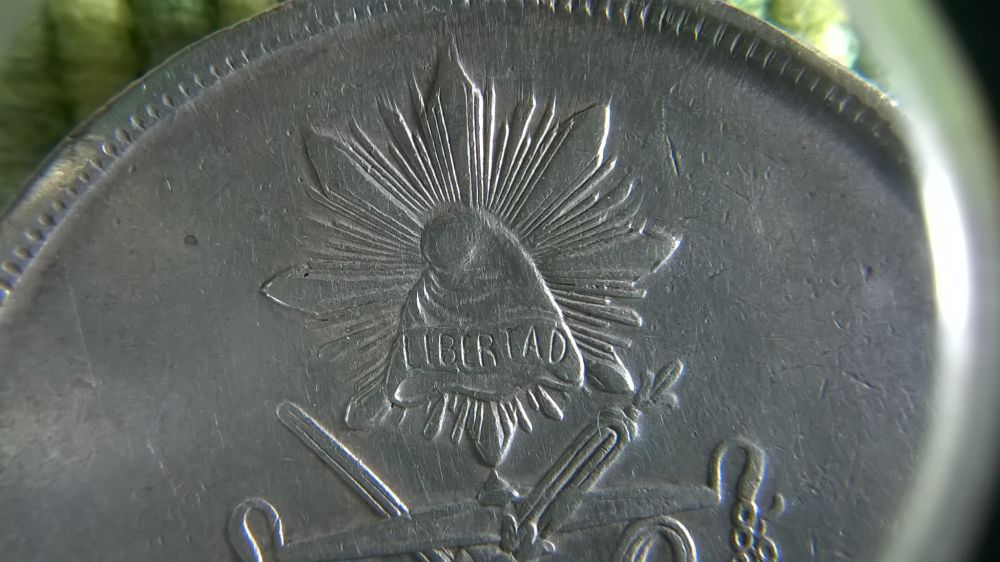
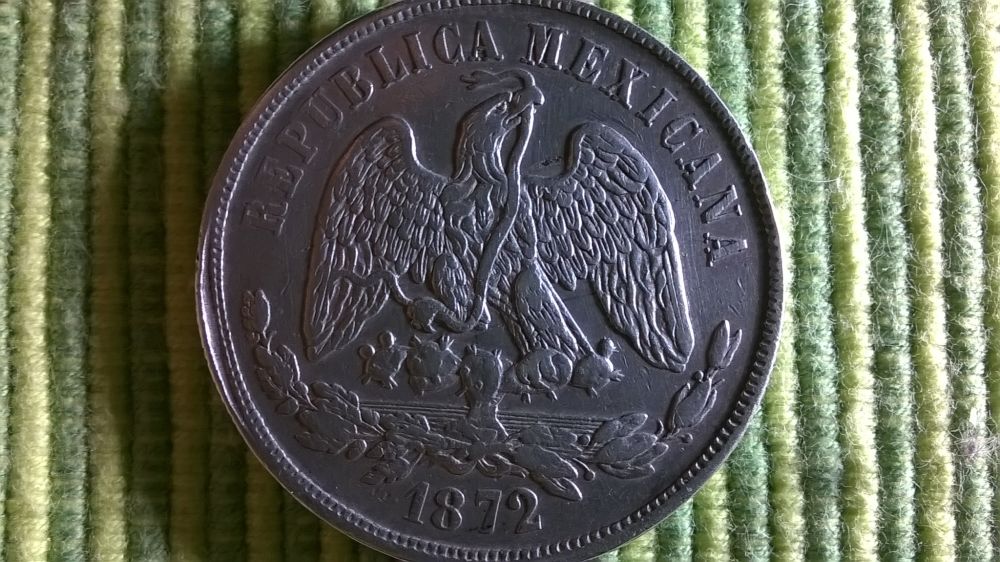
I think Swamperbob will chime in, but in my opinion, this is absolutely a counterfeit, and likely a modern one to fool collectors. The "Libertad" text font just looks wrong, and the reverse rim is off.
|
|
New Member
United States
47 Posts |
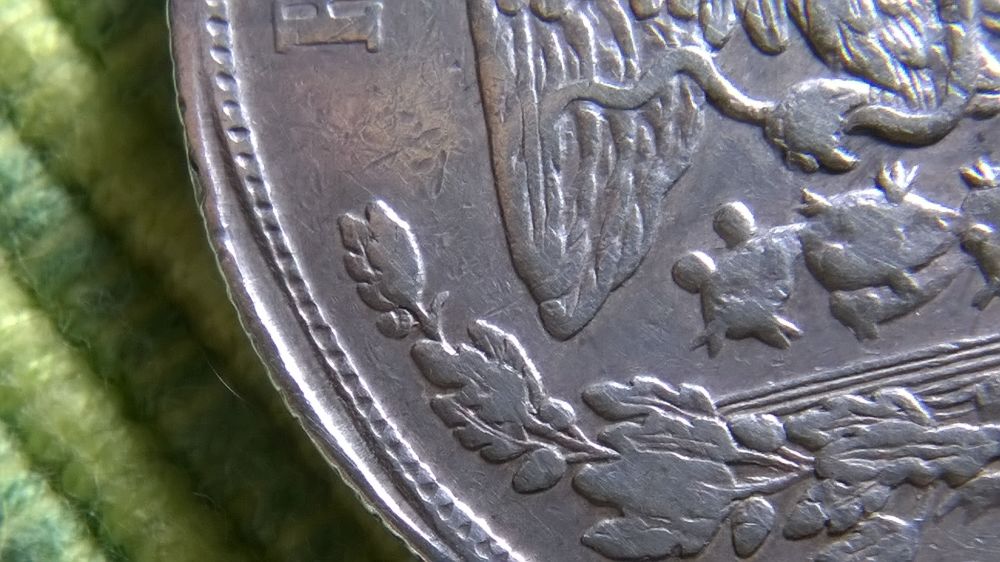
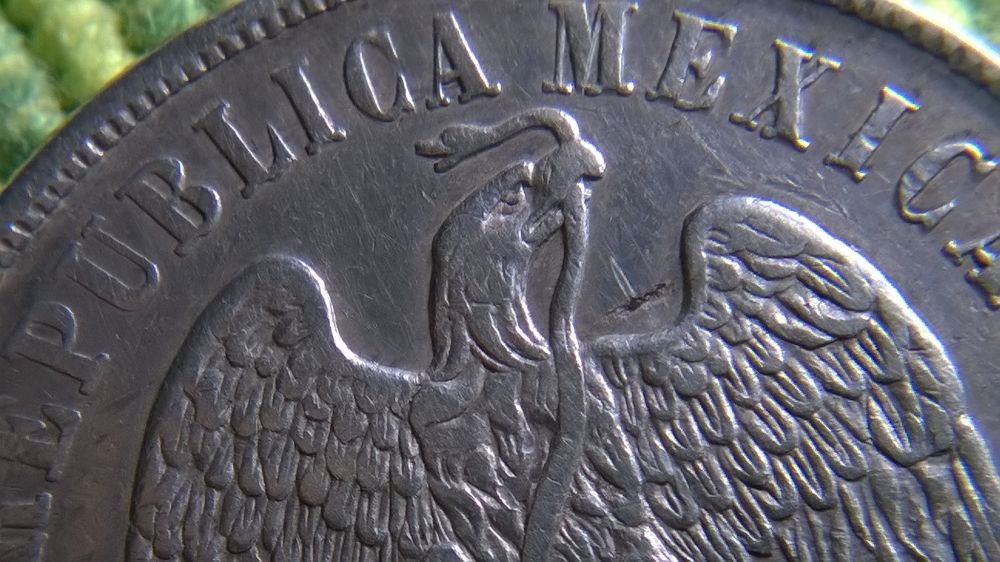
To me the strangest thing is between 8 and 9 o'clock on the eagle side, where the denticles seem to stray away from the rim. If that can be explained as an off-center strike, then I don't see anything else that screams counterfeit to me. But I'm anxious to see what others think.
|
|
Pillar of the Community
United States
1674 Posts |
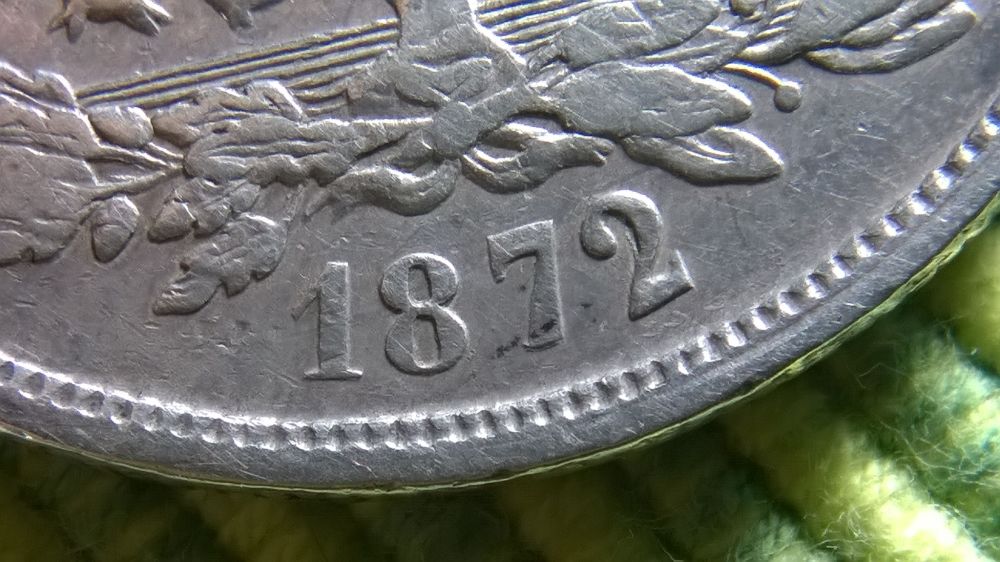
First impression - struck from a well worn die, harshly cleaned with an abrasive like toothpaste or silver polish and banged up a bit around the edges. As for the dentils splitting from the rim, I've seen that on these coins before. It's a bit more extreme on this coin, but that may be the die wear.
|
|
Valued Member
 Uruguay
217 Posts |
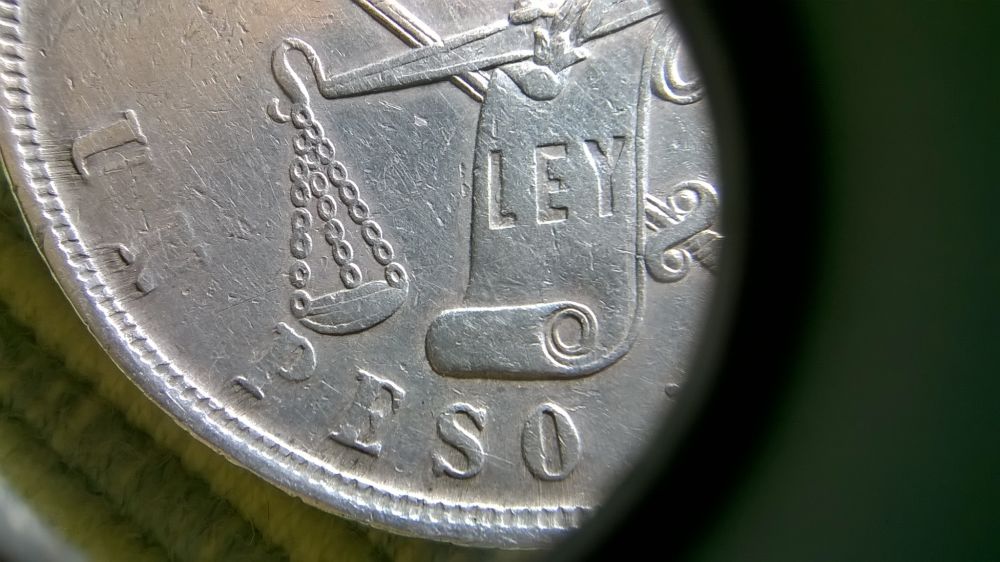
Could the obverse off-center explain the lines and poor struck on reverse legends? Is this a bifurcation example? It is more pronunciated near the dentils splitting from the rim.
|
|
Pillar of the Community
United States
1761 Posts |
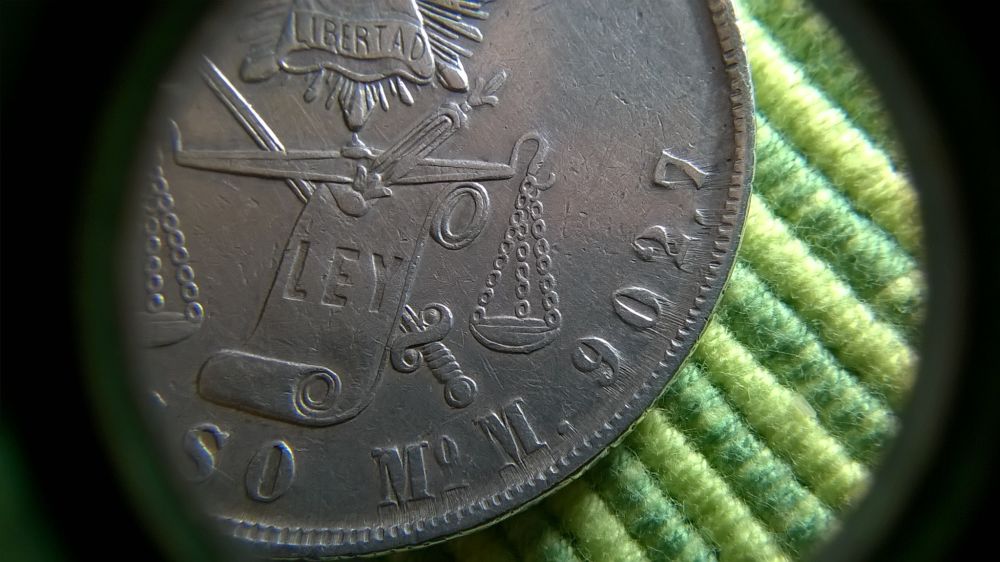
If you look at UN PESO at the top of the letters they are dis-formed due to this so-called bifurcation effect as cara has alluded to in the previous post. Hard to imagine a cast die transfer process bringing this over with such detail? Unfortunately I do not know enough of this coin to determine if its a fake. Error Collector experts like to call these errors particularly in modern coins as severe flow lines created from severely worn dies. As the die ages, the cold metal flow from striking planchets will groove the die face in a radial pattern. I remember writing about this in a paper for U.S. Colonial coins in a ANS-COAC Conference on the Atlee Broken A Letter punch. Sometimes this bifurcation effect or outward radial flow lines effect the dies to a point as to create an incorrect assumption in that a new die variety exist due to letter or numeral dis-forming in the die or maybe in this case thinking this is a modern forgery or contemporary circulating counterfeit. http://www.error-ref.com/radial-flow-lines/John Lorenzo Numismatist United States |
|
Valued Member
Uruguay
217 Posts |
Interesting website, colonialjohn !!
Could misplacement of the silver planchet create this bifurcation effect?
|
|
Pillar of the Community
United States
4883 Posts |
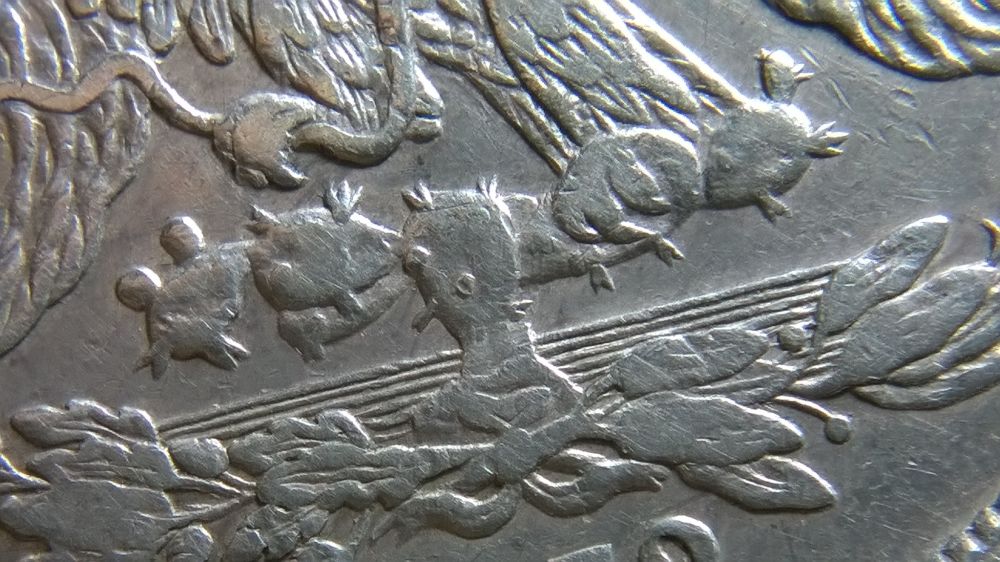
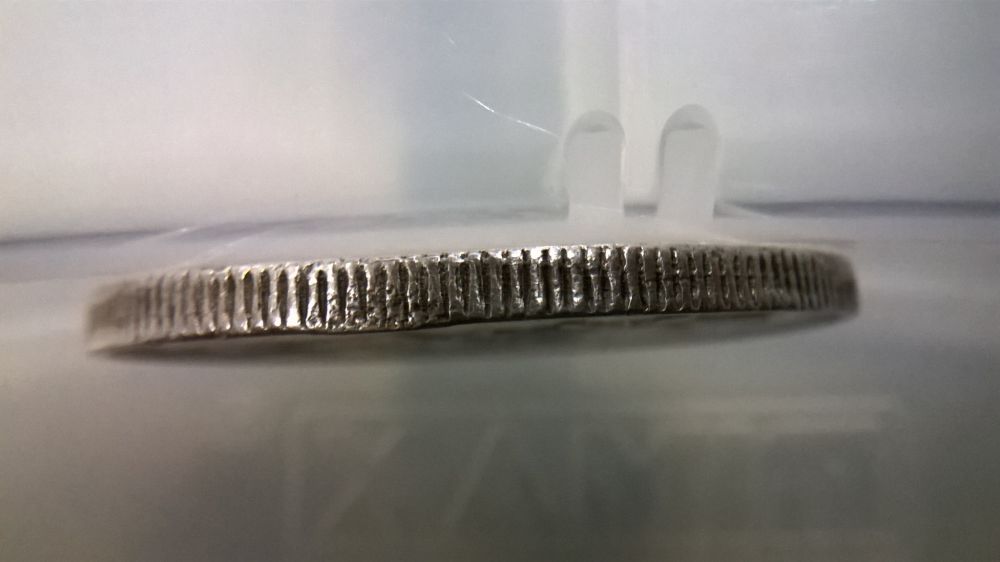
I don't know of any counterfeiting process that'd result in those very fine, minute flow lines out ner the rim. Also, an 1872 Mo is hardly worth the effort faking, at least in the proper composition as the weight and specific gravity indicate. The deformation of the edge could be the result of its having been hurled to the pavement to test its ring, once a common practice south of the border. The flan may have been a bit oversized and/or irregular. I've seen some weird things with this genre that certainly would make you wonder. That said, my impression is genuine but struck with a cap side die in a quite advanced state of wear.
Colligo ergo sum
|
|
Pillar of the Community
United States
5362 Posts |
With no doubt whatsoever it is a numismatic forgery - a torn mold. These are centrifugal castings in my opinion.
|
|
Pillar of the Community
United States
4883 Posts |
Quote:
With no doubt whatsoever it is a numismatic forgery - a torn mold. These are centrifugal castings in my opinion.
You're the expert in such matters. I'll admit that it'd probably have fooled me. I'd simply remark that it seems like the effort would've been better spent forging an issue worth more than just a few dollars over melt, as this would be in its apparent condition if genuine. Colligo ergo sum
|
|
Valued Member
Uruguay
217 Posts |
What I do not understand is why the counterfeiter allowed certain suspects details, like the rim off center, instead of hiding them.
The coin has many hits on edge, many doubts of people along time about his authenticity?
There is a deep scratch on the right side of the neck eagle. Could somebody have made it for a silver test?
|
|
New Member
United States
47 Posts |
I'd like to learn something from this thread but I confess I am not sure what specific details give away the casting. I'm also not familiar with the term bifurcation effect?
|
|
Pillar of the Community
United States
1761 Posts |
If you look at the Mintmark Mo), assayer(M) and 902.7 you will see radial lines coming off the top of these letters. As the dies wear down this effect worsens and does lead to a defacement of the lettering and numeral motifs. It was introduced IMO by Jim Spilman in the Colonial Newsletter around two decades ago originally used as a geologic term. I talked about in this publication: https://nnp.wustl.edu/library/book/512501ANS COAC Publication - Atlee broken A letter punch which refutes Walter Breen's mechanism of classifying certain Colonial Coppers to certain mints by using shared letter punches as a fingerprinting attribution tool. In terms of it being a cast I do not know enough of this type to give an opinion if its cast, struck or a modern forgery. I always prefer the coin in hand and then to a laboratory. But sometimes this is not possible as the owner of this coin is in Uruguay. If cast its of a modern casting process - that is for sure. John Lorenzo Numismatist United States Edited by colonialjohn
10/09/2016 10:57 pm
|
|
New Member
United States
47 Posts |
|
| |
Replies: 13 / Views: 5,194 |
|












 Posted 09/06/2016 10:03 pm


