| Author |
 Replies: 18 / Views: 19,472 Replies: 18 / Views: 19,472 |
|
New Member
United States
12 Posts |
Would appreciate help from the community figuring out if this coin is real or a fake. It's dated 1852 and says California Gold on the back. If it's real, I'm guessing it's a California gold token that was minted sometime after 1880 and backdated. But I can't find a picture anywhere that matches this coin (can't find pictures confirming it's real or fake). Thank you for the help!  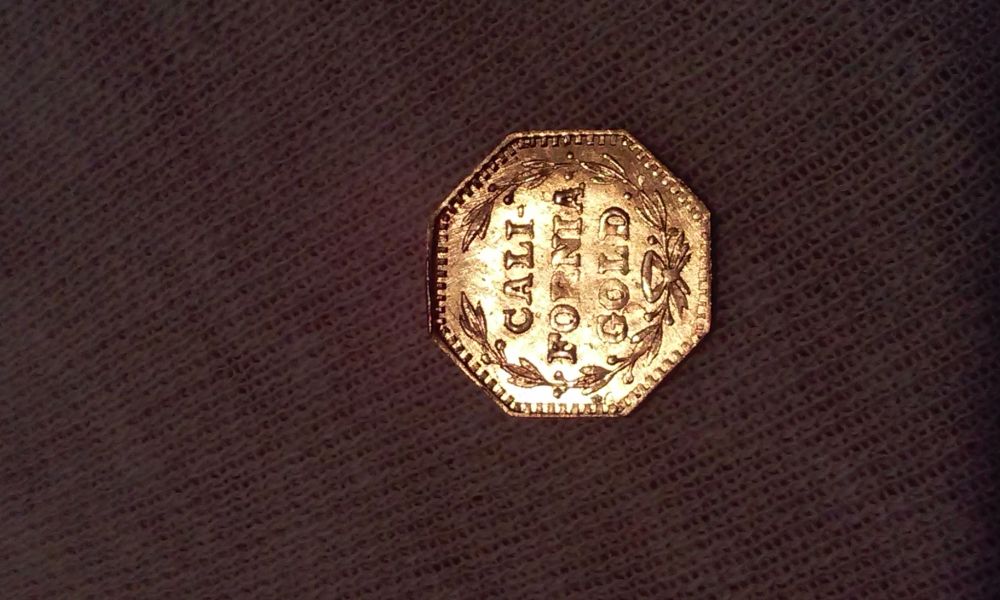 *** Moved by Staff to a more appropriate forum. *** *** Moved by Staff to a more appropriate forum. *** |
|
|
|
Moderator
 United States
16694 Posts |
Welcome to the CCF Learning About Coins :-)
I moved your post to US Classic as this is a potential California Pioneer issue.
Is that 1852?
If so, almost assuredly a token.
swcoin.ecrater.com
|
|
Pillar of the Community
 United States
4616 Posts |
-----Burton 50+ year / Life / Emeritus ANA member (joined 12/1/1973) Life member: Numismatics International, CONECA Member: TNA, FtWCC, NETCC, EveryCountry (online) coin club Owned by three cats and a wife of 40+ years (joined 1983) Author: 3rd Edition of the Sample Slabs book, https://www.sampleslabs.info/ |
|
Pillar of the Community
United States
968 Posts |
|
|
Pillar of the Community
United States
4932 Posts |
These were very commonly faked in the 1960's, and not marked (Hobby Protection Act of 1977 was, well, in 1973, not in the 1960's) so it was legal to produce without clearly marking it.
Edited by CoinHuntingDrew
09/14/2016 1:00 pm
|
|
New Member
 United States
12 Posts |
I also think it's a token. I found it odd that I can't find a picture anywhere on the internet of this variety. How does one go about assigning value to a coin like this?
|
|
Pillar of the Community
United States
4431 Posts |
Welcome to the CCF, Learning About Coins.
Looks to me like your item is a novelty token. A jeweler can test it to see if it's gold, but it's likely not. All genuine Califonia gold pieces have denominations. The Redbooks have a few pages of info about California gold pieces, along with pics. Look under "California gold" in the index to locate the pages.
As an aside, I have seen these tokens sell to ignorant bidders for in excess of $200, apiece, at antique auctions. It bothered me that the auctioneer failed to warn bidders; this, as I had cautioned him before the auction commenced.
Edited by ExoGuy
09/14/2016 3:36 pm
|
|
Pillar of the Community
United States
3357 Posts |
There's no denomination so for sure it's a token. Beyond that the early coins were liberty heads. Look at PCGS coinfacts to try and figure our what it was copied from.
"Two minutes ago I would have sold my chances for a tired dime." Fred Astaire
|
|
Pillar of the Community
United States
968 Posts |
thq, some of the 1852 25c pieces are octagonal and have an Indian on it.
Learning, It is probably a reasonably modern token, not something from the late 1800s as you suggested in your first post. My guess is that it is only worth its gold value (assuming it really is gold).
|
|
Bedrock of the Community
United States
94367 Posts |
Token for sure, age hard to tell. Many of the period ones were quite naïve-looking.
|
|
Bedrock of the Community
United States
12057 Posts |
It's a jewelry/souvenir token. The lack of a denomination dates it after the 19th c. with a high degree of probability, but not 100%.
Even by the 1870's the amount of "gold" in the denominated fractional California gold was debased, sometimes to a quarter or much less of the actual claimed value in gold: i.e. a token from the 1870s denominated at 50 cents might have had anywhere from 5 cents to 45 cents or who knows how much actual gold content. The more recent you go, the less actual gold content was likely to be present. By the turn of the century, they were being backdated to the 1850's, stripped of almost all or all of their actual gold content, and sold as souvenirs or jewelry pieces; at that point almost all of them carried no denomination, such as this one.
People who study this area of collecting extensively can't even agree as to whether or not the original California fractional gold ever circulated at all, or if it only circulated for a few years in the early 1850's.
Member ANA - EAC - TNA - SSDC - CCT #890 "Most of the things worth doing in the world had been declared impossible before they were done." -- Louis D. Brandeis |
|
Bedrock of the Community
United States
94367 Posts |
|
|
New Member
United States
12 Posts |
Thanks for your thoughts, everyone!
|
|
Pillar of the Community
United States
3357 Posts |
Here's a typical token. 1852, a bear and an Indian head are typical markers. http://www.ebay.com/itm/1852-Indian...AOSw4shX2bsjCalifornia fractional coins were actually made in 1852. PCGS estimates 300 survivors for the Liberty Head BG-401 round half dollar, and 150 for the BG-407, making them fairly common among real fractionals. However there are no catalogued BG varieties for octagonal 1852 coins (quarters and dollars) made in the early period. The fractional dollars I have from the early period are all 20-30% underweight, weighing 1.1-1.3 grams versus 1.6-1.7 grams for a US mint gold dollar. Right from the start these are debased coins. Banks refused them, and makers like Nouizillet and Deriberpe were hounded by the police. They're gold but with a whiff of French fraud, which is what makes them interesting to me. Too bad they're so small. "Two minutes ago I would have sold my chances for a tired dime." Fred Astaire
Edited by thq
09/15/2016 10:42 am
|
|
New Member
United States
37 Posts |
|
|
Bedrock of the Community
United States
94367 Posts |
Eagles2019 - this thread is more than two years old. If you would like input on this subject, you might try starting a new thread with a more specific question.  to the CCF! |
| |
Replies: 18 / Views: 19,472 |









 Posted 09/13/2016 10:02 pm


