











 Posted 11/23/2016 7:36 pm


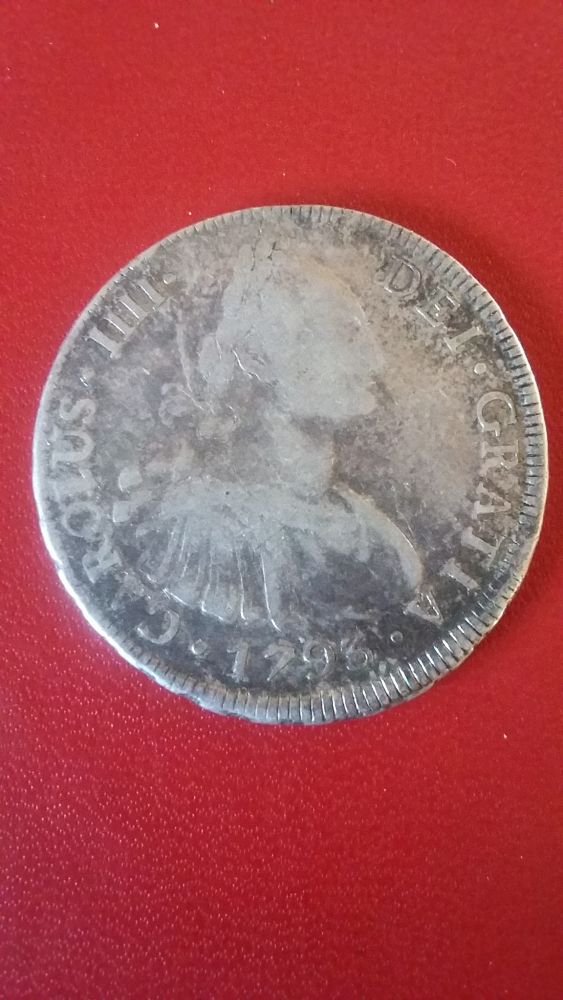
Kenneth Hodges First of all this coin is NOT an example of what I refer to as having the dentils end before the edge. These are complete dentils. They are not truncated (cut short) along an arc before they meet the edge of the coin.
To explain; the dentils were cut into the die face in a circle with a rough inside diameter of 36 mm. The dentils were about 2.5 to 3 mm in length. That makes the outside diameter 41-42 mm. The coin varied in diameter from about 37 to 40 mm. These are typical not precise measurements because they did vary slightly by mint and varied by time frame as well. The key fact to notice is that the diameter of the coin was BETWEEN the inside and outside of the dentil circle.
Since the planchets were placed by hand onto the screw press the position could change. A dead center positioning produced dentils of the same length all around the coin. A very eccentric positioning could show the entire dentil length on a portion of the edge. The opposite edge shows little to no dentil at all. An undersized planchet could show NO dentils and a very oversized planchet could show the complete length of the dentils all the way around.
Here what I see are correct dentils for an eccentric positioning shifted to the SE (35 degrees east of south) when measured on the obverse. The diameter by inference should be slightly larger than the standard for a coin of Mexico City - perhaps 40mm.
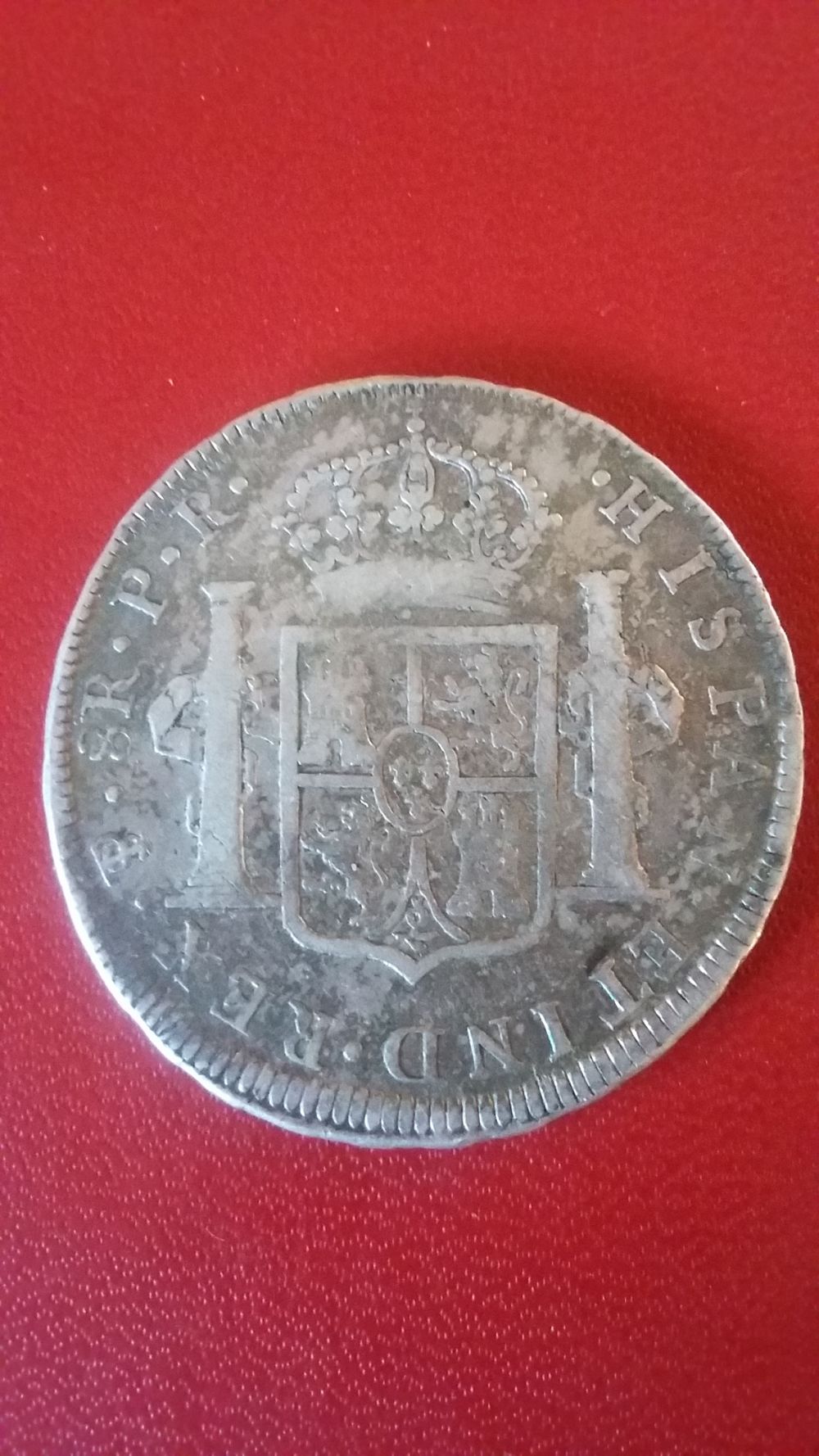
The mint here is Potosi in Bolivia which used a different Matrix block and more relaxed standards than Mexico City.
My second comment is for Lucky Cuss. The 9 in the date is incorrect for Mexico City of any date but NOT for Potosi where the 9 did vary in shape. It is my belief that certain features were altered intentionally to make forgery a bit more difficult. This would work with forgers who made coins from multiple mints in an effort to try to pass off their coins in an international market place.
In my book I suggested that as a starting point that you needed to develop a matrix block approximation for each different mint and watch for deviations over time. What I displayed on page 149 of my book was the Alpha numeric block I developed for Charles III coins from 1772 to 1791 for Mexico City. I referred to this as M-Block-1A. All of the punches seen on a typical matrix block need to be reviewed punch by punch to determine when the block was changed. Once the block is established variations will point directly to suspect coins.
Anticipating the obvious questions someone will have:
The answer is three fold. First no one has ever published a single entire block. Second I am not aware of a forger that has done so either, so I say let them do their own work.
Thirdly I view my own work as proprietary. It took some years of research to finalize and it was none too easy. The advent of the internet has made it easier than when I began but I still have not completed the project for the minor mints or dates prior to 1772.
I hope everyone can understand that.
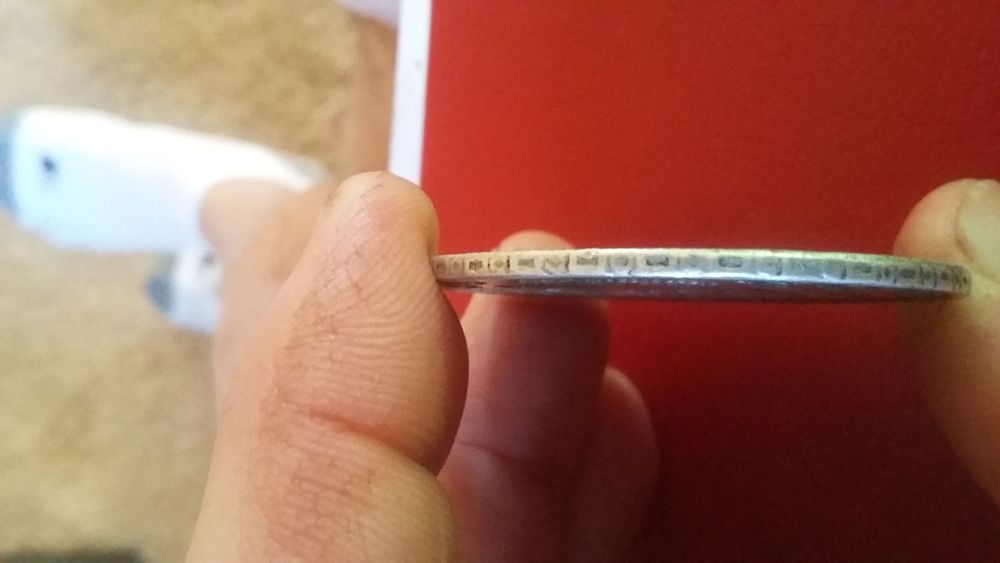
I can not say without knowing the weight and seeing the edge in detail. I have no serious concerns at this point, but that might change as the facts come in.
One good thing is that there are extremely few verified silver forgeries minted at Potosi. The Chinese merchants did not trust that mint and dealt with coins from there at a steep discount. Therefore a counterfeit of the period should NOT contain the correct metal alloy. The coin may be high or low in weight but density would reveal those counterfeits. A modern Numismatic Forgery may be the correct alloy but it will be made incorrectly so look for errors in manufacture - casting - over cuts on die details (indicating punches were not used) - poor die face surfacing -artificial toning - and of course off metal alloys and incorrect weights and densities.
The process sounds a bit lengthy and complex but after a short while it comes naturally. I also remember most key point variations in the matrix so that I spot them initially in seconds. Proving my opinion then takes a bit longer.
Actually with so few full weight silver counterfeits - I usually do not bother looking for them any longer.
To explain; the dentils were cut into the die face in a circle with a rough inside diameter of 36 mm. The dentils were about 2.5 to 3 mm in length. That makes the outside diameter 41-42 mm. The coin varied in diameter from about 37 to 40 mm. These are typical not precise measurements because they did vary slightly by mint and varied by time frame as well. The key fact to notice is that the diameter of the coin was BETWEEN the inside and outside of the dentil circle.
Since the planchets were placed by hand onto the screw press the position could change. A dead center positioning produced dentils of the same length all around the coin. A very eccentric positioning could show the entire dentil length on a portion of the edge. The opposite edge shows little to no dentil at all. An undersized planchet could show NO dentils and a very oversized planchet could show the complete length of the dentils all the way around.
Here what I see are correct dentils for an eccentric positioning shifted to the SE (35 degrees east of south) when measured on the obverse. The diameter by inference should be slightly larger than the standard for a coin of Mexico City - perhaps 40mm.
The mint here is Potosi in Bolivia which used a different Matrix block and more relaxed standards than Mexico City.
My second comment is for Lucky Cuss. The 9 in the date is incorrect for Mexico City of any date but NOT for Potosi where the 9 did vary in shape. It is my belief that certain features were altered intentionally to make forgery a bit more difficult. This would work with forgers who made coins from multiple mints in an effort to try to pass off their coins in an international market place.
In my book I suggested that as a starting point that you needed to develop a matrix block approximation for each different mint and watch for deviations over time. What I displayed on page 149 of my book was the Alpha numeric block I developed for Charles III coins from 1772 to 1791 for Mexico City. I referred to this as M-Block-1A. All of the punches seen on a typical matrix block need to be reviewed punch by punch to determine when the block was changed. Once the block is established variations will point directly to suspect coins.
Anticipating the obvious questions someone will have:
Quote:
Why didn't the book show all the matrix block approximations?
Why didn't the book show all the matrix block approximations?
The answer is three fold. First no one has ever published a single entire block. Second I am not aware of a forger that has done so either, so I say let them do their own work.
Thirdly I view my own work as proprietary. It took some years of research to finalize and it was none too easy. The advent of the internet has made it easier than when I began but I still have not completed the project for the minor mints or dates prior to 1772.
I hope everyone can understand that.
Quote:
So is the coin genuine?
So is the coin genuine?
I can not say without knowing the weight and seeing the edge in detail. I have no serious concerns at this point, but that might change as the facts come in.
One good thing is that there are extremely few verified silver forgeries minted at Potosi. The Chinese merchants did not trust that mint and dealt with coins from there at a steep discount. Therefore a counterfeit of the period should NOT contain the correct metal alloy. The coin may be high or low in weight but density would reveal those counterfeits. A modern Numismatic Forgery may be the correct alloy but it will be made incorrectly so look for errors in manufacture - casting - over cuts on die details (indicating punches were not used) - poor die face surfacing -artificial toning - and of course off metal alloys and incorrect weights and densities.
The process sounds a bit lengthy and complex but after a short while it comes naturally. I also remember most key point variations in the matrix so that I spot them initially in seconds. Proving my opinion then takes a bit longer.
Actually with so few full weight silver counterfeits - I usually do not bother looking for them any longer.
Edited by swamperbob
11/23/2016 7:45 pm
11/23/2016 7:45 pm


