| Author |
 Replies: 8 / Views: 3,134 Replies: 8 / Views: 3,134 |
|
|
Valued Member
Netherlands
204 Posts |
Hi all, I recently acquired this coin at a auction house for around $450. I was wondering what you think of it. I'm also looking for opinions about what type this is (copper, bronze or pewter) Thanks in advance! 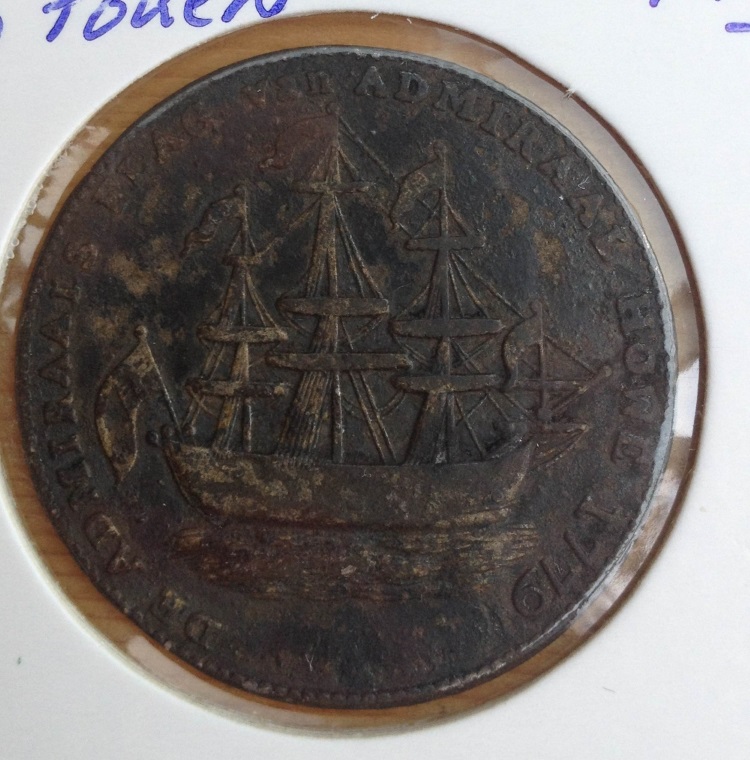 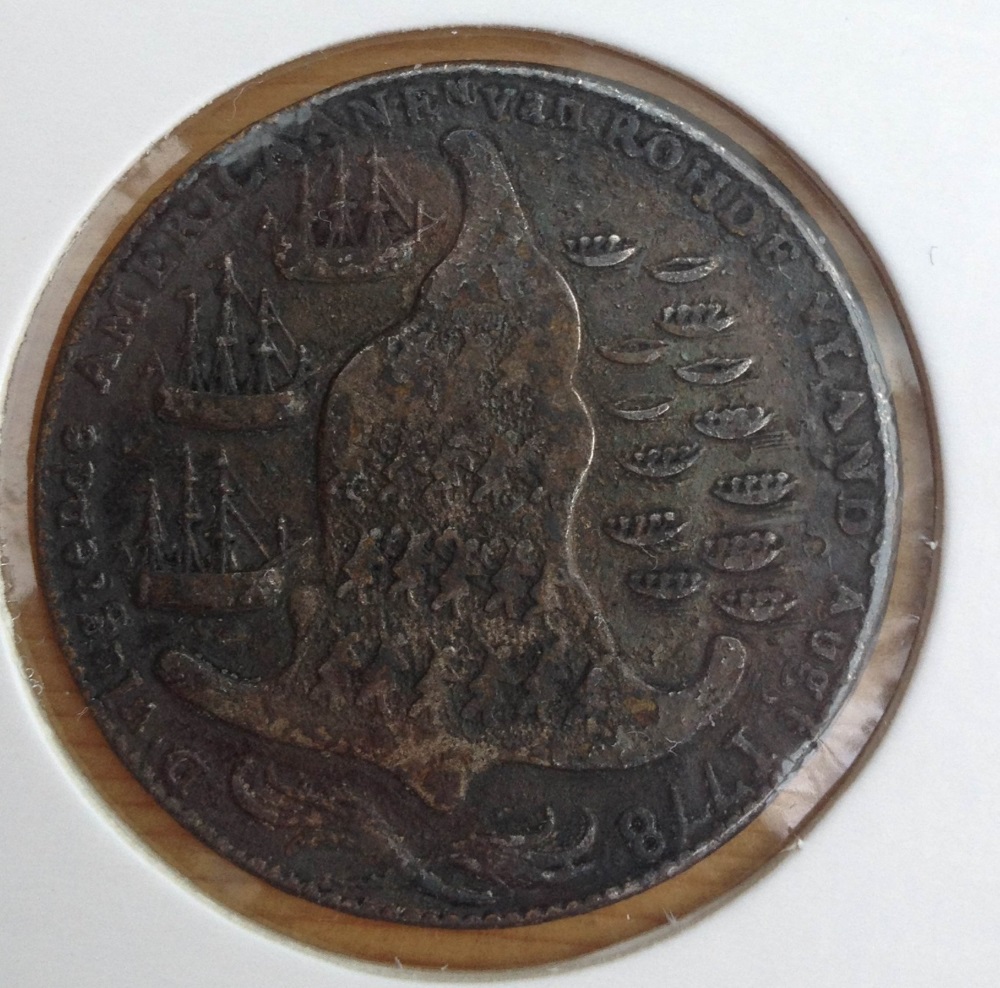 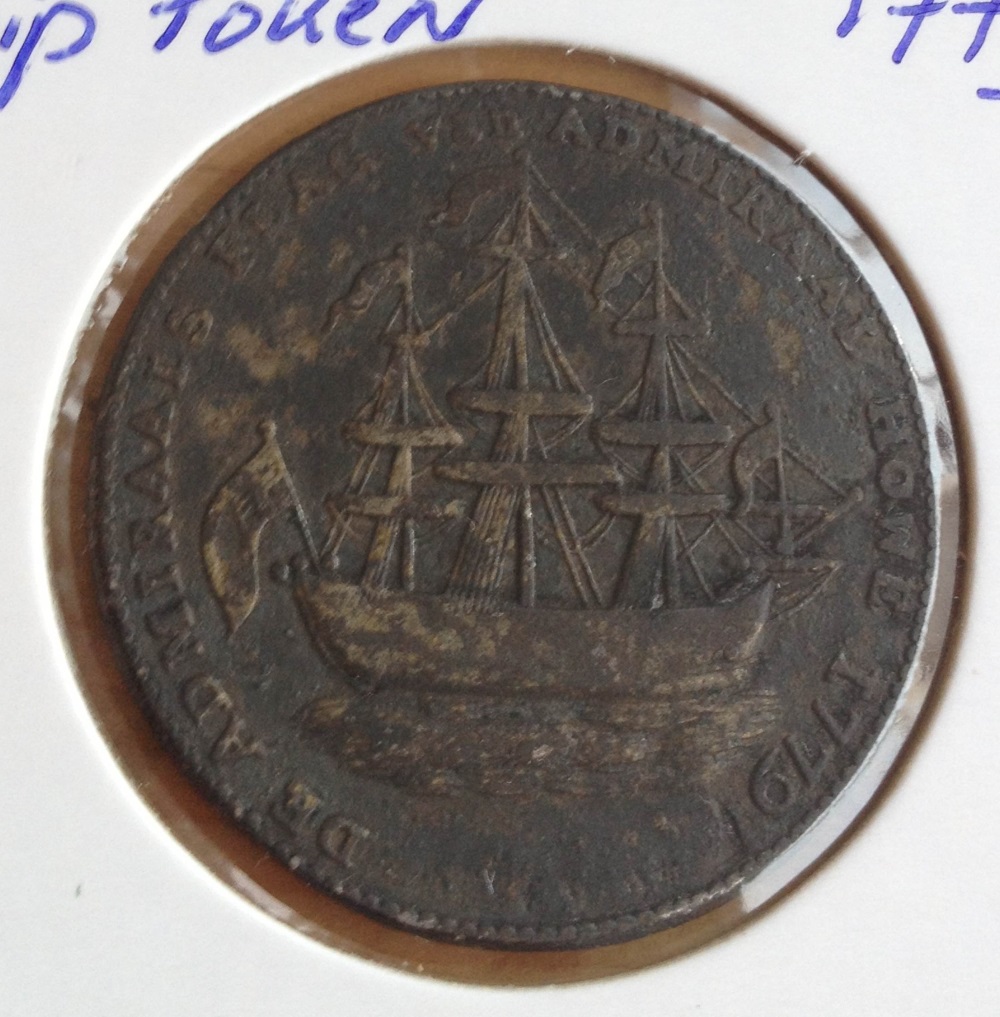 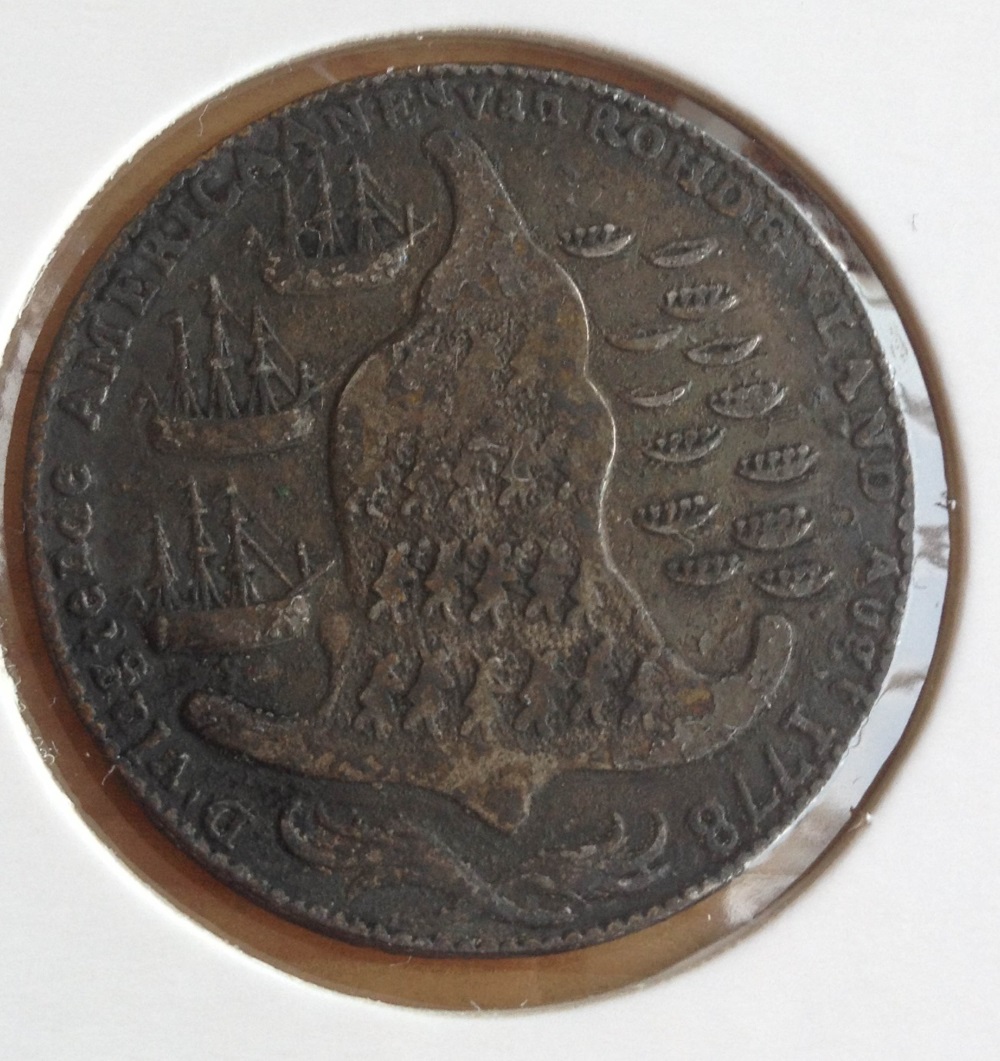 |
|
|
|
Pillar of the Community
Germany
1856 Posts |
It is definitely not pewter. It is probably copper as brass has a lighter tone. So you have a copper Rhode Island Token, without the wreath below the ship. From the pictures you can pick out a lot of detail, so that is quite nice. The surfaces appear to be somewhat rough, however? you can judge that better as you have it in-hand. It is believed the token was minted in the UK, destined for the Netherlands to influence dutch opinion against the american war. This seems to be corroborated by the fact examples turn up with some regularity there. This is my example of the type: it is a brass token. (for comparison, I paid about $400 for mine). 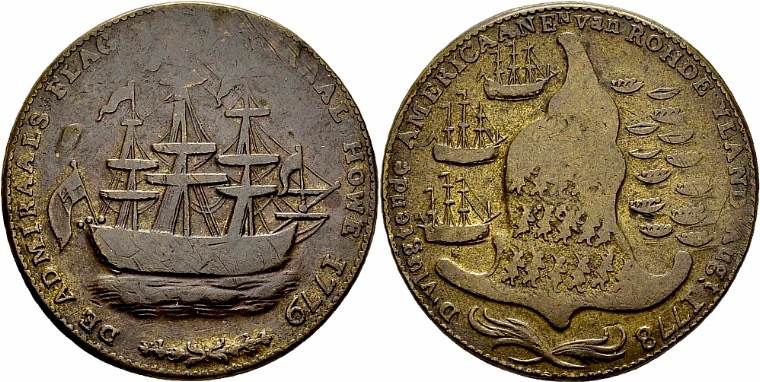 Edited by GERMANICVS
11/26/2016 06:26 am
|
|
Moderator
 United States
34564 Posts |
@canary01, great pick-up!  "If you climb a good tree, you get a push."
-----Ghanaian proverb
"The danger we all now face is distinguishing between what is authentic and what is performed."
-----King Adz
|
|
Rest in Peace
United States
17900 Posts |
That is seriously historic. Your mind can't help but wonder where this coin has traveled.
|
|
Bedrock of the Community
United States
37206 Posts |
|
|
Pillar of the Community
United States
5029 Posts |
Nice looking coin! And definitely would have a story or two if it could talk.
|
|
Bedrock of the Community
United States
11976 Posts |
The island depicted in the coin is Conanicut Island in Rhode Island. Coincidentally I own a home in Rhode Island and can look out of my balcony onto Narragansett Bay and see Conanicut Island from my house. I am at this house right now for the holidays. The map below shows where Conanicut Island is within Narragansett Bay. Narragansett refers to the Native American tribe that inhabited Southern Rhode Island before European colonization. 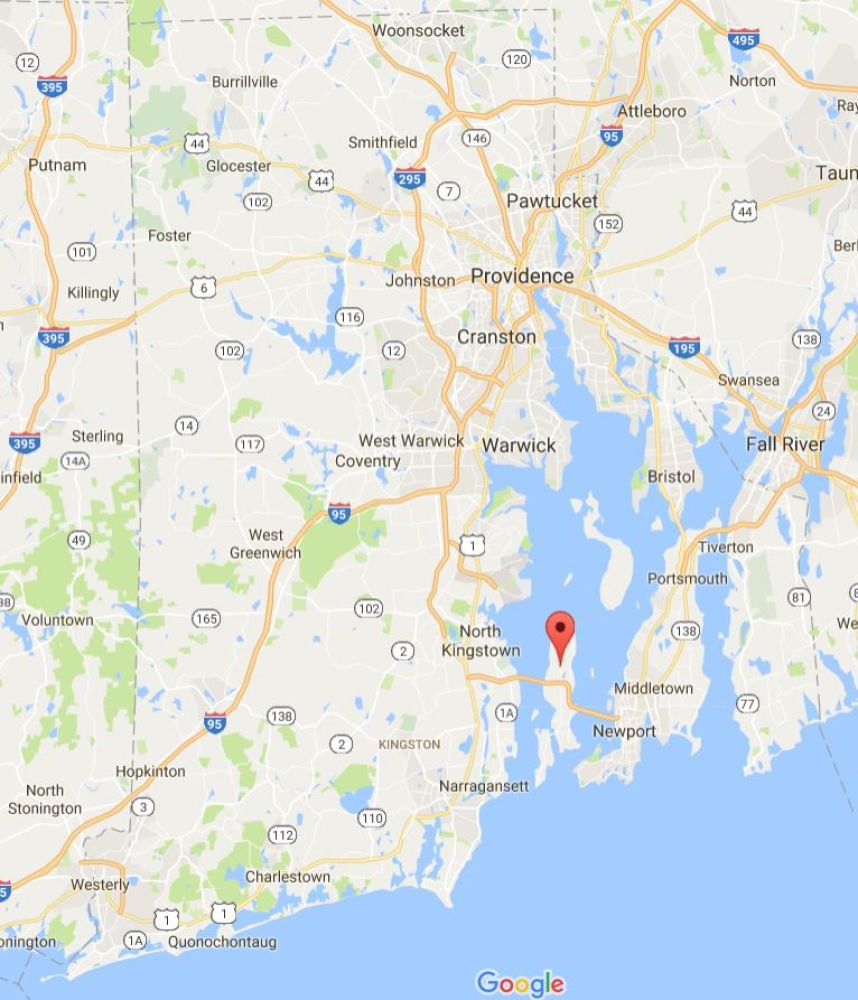 IN NECESSARIIS UNITAS - IN DUBIIS LIBERTAS - IN OMNIBUS CARITAS THE MAN IN THE ARENA, Theodore Roosevelt at the Sorbonne Paris on April 23, 1910: " It is not the critic who counts; not the man who points out how the strong man stumbles or where the doer of deeds could have done better. The credit belongs to the man who is actually in the arena, whose face is marred by dust and sweat and blood, who strives valiantly, who errs and comes up short again and again, because there is no effort without error or shortcoming, but who knows the great enthusiasms, the great devotions, who spends himself in a worthy cause; who, at the best, knows, in the end, the triumph of high achievement, and who, at the worst, if he fails, at least he fails while daring greatly, so that his place shall never be with those cold and timid souls who knew neither victory nor defeat." My coin website: https://fairfaxcoins.comEdited by numismatic student
12/27/2016 11:54 am
|
|
Pillar of the Community
United States
3516 Posts |
|
|
Bedrock of the Community
United States
11976 Posts |
The Rhode Island Visitor's Information Page has the following information about the Revolutionary War fighting depicted in the coin. Quote:
The War for Independence
The beginning of the Revolutionary War is marked by the events of April 19, 1775, when British Major John Pitcairn and six light Infantry companies, who had left Boston the previous day, on a mission to capture Sam Adams and John Hancock and seize supplies of munitions, were met with gunfire at Lexington Green, which left 8 colonists dead, and at Concord's North Bridge, where they were turned back. During their return march to Boston, firing continued along the 16 miles of roadway, resulting in 273 British and 95 colonial casualties by late afternoon.
In Narragansett Bay, the Rose, under the command of James Wallace, was making an impact. A number of merchant ships were seized. The angry merchant community of Newport petitioned the government in Providence for assistance, On June 15, 1775, June, the Rhode Island General Assembly ordered two ships to be purchased and fit out to defend the colony's shipping - the sloops Katy (later renamed Providence) and Washington.
The Katy was immediately put under the command of Captain Abraham Whipple and that day attacked a tender to the HMS Rose, made her run aground on Conanicut Island, and captured her.
In late July, 1775, Wallace's ships threatened to fire on Newport unless they received provisions. When their demands were satisfied, they left. Many residents also chose to leave Newport, believing they would be safer on the mainland.
On December 10, 1775, 200 British and Hessian troops landed at East Ferry on Conanicut Island and marched to West Ferry, where they burned the ferry house. As they returned to East Ferry, they destroyed many buildings, including fourteen homes; which caused more than 200 of Conanicut Island's 556 residents to flee to the mainland.
In December, 1776, a British fleet arrived in Narragansett Bay and, on December 7, occupied Newport.
The colonial militia batteries at Fort Dumpling (now part of Fort Wetherill) and the Conanicut Battery at Beaverneck (just south of Fort Getty) were taken over by the British. With the British in control of Narragansett Bay, the Continental fleet was prevented from leaving Providence.
An attempt was made to break the occupation of Newport in the spring of 1778, combining a land attack from the north with a sea attack by a French fleet. The fleet, however, ran into a severe storm and had to divert to Boston. Without sea support, the land forces had to withdraw.
The British did not leave Narragansett Bay until October 1779. As they departed, they destroyed the fortifications they had occupied, and burned Beavertail lighthouse as well. IN NECESSARIIS UNITAS - IN DUBIIS LIBERTAS - IN OMNIBUS CARITAS THE MAN IN THE ARENA, Theodore Roosevelt at the Sorbonne Paris on April 23, 1910: " It is not the critic who counts; not the man who points out how the strong man stumbles or where the doer of deeds could have done better. The credit belongs to the man who is actually in the arena, whose face is marred by dust and sweat and blood, who strives valiantly, who errs and comes up short again and again, because there is no effort without error or shortcoming, but who knows the great enthusiasms, the great devotions, who spends himself in a worthy cause; who, at the best, knows, in the end, the triumph of high achievement, and who, at the worst, if he fails, at least he fails while daring greatly, so that his place shall never be with those cold and timid souls who knew neither victory nor defeat." My coin website: https://fairfaxcoins.com |
| |
Replies: 8 / Views: 3,134 |
|
To participate in the forum you must log in or register.
Disclaimer: While a tremendous amount of effort goes into ensuring the accuracy of the information contained in this site, Coin Community assumes no liability for errors. Copyright 2005 - 2026 Coin Community Family- all rights reserved worldwide. Use of any images or content on this website without prior written permission of Coin Community or the original lender is strictly prohibited.
Contact Us | Advertise Here | Privacy Policy / Terms of Use
|
| Coin Community Forum |
© 2005 - 2026 Coin Community Forums |
| It took 0.36 seconds to rattle this change. |
 |
|










 Posted 11/26/2016 06:57 am


