| Author |
 Replies: 41 / Views: 6,439 Replies: 41 / Views: 6,439 |
|
Pillar of the Community
United States
6130 Posts |
Fun and hopefully educational thread! One of the coolest things about old dated coins is that they make history more tangible; we can articulate precisely when a lump of metal became a coin, and what else was happening in the world at the time. Let's step it up a notch--post your coins that were definitively made in a time span of *less* than 12 months. If it is not stated on the coin explicitly, give us the history lesson! I'll start with one of my favorites: Roman Empire Emperor Galba Bronze drachm of Alexandria, Egypt Minted between January 1 and 15, 69 AD   The obverse of this coin features the bust of Galba with his titles and name in Greek, and the reverse features the bust of the goddess Isis, with Greek regnal year LB, or Year 2. Year 2 began on 1/1/69, the same day that the provinces began rebelling against this cruel emperor who taxed heavily and put many people to death. The rebellion reached his doorstep two weeks later on January 15, where he met the disgruntled soldiers and was summarily executed in favor of Otho. Galba's death sparked a civil war in which four men would become Roman Emperor by December 31. Curious to see what our members can come up with!  *** Moved by Staff to a more appropriate forum. *** *** Moved by Staff to a more appropriate forum. *** |
|
|
|
Moderator
 United States
198004 Posts |
This should be a very good thread. |
|
Moderator
United States
23731 Posts |
OK I'll give it a shot. AR Denarius Hadrian IMP CAESAR TRAIANO HADRIANVS AVG PM TR P COS III. The honors indicate the coin was struck in 119 AD. RIC II 100 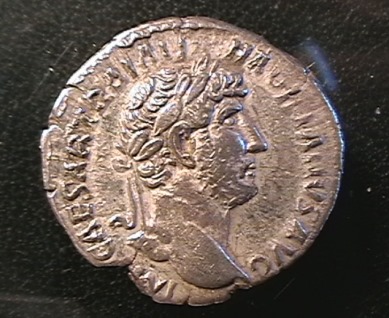 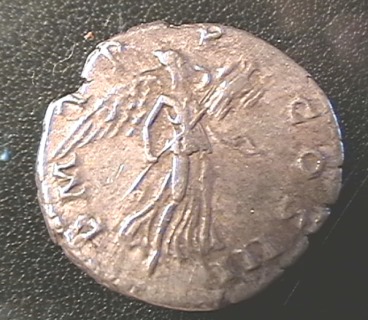 |
|
Pillar of the Community
 United States
6130 Posts |
Thanks for the move jbuck, but I actually intended this one for the main forum, figuring we would get a lot of moderns. My next coins were going to be a 1982 zinc cent and a 1942 nickel.
|
|
Pillar of the Community
Canada
1269 Posts |
This is a rare first issue denarius of Domitian as Augustus. The triangular frame on the reverse means it can be dated to between mid September and late October of AD 81. 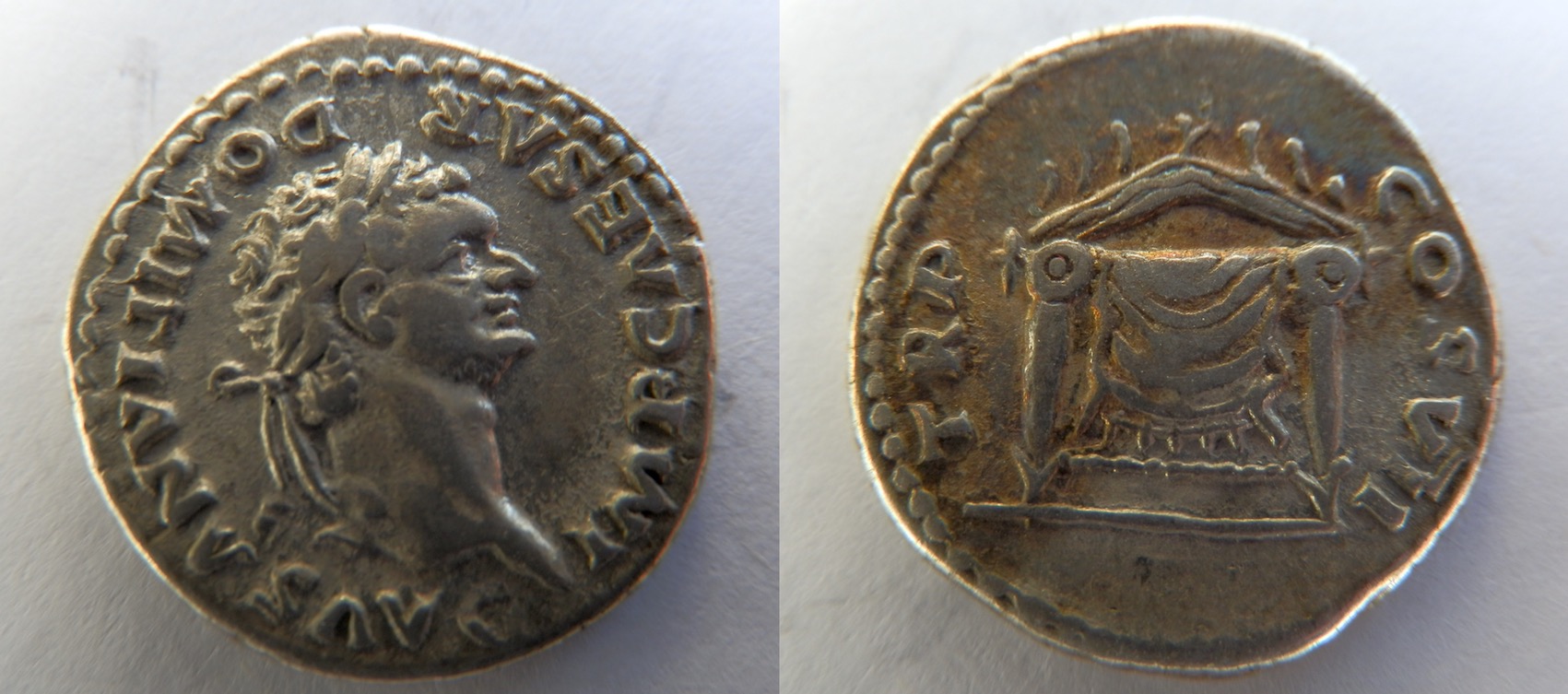 |
|
Moderator
United States
23731 Posts |
Steve, I actually moved it because it appeared to be on ancient coins only I modified your title to include modern coins and will move it back to the General coin section.
|
|
Rest in Peace
United States
17900 Posts |
Fantastic thread idea. Gotta dig out some coins now!
|
|
Moderator
United States
34572 Posts |
"If you climb a good tree, you get a push."
-----Ghanaian proverb
"The danger we all now face is distinguishing between what is authentic and what is performed."
-----King Adz
|
|
Pillar of the Community
Norway
1358 Posts |
A very modern example of a coin with a very limited time frame would probably be the 1994 Dinar from Yugoslavia. It was around for exactly 23 days, from January 1st to January 23rd, 1994. Yugoslavia was in a civil war at the time and suffered from hyperinflation. The government replaced the dinar no less than 6 times in the course of 5 years between 1989 and 1994, from Hard Dinar to Convertible Dinar to Reformed dinar to Dinar to October Dinar to 1994 Dinar to Novi Dinar. The coin with the shortest lifespan is without a doubt the 1994 Dinar with a 23 day lifespan, where the October Dinar takes an honorable second place with a life span of 90 days. More information here: https://en.wikipedia.org/wiki/Yugoslav_dinar |
|
Valued Member
Germany
303 Posts |
In 1888 Friedrich the III became King of Prussia and Emperor of the German Empire, after Wilhelm the I. died on the 9th of March in the same year. However, Friedrichs health was in a very bad shape which is why he eventually died, after having reigned only 99 days. In German he is referred to as "99-Tage-Kaiser" ('99 days emperor'). There were 2 types of coins minted with his portrait while he was alive and shortly after his death, 2 Mark and 5 Mark. Attached you see images of the latter type. 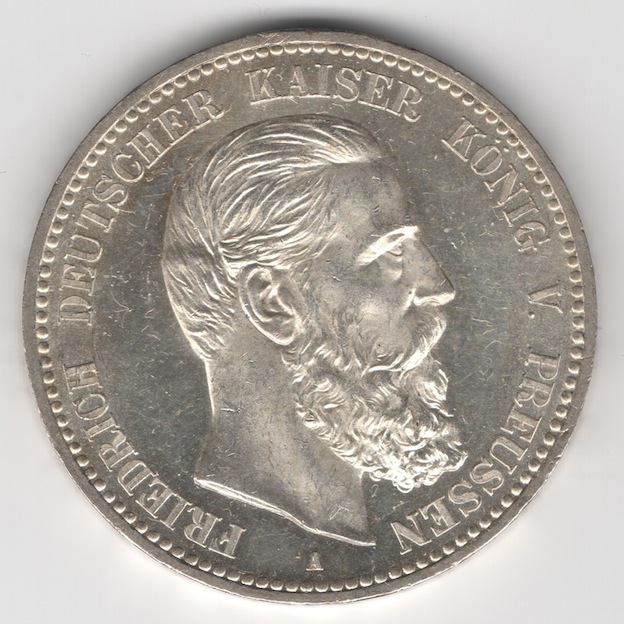 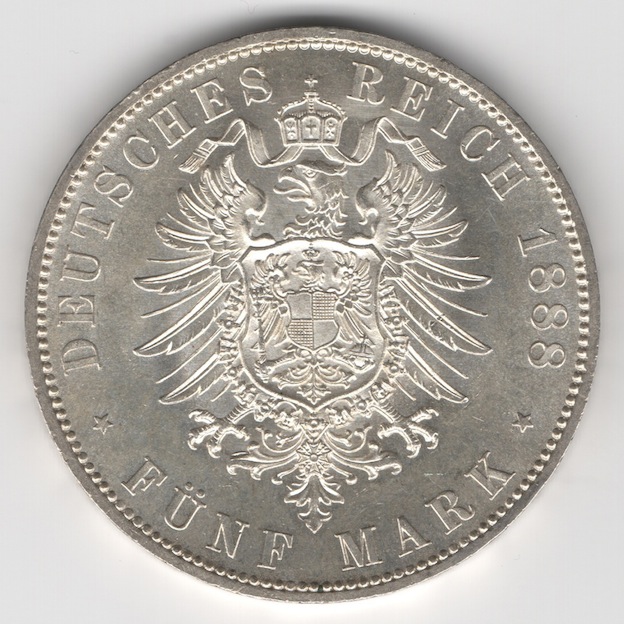 After his death, Wilhelm II. became Emperor of the German Empire and reigned until 1918. |
|
Pillar of the Community
United States
6130 Posts |
Some excellent examples everyone! Here is one of my favorite coins in my Japanese collection: Japan 1 sen Made of baked clay and granite No date (Manufactured roughly July-August 1945)   Japan threw itself so entirely into WWII that from 1939 until 1945, the only coins in circulation were the 1, 5, and 10 sen. As the war became more drawn out they were debased from bronze and nickel to aluminum-bronze to aluminum to tin. When the firebombings started, Japan was preparing itself for a land invasion, planning to fight literally to the last man, woman, and child. The tin sen was no longer viable, so the government contracted out to a few porcelain and granite companies to make some trial pieces of baked clay 1 sen coins. Dire coin shortages in several areas prompted their premature and unauthorized release, where it was said they circulated "for a few days" before the nuclear bombings forced Showa to give the order to lay down arms. Japan's coinage recovered somewhat after the war, but the 1 sen coin was never re-issued. Edited by Finn235
12/09/2016 11:42 am
|
|
Moderator
United States
198004 Posts |
Quote:
Thanks for the move jbuck, but I actually intended this one for the main forum, figuring we would get a lot of moderns. Quote:
I actually moved it because it appeared to be on ancient coins only I modified your title to include modern coins and will move it back to the General coin section. I guess my reputation for being the mover caught up with me.  |
|
Pillar of the Community
 United States
2843 Posts |
simple enough. the 1864 L Indian Head cent. I can't say for sure when the production began, but according to Wikipedia it was not before May of 1864. Quote:
It is not known when this was done; it may have been as early as May So less than one year of mintage for the 1864 L. The 1864 Bronze no L was also less than one year, but since the same dies were used for them as were used for the copper-nickel ones, it is less definitive. |
|
Bedrock of the Community
United Kingdom
19151 Posts |
James II Gun Money halfcrown, dated September 1689. These coins were struck for King James II in Ireland after William and Mary had taken the English throne. They were dated with the month as well as the year of issue: this was to allow them to be gradually redeemed for silver coins in the event of a victory by James II: soldiers would also be able to claim interest on their wages. As James was defeated, the coins were soon devalued and demonetised.  |
|
Pillar of the Community
United States
6130 Posts |
Another fun example from Japan: 1 sen 1938   This design was chosen in mid-1938 (Showa 13) after a popular design contest to renovate the rather boring existing 1 sen coin. The bird on the obverse is Yatagarasu, a mythical crow that variously represents the Sun, the divine guidance of the Japanese people, and general rebirth. It stuck around for just a few months before Japan's invasion of China ramped up, forcing the 1 sen to switch to a much smaller aluminum coin featuring the same design. Three total designs were in use in 1938: "Old" design (until about June): https://en.numista.com/catalogue/pieces13954.htmlYatagarasu bronze (June - mid-fall?): https://en.numista.com/catalogue/pieces13957.htmlYatagarasu aluminum (Late 1938): https://en.numista.com/catalogue/pieces8949.htmlAmazingly, all three designs are common enough that a decent example of each can be acquired rather cheaply, although high grade coins demand exponentially larger premiums. |
|
Pillar of the Community
Canada
514 Posts |
This is a very interesting thread!
Thanks for sharing!!
On this note, were there not some coins made with Edward VIII?
(iirc I have seen pictures of Canadian test pieces with a 1937 date on them)
|
| |
Replies: 41 / Views: 6,439 |







 Posted 12/08/2016 5:38 pm


