| Author |
 Replies: 20 / Views: 3,314 Replies: 20 / Views: 3,314 |
|
Valued Member
United States
173 Posts |
so I stopped by a random coin shop, not my local shop, and bought these for $110. Do you guys think it was a good deal? I searched for prices and the price range was too great for me to make a decision if it was a good deal, fair, or bad deal. If I knew he had these before coming in, I would have done my research, but being there and running out of time, he was about to close, I had to make a decision on the spot. The fact that they were already slabbed seemed very appealing to me. As much as I wish it was PF70, which would then make it absolutely 1000% a great deal, PF69 was good enough for me. 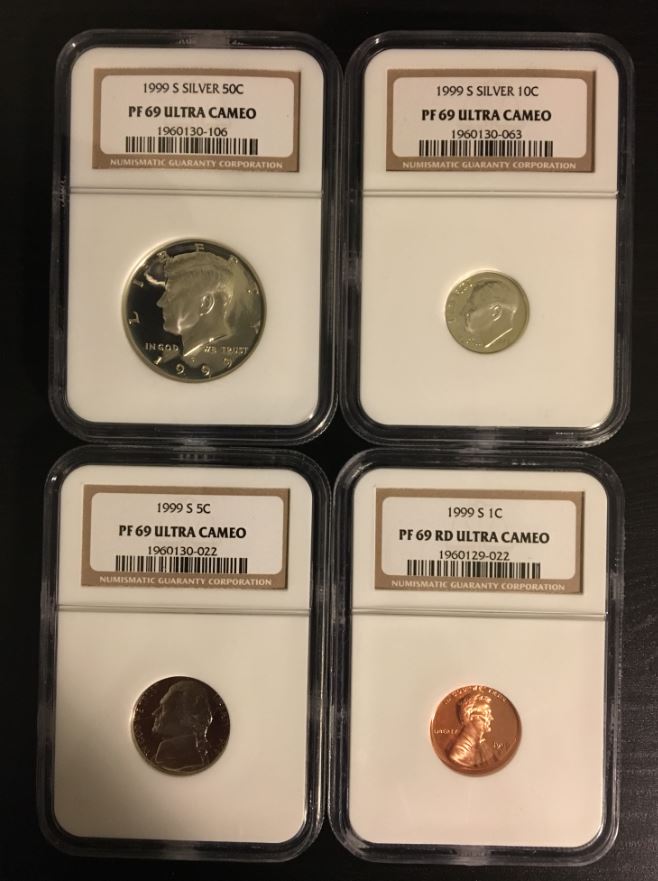 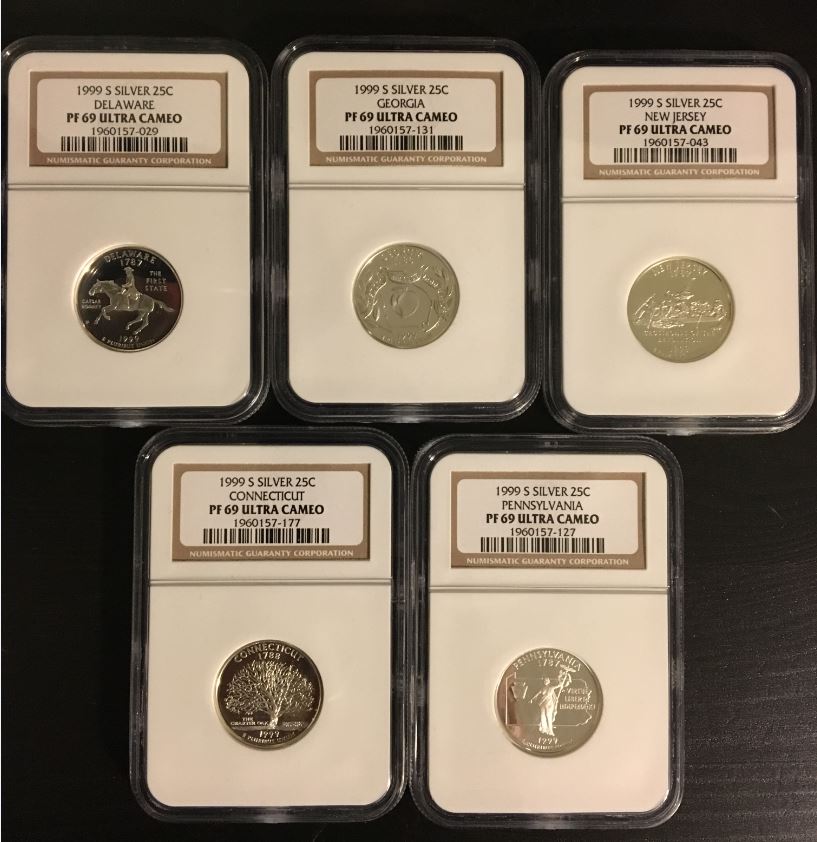 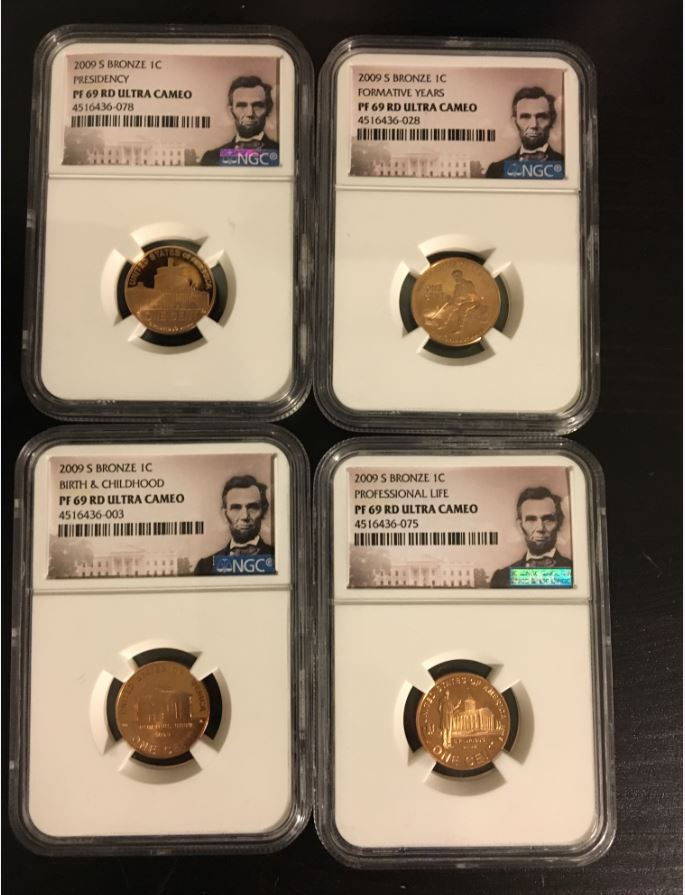 |
|
|
|
Valued Member
United States
89 Posts |
Slabbed 70's and that would have been thousands of dollars. As that silver Delaware quarter routinely sells for $2,000 in 70 condition. I think you did well. I recently sold a NGC 69 set just like that on ebay and got $135 for it. That also did not include the 2009 pennies. Those are pretty popular. I would think slabbed they would be $25 alone |
|
Pillar of the Community
United States
591 Posts |
Does it really add "value" if NGC says a modern coin is 70 vs 69? Or is it just perceived value? I honestly can't wrap my head around the modern coin TPG game. If a coin is prepared by the US Mint, in a proof set, isn't that sufficient high quality? Honestly, if any 69 coin was re-submitted 10 times, I'd guess the TPG would eventually assign a 70 grade. Maybe they are grading earlier in the morning or later in the day, maybe they had a bigger breakfast or had more sleep. If you can't discern any perceptible difference under a loop, why would we assume a paid grader can? To Ross Son, I think you got a good deal if you think these coins are worth this much. The line between 69 and 70 on moderns is going to come down to personal perception on added value. Personally, coins in OGP would likely be fine for me. For others, only a TPG slab will do. I would suggest just thinking critically of your coin purchases and understanding what motivates you to buy a certain coin (e.g., investment, adding a "perfect" coin to your collection, etc.). Are you buying it just because it is "pretty popular", like chavelle7167 references? If so, you may become disinterested when popularity wanes, which it very well may. |
|
Valued Member
United States
344 Posts |
If you like them then in my opinion you made a good deal  |
|
Moderator
 United States
196100 Posts |
I agree with one_fine_dime. I would never pay a premium for a 70 over a 69. I could never justify paying for something that I cannot see. With that being said, I think you did good here.  |
|
Rest in Peace
United States
17900 Posts |
You did quite well. Actual full retail, if sold individually (which would be a LOT of work) would probably net you somewhere in the $160-$170 range. But, again, you'd have to put hours into making that price. There is always blather about being able to distinguish a 69 or 70. I can tell you that in the case of ASE, which I collect, you most certainly can tell the difference. It may take a while to be able to see what takes it "down" to a 69, but a little practice with coins in hand will prove that differentiation. As has been said, and the best advise you could get, is that if you are happy with these coins, then you did great. Think of it this way - you got 13 coins (a LUCKY NUMBER  )that you like. The cost just to slab those 13 coins is MORE than what you paid for them. Actually it's a good deal less because at $15 a pop (not including postage and insurance) $195 just to slab them. |
|
Valued Member
 United States
173 Posts |
Thank you all for the replies. What made me buy these besides the fact that it has high grade is 1) The 2009 S pennies are the only commemorative set for Lincoln cents and the only set (after the copper to zinc transition) made of bronze (same as pre-1982) which was composed of 95%copper, 3% zinc and 2% tin. 2) The State Quarters, Half Dollar and the dime is silver so it should be worth more than face value at some point in the future. 3) They are slabbed, which makes it easier to sell online if it comes to that. |
|
Bedrock of the Community
United States
94367 Posts |
Good reasoning, and as pointed out, the important thing is that you like them.
|
|
Bedrock of the Community
United States
17884 Posts |
Quote:
(same as pre-1982) which was composed of 95%copper, 3% zinc and 2% tin. The exact composition of the bronze was never "set in stone" other than 95% copper and 5% zinc and tin. The actual amount of the two metals varied depending on the time and circumstances and the tin ranged from as high as 2.5% to as low as about .000001% in 1942. |
|
Pillar of the Community
United States
1795 Posts |
|
|
Valued Member
United States
280 Posts |
I suspect that if the person grading is constipated that day, your coin grades lower. It is too subjective.
|
|
Valued Member
United States
173 Posts |
@Conder101. Good to know that. Thank you! Everyday I learn something new here. But to call it Bronze is still correct right? Meaning that the composition is always 95% copper and the remaining 5% other metals. Which leads to my next question. We all have seen different penny colors from different dates and I have come across soo many 60's, 70's and 80's cents (up to 82 copper only for the sake of this question) that still has the shiny reddish or red-yellowish/slightly greenish toning. Does the variance of the other metals (whatever composition of zinc and tin within the 5%) have anything to do with it? I hope I was clear enough. |
|
Bedrock of the Community
United States
17884 Posts |
If it is a copper alloy that contains tin it is Bronze. If it has copper and zinc but no tin it is a brass. (if it has other metals in the alloy they may be mentioned such as aluminum bronze, nickel brass, etc.) The outer layers of the "golden dollars" is Manganese brass because it has more manganese in it than nickel. 77% copper, 12% zinc, 7% manganese, and 4% nickel.
In 1963 tin was completely eliminated from the alloy of the cent so from 1963 to 1982 they are actually brass cents and not bronze.
|
|
Pillar of the Community
Canada
5293 Posts |
@Ross Son, if you had purchased the unslabbed proof set it would trends for about the same. The cost of slabbing all those items would be over $200. So in that respect you did well. Would someone else buy it for more than $110? I have no idea.
|
|
Pillar of the Community
United States
1970 Posts |
I think you did just fine. As long as it is what you collect, because since I don't collect modern stuff, I wouldn't buy things like that.
|
|
Pillar of the Community
United States
2815 Posts |
Quote:
I would never pay a premium for a 70 over a 69. I could never justify paying for something that I cannot see. I don't mind paying a small premium for a 70, but that margin has become smaller over the past 5 years- much smaller.  Edited by Darth Morgan
01/12/2017 11:52 am
|
| |
Replies: 20 / Views: 3,314 |










 Posted 01/09/2017 11:44 am


